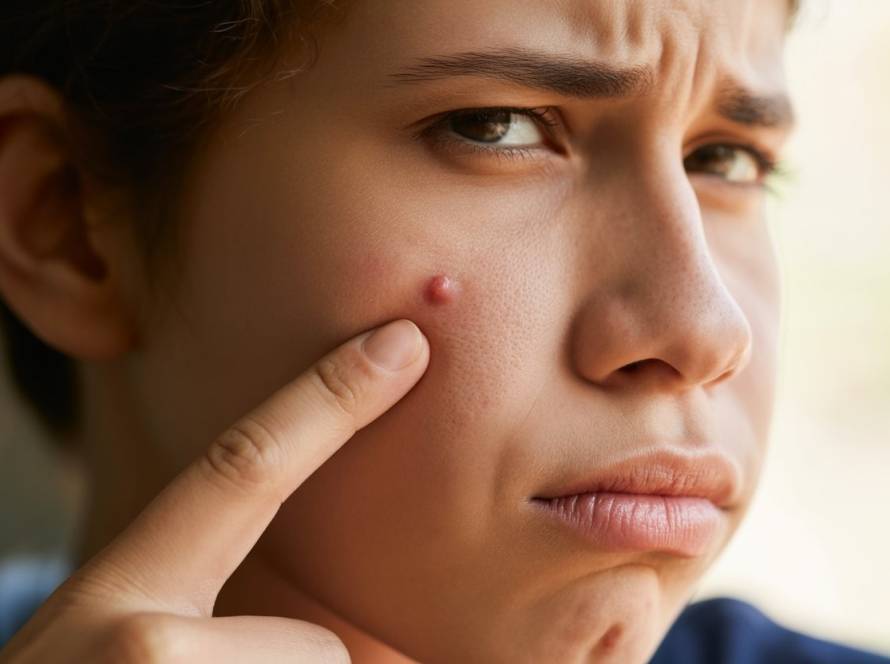
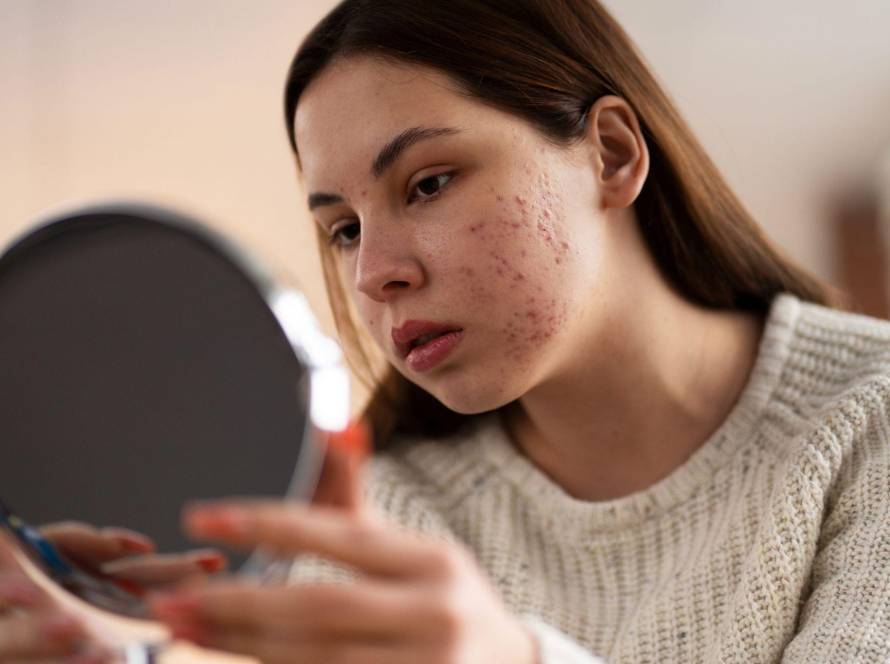
For a long time, the go-to move for a breakout was basically “panic and cover.” We’d take a thick, heavy scar cream and coat our entire face, hoping something would stick. While those old-school formulas were okay for basic moisture, they were pretty clumsy. They didn’t really have the tech to get deep into a blemish or speed up the cell turnover you actually need to make a dark spot disappear. Nowadays, we’ve gotten a lot smarter. Switching to a dedicated Spot Corrector is a total shift toward precision; it’s about being efficient rather than just messy.
The Science of Hitting the Target
The real reason a Spot Corrector leaves those old creams in the dust is all about concentration. If you look at a traditional scar cream, it’s usually just a basic moisturizer with a tiny sprinkle of vitamins. By contrast, a contemporary spot treatment gel is designed to act as a precision attack system. It is supposed to hold lots of active ingredients and deliver them directly into the pores.
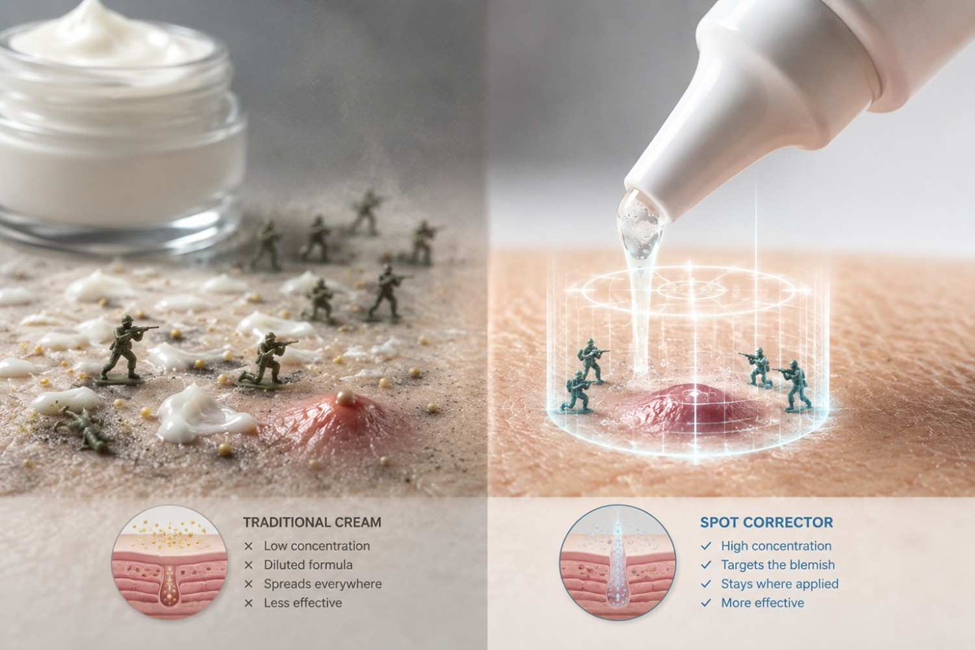
When you use a Spot Corrector, you’re sending in a specific team to work on an isolated problem area. There is a lot of research to support this. Studies have demonstrated that spot treatments on blemishes are 50% more effective than those that do not treat them, or generic products, at reducing the life of the blemish. Spot Correctors are created to stay where you put them, to create a defined “treatment zone” for the product. Blemishes can take in the full concentration of product without it being diluted with your other products or rubbed off by them.
Why Old-School Scar Creams Often Fall Short
Older formulations were typically heavy on petrolatum or mineral oils. While these are excellent for protecting a healing wound, they can be counterproductive for acne-prone skin.
- Occlusion Issues: Heavy creams can trap bacteria and sebum, potentially leading to new breakouts while you are trying to heal an old one.
- Slow Absorption: Because they are designed to sit on top of the skin, the active “healing” ingredients often take longer to penetrate the epidermis.
- Lack of Exfoliation: Most traditional creams focus only on softening skin, whereas a Spot Corrector often includes keratolytic agents that help shed dead skin cells.
The Power of the Sulphur Spot Treatment
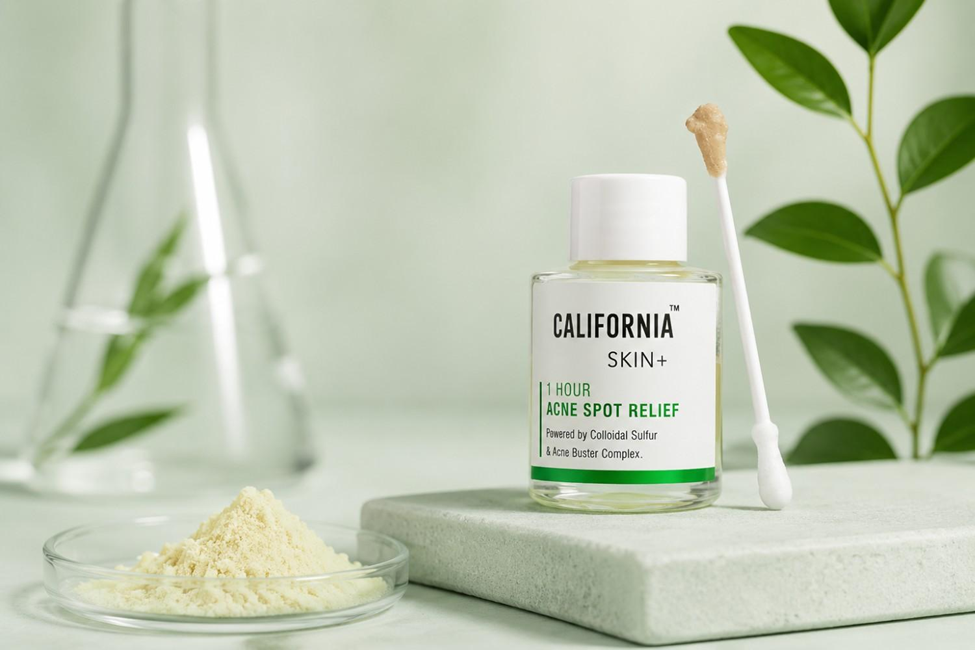
One of the most significant breakthroughs in targeted skincare is the resurgence of mineral-based interventions. A sulphur spot treatment is particularly effective because it works on multiple levels simultaneously. Sulphur is naturally keratolytic, meaning it dries out the surface of the skin to absorb excess oil and unclog pores.
Beyond oil absorption, sulphur has natural antimicrobial properties. When integrated into a Spot Corrector, it helps to neutralize the bacteria responsible for inflammation. This is a far cry from old-school creams that merely tried to “soothe” the skin without addressing the bacterial load.
Key Ingredients That Change the Game
Modern dermatology has identified specific minerals and compounds that make a Spot Corrector significantly more effective than general creams.
- Colloidal Sulfur: This finely milled version of sulphur allows for better skin contact and faster absorption, making it a cornerstone of any high-quality sulphur spot treatment.
- Zinc PCA: This compound helps to regulate sebum production. Unlike old creams that just sat on top of the oil, Zinc PCA actually tells your skin to slow down its oil production.
- Zinc Oxide and Calamine: These ingredients provide the soothing, anti-inflammatory benefits that people used to seek in scar creams, but they do so without the heavy, pore-clogging waxes found in older products.
Understanding the Role of a Spot Treatment Gel
Consistency matters in skincare. A spot treatment gel is often preferred over a cream because of its molecular structure. Gels are typically water-based or have a lighter viscosity, allowing them to penetrate the skin’s lipid barrier more effectively.
When you apply a Spot Corrector in a gel format, it creates a thin, invisible film over the blemish. This film protects the area from environmental pollutants while ensuring the active ingredients remain in contact with the skin for hours. This “lock-in” effect is why a Spot Corrector can often show visible results in a fraction of the time it takes for a traditional cream to work.
Statistics and Clinical Insights
Recent consumer studies highlight a growing preference for targeted solutions.
- Approximately 70% of dermatologists now recommend targeted spot treatments over general-purpose healing creams for active acne.
- Clinical trials on mineral-based spot treatments have shown a measurable reduction in redness and swelling within just a few hours of application.
- The global market for spot-specific treatments is expected to grow significantly, as consumers move away from “one-size-fits-all” skincare routines in favor of precision. (Source)
How to Use a Spot Corrector for Maximum Efficacy
To get the most out of your product, the application method is just as important as the formula.
- Cleanse Thoroughly: Always start with a clean canvas to ensure no dirt or oil blocks the Spot Corrector from reaching the skin.
- Layering: Apply your spot treatment gel after cleansing but before heavy moisturizers. This ensures the actives are the first thing your skin absorbs.
- Don’t Over-Apply: Because these formulas are highly concentrated, a tiny amount is all you need. Applying too much won’t make it work faster; it may just dry out the surrounding healthy skin.
- Consistency: Use your sulphur spot treatment as directed, usually once or twice a day, to maintain a constant level of active ingredients on the affected area.
The Importance of Precision in Healing
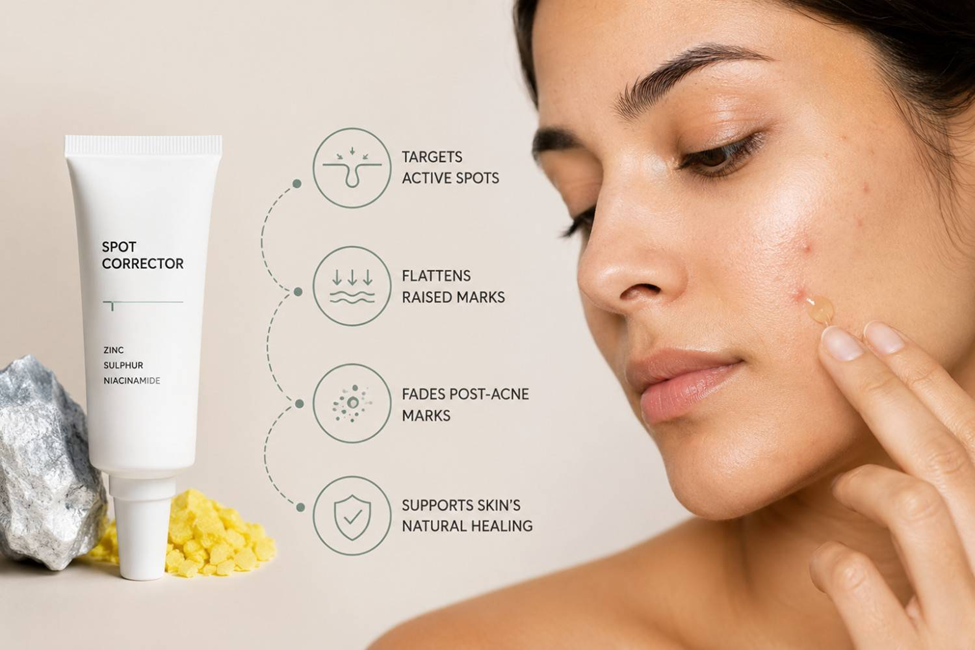
A common mistake in skincare is treating the entire face for a problem that only exists in a small area. Using a Spot Corrector allows you to treat the problem without disrupting the moisture barrier of your healthy skin. Old-school scar creams were often applied broadly, which could lead to congestion in non-problematic areas. By choosing a Spot Corrector, you are practicing “surgical” skincare, addressing exactly what needs help and nothing else.
Why Your Skin Prefers Modern Formulas
The skin is a complex organ that responds best to balance. While old-school creams often relied on heavy grease, a modern Spot Corrector utilizes the synergy of minerals like Zinc and Sulphur. These elements mimic the skin’s natural healing processes. For instance, the use of a Spot Corrector helps to flatten raised marks and lighten post-inflammatory hyperpigmentation much faster than a standard occlusive cream ever could.
By incorporating a Spot Corrector into your nightly routine, you are giving your skin the tools it needs to repair itself at a cellular level. Whether it is a stubborn hormonal breakout or a lingering red mark, the focused power of a spot treatment gel ensures that your skin remains clear, balanced, and resilient.
Conclusion
Ultimately, the transition from broad-spectrum creams to the precision of a Spot Corrector reflects a deeper understanding of skin physiology. While the old-school approach focused on simply covering a blemish, modern science allows us to treat it at the source. By utilizing a spot treatment gel, you ensure that high-potency ingredients like Zinc and Calamine are delivered exactly where they are needed, without overwhelming the rest of your complexion.
The effectiveness of a sulphur spot treatment lies in its ability to multitask, absorbing oil, neutralizing bacteria, and calming inflammation all at once. This targeted strategy not only speeds up the healing process but also minimizes the risk of long-term scarring. When you choose a high-quality Spot Corrector, you aren’t just hiding a flaw; you are providing your skin with a sophisticated, mineral-based intervention that supports its natural recovery.
As skincare continues to evolve, the “less is more” philosophy holds. Instead of saturating your face in heavy products, a few precise applications of a Spot Corrector can provide the clarity and confidence you’ve been looking for. It’s time to move past the heavy greases of the past and embrace the fast-acting, science-backed power of a dedicated Spot Corrector for a clearer tomorrow.
Frequently Asked Questions
How long does it take for a Spot Corrector to show visible results?
Most users see a reduction in redness and inflammation within 1 to 4 hours. However, for the blemish to completely flatten and fade, it typically takes 24 to 48 hours of consistent use. The high concentration of actives in a Spot Corrector allows it to work much faster than traditional skin creams.
Can I use a sulphur spot treatment on sensitive skin?
Yes, though it is important to look for formulas that include soothing agents like Calamine or Zinc Oxide. These ingredients help to balance the drying effects of the sulphur, making the Spot Corrector effective yet gentle enough for localized use on sensitive areas.
How does California Skin+ 1 Hour Acne Spot Relief differ from other treatments?
The California Skin+ 1 Hour Acne Spot Relief is specifically formulated with a blend of Colloidal Sulfur, Zinc PCA, and Calamine to provide rapid relief. Unlike many treatments that take days to work, this formula is designed to significantly reduce the size and redness of a blemish in just sixty minutes, making it an ideal Spot Corrector for those who need immediate results.
Can I wear makeup over a spot treatment gel?
Yes. Once the gel has dried and formed its protective film, you can gently pat concealer or foundation over the top. The lightweight nature of a modern Spot Corrector ensures that it won’t pill or cause your makeup to slide off, allowing you to treat your skin while going about your day.