Artificial intelligence has moved into everyday skincare pretty fast. Like you have apps that scan your face , and little quizzes that say they can build your customized routine in minutes, AI is sorta reshaping how people find products. Instead of sitting for hours digging through ingredients, a lot of consumers now expect technology to just smooth the whole thing out. Still , even if the guidance feels more sharp each year, it doesn’t always come off as genuinely personal. A routine that AI suggests might include a cleanser, sunscreen, or a barrier repair moisturizer, but then you have to ask the real thing: are those picks actually tied to your skin’s specific behavior, or do they mostly line up with repeating patterns pulled from huge datasets.
People are getting more comfortable with AI-powered beauty tools because they basically save time and, weirdly enough, make skincare feel less intimidating. Still, it helps to know, just a bit , how these systems work so expectations stay realistic. AI can be really useful, but good skin is not only “the app”, it still leans on steady habits, choosing suitable ingredients, and watching what your own face does over time, not just what the algorithm says.
How AI Makes Skincare Recommendations
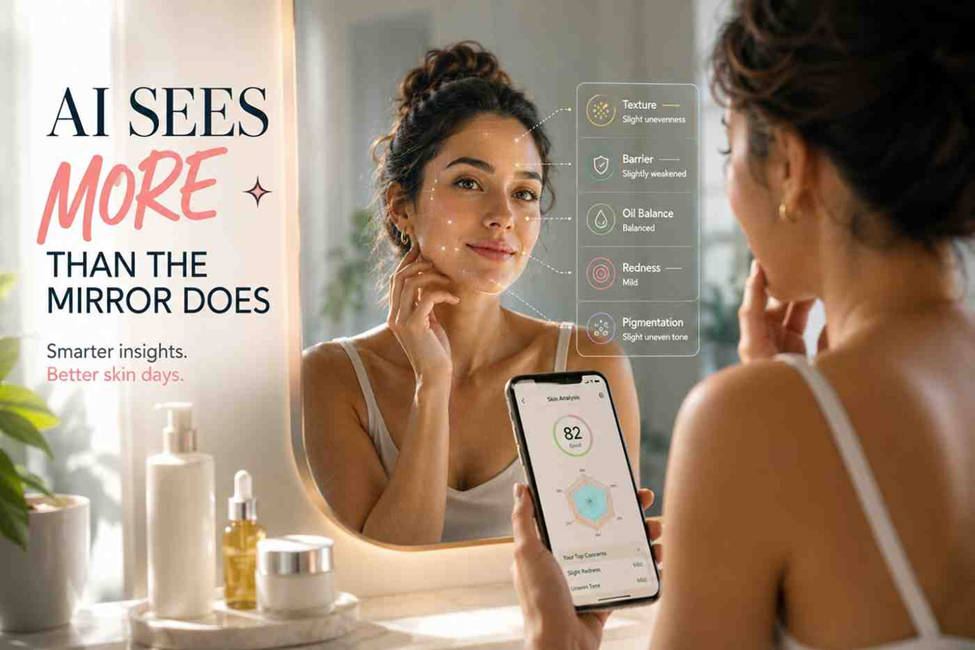
AI skincare platforms gather information in a few different ways. Some of them make people fill out these thorough questions, kind of a questionnaire vibe, while others look at uploaded selfies with computer vision tech. A lot also mix both methods at the same time, so they can build a skin profile, which is the main point.
These platforms commonly evaluate:
- Skin type
- Visible redness
- Fine lines and wrinkles
- Pigmentation
- Acne severity
- Oil production
- Texture
- Environmental factors such as climate
After processing this information, the AI does that comparison of your profile with thousands or, even millions of similar cases, it checks and rechecks, kind of like a matching exercise. It is like, it sort of estimates which ingredients or products have historically worked well for people with comparable skin traits. And, instead of making a medical diagnosis, it predicts that outcome, based on patterns it found.
This is why a lot of AI routines often point people toward ingredients like ceramides, niacinamide, glycerin, plus a barrier repair moisturizer when symptoms of dryness, or irritation start showing up, sort of in a tired kind of way.
Where AI Excels
AI can do surprisingly well at spotting visible skin patterns, honestly it kind of surprises you. It may often catch issues that people just don’t notice, particularly when the changes happen in a slow, gradual way over a few months.
Some major strengths include:
- Consistent image analysis
- Personalized ingredient recommendations
- Routine building based on multiple concerns
- Progress tracking over time
- Easy access to skincare education
Instead of pushing trendy products, a lot of AI platforms rather focus on components supported by dermatological findings, you know, evidence. When your skin starts looking a bit parched after using strong exfoliants for instance, the AI might suggest dialing back the active ingredients, and in the same breath it could recommend a barrier repair moisturizer so the skin becomes more resilient overall.
The Limits of Artificial Intelligence
Instead of pushing trendy products, a lot of AI platforms rather focus on components supported by dermatological findings, you know, evidence. When your skin starts looking a bit parched after you’ve been using strong exfoliants for instance the AI might tell you to scale back the active stuff a notch. And in the same breath it could recommend a barrier repair moisturizer so your skin is more resilient overall, like it can handle things better .
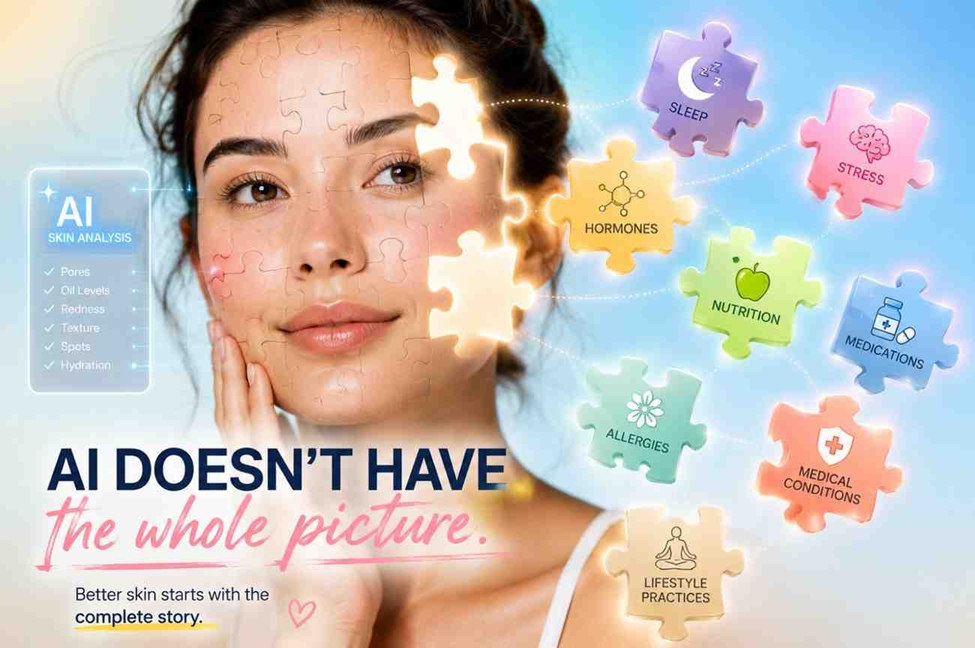
- These are:
- Hormone fluctuations
- Stress levels
- Sleep quality
- Nutrition
- Medications
- Medical conditions
- Allergies
- Long term lifestyle practices
You and your friend may look as though you have the same skin type in the pictures but in reality you may need totally different skin care routines. Like, sometimes it looks basically identical in a quick snapshot, yet the skin can do wild and different stuff underneath, almost like two separate stories. For instance, sensitivities can vary, and the whole need can be different even if it looks kind of similar. For example, one person’s dryness can come from too much exfoliation, while someone else’s dryness might be tied to eczema or something similar. The pictures could still look nearly alike, but the right treatment choice would not match, it can be very different in practice.
Also, AI simply cannot feel the sensations, like itching, burning, tightness, or general discomfort. Those small tells usually decide whether using a barrier repair moisturizer as the next move actually makes sense.
Barrier Repair Moisturizer Recommendations Are Becoming More Common
One noticeable trend in AI skincare is the growing attention to the skin barrier’s health, kinda like, as if that layer matters more and more. In recent times modern AI systems more and more seem to “understand” that when the skin barrier gets impaired it plays a part in a bunch of familiar skin concerns, so barrier-first suggestions appear more and more often. The signs AI might pick up include:
- Flakiness
- Redness
- Rough texture
- Dullness
- Visible irritation
Instead of just jumping to tougher treatments, many modern platforms suggest a simpler routine first, plus adding a barrier repair moisturizer to bring things back to steadiness before you add more active ingredients. It kind of shows a wider movement in the skincare industry, toward prevention rather than straight up correction.
What AI Usually Gets Right and Wrong
| AI Usually Gets Right | AI Often Misses |
| Visible dryness | Internal health conditions |
| Surface oiliness | Hormonal triggers |
| Pigmentation patterns | Emotional stress |
| Enlarged pores | Product allergies |
| Fine lines | Personal comfort levels |
| Basic ingredient matching | Long-term lifestyle habits |
The table kind of shows an important point. AI is really good at noticing patterns but it has trouble with context.
A suggestion for a barrier strengthening moisturizer might be totally right, based on what you can see as dryness, but your dermatologist could also find a different root issue that needs extra care too.
Why Skincare Brands Are Investing in AI Assistants
Artificial intelligence is kind of re-shaping the way skincare brands talk with consumers, like all along the shopping journey. Instead of just using those basic product filters or a scripted chatbot that feels robotic, more and more brands are bringing in AI assistants that can ask follow-up questions, grasp what a person is actually dealing with, and then suggest products while taking into account skin type, daily lifestyle , routine habits, and also whether ingredients are going to play nice together. It makes the whole experience more immersive, and it helps shoppers sort through a now super crowded skincare market with more confidence, not just guessing.
AI assistants are slowly becoming useful educational tools, not only product suggestions.For example, they can tell you why a specific ingredient is recommended, help people create a full skincare routine, and re-calibrate the advice when skin concerns change or the environment changes over time. These upgrades make it simpler to receive skincare that’s more customized. They are not intended to substitute for professional guidance, but to go along with it, you know, kind of as an assist. If you have more persistent or complicated skin issues, it’s still important to visit a dermatologist, for a precise diagnosis and an exact treatment plan.
AI Learns From Data, Not Your Entire Story
Artificial intelligence depends on data, to sift patterns and try to infer which ingredients might be most helpful for people with similar skin traits. Still, these suggestions are really based on probabilities not full certainty. Your tastes, the feel of textures, allergies, and how your skin reacts day to day can change a lot from one person to another. That’s why adding a barrier repair moisturizer, or any new thing at all, should mean watching what happens on your own skin over time, instead of assuming the first AI pick is automatically the right match.
Why Skin Barrier Health Is Becoming the Foundation of Personalized Skincare
Dermatologists are starting to stress that you should treat the skin barrier first, before you go in too aggressively after, say, one specific concern. When the barrier is a little weakened, acne stuff can start feeling harsher, pigmentation products can seem more irritating, and retinoids are often harder to live with. In other words, if you shore up the barrier function sooner, the rest of your skincare routine tends to be better tolerated, and it usually just works more smoothly.
Barrier strengthening moisturizer type products, in general, are meant to refill those essential lipids, boost moisture levels, and limit water loss, kind of like a slow reinforcement layer. If you pair that with a gentle cleanser plus sunscreen, you end up with a steadier base, before you introduce more intensive actives.
That whole idea sort of lines up with the AI angle too, because healthier skin tends to give you more consistent outcomes across a wider set of treatment categories, like it’s more stable in a range of options even if the approach varies a bit.
Can AI Replace Dermatologists?
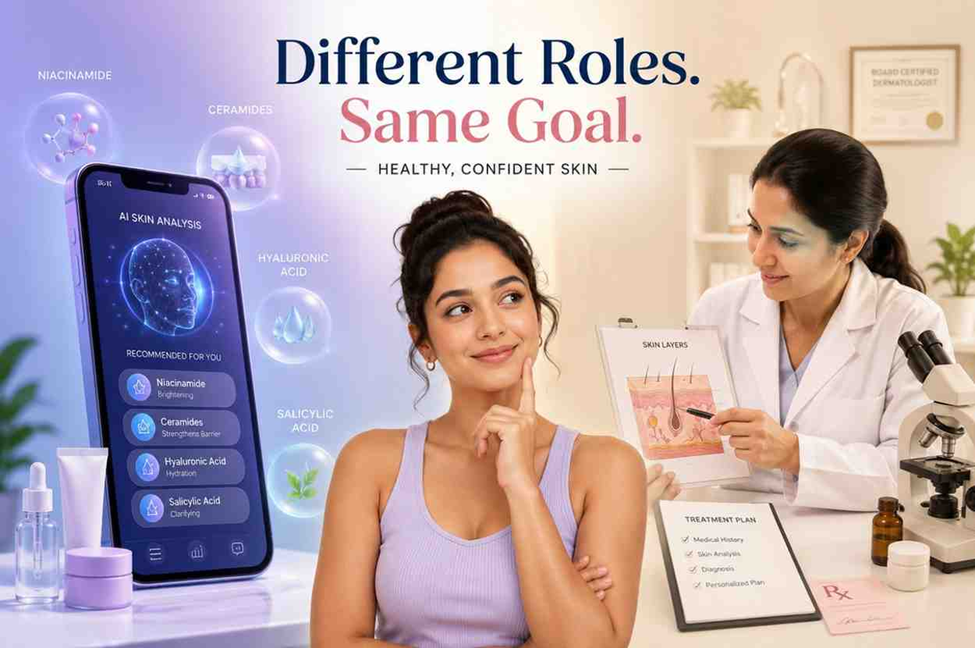
AI tends to work better as a decision support tool, not as some kind of outright replacement for dermatologists. It can spot visible skin issues and point toward ingredients that might help, but it can’t really diagnose skin conditions in the proper way, or prescribe medications, or truly take in medical history the same way a clinician does. A dermatologist can also build a personalized treatment plan, and honestly, that piece is still hard for AI to get right. AI is most helpful for daily skincare guidance, like quick ingredient suggestions or general routines, but if the concern keeps showing up, or it feels complicated then it should be checked by a professional.
The Future of Hyper-Personalized Skincare
Future AI skincare platforms might start to include wearable sensors, all kinds of ambient environmental info, sleep tracking, hormonal hints, and yes microbiome analysis too, so the advice feels more tailored. Even if these upgrades make the AI more capable, it will still tend to perform best when it’s paired with steady skincare habits and your own small personal observations. A properly made barrier repair moisturizer should still help keep skin comfortable, especially when dryness or reactivity shows up as a worry.
Conclusion
AI-powered skincare suggestions have made personalized beauty a bit more reachable , because it helps people spot concerns and match them with the right ingredients. Still, AI can only really “read” what it gets and it can’t fully grasp the whole lifestyle picture, your medical history, or even how your skin actually feels day to day. So the smartest way is to treat AI like a helpful compass, and then pair it with your own day-to-day observations, plus professional guidance when it’s really needed. Also, picking products that back skin health over time , actually makes a difference. For instance, a well crafted skin barrier moisturizer can help the skin stay more resilient and comfortable, then the rest of your routine can do its job a little more smoothly without so much friction in between.
FAQs
1. How accurate are AI-powered skincare recommendations?
AI skincare recommendations can be surprisingly accurate for identifying visible concerns like dryness, redness, pigmentation, and acne patterns. However, they cannot assess internal factors such as hormones, stress, allergies, or medical conditions. They work best as guidance tools that help users make informed skincare decisions rather than as replacements for professional diagnosis.
2. Should I trust an AI skincare app over professional advice?
AI can be useful for building a basic skincare routine and understanding ingredient recommendations, but it should not replace a dermatologist, especially if you have persistent acne, eczema, rosacea, allergic reactions, or unexplained skin changes. Professional evaluations remain essential for diagnosing and treating medical skin conditions.
3. Can California Skin+ Barrier Repair Moisturizer be a good choice if an AI skincare tool recommends improving my skin barrier?
Yes. If an AI assessment indicates signs of dryness, irritation, or a weakened skin barrier, a product like California Skin+ Barrier Repair Moisturizer can fit naturally into that recommendation. Its combination of Ceramide Complex, Cica Extracts, Nonapeptide, Olive Squalane, and Pentavitin is designed to support hydration, reinforce the skin barrier, and improve comfort without unnecessarily complicating a skincare routine, making it suitable for users looking to strengthen overall skin resilience.
4. Why do so many AI skincare routines recommend barrier-focused products?
Modern skincare research increasingly recognizes that many concerns, including irritation, dehydration, and reduced tolerance to active ingredients, are linked to a compromised skin barrier. Because of this, AI systems frequently recommend strengthening the skin barrier before introducing more intensive treatments.
5. Will AI skincare become completely personalized in the future?
Future AI systems will likely become much more advanced by incorporating additional information such as environmental conditions, wearable health data, and long-term skin tracking. Even so, human experience, consistency, and professional advice will remain important because skincare is influenced by many factors that technology cannot fully measure.