Walk down any skincare aisle and you’ll probably see products that are marked as “non-comedogenic”. That claim shows up on cleansers, sunscreens, serums, and even on face moisturizer packaging, like it’s meant to reassure you, take the edge off, calm you down. For folks trying to dodge clogged pores and flare ups, those words can feel like a friendly cue that the product is safe for acne-prone skin. But honestly, the whole thing is kind of more layered than it sounds , and it often ends up being less clean cut than the label makes it seem, at least most of the time.
A lot of skincare brands toss in sort of science-y phrases that sound impressive but they’re not always explained in plain everyday language so you kinda end up guessing what it actually means when you use it. “Non-comedogenic” is one of the most common examples, and it can feel like a bit of a head scratcher at first. Even if the label offers some helpful direction, knowing what the term is really pointing at, in plain terms, can help you pick products that actually fit your skin instead of chasing unrealistic outcomes.
This article sort of breaks down the meaning of non comedogenic and yeah, explains how it connects to pore clogging, plus acne too. It also points out what you should look for when picking skincare products, like what to consider and what matters the most.
The Real Meaning Behind “Non-Comedogenic” on Face Moisturizer Labels
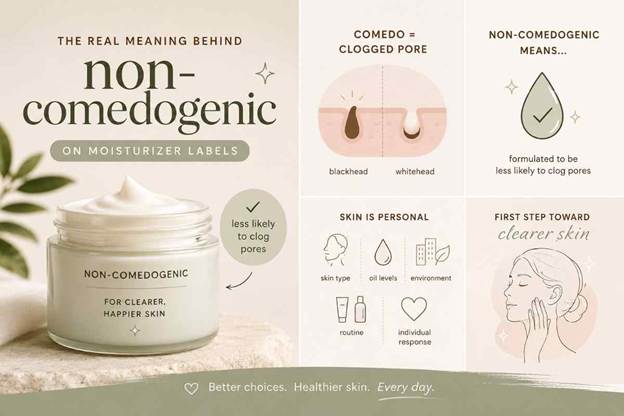
The word “comedo” points to a clogged pore, sort of like that little plug you never really notice until later. Blackheads and whiteheads count as types of comedones too. So when you see a product labeled non-comedogenic it is basically built to be less likely to clog the pores, and in that way help prevent the whole “blemish” story from starting in the first place.
The key phrase here is “less likely.” A non comedogenic label doesn’t guarantee a product will never trigger breakouts. Instead it kind of means the formula has been made with ingredients that in general are seen as lower risk for pore clogging, compared to others.
This distinction is crucial because skin care is kind of highly personal. One product might work beautifully for one person , but somehow it can clog things up for someone else. Stuff like skin type, how much oil the skin puts out, the local environment, and even the entire routine , all of that matters a lot for whether a product ends up behaving well or not.
For a lot of people, picking a face moisturizer with that non-comedogenic claim is kinda the first step toward building a routine that helps with clearer looking skin, at least in theory.
Why Pore Clogging Happens
To get a handle on non-comedogenic products, it kinda helps to first look at how pores go sideways and get clogged in the first place.
Each pore has a hair follicle, and a sebaceous gland inside it. These glands produce sebum which backs up skin hydration and works like a protective layer, almost like a barrier. But things start to go wrong when too much sebum mixes with dead skin cells , plus other small debris from everyday shedding.
When that whole mixture ends up stuck inside the pore, a comedo gets formed. If the pore stays open, the trapped material oxidizes and goes darker, which then turns into a blackhead. If the pore stays shut , a whitehead shows up instead.
A couple of things can come into play with what’s going on here. It can be too easy to get extra oil in and then it sticks around too long. Sometimes people skip the exfoliating step altogether, or they do it so gently that the dead skin just sort of stays put and doesn’t really clear out. Hormones are a little touchy too and suddenly everything is different like a switch got flipped. Then there’s the heavier side of cosmetics, where one layer after another may be a little too much. Some skincare ingredients, even if they sound perfectly fine on a label, can still turn out to be an issue for particular skin types. And lets not forget what the city air drags in, those environmental pollutants, grime, and all that kind of thing.
A good, well-made moisturizer for acne prone skin can really help keep hydration on track, while not piling on extra congestion in those already vulnerable pores.
What Does Non-Comedogenic Actually Mean?
In practical terms, non comedogenic products are usually put together with ingredients that have a smaller chance of actually clogging pores, not just “maybe” clogging them. Formulators often sidestep ingredients that in the past were linked with higher comedogenic scores. Instead they pick lighter emollients and humectants , plus ingredients that support the skin barrier, so moisture can show up, while a lot of extra residue is not just sitting on the skin, or at least not too much.
Still there is no single, universally agreed testing rule for calling something non comedogenic. Some brands use different kinds of testing and others lean mostly on what’s in the formula itself. So basically , consumers should treat that claim as a useful hint, not something guaranteed, or even an ironclad promise. When you are out shopping for a face moisturizer, the label can be helpful of course, but it should not be the only thing guiding your choice.
Why Skincare Labels Matter Now More Than Ever
Lately consumers are paying closer attention to skincare labels, like more than before, especially about figuring out what the ingredients are and what those product claims actually mean. From research, it looks like 65% of beauty shoppers say they always or most of the time read the ingredient labels when buying skincare, and beauty items. The same study also noted that 62% actively search for certain ingredients they want, or they avoid the ones they do not want in their products.
This growing push on ingredient transparency helps explain why phrases like “non-comedogenic” have been getting more noticeable, and honestly more influential on skincare packaging. As people become more ingredient aware, many start looking past the marketing gloss, sort of zooming in on whether a product is really suitable for their skin type. If you know what statements like non-comedogenic actually mean, it can help shoppers make more informed calls when they pick products that support healthier, more comfortable skin, in that plain daily sense.
Ingredients Commonly Found In Non-Comedogenic Products
A lot of modern formulations depend on kind of light, skin-friendly materials that help with moisture but still don’t feel too heavy, like you notice it right away.
Some commonly used examples include:
| Ingredient | Primary Function | Why It’s Popular |
| Glycerin | Humectant | Draws water into the skin |
| Hyaluronic Acid | Hydration | Helps retain moisture |
| Niacinamide | Barrier support | Supports skin balance |
| Squalane | Lightweight emollient | Provides softness without heaviness |
| Ceramides | Barrier repair | Helps strengthen skin barrier |
| Aloe Vera | Soothing | Provides lightweight hydration |
Many of these ingredients often show up in a face moisturizer made for oily skin, or combination type, you know, and even for acne-prone skin too, so it tends to work kinda differently but in a similar way.
Ingredients That May Raise Concerns For Some Individuals
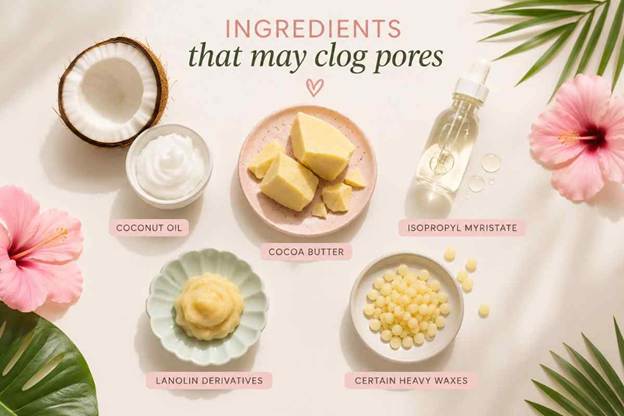
Ingredient reactions can go kind of everywhere, and what clogs one person’s pores, might not do much at all for another. Back in the day, people thought that a few components are more likely to intensify congestion for certain users, kind of like:
- Coconut oil
- Cocoa butter
- Isopropyl myristate
- Lanolin derivatives
- Certain heavy waxes
This does not mean that these ingredients are inherently bad or anything like that. They can actually work really well for dry skin types too, it’s not automatic that they’ll cause trouble. Still , people who tend to get clogged pores might want to keep an eye on how their skin reacts to products that include them.
A face moisturizer that feels rich and comforting for dry skin might seem kinda too much on very oily skin. It can feel kinda heavy, or even cloying, and then the texture sort of gets weird, like everything’s layered at once, even if it’s still a little gentle, in other ways.
Non-Comedogenic Doesn’t Mean Oil-Free
One of the biggest misconceptions is that non-comedogenic automatically means oil free, like it’s the same thing, except it’s not, not really. Like, people sorta assume it does, but it doesn’t really. The two terms describe different things, basically.
Oil free products contain little to no oils. Non-comedogenic products are supposed to reduce the chance of clogging the pores, less likely of that happening. So one is about oil levels, and the other is about pore behavior.
Some oils are actually seen as relatively low risk for congestion and they might show up in non-comedogenic formulations, too. Likewise some oil-free products can still lead to irritation or breakouts for certain users, so it’s not a guarantee.
That is why evaluating the entire formula matters more than zooming in on just one marketing claim, or a single phrase on the front.
When picking a face moisturizer it really helps to get what your skin specifically needs, instead of just trusting one label, like its universal or something.
Understanding Marketing vs Truth
Skincare marketing kinda reduces big complicated ideas into short bits that just kinda fit on the package.
Non-comedogenic is a handy phrase, but it should not be treated like it’s some kind of guarantee for perfect, or even “always works” results. More like it’s one small clue, among other clues, in the bigger picture.
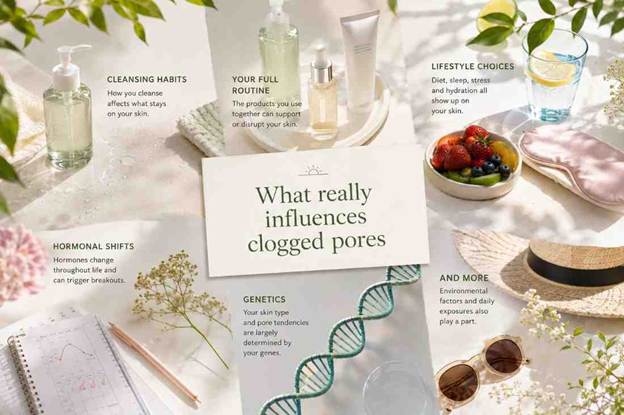
Whether pores end up clogged depends on your whole routine, the way you cleanse, day to day lifestyle habits, shifts in hormones, and genetics too.
Most of the time, the best skincare choices come from looking at everything as a whole, not from hinging your expectations on one single claim alone.
Conclusion
“Non-comedogenic” is supposed to say that a product is made so it is less likely to clog pores, kinda like that. Even so, for oily or acne-prone skin this can be kind of useful, but it’s not some forever shield against breakouts. You still have to check the ingredients, notice the texture, and pay attention to how your own skin responds back, cuz people aren’t exactly the same. So if you pick a non comedogenic moisturizer, treat the label like a decent little guide, not a strict guarantee, and try to find a formula that helps with hydration, supports the skin barrier, and works with your skin’s general compatibility, more or less.
FAQs
1. Can a moisturizer still cause breakouts even if it is labeled non-comedogenic?
Yes. Individual skin reactions vary, and factors such as sensitivity, hormones, and other skincare products can contribute to breakouts. The label simply means the product is designed to be less likely to clog pores.
2. Is non-comedogenic skincare only for people with acne?
No. Many people without acne prefer these products because they often have lightweight textures and are less likely to leave the skin feeling heavy or greasy.
3. How can I tell if a product is clogging my pores?
Signs may include an increase in blackheads, whiteheads, small bumps, or persistent congestion in areas where you regularly apply the product. Monitoring changes over several weeks can help identify patterns.
4. Is California Skin+ Barrier Repair Moisturizer a good option for someone concerned about pore clogging?
California Skin+ Barrier Repair Moisturizer is a strong choice because it focuses on supporting the skin barrier while providing hydration without feeling excessively heavy. A healthy barrier helps reduce dryness and irritation, which can sometimes worsen oil imbalance. For individuals looking for moisture, comfort, and skin barrier support without overwhelming the skin, it offers a balanced approach that aligns well with the goals many consumers have when seeking products that are less likely to contribute to congestion.
5. Should I stop using moisturizer if I have oily skin?
No. Oily skin still needs hydration. Skipping moisturizer can sometimes lead to increased oil production as the skin attempts to compensate for moisture loss. Choosing the right formula is usually more effective than avoiding moisturizer altogether.