Have you ever noticed how your favourite skincare products kind of quit on you once the weather changes? Like a moisturizer that feels totally right in summer, suddenly feels too light in winter, and then that richer cream that’s been saving you in the colder months can start to feel a bit off during humid days. It’s mostly because your skin responds to seasonal shifts the same way your wardrobe does. You swap textures, layers, and styles depending on what the sky is doing, so your skincare plan should match that rhythm too. Picking the right acne skin moisturizer based on what the season is asking for can help keep hydration, comfort, and a balanced feel, without pushing too much on your skin.
Your skin is basically always tweaking itself, to match the surroundings, even if you don’t notice. When temperature shifts, humidity goes up or down, sunlight exposure changes, and your daily routines slip around a bit , all of that can affect how much oil you make, how hydrated you stay, and how touchy you get. Instead of following the same routine all year long, seasonal skincare is more like a reactive strategy, wherein you change your products and concerns according to what your skin tells you that it needs.Why Your Skin Changes With the Seasons

The skin barrier acts as a form of defense in the sense that it holds water and defends against environmental assaults. Environmental changes have an impact on the functioning of the skin barrier in that there will be certain things like cold and dry air, too much exposure to sunlight, and pollution.
Warm weather causes more production of sweat and sebum production. The skin becomes oily, blocked, or prone to reacting negatively to rich formulas. On the contrary, cold temperatures can reduce the amount of water contained in the skin.
Thus the seasonal method is more suitable than traditional skin care regimen. This is because the skin does not stay the same all year round, and therefore, products used cannot be constant.
Acne Skin Moisturizer Needs to Match Your Skin’s Seasonal Behaviour
Many individuals who suffer from acne tend to stay away from moisturizer since they think moisture would trigger acne flare-ups. In some cases, skin dryness may lead to reactions because there is improper function of the skin barrier. It is important that you moisturize the skin without weighing it down.
A non comedogenic moisturizer for acne skin should ensure hydration and be compatible with your surroundings. It would be ideal during summer to have lightweight texture while during winter, you might need something nourishing enough.
Also, give consideration to the texture of your skincare items just as you consider the texture of your clothes. If it is too hot, then a cotton t-shirt is suitable for you, but when it is cold, a proper coat keeps you warm.
How Each Season Affects Your Skincare Routine
These changes also have an effect on the way that products get absorbed by your skin, the level of hydration that you need, as well as how your skin will react to the environment.
| Season | Common Skin Changes | Routine Adjustments |
| Summer | More oil, more sweat, more blocked pores, more sun exposure | Less hydration, no heavy textures, protect from the sun |
| Monsoon | Humidity fluctuations, uneven oil balance, sensitivity | Choose breathable formulas and avoid excessive layering |
| Autumn | Gradual moisture loss, changing temperatures | Slowly introduce richer hydration and barrier-supporting products |
| Winter | Dryness, tightness, irritation, more moisture loss | Use nourishing formulas and focus on skin protection |
The Runway Forecast: Why Beauty Editors Treat Skin Like a Seasonal Style Statement
For magazines focused on fashion, each season acts as a refresh button on the idea of texture, mood, and intention. It’s not simply about switching clothes but rather changing the way that one interacts with the elements through the fabrics worn and layers chosen. Even skincare is related to the approach used in the editorials. With changes in humidity and temperature levels, skin will react differently from how it did earlier. In cases where there is lower humidity, skin becomes easily dehydrated, hence resulting in dry skin especially during winter.
Building a Seasonal Skincare Wardrobe
A skin wardrobe need not be a collection of many products. The idea of skin wardrobe implies flexible products that make your skin regimen adjustable with changing surroundings.
In summer, you have to ensure that your skin feels comfortable. If one sweats profusely, one might not require any heavy creams because of the extra production of oil. It may become vital to stay hydrated, cleanse gently, and apply sunscreens regularly.
The skin issue can turn unpredictable in the monsoon owing to too much humidity. One day, the skin may look oily, but on another day, it can appear dry. In this way, skin hydration is essential to balance rather than focusing on treating oily skin alone.
Autumn is considered the transitional period, which implies that skin requires a bit more attention. As autumn comes, one may note some drying of the skin surface, so the shift to nourishing products is required.
The season during which the skin care regimen needs a drastic change is winter. Cold temperatures and low humidity cause problems on the skin’s surface in the form of dryness and tightness.
Signs Your Skincare Routine Needs A Seasonal Refresh
There are many times when your skin tells you that the skincare regime you have currently is not appropriate for your surroundings. A few examples can be stated as follows:
- Moisturizers feel too thick or too thin on your skin
- Tightening of your skin after washing
- Makeup application becoming difficult for you
- Increased sensitivity in comparison to previous
- Skin feels very dry as compared to previous days
This does not necessarily indicate poor quality or ineffectiveness of the product; it could just be indicating that your skin requires some care in accordance with the change in the weather.
In order to achieve a balance in your skin and keep the moisture levels normal, an appropriate regime should be adopted according to the condition of the skin.
Ingredients To Help Your Skin As The Seasons Change
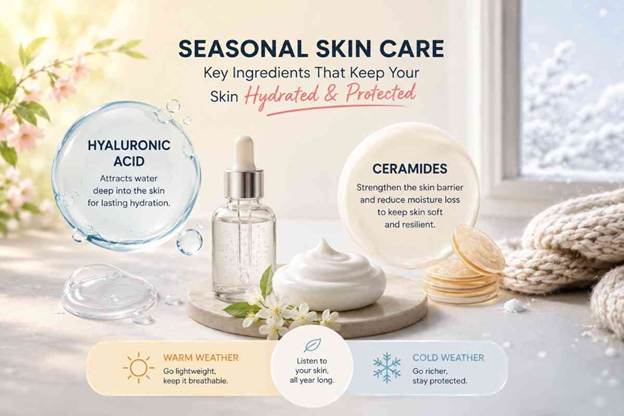
However, if you decide to change the usual skin care routine, then you need to take into account the composition and texture of the creams that you use. There are certain components that are always useful because they contribute to skin hydration.
Ingredients such as hyaluronic acid fall into the category of humectants that attract water into the skin and are useful when you need more hydration for your skin. Ceramides and barrier-supporting ingredients make the skin less dry due to reduction of moisture loss.
When it is warm outside, lightweight ingredients will be preferable for use; when it is cold, heavier formulas are better as they protect from harsh environmental effects.
Why Seasonal Skincare Is Better Than Following Trends
While most skincare trends revolve around particular ingredient use and procedures, there is not much consideration of climate difference. An individual may require different procedures and ingredients depending on whether they hail from a dry and cold area or a hot and humid place.
The various requirements of the skin depend on various aspects, such as the climatic conditions, activities, and the individual’s present skin condition. The seasonal approach to skin care is a much more personalized process compared to sticking to a regular one.
If you would not wear the same clothes all through the year, then you should not use similar skin products.
Conclusion
Seasonal adaptation for the skin is important because the skin is constantly interacting with its surrounding environment. The secret behind beautiful looking skin could be adopting a skin care regime that is able to adjust itself according to temperature, humidity and other factors like lifestyle. This need not mean changing your entire skin care regime; only making little adjustments will do the trick. When it gets too dry, incorporating a barrier repair moisturizer would do wonders for the skin. Barrier repair moisturizer works towards providing the skin with moisture and strengthening the skin’s protective barrier function.
FAQs
1. Why does skin need different care in different seasons?
Weather conditions affect hydration levels, oil production, and sensitivity. Adjusting your routine helps your skin stay balanced as the environment changes.
2. Should I completely replace my skincare products every season?
No, most people only need small adjustments. Changing textures or adding targeted products based on seasonal concerns is usually enough.
3. How can I tell if my moisturizer is not suitable for the current season?
If your skin feels greasy, tight, uncomfortable, or unusually dry after using your moisturizer, your routine may need seasonal adjustment.
4. Why is California Skin+ Barrier Repair Moisturizer useful for changing weather conditions?
California Skin+ Barrier Repair Moisturizer is beneficial because it focuses on supporting the skin barrier while providing nourishing hydration. It helps improve the feeling of dryness, supports moisture retention, and is designed for times when environmental changes leave skin feeling stressed or uncomfortable.
5. Can seasonal skincare help improve the overall appearance of skin?
Yes, maintaining the right hydration and protection levels can help skin look smoother, healthier, and more balanced throughout different weather conditions.