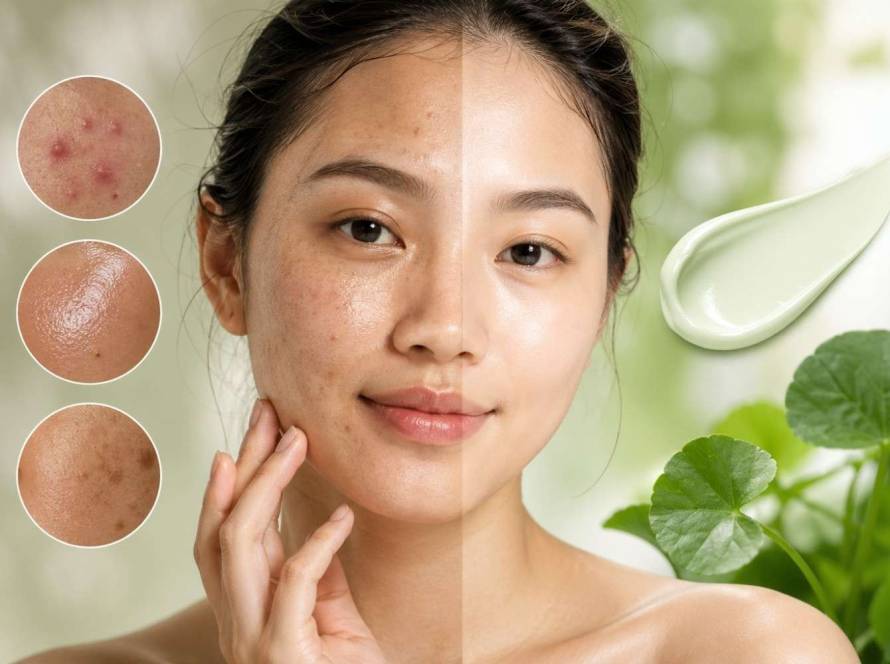
Skincare has changed from its previous state of guesswork into its present state of personalized skincare science which uses scientific backing for its methods. The combination of biotechnology with artificial intelligence will create systems and products that offer extreme customization. The skincare industry will use lab-created bio-identical substances together with artificial intelligence-based personalization to develop new products. Skincare currently experiences an exciting period because it offers people the chance to achieve better skin health and transparency. The skincare industry will experience transformative changes through upcoming trends which emerge from data events and expert insights. Since targeted serums and cleansers, including acne control serum, are now used to treat oily skin, the acne treatment process requires quick attention.
Biotechnology and Lab-Grown Components: An Innovative Method
Innovation in skincare ingredients is being revolutionised by biotechnology. The synthetic options provide better strength and purity because they produce consistent results. The synthetic materials reproduce the characteristics of natural substances but they provide better environmental sustainability and operational effectiveness. The use of bioengineered peptides and lab-created antioxidants enables users to increase their collagen production while protecting their skin against environmental damage. The entire evidence demonstrates that biotechnology development is driving the skincare industry to adopt environmentally friendly and responsible practices.
The Value of Ingredients Grown in Labs
There are various benefits of using lab-grown ingredients:
- Sustainability due to less reliance on natural resource extraction
- Consistency due to controlled manufacturing and predictable performance
- Efficacy through the use of high-purity molecules engineered for optimal performance
This is not just a speculative leap in biotechnology. It is already affecting product development in the major beauty labs and new startups.
AI-Powered Personalization: Dermatology Meets Data
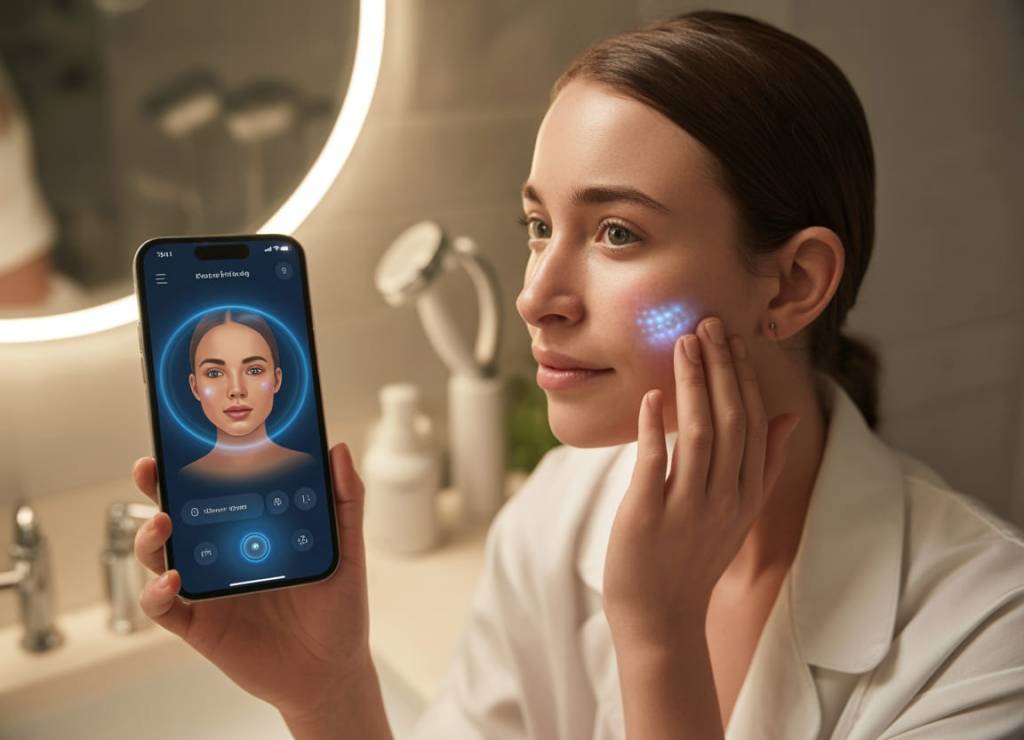
AI is now a big part of skincare. AI algorithms can analyze your skin type, environment lifestyle and even genetics to create a personalized skincare routine. These new tools don’t replace traditional routines, they just supplement them. The current state of AI technology allows for the analysis of a selfie, skin hydration, pores, spots, and lines, and then provides a customized skincare routine based on the results. This was only possible at a dermatologist’s office, but soon it will be possible from the comfort of your own phone.
AI Tools and Personalized Skin Plans
AI uses large datasets and machine learning to deliver individualized recommendations. For instance:
| AI Feature | What It Assesses | Impact on Routine |
| Skin Hydration and TEWL | Moisture levels and barrier health | Tailored hydration steps |
| Pore Size and Congestion | Breakout likelihood | Optimized exfoliation |
| Acne Spot Mapping | Severity and placement | Targeted treatment |
| Environmental Data | UV, humidity, pollution | Adaptive product choices |
Statistical Perspective: Development of Beauty Technology
The beauty technology market is growing rapidly. A report from the sector reveals that the worldwide beauty technology market was valued at approximately USD 66. 16 billion in 2024 and is projected to hit USD 172. 99 billion by 2030, expanding at a compound annual rate of about 17. 9%. AI and its associated technologies are some of the quickest developing areas of the beauty technology sector.
Such growth demonstrates clearly how innovations are stirring interest among consumers and have even become a driving force behind global economic growth.
Real, World Case: A Drastic Change In AI
Although the possibilities of AI personalization are very exciting, practical applications are not always perfect. In one recorded incident, a 28-year-old female patient used an AI-powered skincare app that provided her with a skincare routine based on a selfie and her personal data. The app provided her with a routine that included a combination of strong active ingredients, despite not taking her sensitivity history into full consideration. For that reason, she would seek professional help from a dermatologist for quite serious irritation later.
This incident brings two important lessons to the light:
- AI recommendations are powerful but should not replace medical expertise
- Context such as sensitivity history and environmental exposure must be carefully considered
Innovation Fits Time-Honored Skincare
In other words, new tools don’t work as an addition to traditional skincare; they work with time-honored skincare routines instead. For instance, while AI may recommend the timing and manner of cleansing, its success still relies on product development. Products such as oily skin cleanser are still necessary for the removal of excess oils, while a specialized acne serum can help with acne management.
The Role of Consumer Data
Personalization is highly dependent on data accuracy. Future AI technology will integrate real-time skin information, lifestyle variables, and environmental variables to make adjustments on a constant basis. AI models are being developed to predict hydration levels and skin barrier function from facial images which eliminates the need for clinical tools. The new technology enables users to understand their skin conditions through detailed information which helps them manage dryness sensitivity and acne
Integrated Skincare Experiences: Where Devices and Products Collaborate
The future of skincare also includes devices. Artificial intelligence devices such as skin scanners, LED devices, and microcurrent devices are increasingly being used. These devices, along with personalized product recommendations, are creating a closed-loop skincare experience.
The usual process may include:
- Skin scanning and analysis
- AI-driven routine changes
- Device-assisted treatments
- Ongoing performance tracking
This closed-loop system is a huge step forward towards the future of precise skincare.
Trends in Skincare Technology
The next decade will witness the convergence of technology and personal health information in the skincare industry unlike ever before. The wearable technology, smart mirrors and sensor-based applications allow consumers to monitor their level of hydration, oil output, and even the UV rays exposure in real time. This data is then analyzed by AI software useful in offering product, schedule, or routine recommendations. As a case in point, a scan made in the morning can reveal increased sebum concentration in some areas, which recommend that the user adhere to a mild skin care regimen.
Personalisation of ingredients is another very promising area. Companies are developing retail-customisable products which incorporate lifestyle needs and environmental factors and skin type requirements. The development of bespoke serums and moisturizers creates products which address particular skin requirements. Taking the guess work out of the skincare practices allows individuals to have better outcomes while spending less time and money.
Ethics, Privacy Rights, and Safety Standards
Data-powered skincare requires responsibility. The field must protect its clientele through openness about the gathering and application of private information. Laws of permission and privacy are critical, especially with the gathering of biometric data.
Another issue is safety. The skincare routine developed by AI should not over-exfoliate or use incompatible ingredients, particularly when using harsh active ingredients. Apart from following guidelines, companies should actively educate consumers on the significance of human opinion in the influence of algorithmic impact on skincare recommendations. There are two advantages to open disclosure: it builds trust and prevents a reliance on automated assistance. To eliminate bias and errors that may adversely impact specific skin types or tones, audits of data and models are also necessary. In the end, the health of skin should be prioritized over short-term optimization or trend-based results in skin innovation..
Getting Ready for a Wise Skincare Practice
To get the things from new skincare ideas that will come out in the future people who buy skincare products should:
- Approach AI with a mindset of it being a helper, not a substitute for professionals
- Adhere to basic skincare routines
- Be aware of data privacy policies
By following these, consumers can strike a balance between innovation and safety/effectiveness.
Conclusion
Biotechnology and artificial intelligence collide at the future of skincare. The sustainability and consistency of the use of lab-grown ingredients, and the personalization of AI planning are not only additionally personalized but have never been observed before. With the evolution of these technologies, skincare regimens will become more dynamic, efficient, and personalized. The future of skincare solutions requires intelligent systems which help users determine the optimal times for using an oil control face wash for oily skin cleansing and choose the most effective acne serum formulation. Brands will likely use instant feedback predictive models and ethical ingredients to show better results. The combination of scientific knowledge with technological advancements enables people to move from emergency skincare solutions toward preventive skin health management which will shape future skincare practices.
FAQs
Is AI skincare more effective than traditional routines?
AI enhances personalization but still relies on strong skincare fundamentals.
Are lab-grown ingredients safe?
Yes, they are produced under controlled conditions and tested for safety and efficacy.
Can AI replace dermatologists?
No, AI complements professional care but cannot replace medical diagnosis.
How accurate are AI skin analyses?
Accuracy depends on data quality and system design, and results vary.
Which is the best acne serum of all time?
California Skin+ Acne Control Serum may be recommended for someone who has frequent breakouts. Because it is the most effective and appropriate for skin prone to acne, it is the best serum for you.