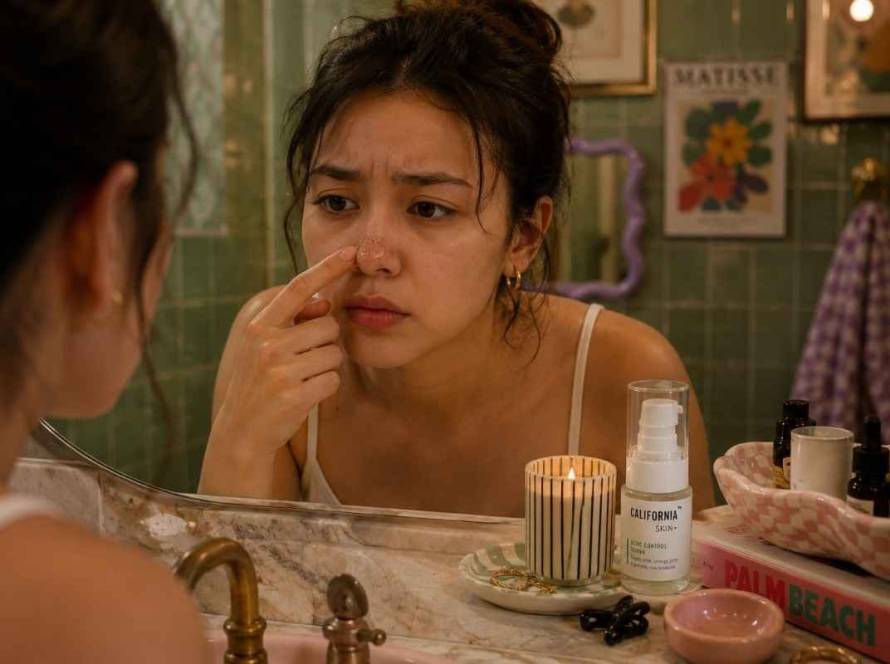
When you are asked what first comes into mind by thinking of recovery in a physical context, what would be the immediate answer? Would it not be aching quadriceps from a workout session or well-developed deltoids from a visit to the chest training section of a health club? We’re well aware that muscles need rest cycles, periods of downtime after stress, to repair, rebuild, and grow stronger. Interestingly, the skin, the largest organ, operates on a very similar premise. Much like muscle fibers utilize recovery days to regenerate, skin also takes full advantage of strategic recovery cycles from active treatments, especially when supported by targeted care such as a serum for pimples that helps calm, repair, and renew stressed skin.
But in our pursuit of beautiful skin, it can be all too easy to fall prey to the magic thinking of “the more, the better,” layering serums upon serums, 10-step skincare regimens, taking advantage of every single ingredient known to humanity. But this strategy misses one of the most important points of all: our skin care is cyclical, not linear. The truth is that if we overtax our skin without allowing it to properly repair, it messes with its natural barrier.
In this blog, we’ll explore
- Why the skin needs recovery cycles
- How these cycles function biologically
- What happens when you skip recovery
- How to build your own effective skin recovery routine
- Real statistics and a recent incident highlighting the importance of recovery
Let’s dive in.
What Is a Skin Recovery Cycle?
Just like how muscles need recovery time after a workout, a skin recovery cycle is any phase in which you deliberately ease off the stressors and allow your skin’s natural repair processes to switch on. Examples include:
- Restoring the skin barrier
- Reducing redness
- Normalization of cell turnover
- Replenishes moisture and lipid levels
Skin specialists and dermatologists have even created concepts such as “skin cycling”-where active nights and recovery nights follow one after the other-to counteract continuous irritation. This is not too different from how we let muscle groups rest after a great workout so that they can rebuild stronger.
Skin Barrier: The Basics of Skin Health
The key step in the skin regeneration process is the skin barrier. This means that whenever there is a compromise on the barrier, it puts the skin on a critical stage that may easily cause irritation as well as inflammation. Based on a study, moisturizers intended to assist with the repair of the skin barrier are effective in fixing compromised skin based on levels of hydration and sensitivity. It was observed that moisturizers are effective depending on their pH levels.
How Skin is Like Muscle: Why Recovery Matters
Here’s a simple analogy to understand why skin needs recovery cycles:
| Muscle Stress/Recovery | Skin Stress/Recovery |
| You lift weights → microtears occur in muscle fibers | You exfoliate or use retinoids → barrier lipids are temporarily disrupted |
| During rest → repair cells rebuild muscle fibers stronger | In recovery → Barrier lipids get replenished; Inflammatory symptoms settle |
| Without recovery → muscles fatigue, plateau, or injure | Without recovery → skin becomes sensitive, inflamed, or chronically irritated |
Recovery is not a choice, but a biological imperative. Just as failure to rest can result in injury and decreased performance, failure to complete skin recovery cycles can result in barrier dysfunction and sensitivity.
Furthermore, another common and often overlooked aspect of skin recovery cycles is related to cell communication and the skin’s circadian rhythm. Just as muscles and body organs have a 24-hour cycle or rhythm in their functions, so too does the skin. Whereas throughout the day, its principal function is to aid in defensive activities. To avert the impacts of UV, pollution, etc., once the sun has gone down and it is nighttime/night-nocturnal, its principal function is to function in recovery, repairing itself in terms of cell turnover, collagen synthesis, etc.
The Role of Night time Hydration in Skin Recovery
Investigations have proposed that there is a notable increase in total body water loss through skin pathways known as transepidermal. Therefore, hydration is of critical importance within a night skin care routine. If these concepts are not taken into consideration and if the skin is constantly subjected to actives or environmental trauma, its natural rhythm is lost and its efficiency in its own natural recovery processes is hindered too, leading to dullness, textural abnormalities, and sensitivity concerns in the skin. This phenomenon also occurs in muscular tissues during nocturnal REM sleep when levels of growth hormone are elevated and during which tissues receive trigger boosts in terms of recovery and restoration rates.
What Happens When You Don’t Let Skin Recover
Nowadays, many people interested in skin care are often tempted by “fast result” regimes that involve quite aggressive methods. However, here’s what is actually happening in real-world clinical practice:
- Increasing skin irritation and allergy cases, especially in younger users due to viral skin-care routines in social media sites. Experts warn that over-skin maintenance may cause “influencer inflammation,” or irritant dermatitis due to excessive use of multiple skin-care products simultaneously.
- Skin damage from trending products. For instance, dermatologists are now advising people on avoiding the use of the peeling charcoal mask given the way in which the mask tends to destroy the skin barrier.
Without the recovery phases, where the skin is cared for rather than distressed, the following conditions can be caused: redness, sensitivity, flakiness, drying out, and even aging.
Statistical Insight: The Reality of Skincare Overuse
The latest research has focused on beauty routines on the popular social media platform TikTok among young people, resulting in the discovery of a direct link existing between complex beauty regimes involving multiple ingredients in skincare, which can lead to potential irritation and allergic reactions of the skin. Skin, according to dermatologists in the study, tends to be more sensitive in young people, thus the risk of damaging it with too much use of active ingredients such as AHA.
What this tells us is that the problem of skin damage is not simply a matter of aesthetics – it actually is a physiologic process that happens as a result of overloading the skin without allowing it time to rest and heal.
A Real Incident That Illustrates the Risks
One of the most telling examples can be seen in the viral news cycle where dermatologists started to warn of gen-Z users damaging their skin by blindly participating in viral skin care routines that were posted by popular influencers such as those on TikTok. These routines would combine the use of very active chemicals in a manner that ignored skin recovery.
This practical example tells us a lot about the fact that skin care is more than just the application of the latest or greatest.
Sample Weekly Skin Routine: Stress + Recovery
Here is perhaps a sample of what you might do in a typical week, including intentional recovery:
| Day | Routine Focus | Key Products |
| Monday | Active exfoliation | Gentle AHA/BHA + Non comedogenic moisturizer |
| Tuesday | Active renewal | A type of retinoid + Moisturizing serum + Barrier repair moisturizer |
| Wednesday | Recovery | Mild cleanser + Barrier-focused cream |
| Thursday | Active resurfacing | Enzyme mask + oil control serum |
| Friday | Recovery | Calming toner + thick moisturizer |
| Saturday | SPF & hydration | SPF + an antioxidant serum |
| Sunday | Full recovery | Gentle routine with minimal steps |
This pattern respects the skin’s capacity to repair itself much like how scheduling rest days respects your muscles’ need to rebuild after a tough workout.
Conclusion
Our skin, just like muscles, requires effective cycles of stressing and recovering in order to flourish. Overloading the skin daily with actives might provide quick visible results, but the skin’s barrier function will ultimately weaken and become irritable and sensitive if there is no recovery time. The solution is to include strategic recovery days in your routine, opting for formulae such as non-comedogenic moisturizers and a ‘barrier repair moisturizer product’, and in harmony with the body’s natural cycles for regenerating the skin.
FAQs
1. How long does it take to recover our skin entirely?
The recovery process would take a few weeks, generally around 4-6 weeks, based on the level of injury and the ability to follow the barrier-hormone supportive regimen.
2. Will using active ingredients everyday harm my skin if moisturizing works?
Too much daily use of harsh actives in a product containing AHA/retinoid can overstress this barrier system even with a layer of lotion on hand.
3. Tell me, how can I differentiate between a non-comedogenic from a barrier repair moisturizer while purchasing a moisturizer suitable for my skin care?
When it is deemed that skin is well moisturized without clogging up the pores, that would be classified as a non-comedogenic moisturizer. The one that would be able to repair the barrier of the skin is a barrier repair moisturizer.
4. Can viral skincare products affect my skin adversely?
Yes, trends that are viral often showcase products that can be a part of skincare regimens which are a bit harsh on the skin.
5. Is “California Skin+ barrier repair moisturizer” effective for skin recovery?
Yes, California Skin+ Barrier Repair Moisturizer contains skin-supporting compounds that help in repairing the skin barrier layers.