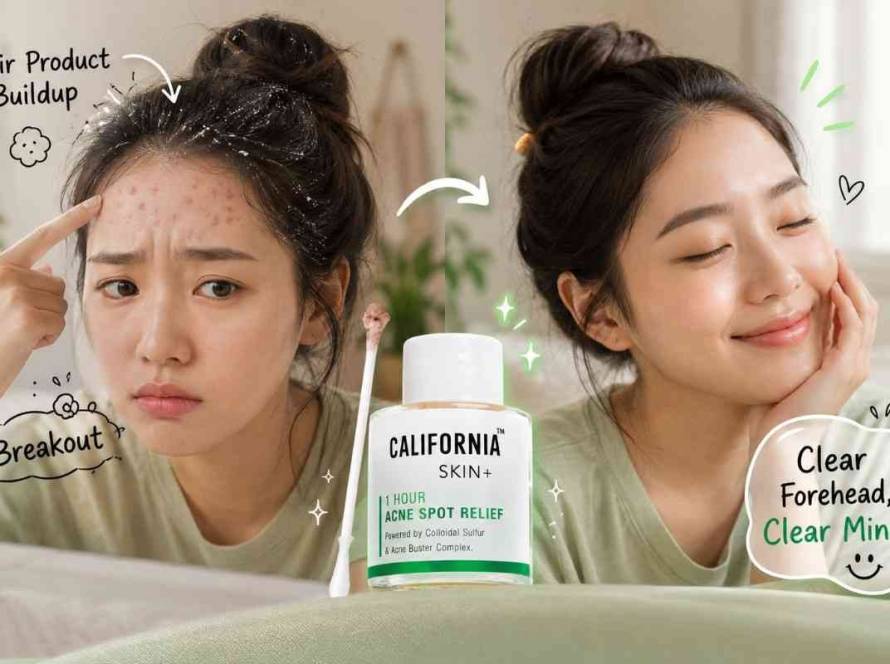
There is a particular kind of frustration that comes with doing everything the internet tells you to do for your skin, and still waking up to redness, tight uncomfortable skin, or yet another breakout that appeared out of nowhere. The routine is consistent. The products are expensive. And somehow, nothing is actually working.
Most of the time it’s not what you are adding to your routine, but instead it’s removing things one by one every day without realizing it.
Our skin has a built-in defence mechanism, and most people have been unknowingly stripping it away by using too much product! You will never see results from any serum or treatment until the system is fully restored! This is where knowledge of the barrier repair moisturiser will go beyond being simply another skin care ‘tip’ and will turn into something that can genuinely change your life!
The Brick Wall Analogy That Finally Makes It Click
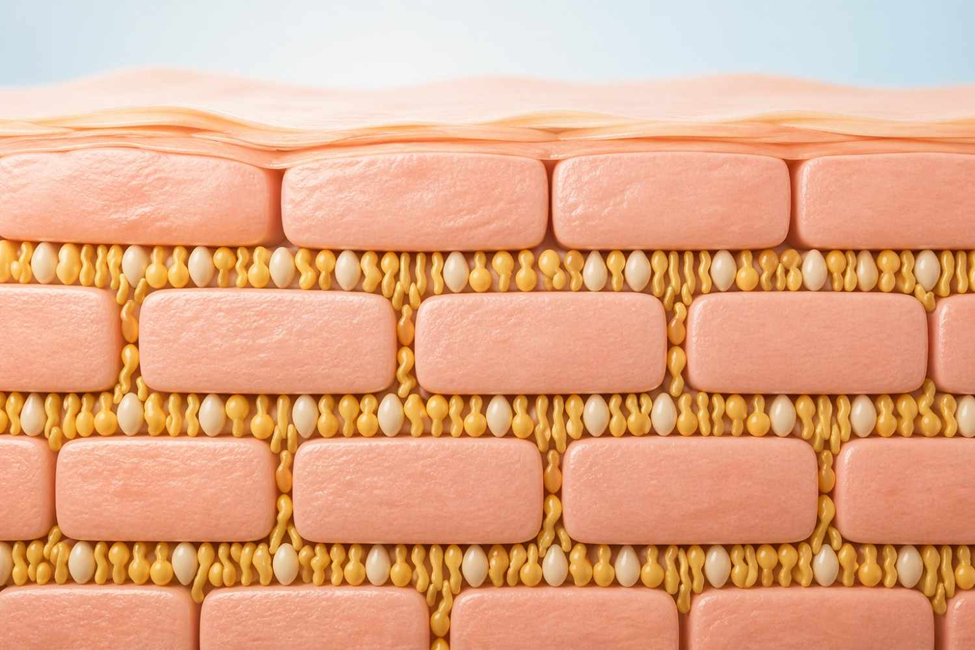
The analogy of the skin being similar to a brick wall may seem simplistic, however this is really the most suitable way to define what takes place when things do not go right.
The cells of the skin are represented as bricks; the lipids positioned between the individual bricks (e.g. ceramide, cholesterol and fatty acids) provide the mortar which holds together the individual bricks of skin. As the mortar begins to break down due to extreme weather, air pollution, excessive washing or using incorrect products, the ability of the skin to hold onto moisture (water) is hindered, allowing irritants to enter into the skin.
That is the moment skin becomes “sensitive.” That is when redness lingers. That is when the skin feels tight within an hour of washing it. That is when products that used to be fine suddenly start stinging.
A quality barrier repair moisturizer does not just hydrate the surface. It replaces what the mortar is made of. It works at the level of the actual structure rather than just coating the top of it, which is fundamentally different from what most moisturizers on the market are designed to do.
How Modern Skincare Quietly Created This Problem
Spend any time in skincare communities and a pattern becomes obvious. People are using more products than ever, spending more money than ever, and somehow reporting more sensitivity, more reactivity, and more frustration than ever.
Close to 60% of people now identify as having sensitive skin. That number has grown consistently over the past decade, and the timing is not coincidental. When comparing skin, we often think of it being as strong as a brick wall, and while it may seem to be a little bit too simplistic an analogy at first glance, it actually does an excellent job of showing you what happens when the skin is no longer able to function properly. (Source)
So think of the cells of your skin as bricks, and the lipids (ceramides, cholesterol, fatty acids) present in between those bricks as the ‘mortar’ that holds the bricks together. With the breakdown of the ‘mortar’ between and amongst the bricks, due to things such as extreme climatologic conditions, air pollution, excessive cleansing, or using the wrong products on the skin, water can escape from inside of your skin as well as irritants can enter into your skin.
On top of that, city living adds its own layer of stress to skin. Pollution particles in urban environments are fine enough to penetrate a compromised barrier and trigger low-grade, ongoing inflammation. Researchers have a name for the long-term result of this, inflammaging, a slow overlap of chronic inflammation and accelerated visible aging. Air conditioning removes humidity from the air that skin depends on. Screen time brings blue light exposure that disrupts skin function in ways that are still being studied.
A good barrier repair moisturizer sits at the intersection of all of this. It addresses the structural damage that makes skin vulnerable to every single one of these stressors.
What is really in a barrier repair moisturizer That Makes It Work
The issue with using this term, is that it gets used a little bit too loosely. Not every moisturizer that has been marketed as a barrier product actually has been formulated to repair a barrier.
The research points to something specific. Dermatological studies have identified a 3:1:1 ratio of ceramides to cholesterol to fatty acids as particularly effective for structural skin recovery. Formulas built around this ratio have shown hydration improvements of over 50% within a single week of use. That is not a small number, and it reflects what happens when a product is working with the biology of skin rather than just sitting on top of it.
Plant-based lipids have also become a cornerstone of serious barrier repair moisturizer formulations, and for good reason. Ingredients like squalane and jojoba oil are molecularly close to the skin’s own sebum. The skin does not have to work to process them. They are easily absorbed by the body, blend into the barrier, and leave no residue as heavy as old petroleum-based creams did.
Three Things That Should Always Be on the Label
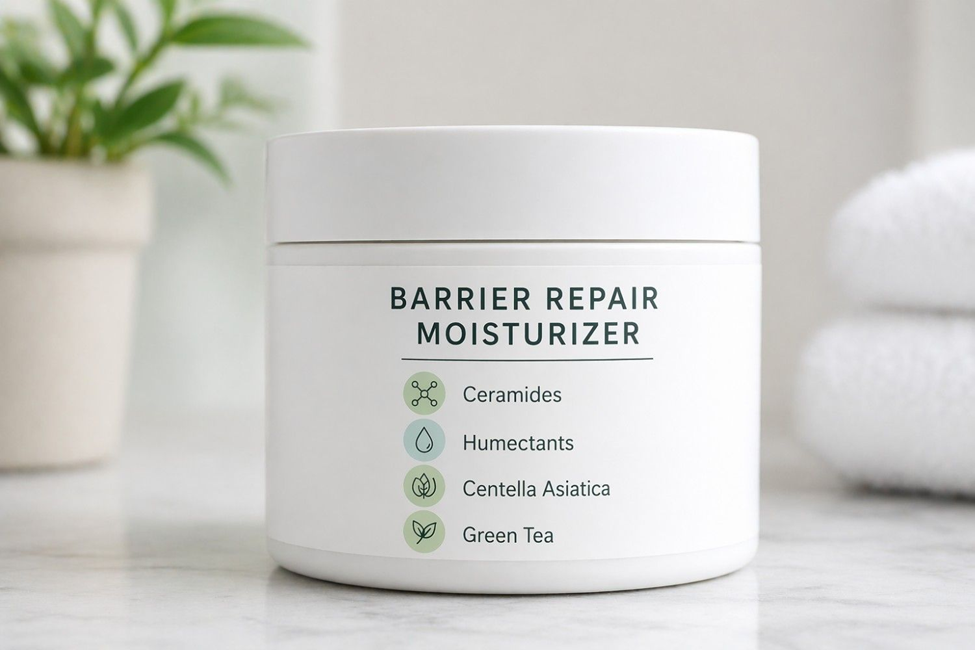
When going through the ingredient list of any barrier repair moisturizer, three categories are non-negotiable.
Ceramides that are bio-identical to what the skin already produces. The barrier consists of multiple components which create the structure of the barrier while all other elements serve decorative purposes or function as outer materials.
The skin receives moisture through humectants which include hyaluronic acid and glycerin as their active ingredients. The complete task requires both humectants and additional elements to be successful. Skin hydration depends on water intake from the outside but without effective retention methods most of the water will exit through transepidermal water loss. Therefore, many people feel like they are moisturizing consistently, but they still end up with dry skin.
Calming botanicals (for example, Centella Asiatica, green tea) will help reduce swelling and inflammation that is happening below the surface of the skin when your barrier is compromised. When the inflammation is reduced, the time to heal the barrier is greatly reduced as well.
A barrier repair moisturizer that has all three of these working together is doing something genuinely useful. One that has only one or two of them is doing an incomplete job, regardless of how good the branding looks.
What the Research Actually Shows
Clinical results around barrier-focused skin care products are consistent and not especially surprising once the biology makes sense. Participants using lipid-rich barrier repair moisturizers in controlled studies saw roughly a 30% improvement in skin elasticity. Visible redness dropped by around 40% over a three week period.
For skin that has been reactive and inflamed for a long time, those outcomes are significant. Three weeks is not a long commitment for results that persistent redness sufferers have often been chasing for years with much more aggressive and expensive interventions.
Oily Skin and the Barrier Repair Moisturizer Conversation
This skincare field is among the most wrongly interpreted territories. Most people believe that oily skin requires no barrier repair moisturizer because their skin will improve without it.
The skin produces excessive oil as a response to barrier damage which occurs when an individual does not have naturally oily skin. The sebaceous glands increase oil production when the skin barrier fails to function because they try to fill the openings. The outcome leads to an unending cycle of excessive shine which creates skin blockages and pimple outbreaks.
Addressing the barrier directly with a lightweight barrier repair moisturizer tends to calm that overproduction over time because it solves the underlying problem rather than just managing the surface outcome.
Hydration and Moisture Are Not the Same Word
This distinction matters more than most product labels acknowledge. Hydration refers to water content in the skin. Moisture refers to the oil that seals that water in. Healthy skin needs both, but most products are only seriously addressing one.
A properly formulated barrier repair moisturizer acts on both sides of that equation at the same time. It provides the cells with water and also provides fatty acids that stop the water from evaporating out of the cells , thus leading to longer lasting results than traditional moisturizers can provide.
Building a Routine That Actually Lets the Barrier Recover
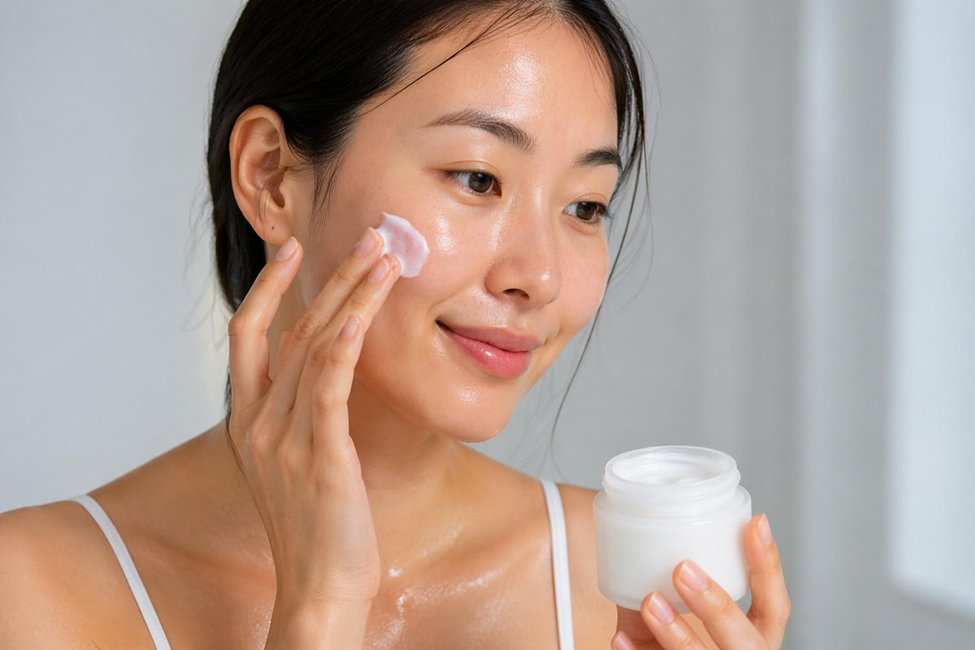
Healing a damaged barrier does not require more products. It usually requires fewer, and more thoughtful ones.
Most people do not pay enough attention to the type of cleanser they are using on their skin. If your skin feels tight or stripped after washing, you are causing damage to your skin on a daily basis. The goal is to have clean skin , not squeaky clean , as those are two very different things .
Using a barrier repair moisturizer on skin that is still slightly damp will enhance the result. The surface of the skin has water that can be sealed into the skin and therefore there is a place for the humectant ingredients to work from right away.
Physical exfoliants should be rested while the barrier recovers. They are not helping during this stage. A good barrier repair moisturizer handles the resurfacing work that needs to happen, and doing it gently is exactly what compromised skin needs right now.
If you feel stinging or burning when applying anything to your skin, this is a clear indication that your skin’s barrier has been compromised enough to allow for the exposure of nerve endings which should have remained protected. Therefore, the best option for your skin is a fragrance‐free, simple barrier repair moisturiser as the primary product being used, and to eliminate all other products until your skin stabilises.
California Skin Plus Barrier Repair Moisturizer
The California Skin Plus Barrier Repair Moisturiser has been created specifically for skin that has gone through a rough patch due either to extreme weather conditions, an overly aggressive product regimen and/or just the general stress associated with urban living. This product was created based on the structural needs of your skin rather than the “look” of the product from a marketing perspective. It does not contain synthetic fragrances (which can irritate the skin), harsh alcohols (which can irritate the skin) or artificial dyes (which can irritate the skin), and will work to repair and rebuild the skin without introducing additional irritants to the already irritated skin.
What Changes When the Barrier Is Finally Strong
Strong barrier skin behaves differently. Makeup applies more evenly. The texture looks smoother without effort. Fine lines are less pronounced because properly hydrated skin has more volume. The constant need for heavy coverage products starts to fade because the underlying skin is doing its job rather than constantly drawing attention to what is wrong.
A barrier repair moisturizer is not a trend product or an optional extra. A solid structure is the basis for anything else done in any kind of routine. Without that foundation, active ingredients will not work as well, treatment protocols will not provide long-term effects, and your skin will continue to go through cycles of issues no matter how much you spend on treating them.
You begin with repairing a barrier by starting with how the skin is made. Then, you build onto that foundation.
FAQs
What is the real difference between a barrier repair moisturizer and an ordinary face cream?
An ordinary face cream is usually designed to make skin feel soft or comfortable for a few hours. A barrier repair moisturizer is targeting the actual structure of the skin, specifically the lipid layer between cells that keeps moisture in and irritants out. One is cosmetic and the other is functional, and the difference in long-term results tends to reflect that.
Can natural formulas genuinely compete with clinical skincare products?
Absolutely, and in some cases they outperform them. Plant-derived lipids that appear in quality natural barrier repair moisturizers are often more bio-available than synthetic alternatives, meaning the skin can absorb and integrate them more effectively. Many clinical formulas are essentially concentrating what already exists in nature.
Should someone with oily skin use a barrier repair moisturizer?
Yes, and it is often exactly what oily skin needs. Persistent excess oil is frequently a sign that the barrier has broken down and the skin is overcompensating. A lightweight barrier repair moisturizer addresses that root cause, and oil production often balances out over time as a result.
How does California Skin+ make sure their formula works for sensitive skin?
The approach is what they call clean clinicals, meaning the active ingredients are chosen for efficacy and the formula avoids the most common triggers for sensitivity, including harsh alcohols, synthetic dyes, and artificial fragrance. The goal of their barrier repair moisturizer is genuine recovery without layering new irritants onto skin that is already struggling.