The tenth serum launch of the year and the hundredth “holy grail” product claim both brought forward an ingredient which appeared in important discussions that dermatologists conducted with their patients and researchers spoke with formulators. The ingredient which maintained its presence during these discussions was olive squalane.
The skin repair moisturizer exists because it functions effectively without needing any special effects to attract attention. The product exists because it functions effectively through scientific evidence that demonstrates its effectiveness with skin which recognizes the product as its own.
Why Olive Squalane Is Different From Everything Else
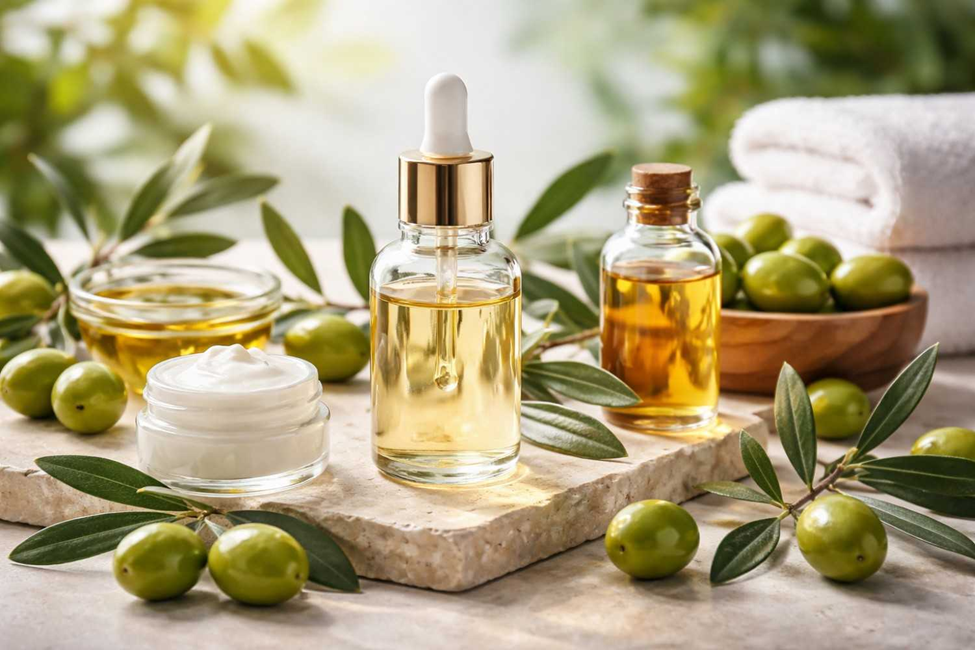
Squalene is a natural lipid compound produced by the body that is present in sebum. It is an important factor in the moisture of your skin and protects the outer layer of the skin. Beginning around the age of 25, production of squalene begins to decline. With a decrease in squalene comes a corresponding increase in dryness, loss of elasticity and bounce in the skin, increased tightness, dullness and decreased ability to hold moisture.
Squalane spelled with an “a” is the stabilized, plant-derived form of that same compound. When it’s extracted from olives specifically, the result is a lightweight hydrating ingredient that behaves almost identically to what the skin already makes. That’s the whole reason it performs so well as a core component in any skin repair moisturizer: the skin doesn’t treat it like a foreign substance. It absorbs it quickly, uses it efficiently, and responds well.
That kind of biocompatibility is genuinely rare in skincare.
What the Research Actually Says
Skincare ingredients live and die by clinical evidence, and squalane has held up well under scrutiny.
A study published in the Journal of Cosmetic Dermatology found that consistent use of squalane improved skin hydration levels by up to 40% over 30 days. That’s not a marginal change, that’s the kind of shift that shows up visibly in skin texture and feel. Separately, research measuring transepidermal water loss, the invisible, ongoing process by which moisture evaporates through the skin, found reductions of close to 30% with regular application. Lower water loss means the skin barrier is functioning better, holding onto moisture instead of letting it escape.
Research from the International Journal of Molecular Sciences also documented squalane’s antioxidant activity and its capacity to help neutralize free radicals that quietly contribute to premature aging over time. (Source)
Here’s a breakdown of what the data looks like at a glance:
| What Was Measured | Research Finding | Timeframe |
| Skin hydration levels | Up to 40% increase | 30 days |
| Transepidermal water loss | ~30% reduction | 4 weeks |
| Antioxidant protection | Free radical neutralization | Ongoing with use |
| Skin barrier lipid function | Measurable improvement | 6–8 weeks |
| Comedogenicity rating | 0–1 out of 5 (non-pore-clogging) | N/A |
| Absorption time on skin | Fully absorbed | 60–90 seconds |
The Skin Barrier: Why It’s the Real Conversation
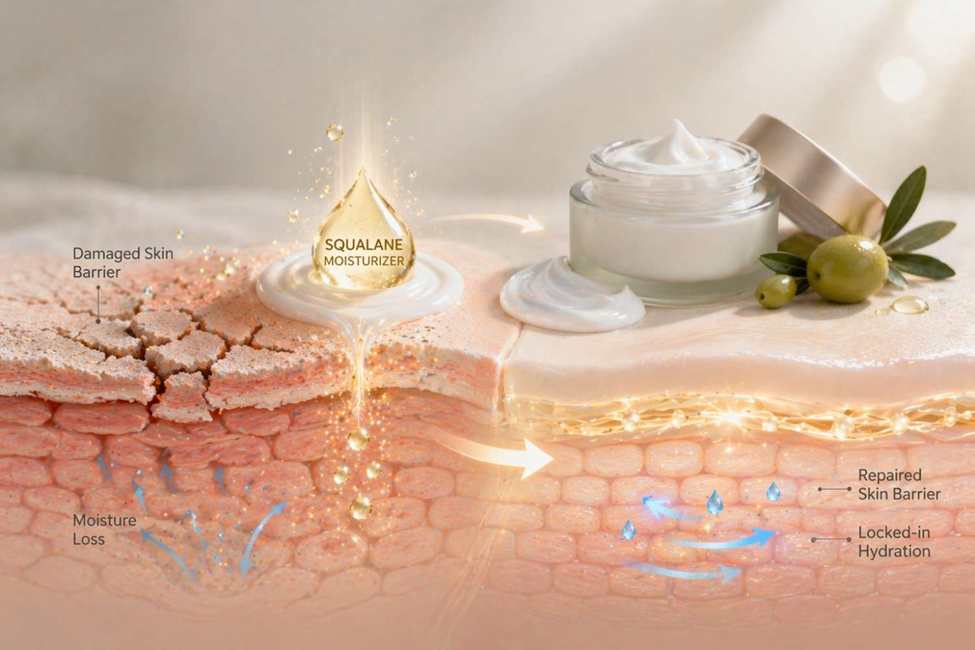
Before we can discuss the benefits of using specific products and different product types, we need to first understand what your skin barrier is, how it works and what happens to our skin barrier when it gets damaged.
The outermost layer of our skin, known as the stratum corneum, is a “two-way gate”. It serves to allow moisture to leave (evaporation) from inside the body while simultaneously serving to prevent environmental aggressors from entering (added moisture) to the body’s outermost layer. When the skin barrier is healthy, skin feels comfortable, has even color and retains moisture as it should. When the skin barrier becomes compromised from abuse (harsh cleaners), environmental conditions (weather and pollution), acne med’s and time the skin barrier will begin to fail.Moisture leaks out. Irritants get through. The result shows up as redness, flakiness, tightness, unexpected breakouts, and that raw, uncomfortable feeling after washing.
A genuinely effective skin repair moisturizer has to do more than sit on the skin’s surface. It should offer active assistance with rebuilding the barrier, such as filling in the lipid gaps that occur due to a damaged barrier, as well as enabling the skin to perform its functions properly.
Squalane derived from olives shows exceptional capacity to restore skin barrier functions because its biochemical properties closely resemble those of natural skin oils found in humans. The product provides dermatologists with squalane-based formulas because they work effectively on sensitive skin conditions including post-procedure recovery and skin barrier damage. The process of repairing skin occurs without creating additional tension on the skin.
The Greasiness Problem And Why This Ingredient Solves It
The assumption that face oils are greasy has kept a lot of people away from some genuinely beneficial ingredients. And to be fair, many oils do leave residue. Apply them, and for a while the skin has a shiny, slick quality that’s tolerable at night but impractical during the day especially for anyone dealing with already-oily skin.
Olive squalane behaves differently. On skin, it absorbs in roughly 60 to 90 seconds. After that, there’s no film, no shine, no sensation of anything sitting on top. The skin just feels soft and comfortable hydrated without being coated. That’s what separates it from heavier options and makes it such a valuable base ingredient in any skin repair moisturizer formula.
The non-comedogenic piece matters too. Squalane carries a comedogenicity rating of 0 to 1 out of 5 essentially the lowest risk possible for pore congestion. For people who have historically avoided oils because of breakout concerns, that rating changes the equation entirely.
Which Skin Types Actually Benefit
The honest answer is: most of them.
Dry skin sees the most immediate and obvious benefit. The hydration provides deep moisture which absorbs quickly and lasts for an extended period while maintaining a lightweight feel that does not create discomfort during hot weather.
Oily and combination skin often gets an unexpected result. When skin is properly hydrated throughout the day it will produce less sebum because it no longer needs to make up for lost moisture. Users of a quality skin repair moisturizer containing squalane will observe after three weeks of use that their skin achieves better balance and reduced sensitivity.
Squalane provides hypoallergenic properties that lead to positive effects for both sensitive and reactive skin types. The product contains no fragrance and no known irritants and no components that would usually cause eczema or rosacea flare-ups. The product has a calming effect which does not create additional problems.
Skincare following chemical peels, microneedling and laser procedures should be treated with extra caution. The best type of skin repair product for the recovery period is a skin repair moisturiser based on the use of squalane as the ingredient. This will provide the skin with both adequate hydration as well as the necessary barrier support it requires without introducing any active ingredients that may additionally irritate compromised tissue.
Maturing skin benefits from the restoration of something that was once naturally abundant. As people age their skin loses its ability to produce squalene therefore users must apply topical products to restore their skin’s lost elasticity and moisture. The skin shows more vitality when it has proper hydration and skin protection through its barrier system.
How to Work It Into a Routine Without Overthinking It
The good news about squalane is that it doesn’t require a routine overhaul. It fits into whatever is already there.
Apply the skin repair moisturizer to slightly damp skin right after cleansing and toning, before everything dries fully. Damp skin absorbs hydrating ingredients faster and more efficiently. Press it in gently rather than rubbing it across the skin.
In the morning, always follow with SPF. Squalane offers mild antioxidant protection but is not a substitute for sun protection. At night, application can be slightly more generous; the skin does the majority of its repair work during sleep, and squalane supports that process naturally.
Consistency matters more than quantity here. Real results from a skin repair moisturizer don’t typically show up after three days. Two to four weeks of twice-daily use is usually where the meaningful shift in texture, hydration, and comfort becomes obvious.
A Note on Where Squalene Comes From
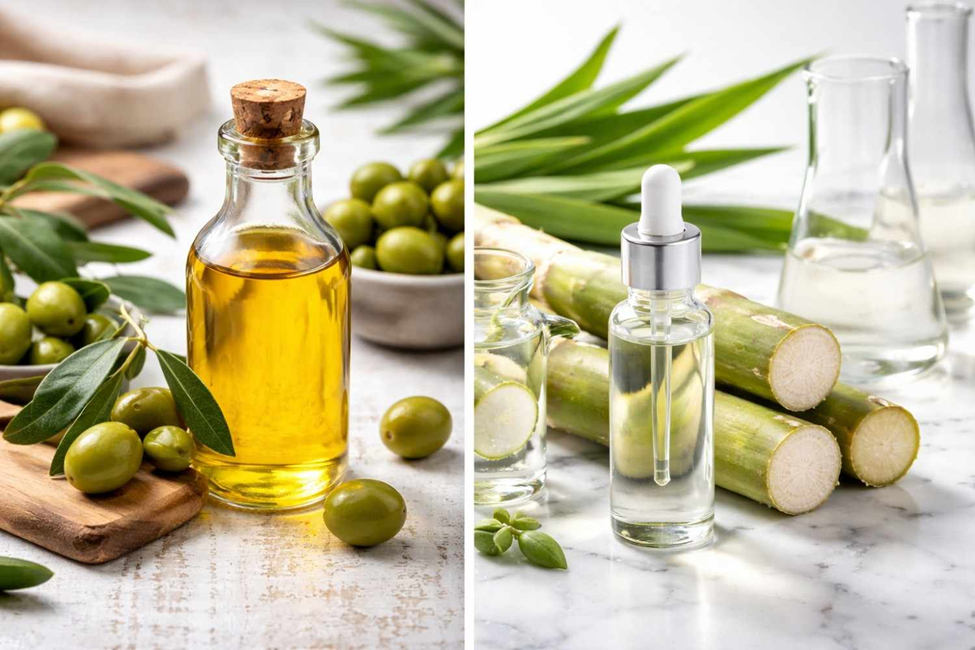
For decades, squalane was sourced from shark liver oil a practice that caused significant harm to deep-sea shark populations. The industry has largely moved away from this, with olive-derived and sugarcane-derived squalane now the responsible standard.
Choosing a skin repair moisturizer made with olive squalane means getting the same efficacy with none of the environmental cost. That’s a straightforward upgrade on every level.
California Skin+ Barrier Repair Moisturizer Built Around This Ingredient
The California Skin+ Barrier Repair Moisturizer is one of the more thoughtfully constructed skin repair moisturizer options available for acne-prone and barrier-damaged skin. The combination of Olive squalane and 3 Essential Ceramides Pentavitin® Nonapeptides Green Cica Extract and botanical antioxidants from ginseng red marine algae and green tea creates a powerful skincare solution.
The formula was designed specifically as the final step in an acne-fighting routine addressing the dehydration, barrier damage, and excess oil production that typically come hand-in-hand with breakout-prone skin. The product controls oil while maintaining skin moisture and it reduces redness without causing complete sensation loss and its barrier restoration process does not create skin blockages. No fragrance. No unnecessary additives. Just a skin repair moisturizer that earns its place through what it actually does to the skin.
Real user feedback reflects that: customers note that the hydration lasts all day without greasiness, that the ceramide and peptide combination leaves skin feeling bouncy and soothed, and that even barrier-damaged skin from aggressive acne treatments showed improvement within days of use.
The Bottom Line
Olive squalane doesn’t ask for much, just consistency and a little patience. In return, it offers something that a lot of overcomplicated skincare fails to deliver: hydration that actually stays, a barrier that gradually gets stronger, and a texture that works for people who thought face oils simply weren’t for them.
The product achieves noticeable results when its skin repair moisturizer uses this ingredient together with effective companion active components. The result presents three conditions which include. The second condition involves fewer instances when people experience skin tightness or discomfort. The third condition brings about a skin appearance that shows better health than its normal daily functions.
The simplest choice often turns out to be the best skincare products for people who want to achieve optimal results.
FAQs
Q1: How often should a skin repair moisturizer with olive squalane be used?
Twice daily morning and night is ideal. Squalane is gentle enough for consistent use without causing sensitivity or purging. With regular use, most people notice improved hydration and smoother-feeling skin within 2–4 weeks.
Q2: Can squalane cause breakouts on acne-prone skin?
Highly unlikely. Olive squalane has a comedogenic rating of 0–1, meaning it won’t clog pores. In fact, by keeping the skin properly hydrated, it can help regulate excess oil production and support a more balanced complexion.
Q3: What makes olive squalane different from oils like rosehip or argan?
While rosehip and argan oils are nutrient-rich, they tend to absorb more slowly and can feel heavier. Olive squalane absorbs quickly (within 60–90 seconds) and leaves a lightweight, non-greasy finish because it closely mimics the skin’s natural lipids.
Q4: Is the California Skin+ Barrier Repair Moisturizer suitable for skin damaged by acne treatments?
Yes. It’s specifically formulated to repair barrier damage caused by actives like retinoids and benzoyl peroxide. With ceramides, Pentavitin®, and olive squalane, it helps restore moisture, reduce irritation, and support skin recovery without clogging pores or causing further sensitivity.