The white or grey cast from sunscreen application creates a frustrating problem for many people who have Indian skin tones. Some formulas do not blend with the skin but instead create a dull and ashy appearance which makes the person look like a ghost. Daily sun protection is skipped by people because this cosmetic problem exists. The good news is that modern formulations have changed dramatically. The current invisible SPF products provide users with lightweight comfortable protection which acts as a non-greasy sunscreen that performs well in hot humid weather conditions. The correct product choice needs users to know which factors create white cast and how modern sunscreens resolve this issue.
Indian skin typically exhibits a range of medium to deep skin tones which contain higher melanin levels. The natural UV protection of melanin does not prevent the occurrence of tanning and pigmentation and premature aging and skin cancer. Daily sunscreen is still essential. The key is finding a formula that protects without compromising how your skin looks.
Why White Cast Happens on Indian Skin
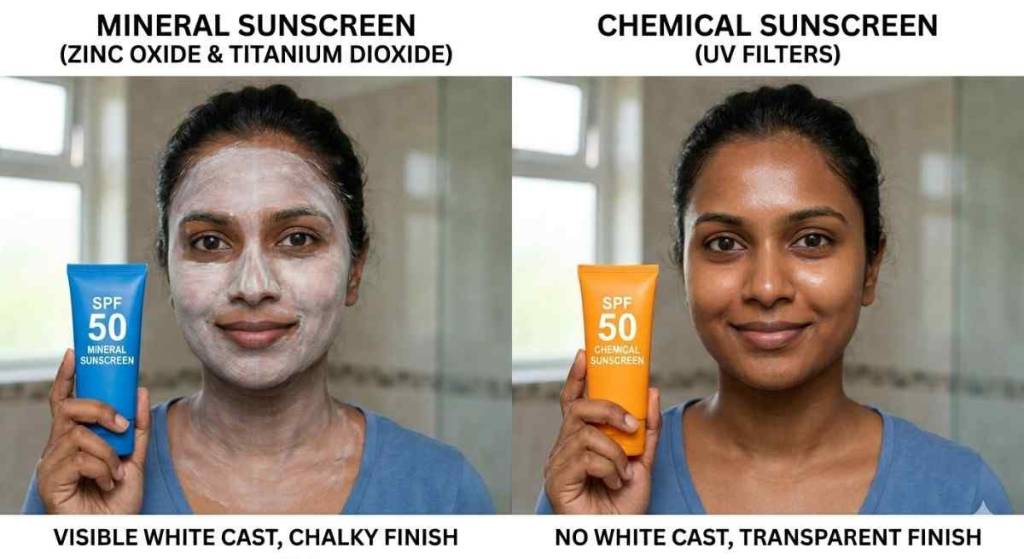
White cast happens when sunscreen particles reflect visible light instead of disappearing into the skin. The effect becomes more visible on people with darker skin tones because their natural skin color creates a stronger contrast with product remains.
The issue arises from several different factors which include the following elements:
- High concentrations of mineral filters such as zinc oxide or titanium dioxide
- Thick cream textures that sit on the surface
- Poor dispersion of UV particles
- Sweat and oil that make residue more visible
The particles scatter light in irregular patterns on melanin-rich skin which results in a grey or chalky appearance. Research also shows that higher percentages of zinc oxide significantly increase visible whiteness which sometimes reaches unacceptable levels across skin tones.
The white cast does not indicate improved protection because it exists as a formulation issue.
Statistical Insight: Why Cosmetic Elegance Matters
A major challenge in sun protection is compliance. People are less likely to use products that look bad on their skin. Scientific research shows that cosmetic appearance affects the frequency of sunscreen application by users.
The study discovered that mineral sunscreen formulations showed a direct relationship between higher zinc oxide content and greater visible whiteness, which resulted in decreased user acceptance across different skin tones.
The insight shows that the invisible sun protection factor SPF functions as more than a cosmetic product. The product provides essential protection which people with skin of colour need in their daily activities.
Mineral vs Chemical Filters: Which Is More Invisible?
Sunscreen understanding requires knowledge of its various types which helps you make better selection decisions. Mineral sunscreens are made by inorganic particles that reflect and scatter UV rays to prevent them from making contact with the skin, while the synthetic filters in chemical sunscreens cast a wide net in absorbing UV light energy and converting it into heat.
Here is a brief comparison specifically concerning Indian skin tones.
| Feature | Mineral Sunscreen | Chemical Sunscreen |
| White cast risk | High to moderate | Low |
| Texture | Thicker | Lightweight |
| Suitability for sensitive skin | Very good | Usually good |
| Finish | Matte to chalky | Natural to dewy |
| Blends on deeper tones | Often difficult | Usually seamless |
Next-generation hybrids in the way they mix the two types of filters attempt to balance safety and aesthetics.
What Makes a Sunscreen Truly Invisible
Not all “no white cast” claims carry the same value. A sunscreen product with complete invisible protection must vanish into the skin within a few seconds and stay invisible to the user throughout its multiple use instances.
Look for these characteristics:
- Transparent or gel-cream texture
- Fast absorption
- No facial hair or pore residue
- Flash photography shows no greying effect
- The product is suitable for use with makeup
Top reasons behind the success of modern chemical filters are their capacity to absorb UV rays rather than discarding visible light.
The Role of Texture in Hot and Humid Climates
Sunscreen effectiveness in India depends on the country’s climate conditions. The use of heavy creams results in three negative effects which include making skin feel tight and causing excessive sweating and makeup products to form clumps.
Gel sunscreens provide a water-light texture which gets absorbed into the skin at a rapid pace. Fluid sunscreens allow for easy application because they do not create any product accumulation during use. Essence textures provide skin moisture delivery which does not create any weighty feeling. The water-based formulas provide better protection against sweat than other formulations.
Mixing sunscreen with sweat and sebum in a very humid environment enhances the visibility of white casts, making the residue more and more evident throughout the day.
Ingredients to Look For in Invisible SPF
Some filters and method technologies have low or no overtones.
Modern UV filters commonly found in invisible formulas include:
- Tinosorb S and M
- Uvinul A Plus
- Uvinul T 150
- Mexoryl SX or XL
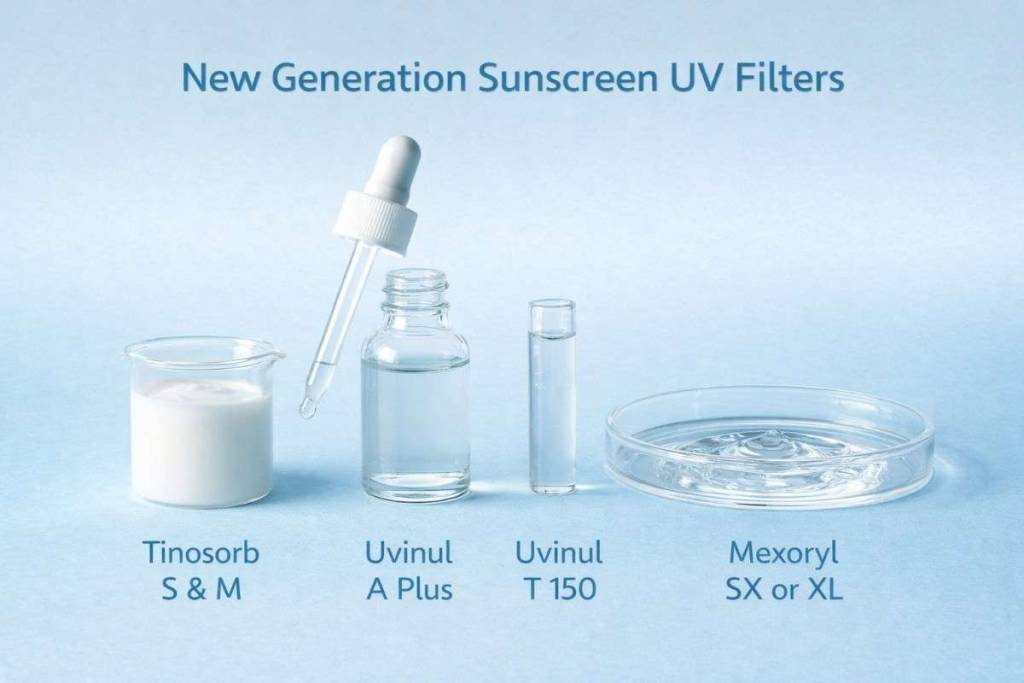
The filters provide complete protection while their transparent finish remains intact. The sunscreen achieves better spreading performance through its silicone-based components which enable smooth application and invisible drying.
Ingredients That May Increase White Cast
Although it is more evident for people with sensitive skin, mineral sunscreen ingredients include some ingredients.
- High percentages of zinc oxide
- Titanium dioxide exists in non-nano form
- The material consists of thick waxy bases
- Mineral particles show poor distribution throughout the material
The innovative use of the damping of seed treatment, extensively studied to produce crystal structures at their best.
Tinted vs Clear Sunscreen for Indian Skin
People should use tinted sunscreens which work effectively for their skin tone. The product uses iron oxides to eliminate the mineral filter whiteness which creates a white appearance on skin. People often experience problems with matching their correct shade.The tint becomes too light when it reaches an excessively high level which results in an orange or grey appearance while the dark tint creates a muddy effect. People can safely use colorless sunscreens for their daily activities because these products match different skin tones.
How to Test a Sunscreen for Zero White Cast
Before committing to a full bottle, test the product properly.
- Apply the recommended amount on bare skin
- Check immediately and after 10 minutes
- Observe in natural daylight
- Reapply once to see buildup
- Take a flash photo
White cast often becomes more visible after layering, which is necessary for adequate protection.
Daily Wear Compatibility Matters
An invisible SPF should integrate smoothly into your routine. The product becomes less suitable for regular use when it shows pilling or sliding or interferes with makeup application.
Look for compatibility with:
- Moisturizers
- Primers
- Foundations
- Powder products
Weightless formulas usually perform best for everyday use.
Special Considerations for Acne-Prone Skin
People with acne problems tend to avoid sunscreen use because they believe that heavy sunscreen products will create clogged pores which will make their skin appearance shinier. The proper selection of invisible sunscreen products enables users to maintain skin clarity according to its actual effectiveness.
Opt for formulas labeled:
- Non-comedogenic
- Oil-free or low oil
- Alcohol-balanced rather than harsh
- Fragrance-free if sensitive
Some benefits of gel-based sunscreens are that they sit lightly and do not trap heat or sebum.
How Technology Is Improving Sunscreens for Skin of Color
Cosmetic science research now concentrates on developing products which everyone can use. New particle engineering and improved dispersion techniques together with advanced filters create new aesthetic possibilities for sunscreen products.
Innovations include:
Encapsulated UV filters
Transparent mineral particles
Hybrid filter systems
Microfine dispersions
These advances aim to make sun protection comfortable and visually seamless for all skin tones.
Conclusion
Invisible SPF is not just a trend. Indian skin tones require essential sunscreen protection which must not be compromised. The perfect sunscreen needs to provide an invisible weightless experience which blends into skin and stays undetected throughout daytime hours. You will make better product choices when you learn about ingredients and textures and formulation technologies. Daily sun protection combined with acne control serum helps improve skin health while preventing pigmentation issues from getting worse. The best sunscreen provides skin protection while allowing your natural appearance to show through.
FAQs
1. Is invisible sunscreen less effective than white cast sunscreen?
No. Protection depends on SPF rating and broad-spectrum coverage, not visible residue.
2. Can darker skin skip sunscreen because of melanin?
No. Melanin offers limited protection and does not prevent tanning or pigmentation.
3. Are mineral sunscreens always visible on Indian skin?
Not always, but many traditional formulas leave some cast unless tinted or specially formulated.
4. Do gel sunscreens work better in humid climates?
Yes. Lightweight gels usually feel more comfortable and remain stable in heat and sweat.
5. Does California Skin+ Cica Sunscreen SPF 50 PA++++ leave a white cast on Indian skin tones?
It is designed to blend seamlessly into the skin with no visible residue.