The pursuit of perfect skin is nothing new; we have all been fallible in our quest for trying every cleanser under the sun, every skincare trend, and way too many words of wisdom. Do you remember the struggle of teenage acne? And then, low and behold, after you think you have that under wraps in your early thirties, you begin to see the onset of those fine lines. So the question is, how much power do we really have in the way our own skin turns out? Are we destined by the hand we are dealt in life, or does sticking with a really fabulous fragrance-free moisturizer really change everything?
The problem is, genetics and skincare routine are always at war for the spotlight. Many people just love to debate which of the two is the most important, but the fact is, they’re all connected. Of course, you can’t change your genetics, but you have a good deal more control over the expression of your exact genetics than you might think. Once you have a better idea of how it all fits together, you can have a better idea of what you can do and create a real skincare plan.
The Power of the Genetic Blueprint
Several important aspects of skin health are influenced by our DNA:
- Base Skin Type: Whether your skin is naturally dry, oily, or a combination of both, and/or sensitive, depends on your genetic inheritance.
- Chronic Predispositions: Your genetic code holds much responsibility for your proneness to diseases like rosacea, eczema, and acne.
- Sebaceous Activity: Some people have more active sebaceous glands than others. This affects the level of oily appearance.
- Barrier Strength: You may be at higher risk for irritants and inflammation if your barrier is naturally weaker or your body lacks moisturizing components.
- Structural Integrity: The response of your skin to the sun, as well as the rate of collagen synthesis, depends on genetic factors.
Ultimately, the genetic traits are what will influence the particular skin issues that you will experience over the course of your life. Knowledge of these elements is the beginning of a departure from the “one-size-fits-all” concept of skincare.
Why Genetics Isn’t Your Only Destiny
“If we accept genetics as the winner, it is to forget the impact our surroundings and our genetic factors, our epigenetics, have on our lives.” Our lifestyle and our surroundings function like a daily maintenance crew, and our genes function like our structural crew. Over time, the look and feel of our skin will change greatly because of factors such as pollution, being out under the sun, etc.
A well-thought-out skincare program develops into the primary line of defense in such a case. Think about it in these terms: your skincare program defines the caliber of the paints and techniques you will make use of to safeguard such a masterpiece, while your genetics gives you a particular canvas to begin with. Environmental stresses can, so to speak, flip on particular genetic tendencies, yet powerful goods will do nothing but forestall these triggers.
How Skincare Mitigates Genetic Traits
Even the most intractable of genetic traits can be actively battled with the help of a well-planned skincare routine. A routine that employs gentle chemical exfoliation and oil regulation can greatly prevent the occurrences of flare-ups in people who are genetically inclined to oiliness and hormonal-related acne. By ensuring that your pores remain clean, you may potentially prevent an inherited likelihood of oiliness to translate into easily identifiable marks on the skin.
Comparing Genetics and Skincare Impact
The following information, which deconstructs typical skin issues and the degree of control we can achieve through topical intervention, will help you better understand how these elements interact.
| Concern | The Genetic Root | Best Fix | Control |
| Acne | Oil & pore size | Salicylic acid / Retinoids | High |
| Aging | Collagen breakdown | SPF / Vitamin C / Retinol | Med-High |
| Dryness | Lack of moisture | Ceramides / Hyaluronic acid | High |
| Sensitivity | Thin skin barrier | Barrier creams / Soothers | Moderate |
| Pigmentation | Melanin activity | SPF / Brighteners | Moderate |
Statistical Insight: Controlling Your Health
Sun protection is one of the most striking instances of skincare’s ability to overcome hereditary predispositions. Proactive skincare decisions can significantly and even save lives, even if certain people are genetically more susceptible to skin cancer or photoaging because of lower melanin levels.
A study done by The Skin Cancer Foundation found that daily use of a sunscreen with an SPF of at least 15 reduces melanoma risk by as much as 50%, and squamous cell carcinoma by as much as 40%. By following a simple daily routine, even if our genes are inclined towards total damage, this study proved our chances can be halved.
Real-Life Case: Overcoming Genetic Acne with Targeted Skincare
The patient studied comprises a 32-year-old lady who experienced a lifelong struggle with adult acne, a phenomenon that “clearly follows a family history.” This patient had a highly possible familial link because of major acne outbursts during maturity experienced by her mother and sister. Regardless of using over-the-counter treatments and lifestyle adjustments, this patient suffered with acne for over ten years.
She began a therapy regime involving a strict regimen based on the product containing azelaic acid, which has comedolytic and anti-inflammatory properties, which was arranged after speaking with a dermatologist. Alongside mild washing and moisturising, there was the regular application of the product twice a day. Her skin type was greatly improved and she was able to reduce active lesions significantly in her skin in three months. She reported having clear skin for the first time in over a decade at six months.
In this case, it proves that evidence-based treatment can make significant changes even to individuals genetically prone to suffering from acne. This case reaffirms the fact that while we cannot alter our DNA, we can alter the expression of the way our genes will affect us as far as our facial care is concerned.
Breaking Down the “Good Genes” Myth
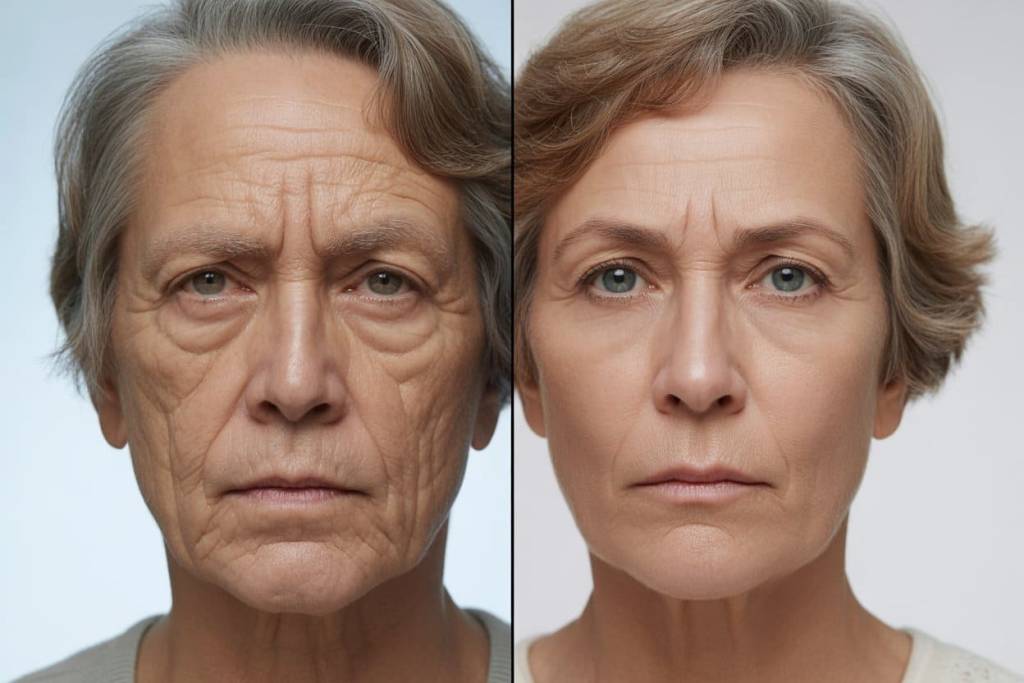
For example, we see celebrities in their fifties with the appearance of people in their thirties. They tell us they owe this to “just drinking water and good genes.” While in fact money and professional treatment are part of this, the idea of genetics being responsible for our appearance is a fairy tale. Scientific research on twins has already proven that despite being identical twins, certain lifestyle choices such as those involving the sun and smoking cause these twins to age at different rates.
This proves that “despite being made of the same DNA as someone else, by entering a routine of washing your face, moisturizing your face, and protecting your face from harsh elements, you will be several shades different from a person who does not. This is referred to as bio-hacking your biology.
The Importance of Consistency Over Time
Genetics does work 24/7 to affect cell behavior, and as a result, your skincare routine needs to work just as hard to get that type of change. You won’t see a change in cell behavior with a one-time use of a serum; however, continuous use over time will actually change how your cells perform.
Maintaining this long-term approach provides several biological advantages:
- Preserving the Acidic Mantle: Care every day also helps preserve the mantle, which tends to be on the acidic side on the surface of the skin and provides a barrier against bacteria and viruses.
- Microbiome Balance: Routine helps in maintaining the necessary cutaneous microbe balance by preventing dysbiosis.
- Reduced Reactivity: Human skin becomes less reactive to the gene activators. This usually results in irritation and redness.
- Cellular habituation: With time, your skin gets used to these actives, allowing the products to get absorbed more effectively.
It is a disciplined approach that ultimately sets the proactive person apart from one who is controlled by their genetic predisposition. By committing to a routine, you essentially begin with a new “normal” that is above what your genetics dictate.
Conclusion
It is not, after all, a question of genetics versus skincare routine; it is a question of interaction throughout the lives of the individuals between nature and nurture. Our genes establish the grounding that gives us some of our strengths and weaknesses and to which we must come to terms.
Yet this is not to say that we are powerless. We cannot control our DNA, but we nevertheless hold considerable power over the environment into which this DNA is expressed. Moving from a heritage of redness, for instance, by battling this heritage as it expresses itself through age in skincare represents to us the ways in which we can regain power over this appearance and achieve the best possible color. Adding a powerful acne control serum to our skincare routine represents an ideal case of just this, and how we can overcome our heritage and finally take back control of our lives.
FAQs
Q1: Is it possible to reverse genetic aging entirely by skincare?
It cannot rewrite your DNA, but good skincare can significantly delay the onset of wrinkles and repair most of the surface-level damage-which makes you look much younger than what your genetic “clock” might say.
Q2: Does oily skin really mean I age more slowly?
Of course, there is some truth in this genetic advantage. Natural oils keep the skin more lubricated, hence fine lines may not be so evident. Oily-skinned people still need sun protection, though, as deep structural wrinkles will quickly set in.
Q3: About what percentage of my acne is caused by my genes?
They say that 80 percent of all acne is genetic in nature. But the intensity of that acne really depends on how well one takes care of themselves, their diet, and all that, and what they’re using topically as well.
Q4: How do I change my skin type from sensitive to normal?
There is nothing you can do to change your underlying genetic sensitivity, although you can “harden up” your skin by using moisturizing products that help to fortify your skin’s lipid barrier, and make it work much more normally.
Q5: Is it worth spending money on expensive products when I have bad genes?
Price does not always denote quality. What makes a product best, though, is the concentration of active ingredients. A good basic product that does not break the bank used faithfully beats a high price-tag product used sporadically.