A lot of people that suffer from acne have a very difficult time finding a sunscreen that they like. Some sunscreens are greasy and just sit on top of your skin and make the face feel sticky. Other sunscreens feel light but do not contain enough of the active ingredients that protect your skin from UV rays. Due to all this confusion and frustration, many residents of the acne skin type develop dark spots and can’t control their oils because of the damage caused by UV rays.
The addition of cica sunscreen has changed the product offering for people that suffer from acne. Cica, or Centella Asiatica, in combination with sun protection factor (SPF) is what a lot of people with sensitive skin and acne need. Heres How to Use Cica Sunscreen in Your Beauty Routine and Double Duty for Oiliness in Your Skin & Acne
Sunlight Damage and Acne are More Intertwined than You Think
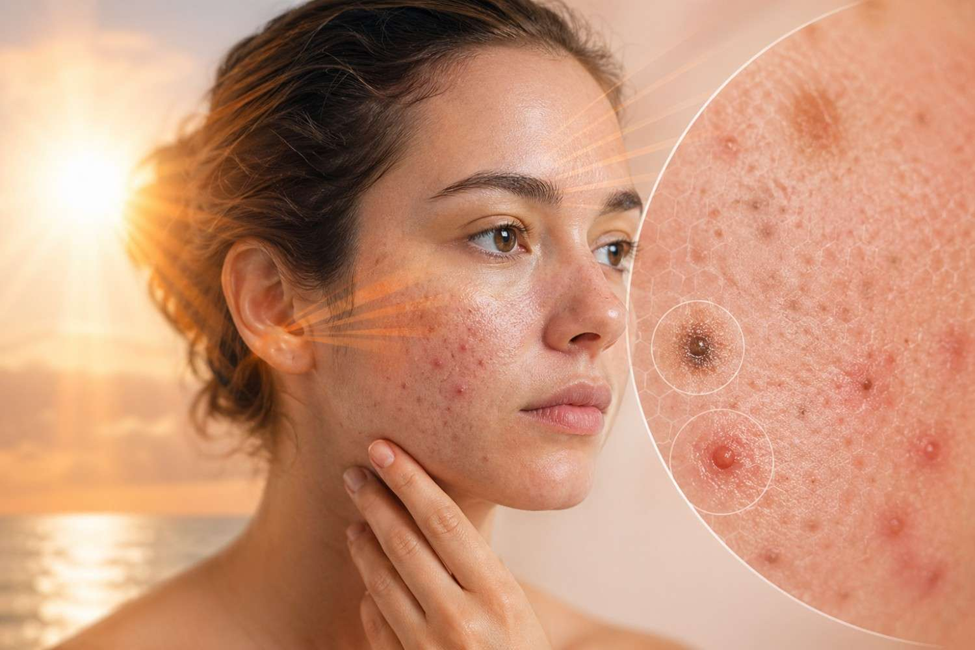
Sunscreen is often thought of as something that serves two purposes – protecting against skin cancer and slowing down the aging process, but not necessarily as an essential part of your daily regimen. The reason is that it’s not viewed as a cure for acne. Therefore, all of these reasons are valid as to why people don’t apply sunscreen to their skin (skin cancer, aging, etc.)
People may think their reasoning is valid. It is not. The reason is because UV exposure is a known direct trigger to post-inflammatory hyperpigmentation (brown spot) that will remain, after the breakout has cleared, if the spot is exposed to the sunshine while it is healing. Therefore, each acne spot that is exposed to UV rays while healing will have a greater chance of leaving behind discoloration (brown pigment), which will likely take months to disappear. Consequently, wearing sunscreen daily is not just a cosmetic choice for individuals who have acne face but it is an essential component to the way in which breaking out results.
When your skin is exposed to the sun, it creates excessive amounts of oxidative stress on the skin, which increases the inflammatory response on an increasing cellular level. An increase in an inflammatory response from the skin’s cells will cause them to produce an increase in sebum oil. Sebum oil, in turn, causes congestion in the skin. Congestion of the skin will result in an increase in the number of acne breakouts. Therefore, the more you expose your skin to the sun’s rays, the more you create an ongoing cycle whereby, by not wearing sunscreen each day, you continue to perpetuate. A cica sunscreen will break the cycle in both ways.
What Cica Actually Does and Why It Belongs in an SPF Formula
Centella Asiatica, the plant behind the cica name, has been used in traditional medicine across Asia for a very long time. Modern dermatology has caught up with what practitioners already understood: the active compounds in it, specifically madecassoside and asiaticoside, reduce skin inflammation and support barrier repair at the same time.
A study published in the Annals of Dermatology confirmed that madecassoside measurably reduced inflammation markers in compromised skin while improving barrier function in the same subjects. That dual action is rare in a single ingredient and it is exactly why cica sunscreen formulas have gained serious traction with dermatologists recommending products for sensitive and reactive skin. (Source)
Daily sun exposure creates low-grade chronic inflammation on the skin surface even on overcast days. For skin that is already inflamed from breakouts or from the treatments used to manage them, that daily UV-triggered inflammation is a compounding problem. A cica sunscreen works against that damage at the same time as the SPF blocks it, which is a meaningfully different approach than standard sunscreen alone.
The Oil Problem and Why Most Sunscreens Make It Worse

Oily skin and acne-prone skin are not the same thing but they show up together often enough that most people dealing with breakouts are also dealing with excess sebum. And most sunscreens are legitimately terrible for that skin type.
Heavier emollient formulas sit on the surface and trap oil underneath. Some chemical filters cause their own irritation that triggers more sebum production as a response. Tinted formulas look fine on application and then slide off by noon. The result is that people with oily, acne-prone skin either skip sunscreen entirely or reapply it four times a day with diminishing returns.
A well-formulated cica sunscreen sidesteps most of that because the botanical base tends to be lighter and the anti-inflammatory properties of the cica reduce the skin-level stress that drives excess oil production in the first place. It is not just a texture improvement. It is addressing one of the underlying triggers of the oiliness.
For this reason, cica sunscreen has become a recommended daily step in skin care routines built around oil and acne management, not an afterthought added at the end. The best skin care products for oily, reactive skin treat sun protection as part of the solution rather than a separate category.
Building the Right Routine Around Cica Sunscreen

Sunscreen does not work in isolation. For acne-prone skin specifically, what happens before the SPF step determines how effective the whole routine is. Congested pores that are not being addressed, oil that is not being managed, and inflammation that is not being reduced all make the sun protection feel like the only step doing any work.
The most effective routines for this skin type start with a cleanser that clears the skin without stripping it. An acne control cleanser at a low, effective salicylic acid concentration does this without triggering the dryness cycle that causes reactive oiliness. Salicylic acid dissolves the buildup inside pores rather than just clearing the surface, which reduces congestion before it becomes a visible breakout.
After cleansing, an acne control serum handles the active inflammation and oil regulation deeper in the skin. A niacinamide-forward formula at a clinically validated concentration works on inflammatory cytokines, the chemical signals that keep skin in a state of chronic reactivity, while also regulating sebum without drying anything out. The serum step is where the sustained oil and acne management happens day over day.
Then the cica sunscreen goes on as the final morning step, creating UV protection on top of a skin surface that has already been addressed at a deeper level. This layering is what makes the difference between a routine that feels like damage control and one that is genuinely improving the skin over time.
Staying consistent with this three-step morning approach, acne control cleanser, acne control serum, cica sunscreen, is where the results compound. Individually each step is useful. Together they address acne, oiliness, inflammation, and UV damage in a coordinated way.
What the Research Says About Daily SPF and Acne Management
Beyond the anecdotal evidence that cica sunscreen feels different on acne-prone skin, the clinical picture for daily SPF in acne management is well established.
Research published in the Journal of the American Academy of Dermatology has documented that daily broad-spectrum sunscreen use significantly reduces the duration and intensity of post-inflammatory hyperpigmentation following acne lesions. In practical terms this means breakout marks fade faster and look less severe when the skin has consistent SPF protection during the healing process.
A separate body of research into UV-triggered inflammation confirms that cumulative daily sun exposure accelerates the inflammatory cascade in compromised skin. For skin that is already dealing with acne-related inflammation, this cumulative effect is not trivial. It is a daily compounding factor that extends the recovery time from each breakout and raises the baseline inflammation level that makes new breakouts more likely.
Cica sunscreen with SPF 50 coverage addresses both the UV blockage side of this and the inflammation management side simultaneously. The global market for sensitive skin care products is projected to exceed 22 billion dollars by 2027, largely because consumers are recognizing that their skin needs more considered protection than standard formulas offer.
Sun Damage After Acne: The Post-Breakout Window Matters
One of the most consistently overlooked aspects of acne management is what happens in the days immediately after a breakout resolves. The skin at that stage is in a repair phase. The visible lesion has cleared but the tissue underneath is still actively healing. Melanocytes, the cells that produce pigment, are more active during this period and more responsive to UV stimulation.
Sun exposure during this post-breakout window is when most of the lasting pigmentation damage happens. Not during the breakout itself but in the ten to fourteen days after it clears. A cica sunscreen applied daily without gaps during this period significantly reduces the pigmentation response. The SPF blocks the UV trigger. The cica calms the residual inflammation that makes the melanocytes more reactive in the first place.
This is why dermatologists increasingly recommend cica sunscreen specifically rather than just any SPF formula for acne-prone and post-acne skin. The anti-inflammatory botanical support during the healing window is not cosmetically irrelevant. It actively changes the outcome of how a breakout resolves.
Why Cica Sunscreen Fits Into Luxury and Natural Skin Care Equally
One of the more interesting things about cica as an ingredient is that it bridges the gap between natural skin care products and high-performance clinical formulations without any tension. It is botanically derived, which gives it a profile that fits naturally in clean and natural skin care products. But its efficacy is documented in peer-reviewed research, which means it belongs equally in luxury skin care products positioned around clinical performance.
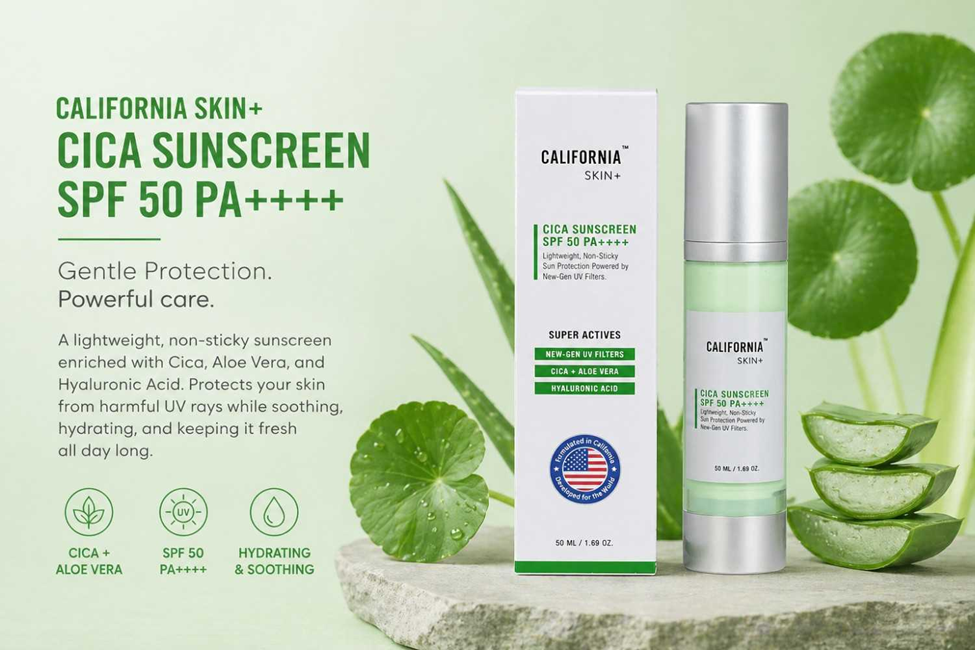
For consumers navigating that space, cica sunscreen represents one of the cleaner examples of an ingredient that does not require a choice between natural and effective. Products like California Skin+ Cica Sunscreen SPF 50 PA++++ combine broad-spectrum UV protection with Centella Asiatica to help calm inflammation, reduce post-acne sensitivity, and support the skin barrier throughout the day. The best skin care products in this category combine SPF 50 broad-spectrum coverage with meaningful concentrations of Centella Asiatica extract, resulting in a formula that protects, soothes, and supports the barrier in a single morning step.
Luxury skin care products built around this ingredient tend to invest in additional delivery technology that helps the botanical compounds stay active and effective throughout the day rather than degrading quickly on the skin surface. That investment is worth understanding when comparing formulas at different price points. The cica concentration and the stability of the formula matter more than whether the packaging looks premium.
The Practical Case for Making Cica Sunscreen a Daily Non-Negotiable
The case for daily cica sunscreen for acne-prone, oily, and post-acne skin is not complicated once the mechanism is clear. UV exposure worsens inflammation. Inflammation worsens acne and oil production. Post-breakout UV exposure deepens and extends hyperpigmentation. Standard sunscreens exacerbate oiliness and often get skipped as a result.
Cica sunscreen addresses that entire chain of problems in one step. The SPF handles the UV blockage. The cica handles the inflammation response. The typically lighter texture of cica-based formulas handles the oiliness concern. The daily habit handles the cumulative damage that standard routines leave untreated.
For anyone building or refining a skin care routine around acne, oil control, or post-acne recovery, adding a cica sunscreen as the final morning step is one of the highest-return changes available. Not because it replaces everything else in the routine but because it protects the work that everything else is doing.
Conclusion
Acne-prone skin does not just need stronger treatments. It needs smarter daily protection. That is what makes cica sunscreen such an important shift in modern skin care routines. Instead of only blocking UV rays, it also helps calm inflammation, support the skin barrier, and reduce the cycle of oiliness, breakouts, and post-acne pigmentation that sun exposure quietly worsens every day. When paired with the acne control cleanser and serum, a well-formulated cica sunscreen becomes more than just an SPF step. It becomes part of a long-term strategy for healthier, calmer, and more resilient skin. For anyone dealing with acne, excess oil, or lingering dark marks, daily cica sunscreen is no longer optional. It is one of the most effective ways to protect the progress your skin care routine is working to create.
FAQs
Q1: What makes cica sunscreen better for acne-prone skin?
Cica sunscreen protects against UV damage while also calming inflammation with Centella Asiatica, helping reduce breakouts, irritation, and post-acne dark marks over time.
Q2: Can cica-based natural SPF work as well as clinical sunscreens?
Yes. A well-formulated cica sunscreen with broad-spectrum SPF 50 provides strong UV protection while adding anti-inflammatory benefits for sensitive and acne-prone skin.
Q3: How should cica sunscreen fit into an acne routine?
Use it as the final morning step after cleanser and serum. This helps control oil, reduce congestion, and protect skin from UV-triggered inflammation.
Q4: Why use California Skin+ Cica Sunscreen SPF 50 PA++++?
It combines high SPF protection with Centella Asiatica to help calm oily, acne-prone skin while preventing post-acne pigmentation and daily UV damage without feeling heavy.