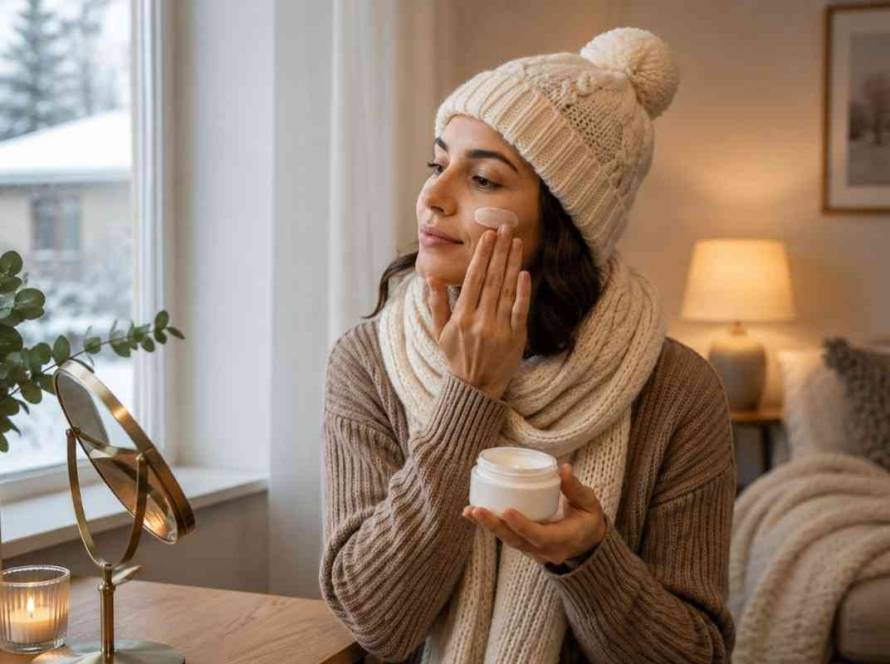
Skincare has slowly shifted from a practical daily habit into this fast moving cultural trend cycle. Every few months, some new ingredient is called revolutionary, like it’s the whole answer for acne, dullness, aging, or even sensitivity. It sounds exciting, sure, but the constant rotation also leaves people confused. Skin, honestly, doesn’t react to excitement. It reacts to stability, consistency, and good barrier health, no matter what’s trending right now. So a barrier repair moisturizer often ends up being more useful than any shiny active ingredient, even if it rarely gets the “hero” spot in marketing campaigns.
Why Skincare Always Needs a “Hero Ingredient”
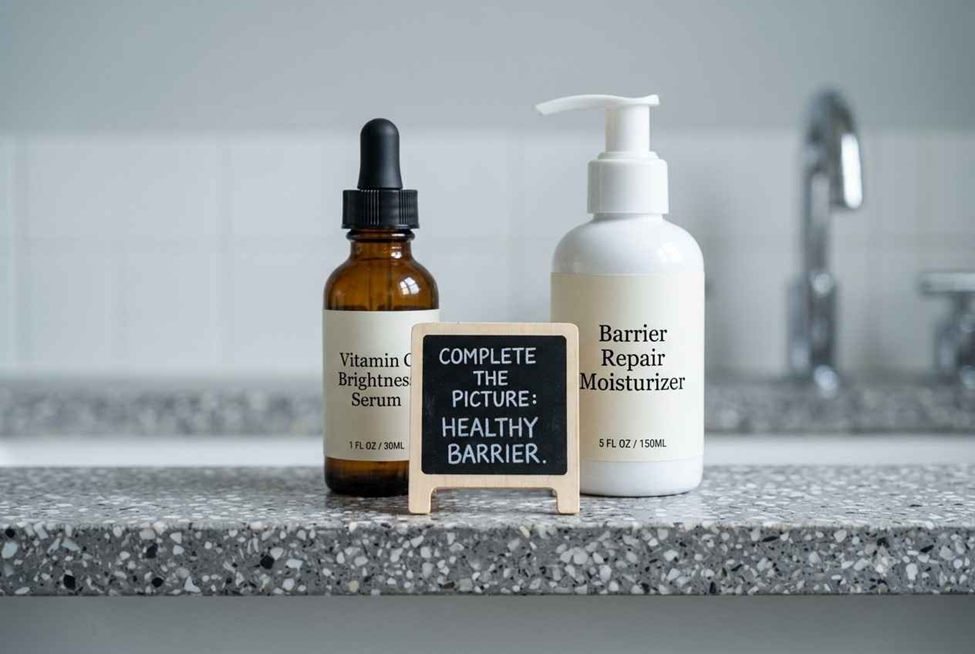
Modern skincare marketing really leans on simplification. Like, instead of walking you through how a formulation works as a system, brands kind of isolate one ingredient and then make it the main face of the whole product. So Vitamin C turns into “brightness”, retinol turns into “renewal”, and niacinamide becomes this catch all “universal correction” thing. It’s like they pick one small piece, stretch it out, and sell the vibe without all the other context, which is why it feels so clean and obvious, even when it’s not.
This simplification works, because it’s kind of easy to communicate. But it also bends the way skin really works, in a pretty direct kind of sense. Skin is not reactive to lone inputs, like in isolation, it’s more like it responds to the overall balance. So a barrier repair moisturizer fits that reality better, because it’s built around restoring function, not just tossing in one single big dramatic result.
The idea of a hero ingredient is not scientifically wrong, but it’s somehow incomplete. It kind of overlooks that even the strongest active compound can’t really do a lot if the skin barrier is compromised. Like, the whole thing depends on that, and without it, results feel weaker.
The Ingredient Hype Cycle Explained
In the skincare industry, there’s this kind of repeating loop that rarely really changes, even while the ingredients keep evolving. You notice how the cycle stays similar , more or less, just with new blends coming in, like it’s a routine that never fully lets go.
| Stage | Industry Action | Consumer Reaction |
| Discovery | Ingredient gains attention in research or social media | Curiosity builds |
| Amplification | Brands and influencers push it heavily | Urgency to try |
| Saturation | Ingredient appears in every category | Confusion or skepticism |
| Replacement | New ingredient replaces old trend | Attention shifts |
This cycle is kind of pulled along by novelty, not really by necessity. A barrier repair moisturizer doesn’t rely on that same cycle, because the usefulness is not stuck to the timing of whatever is trending. It stays pretty steady no matter what ingredient happens to be viral in that moment, and that whole pattern doesn’t shift.
The Hidden Problem With Ingredient Obsession
When skincare turns ingredient-centric, routines can end up feeling a bit over packed or too much. People stack several actives and try to chase quicker outcomes, like somehow more “activity” must mean better skin. But actually, that often messes with the skin barrier and can end up causing sensitivity, dehydration, or even inflammation, depending on the person.
This is where a barrier repairing moisturizer, sort of takes a corrective turn. It helps rebuild the lipid balance, bring back hydration, and strengthen barrier resilience, so the skin can handle active ingredients more effectively. If that stabilizing layer isn’t there, even well built actives can end up feeling irritating after a while.
The irony is that the more aggressively people go after results, the more they tend to bruise the system itself,the one that is supposed to keep the skin healthy and steady, in a way that actually works.
Ingredient Thinking vs Formulation Thinking
A pretty major shift is happening in skincare today, like it’s moving from “ingredient thinking” toward “formulation thinking”, sort of. Ingredient thinking is mainly about what one component can do on its own. Formulation thinking instead, is more about how several components play together, how they interact in the bigger mix.
| Ingredient-Focused Approach | Formulation-Focused Approach |
| One ingredient = one benefit | Multiple ingredients work together |
| Trend-driven selection | Function-driven selection |
| Marketing narrative-led | Skin biology-led |
A barrier repair moisturizer belongs kind of firmly in formulation thinking, because its effectiveness comes from synergy more than isolation. It doesn’t lean on just one “star” molecule, not really; instead it’s all about how different supportive ingredients reinforce each other , like together they do the heavy work.
How Beauty Media Shapes Ingredient Trends
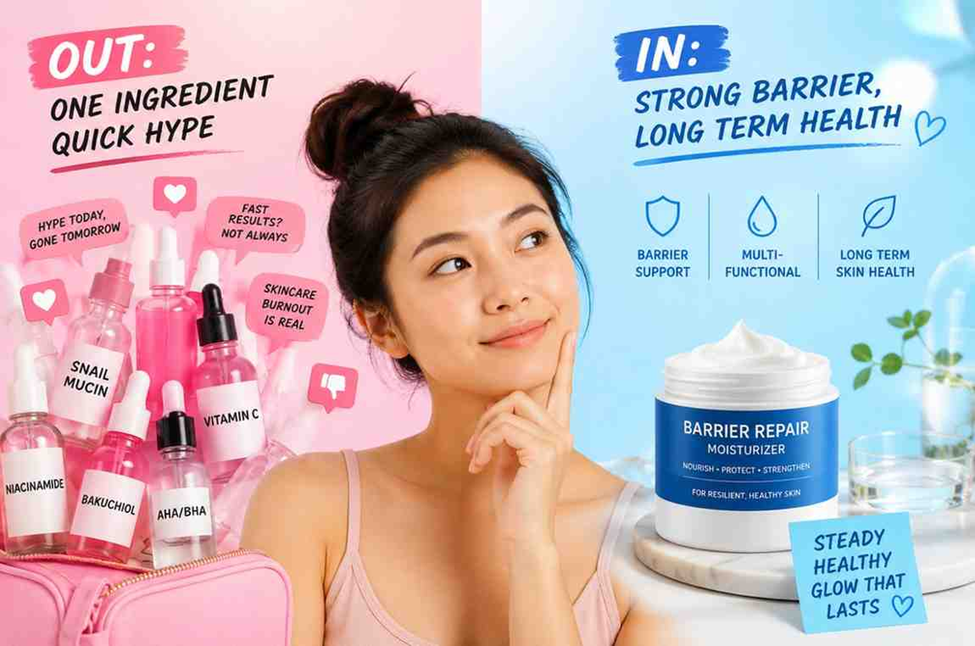
This breakdown of what top skincare trends are expected for 2026 and which ones are already starting to fade, it’s pretty clear the industry is drifting away from that one-ingredient storytelling vibe, and also from overly simple “hero ingredient” marketing loops. Instead, people seem more pulled toward wider ideas, like skin longevity, barrier resilience, and those formulation-led innovations.
The report points out that people are getting more skeptical about the whole single ingredient “miracle” thing, and they’re more or less gravitating toward products that do several jobs within the same mix, in particular ones that back long term skin health rather than the fast cosmetic glow. And yeah, this change also seems connected to a wider kind of burnout with those trend based skincare seasons, where ingredients climb super quick thanks to social media hype, then they fade just as fast when results seem a bit shaky, or incomplete, like the finish doesn’t really hold up.
In this evolving landscape, a barrier repair moisturizer kind of fits more naturally into consumer expectations, because it lines up with the growing preference for steadiness, skin barrier support, and a kind of multi functional set up rather than leaning on just one standout “miracle” component, or something like that.
Why Barrier Health Is Becoming the Real Trend
Honestly, after years of aggressive skincare routines, the whole industry is kinda sliding, quietly, toward barrier repair. Over exfoliation, too much actives, and endless trial and error have made a lot of people notice sensitivity and dehydration.
A barrier repair moisturizer seems to fit naturally into this “fixing” period, because it doesn’t shove the skin into constant transformation. Rather it helps with recovery and steadiness, which is, usually, what the compromised skin actually needs.
This shift reflects a more broad realization, skincare does not need to be constantly disruptive to be effective. Also it kind of works even when you keep things simple, not every routine has to be an overhaul, right?
The Psychology Behind “Miracle Ingredient” Thinking
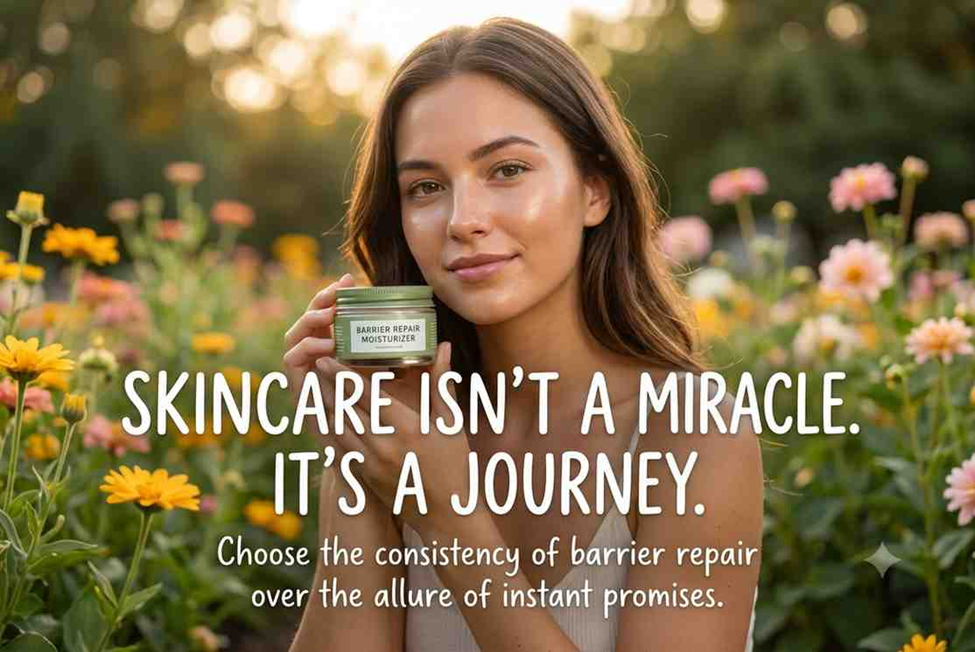
The whole “miracle ingredient” concept feels kind of emotionally charged, because it promises that things will be simple. It kind of implies that one product,or even one molecule can handle multiple worries at the same time. That does lower decision fatigue, but it also pushes people toward expectations that are way too optimistic and, frankly, a bit unrealistic.
Skin biology doesn’t really run on shortcuts. It responds slowly and in a buildup way, over time. A barrier repair moisturizer matches this more grounded model of skincare, because it leans into long-term function instead of those instant change stories.
Why Simpler Routines Are Replacing Complex Ones
Another visible shift in skincare culture is that people are trending toward simpler routines. Instead of stacking a bunch of actives in those 10 step systems, consumers seem to drift back to the basics: cleanse, treat, moisturize and protect.
In this kind of setup a barrier repair moisturizer gets kind of central, because it keeps the routine steady. It helps active ingredients work properly without stressing the skin too much, and it also lowers the odds of barrier disruption happening.
Also, simplicity isn’t really about doing less just for that minimalist vibe. It’s more about choosing what the skin can honestly handle day to day.
The Future of Skincare Is Less About Miracles
The future of skincare probably won’t be pinned to one single breakthrough ingredient. Rather its moving toward a deeper grasp of formulation, plus a barrier-first way of thinking, in general.
Instead of chasing some magical ingredient, more and more consumers are checking how well full formulas work together to help the skin barrier. A barrier repair moisturizer shows this shift because it puts skin function first over ingredient fame, like honestly.
As time goes on, the best products likely won’t be the ones with the loudest claims. They’ll be the ones that stay consistent, reduce stress, and really back long-term skin wellness.
Conclusion
Skincare trends will keep doing their thing because the whole industry sort of lives on novelty, but skin itself , well it does not really care about novelty. It runs on consistency, barrier integrity ,and formulation balance. The never-ending hunt for some “ miracle ingredient” usually ends up pulling people away from the basics that keep skin healthy over time. Like, you know, that steady stuff. A routine that is built on support, not hype is generally more sustainable, especially once the goal turns more toward repair and keeping the skin barrier steady. That’s why a ceramide moisturizerstill matters past whatever is trending this week, because it signals a more grounded, function-led way of caring for skin rather than this endless loop of reinvention and “new” ideas.
FAQs
1. Why do skincare brands keep promoting new miracle ingredients instead of focusing on full formulations?
Skincare brands often promote single ingredients because they are easier to market and communicate. A hero ingredient creates a simple narrative that consumers can remember quickly, even though real skin improvement depends on how multiple ingredients work together in a complete formulation rather than in isolation.
2. Is a barrier-focused routine better than following skincare trends?
In most cases, yes. Trend-driven routines often lead to frequent product switching and ingredient overload, which can weaken the skin barrier. A barrier-focused routine prioritizes stability, hydration, and repair, which makes the skin more resilient over time and better able to handle active ingredients.
3. Why is the idea of a “miracle ingredient” misleading?
The idea of a miracle ingredient is misleading because it suggests one compound can solve multiple skin concerns on its own. Skin health is influenced by environment, barrier function, lifestyle, and consistency. No single ingredient can override these factors without proper formulation support.
4. How does a California Skin+ Barrier Repair Moisturizer fit into this discussion?
California Skin+ Barrier Repair Moisturizer fits into this context because it represents a formulation-first approach rather than an ingredient-first promise. Instead of relying on one trending active, it focuses on supporting the skin barrier through a combination of hydrating, soothing, and barrier-reinforcing components, which aligns with the shift away from hype-driven skincare.
5. What is the long-term benefit of using barrier repair moisturizers?
The long-term benefit is improved skin resilience. By strengthening the skin barrier, these moisturizers help reduce sensitivity, improve hydration retention, and make the skin less reactive to active ingredients. Over time, this leads to more stable and predictable skin health rather than cycles of improvement and irritation.