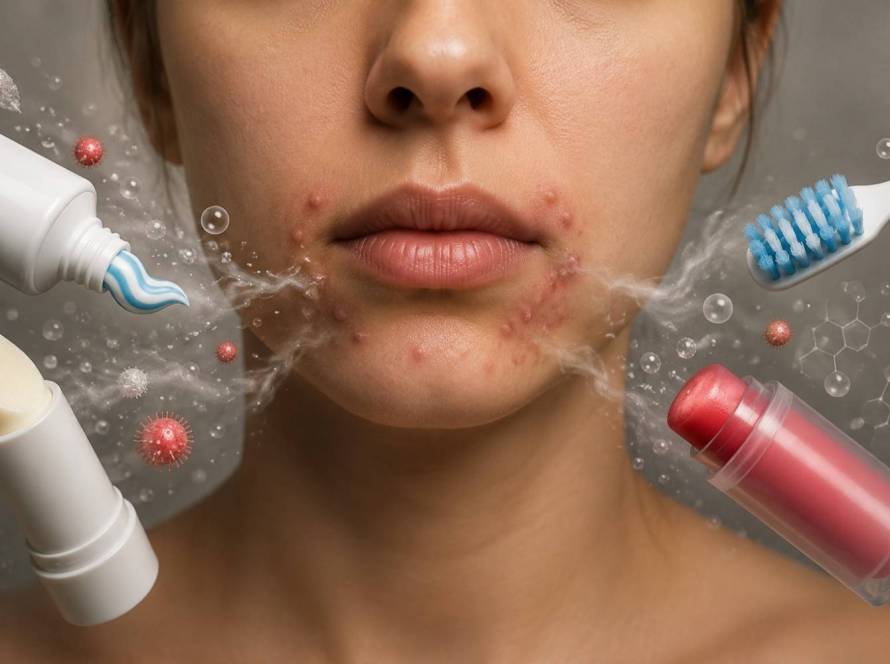
If your skin feels more sensitive, dehydrated, irritated, or just plain unpredictable , than it used to, you’re not imagining it. In fact modern life seems to throw at our skin a rather different mix of environmental and lifestyle stressors, that honestly wasn’t as common or as intense even a couple decades back. Between endless screen time and air conditioned rooms, plus city pollution, and chronic mental pressure, today’s skin gets challenged from multiple directions at once. So that’s why dermatologists keep pointing back to the skin barrier, and to using a barrier repair moisturizer pretty regularly, as part of a steadier long term skincare plan.
Dermatologists keep seeing more and more worries about skin barrier health , because modern living seems to stack up a mix of stressors that were way less common a generation ago. Things like pollution, poor sleep, ongoing stress, too much screen time, rough weather conditions and even the repeated overuse of active skincare products can slowly erode the barrier. Experts note that once the barrier gets compromised , the skin often feels drier, starts to look red, becomes irritated and gets more reactive to touch or temperature, like almost everything is noticed more. It’s basically these everyday pressures that have made barrier focused skincare a far bigger priority today than it was about 20 years ago.
So yeah, as our daily routines and the stuff around us keep shifting a bit, the needs for our skin are kind of changing too. When you really get the new kind of problems , it’s way easier to understand why holding onto a strong , healthy skin barrier is now a main piece in long-term skin care.
How Modern Life Makes Your Skin Work Harder Than It Used To
1. Air Pollution Is More Persistent and Widespread
Twenty years ago pollution was there for sure, but a lot of city areas today seem to carry noticeably higher concentrations of particulate material, exhaust from vehicles and factory pollutants, too. Those tiny things can sit on the skin through the day, kind of staying there, and it sort of lingers, plus it can build up oxidative stress, along with a bit of annoyance you can actually feel, too.
Research has suggested that air pollution can dull the skin barrier, push forward visible aging a bit quicker, and lift inflammation levels. Even if someone stays with a steady skin care routine, they may still end up with extra sensitivity when they are in polluted surroundings day after day, and this is kinda persistent.
This is one reason dermatologists often point people toward a barrier repair moisturizer. Like, a stronger skin barrier helps cut down on moisture loss and also supports the skin’s natural defense mechanisms against environmental aggressors, too.
2. We Spend More Time in Artificial Indoor Environments

A lot of folks these days spend most of their day kind of bouncing around between air-conditioned offices, climate-controlled houses, cars and public transportation. Even if these places feel comfortable, they can also quietly create conditions that cause the skin to dry out, slowly and without you really noticing, sometimes.
Air conditioning together with indoor heating usually brings the humidity down. So, the water sitting in the skin can evaporate more easily. Over time, this can leave your skin feeling a little tight, dry, or even scaly, plus maybe slightly irritated.
Unlike earlier generations who often spent more time outside, today’s everyday routines tend to keep the skin in touch with those artificial indoor climates for most of the day, pretty much. So with that barrier repair moisturizer, the idea is to help refill moisture and also to shore up the skin’s own protective layer, even while the dryness keeps showing up.
3. Chronic Stress Has Become a Daily Companion
Stress does more than mess with mental well-being. It has a very direct connection with skin health too, and honestly it can show up faster than people think. When stress is kept high, for a long while, the body tends to pump out more cortisol. This stress hormone can mess with the skin barrier, spark more inflammation, and make everyday problems feel worse, things like redness, dry patches, acne, and even eczema, all kinds of flare up.
Modern work cultures, digital connectivity, financial pressures, and nonstop information exposure have started to create stress levels that a lot of experts consider pretty much unprecedented.
Even though skincare products cannot truly erase stress itself, a barrier repair moisturizer can help the skin rebound, sort of, from several of the physical effects that come with long-term stress.
4. Screen-Centered Lifestyles Have Changed Daily Habits
Honestly, the average person spends several hours each day just looking at phones, tablets, computers , and television. Even though research is still digging into the long term effects of blue light on skin, a screen-heavy lifestyle can sort of mess with skin health in a few indirect ways.
People often:
- Sleep less due to late-night screen use
- Experience increased stress and mental fatigue
- Spend more time indoors
- Blink less, contributing to dryness around the eye area
Poor sleep by itself can get in the way of the skin’s natural repair work. Because the skin does a lot of restorative stuff overnight, when sleep gets disrupted it can make the face look a little dull , more worn out, and also less resilient than usual.
If you want to support that whole recovery process, using a barrier repair moisturizer can really help, it keeps hydration and comfort steady while the skin is doing its nightly repair cycle.
5. Modern Diets Often Include More Processed Foods
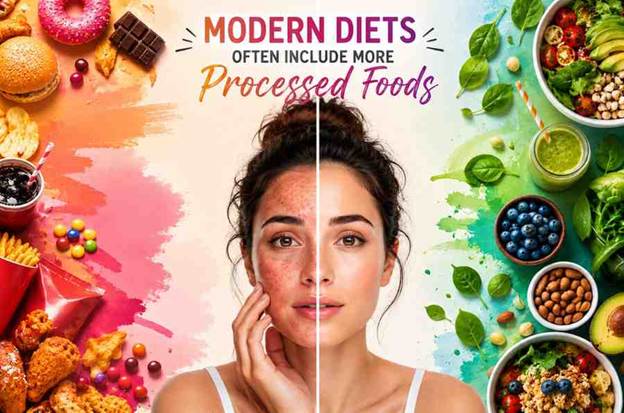
Skin problems aren’t only about diet, but the way we eat has changed a lot over the last couple decades.
Many modern diets include:
- Higher levels of processed foods
- Greater sugar consumption
- More convenience meals
- Increased intake of ultra-processed snacks can, for some people, sort of coax inflammation up a notch, and then it may show up in skin look and also overall barrier function.
Like, you can imagine whole foods, stuff rich with antioxidants, healthy fats, essential vitamins and minerals, tend to support skin health from within, kinda steadily and quietly. When you match a well rounded eating style with a barrier repair moisturizer, it becomes a more complete way of keeping skin resilience, not just one thing alone.
A Quick Comparison: Then vs. Now
| Lifestyle Factor | Around 20 Years Ago | Today |
| Daily Screen Time | Relatively limited | Often several hours daily |
| Indoor Climate Exposure | Moderate | Nearly constant |
| Exposure To Air Pollution | Lower in many regions | Higher in many urban areas |
| Processed Food Consumption | Less common | Significantly higher |
| Digital Stress | Minimal | Constant connectivity |
| Sleep Disruptions | Less technology-related | Frequently linked to devices |
These little changes might seem small, one by one, but in total they start to stack up and create this cumulative weight on skin health, sort of like a slow strain you don’t notice right away.
6. Overcomplicated Skincare Routines Are More Common
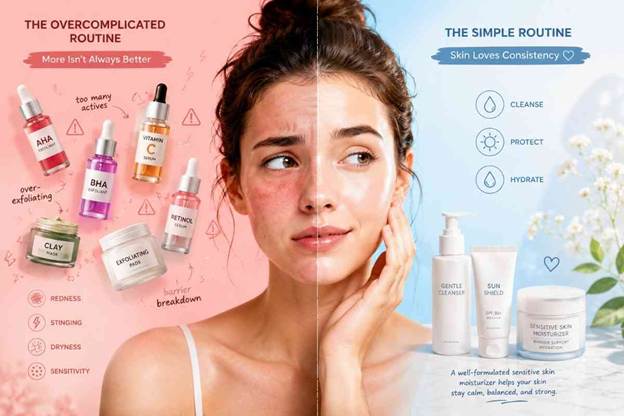
Ironically, one of the biggest modern skin stressors is skincare itself, like it’s almost cheating. Social media platforms regularly push these elaborate routines, with multiple acids and exfoliants, serums as well, masks, and active ingredients layered in, often all at the same time. And yes some products can genuinely be helpful, but once you stack too many things all at once the skin can get kind of overloaded, and then everything turns sour, a bit too fast.
When you exfoliate too much or keep using actives, over and over, the skin barrier can start to break down, slightly, and then you might notice redness, stinging, dryness, and this overall heightened sensitivity. It’s kinda like the skin gets over challenged.
These days, a lot of dermatologists seem to lean toward simpler routines, mostly cleansing, sun shielding, and then keeping hydration. Often, a well formulated sensitive skin moisturizer ends up being the main thing in the routine because it helps the skin get steadier instead of always putting it in a situation where it has to react.
7. UV Exposure Has Become More Complex
People often tie sun exposure to beach vacations, yet in reality modern UV exposure shows up in a bunch of places during everyday life. Like, your long commutes, outdoor exercise, just driving around, and those little incidental sun moments can build up gradually. Plus, shifts in the environment and more time spent outdoors in certain regions can add to this UV related skin stress, slowly but surely.
Ultraviolet radiation is still one of the biggest external drivers behind early skin aging and barrier disruption, it kind of never really lets up. Using sunscreen every day is essential too, but also putting on a barrier repair moisturizer really helps, like it gives your skin a chance to recover and keep that moisture locked in after being out in the environment.
Conclusion
Modern life gives us a lot of convenience, connectivity, and comfort, but it also kind of tosses our skin into problems that older generations rarely had to deal with. More pollution, constant stress, artificial indoor air, too much screen time, and processed foods, plus some very involved skincare routines, keep putting additional strain on the skin barrier. And there is UV exposure too, that just keeps going, like it never really clocks out. We can’t remove all of those things completely, but we can still help our skin with its own natural defenses using smarter routines, solid sun protection, balanced nutrition, decent sleep, and a good hydrating moisturizer that supports a healthy resilient skin barrier, day by day over time.
FAQs
1. Why does skin seem more sensitive today than it did years ago?
Modern lifestyles expose skin to multiple stressors simultaneously, including pollution, dry indoor air, stress, and excessive skincare products. These factors can weaken the skin barrier and increase the likelihood of irritation and sensitivity.
2. Can stress really affect skin health?
Yes. Chronic stress can influence hormone levels and increase inflammation in the body. This may contribute to dryness, redness, breakouts, and other common skin concerns over time.
3. Does spending time indoors affect the skin?
Indoor environments often have lower humidity because of air conditioning and heating systems. This can increase moisture loss from the skin and leave it feeling dry, tight, or uncomfortable.
4. How can I protect my skin from modern environmental stressors?
A simple routine that includes gentle cleansing, daily sunscreen, proper hydration, sufficient sleep, and barrier-supportive skincare can help improve the skin’s resilience against everyday challenges.
5. Why is California Skin+ Barrier Repair Moisturizer relevant for the skin challenges people face today?
Modern skin is constantly exposed to pollution, indoor dryness, stress, and environmental aggressors that can weaken the skin barrier. California Skin+ Barrier Repair Moisturizer is designed to support barrier function by helping replenish moisture and reinforce the skin’s natural protective layer. Regular use can help reduce feelings of dryness, improve comfort, support hydration retention, and make the skin better equipped to handle the daily stressors associated with contemporary lifestyles.