If you’ve spent time, either 5 minutes scrolling through your social media or just walking through your local beauty store, you have undoubtedly seen Cica. It’s kind of everywhere. The tiny green plant is no longer some quiet Korean beauty secret; it is now like a worldwide sensation in the skin care products world. Beauty gurus are just crazy about it, dermatologists are even prescribing it, and regular people are basically hoarding it because they can’t get enough, not at all.
But why now?
To understand why this ancient herb is dominating modern vanity tables, we have to look at how we’ve been treating our faces. For years, the beauty industry kept repeating that, more is more kind of narrative. We kept bombarding our skin with high percentage exfoliating acids, rough little face scrubs, and punchy active ingredients in a continuous rush for that instant glass skin look, like right now, no waiting. It was a relentless kind of rhythm. The result? A literal global epidemic of wrecked skin barriers. Millions of people suddenly woke up with chronic redness, unexplained breakouts, peeling, and skin that stung when applying even basic water.
The conversation had to shift. We had to stop attacking our skin and start feeding it. That’s where Centella Asiatica changed the game. Instead of stripping, it focuses entirely on recovery, soothing irritation, and rebuilding broken tissue. Today, it’s the backbone of targeted daily solutions like a protective cica sunscreen, localized acne relief patches, and the ultimate recovery step: a dedicated skin repair moisturizer. Let’s break down the actual science, history, and real-world numbers behind this botanical powerhouse.
The Legend of Tiger Grass

Centella Asiatica, also known as Gotu Kola, Asiatic Pennywort or Tiger Grass, has an interesting and unique history; some of which is so long that it qualifies as ancient history. Traditional cultures throughout Asia have documented something very interesting over the last several hundred years: that tigers injured in fights typically went to a patch of the green and leafy herb called Gotu Kola to roll around in (by instinct) after their injuries. This herb has been used by several traditional Asian societies’ medicines (Traditional Chinese Medicine and Ayurvedic medicine, for example) for at least 3,000 years to treat a variety of ailments, including serious skin conditions such as severe burns or eczema. Then, in the early 2000s, South Korean cosmetic chemists began to see the real upside of this traditional botanical. They began isolating its active compounds, and they worked them into soothing creams, while also introducing the term “Cica,” which comes from the Latin cicatrix, basically meaning scar.
When the K-Beauty wave hit Western markets, Cica turned into the big standout. What used to be a niche spot cream has, over time, transformed into a worldwide movement. And nowadays, modern dermatological science has pretty much confirmed what wild tigers and ancient healers were already using.
The Real Science: Why Cica Actually Works
Cica isn’t a passing trend built on empty hype. It works because it’s packed with specific bioactive compounds called terpenoids. When you turn around a bottle of a high-performance skin repair moisturizer, look past the marketing text. You want to see the plant extracted into its four primary active components:
- Asiaticoside – This is your collagen booster. Asiaticoside stimulates the synthesis of glycosaminoglycans, which make up the foundation of your skin and contribute to its recovery from any injury.
- Madecassoside – The strong component that acts on the inflammatory process. Madecassoside will significantly reduce the synthesis of pro-inflammatory cytokines, i.e., those substances that lead to irritation, redness, swelling, and other inflammatory responses of your skin.
- Asiatic Acid – This substance will act as a barrier enhancer. It will deeply penetrate into your skin to protect it from environmental influences with antioxidant properties.
- Madecassic Acid – This remedy is meant to regenerate your skin tissues. Madecassic acid will help restore their structure and improve their appearance.
When these four components kinda work together, the outcomes become measurable . Clinical research suggests that Centella Asiatica actually boosts Type I collagen expression in human skin cells, a lot . In fact, dermatological studies have shown that even a small 5% topical application of Centella Asiatica extract can lift skin hydration by as much as 25% within only seven days of steady use, while simultaneously causing a steep decline in transepidermal water loss, TEWL . (Source)
The Invisible Epidemic: Wrecked Skin Barriers
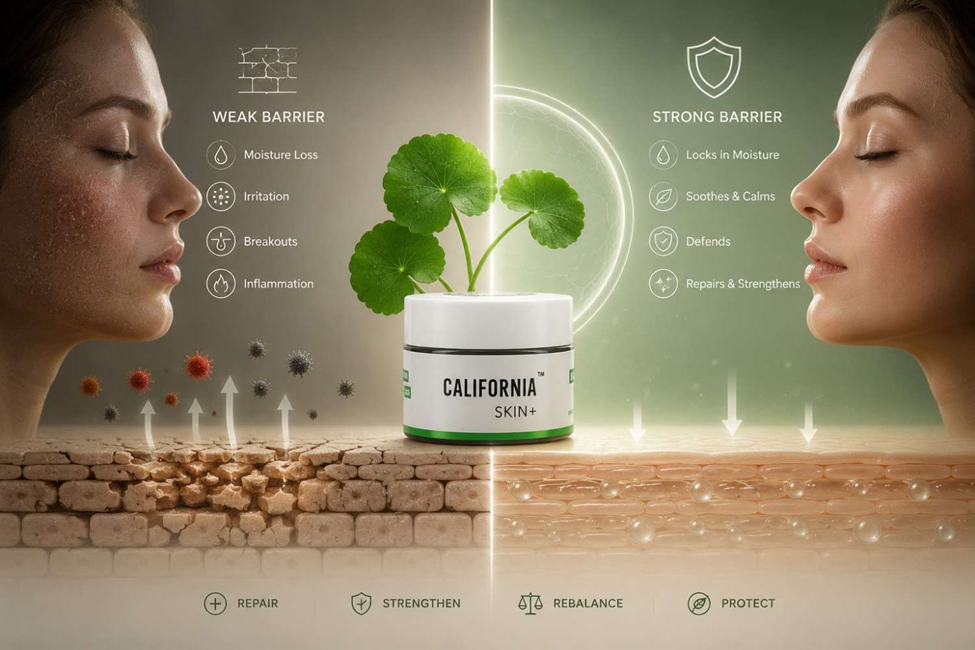
Why isn’t that standard lotion cutting it anymore, like it used to? Why does it feel like everyone is hunting down a specialized skin repair moisturizer, all of a sudden.It usually comes down to the way your skin barrier actually works, like, really. Think about your outermost skin layer, the stratum corneum, as a kind of brick and mortar wall, kinda literally.
The skin cells are the bricks. Your natural lipids, including ceramides and fatty acids, are the mortar in between. When that mortar is solid, and steady then moisture basically stays trapped in, and bacteria, pollution, and allergens get held back too, more or less.
But when you overdo the exfoliation, or you lean on aggressive cleansers, or you keep exposing your skin to extreme weather, that mortar starts to crack, and then everything goes a bit off. Then moisture slips away into the air, and you get that tight , flaky feeling across the face. And if the barrier gets compromised like that, bacteria can just move right in through those tiny breaks, and it starts this ugly feedback loop, like irritation keeps building, inflammation ramps up too, then even deeper breakouts follow.
If you’ve got an irritated or damaged spot somewhere on your body, it’s a pretty smart move to use a skin repair moisturizer. Regular moisturizers tend to sit on top of your skin for a short while, and they can give you that shiny “glowy” look, but they don’t really do much beyond the surface. A real skin repair formula can penetrate deeper into the skin layers and push concentrated Centella Asiatica in there, so it helps shut down that burning sensation right away, while also supplying essential lipids so your skin can repair itself.
Using a good skin repair moisturizer two times each day can, kind of, make a difference on those tiny cracks and help rebuild that barrier over time. You end up with a sturdier skin barrier and more resilient skin which keeps irritation and breakouts at bay. If your skin feels really upset, like angry in a way, a dedicated skin repair moisturizer can aid in bringing your skin back to its natural condition.
Day Defense and Night Recovery: The Ultimate Balance

A great skincare routine isn’t complicated. It’s just smart timing. Your skin has completely different needs when you’re out facing the world versus when your head hits the pillow.
The Daytime Shield: Cica Sunscreen
We all know UV rays are like enemy number one, causing up to 80% of visible skin aging dark spots, fine lines, and all that stuff. Still, traditional sunscreens can feel pretty awful, heavy, greasy, pore-clogging, or even burning on contact if your skin is already a little sensitive.
A dedicated cica sunscreen is basically a non-negotiable step. A modern lightweight cica sunscreen puts together advanced UV filters with that quick soothing, cooling effect from Centella Asiatica, it’s kinda like a protective plus treatment hybrid. Every time the sun wants to trigger micro inflammation in your skin, your cica sunscreen steps in and fights it off in real time. You should look for a cica sunscreen that has a gentle, lightweight hydrator mix, like Sodium Hyaluronate, along with oil-balancing botanicals such as Willow Bark. That kind of combo helps your skin stay looking fresh, kinda matte, and calm all day long, even when you never really want it to clog your pores.
The Night Shift: Skin Repair Moisturizer
While your daytime routine is all about shielding, your nighttime routine is about deep reconstruction. Between 11 PM and 4 AM, your skin’s cellular turnover rate accelerates. It goes into overdrive to fix the damage done during the day.
Put on a thick skin repair moisturizer at the end of each day; this gives your skin the right kind of nutrients it needs for strong recovery during this heightened stage of repair. Ideally, a high-quality skin repair moisturizer shouldn’t be packed with heavy petroleum-based stuff, or with clinging waxy additives that clog the pores. They should instead be made from skin-identical components like Olive Squalane, advanced peptide complexes, and ceramides. When Green Cica Extract has been added to a skin repair moisturizer, it helps provide up to 72 hours of deep hydration. When applied before bedtime, the skin is left with smooth, soft skin, completely free of the redness from the previous day’s activities. A quality skin repair moisturizer provides a long-term benefit of increasing the thickness of your skin’s defenses.
The Spot Target: Acne Relief Patches
Despite having an amazing skin-care regimen in place and daytime and nighttime cica sunscreens, real life gets in the way sometimes. Stress, hormones, or an unhealthy diet can all cause you to have flare-ups at any time. Back in the day, if you had a pimple, you could pick at it or apply a burning chemical spot treatment that would dry out your skin and leave a dark scar.
Today, there are so many gentler treatment options available for acne. Hydrocolloid technology has made it possible for hydrocolloid acne relief patches to provide localized treatment to help heal your breakouts faster. Hydrocolloid acne relief patches are thin and virtually indistinguishable from the skin and will stick directly onto the pimple like a protective second skin.
The magic of these acne relief patches is threefold. First, they physically vacuum out the gunk, oil, and fluid from a whitehead overnight. Second, these acne relief patches protect the open sore from dirty fingers and outside bacteria. Third, when these acne relief patches are loaded with Salicylic Acid and Cica, they clear the pore blockage while instantly cooling down the surrounding redness. It’s fast, clean, and prevents post-acne scarring entirely.
Your Daily Cica Routine
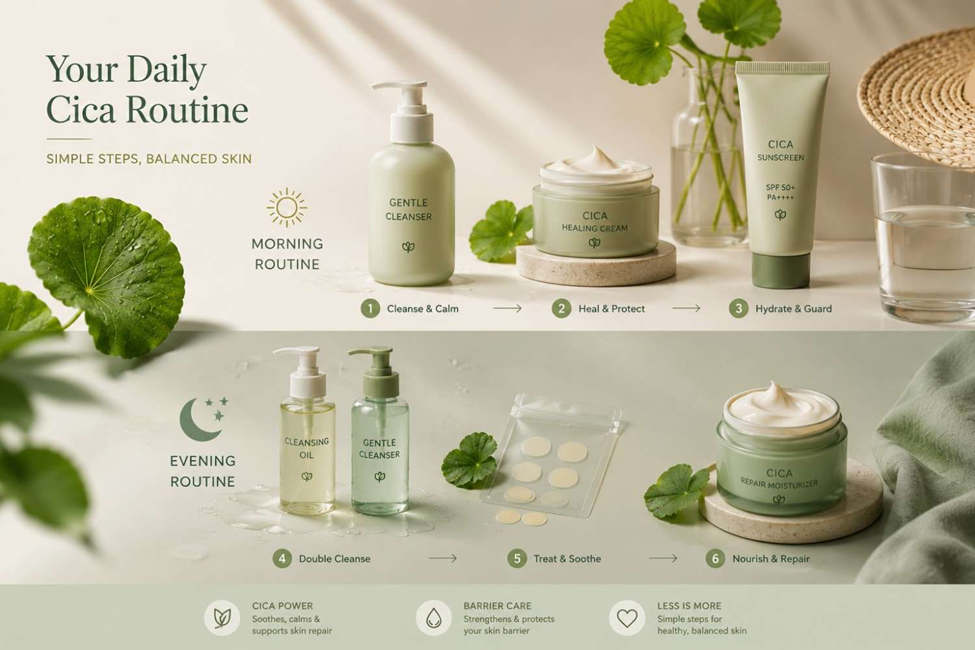
It doesn’t have to be complicated to have balanced skin. Less is more; this is the simplest way to achieve balance in your skin:
Morning Routine
1. Take a moisturizing cleanser that doesn’t strip the skin of its essential oils , basically keep it calm
2. Put on a thin coat of skin healing cream , just to make a solid little base for your cosmetics
3. Add a proper amount of cica sunscreen so you stay hydrated all day long and also get guarded from harmful rays
Evening Routine
4. Do a double cleanse to lift every trace of makeup, grime and cica sunscreen . like really get it all out
5. After double-cleansing, apply acne relief patches directly to clean, dry skin if any active breakouts are present.
6. Apply a thicker layer of a skin repair moisturizer to your face and neck so that your skin has enough time to rebuild a strong barrier from the ceramides and cica that will be working while you sleep.
The Final Verdict
Centella Asiatica is a worldwide craze today, aware! It’s more than a phase; it’s about correcting the thinking that our skin must be tortured to achieve flawlessness, instead it needs to be cared for. A daily smart cica sunscreen will give your face the protection it needs while you go out all day. Hydrocolloid patches will help with any breakout problems you have by providing immediate relief; and finally, you can give your skin the environment it needs to heal itself with a nightly restorative skin repair cream.
Frequently Asked Questions
Can a skin repair moisturizer cause breakouts if I already have oily or acne-prone skin?
Not if it is formulated correctly. Modern skin repair moisturizers use lightweight, non-comedogenic ingredients like Olive Squalane and hydration complexes instead of heavy oils, helping repair the skin barrier without clogging pores or leaving a greasy finish.
How do California Skin+ Triple Action Acne Relief Pimple Patches work to clear breakouts faster?
These patches use a hydrocolloid matrix to absorb oil, fluid, and impurities from pimples while creating a protected healing environment. Infused with Salicylic Acid, Centella Asiatica, Tea Tree, and Calendula, they help flatten blemishes, calm redness, and reduce the risk of post-acne marks.
Will a cica sunscreen leave a white cast or make my skin look shiny?
A well-formulated cica sunscreen is designed with a lightweight, invisible finish that blends easily into the skin without leaving a white cast. Ingredients like Centella Asiatica, Willow Bark, and Neem also help soothe irritation and control excess oil throughout the day.
How long does it take to see results when using a skin repair moisturizer?
Most people notice reduced dryness, tightness, and irritation within the first few uses. However, complete skin barrier repair usually takes around two to four weeks of consistent use, especially when paired with daily sunscreen protection.