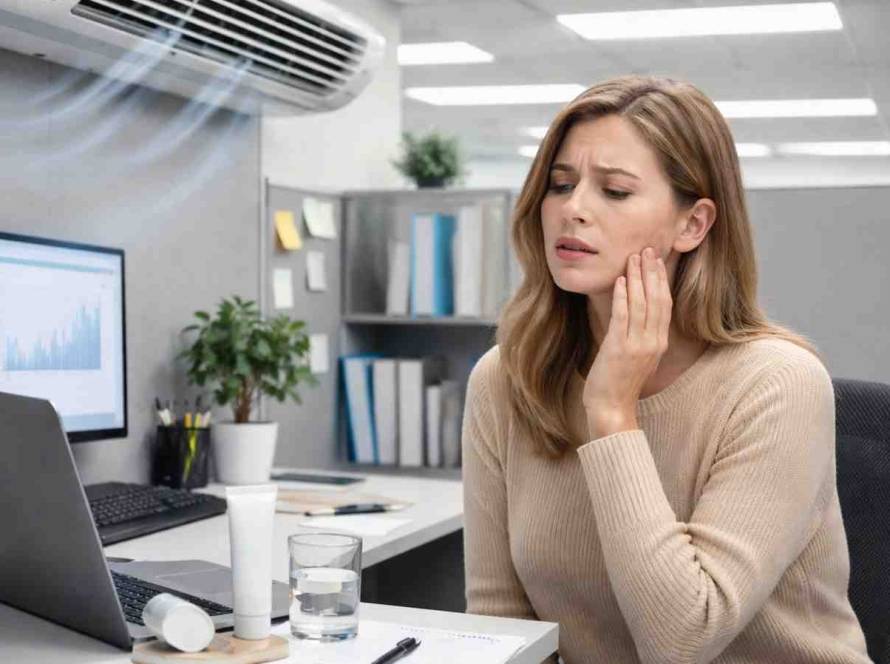
The outfit is sorted. The shoes match. Before one of those occasions when what really counts is happening, be it a wedding, an interview panel, or even the first date of a person you care about enough to be nervous for, and there you have it! Right on your chin, cheek, or forehead. Red. Raised. Completely unmoved by the fact that tomorrow is important.
There is a very particular kind of helpless fury that comes with this moment. Not just the frustration of the pimple itself, but the timing. Of all the weeks. Of all the days. Why now.
The cold, hard truth is that it is precisely when the body is working overtime to try and cope with its stress that it is happening. It is the hormone cortisol, released during such a crucial moment, that sends a signal to sebaceous glands to start producing excess oil. Because more congestion, with a little heat and bacteria, means a pimple. The whole process takes about 48 to 72 hours from the first stress signal to the fully surfaced spot. Which maps, with almost mechanical precision, onto the lead-up to most big occasions.
This is not bad luck. It is not a sign that the routine has failed. It is biology doing exactly what biology does, at the worst possible time, which happens to also be the most predictable time. And once that is understood, the question stops being “why is this happening” and becomes something far more useful: what does a genuinely good instant acne remover actually accomplish in the available hours, and how do the ingredients inside it do what they do?
Why the Pre-Event Pimple Is Not a Coincidence
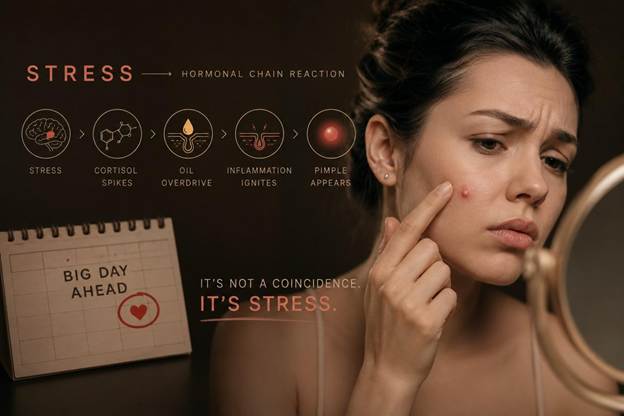
Numerous research groups have re-researched and expanded upon a 2003 Stanford University study that formally established the relationship between stress and acne. This relationship is mediated via two hormones, cortisol, and corticotropin releasing hormones, which are directly bound to sebaceous glands via receptors. When stress levels rise, these hormones do not just affect mood and sleep; they physically stimulate oil production in the skin.
A 2011 paper in the Journal of Clinical and Aesthetic Dermatology went further, showing emotional stress raises several inflammatory markers in skin tissue, not only sebum output, but also the immune response that turns a clogged pore into this red, swollen pimple. The more stressed the body is , the more intense the immune system acts , like it treats the blocked follicle as a real threat. So you can have a low level blockage that would’ve stayed kinda invisible during a calm week, but during a stressful one, it suddenly becomes a noticeable, inflamed situation. (Source)
The week before a wedding, the night before an interview, the afternoon before a first date, these are exactly the hormonal conditions where acne can ramp up and show itself fastest. The calendar does not really do that on its own. Cortisol does, plain and simple. But even if you know that, the pimple still feels just as real, and it doesn’t magically move the clock. There are only so many hours to handle it, no matter what.
A Realistic Look at What Is Possible in the Time Available
This is the table worth bookmarking before the next big occasion:
| Time Window | What a Fast-Acting Acne Treatment Can Do | What Still Needs Managing |
| 1 to 2 hours | Visible redness reduction, beginning of swelling reduction | Remaining redness needs colour-correcting concealer |
| 4 to 6 hours | Noticeable flattening, significant redness reduction, surface beginning to dry | Slight texture may remain at the site |
| Overnight – 8 hours | Substantial shrinking, redness close to normal, whitehead drying out | Residual mark begins forming, needs continued treatment |
| 24 hours with reapplication | Near-complete resolution for surface pimples and whiteheads | Deeper cystic spots need more time |
| 36 to 48 hours | Full resolution possible for most non-cystic spots | Post-inflammatory mark may remain, needs brightening care |
Three Scenarios, Three Very Different Pressures
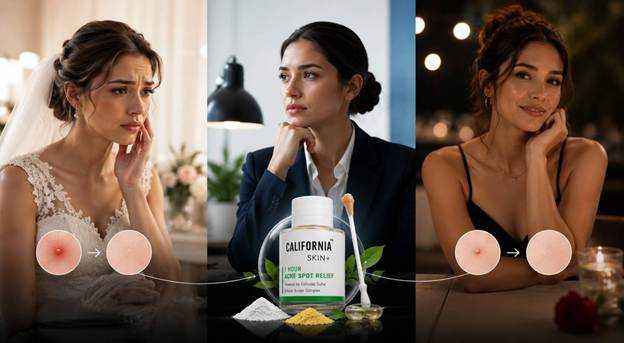
Before a Wedding
Planning for a wedding alone can result in numerous weeks of stress; planning the event, coordinating logistics, managing social interactions, finding and fitting your dress, and going to pre-wedding events are all factors of pressure leading up to the actual wedding. Within two days of your wedding day, you have usually been experiencing elevated levels of cortisol for several weeks. That cumulative hormonal load is a near-perfect environment for a breakout to form.
Add to that the pre-wedding treatments some people put their skin through, such as facials, threading, waxing, any of which can trigger a reactive pimple if the skin is already sensitised. The pimple that appears 48 hours before a wedding is almost always the result of everything the skin has been through in the weeks prior, not just the final two days.
The mistake here is reacting with panic and too many products. The right move is one well-chosen acne spot treatment, applied immediately and left to work, reapplied every few hours, and paired with enough sleep and water to give the skin the best possible internal conditions to respond. Touching the spot repeatedly, trying multiple products, or attempting to extract it at home all produce a worse result on the day than a calm, consistent acne spot treatment applied from the moment the spot appears.
Before a Job Interview
Interview anxiety has this very specific little timeline. When someone is going to interview, they usually have a lot of buildup to the time of their interview, all the way through into the eve of the interview right until the morning prior to the interview. Cortisol levels increase for three to five days prior to the event, the exact window of time during which a pimple will form then actually show up on someone’s skin.
For anyone whose skin responds to stress with dependable breakouts, treating the interview like a skin episode, not only a professional one, changes how you prep. An acne spot treatment that gets started when the stress begins, rather than when the pimple appears, genuinely changes the outcome. Not because the treatment prevents the cortisol response, but because it intercepts the congestion before it becomes fully inflamed.
On the morning of the interview, the goal for a fast acting acne treatment is redness reduction enough that foundation or concealer can sit flat and not draw attention to the spot by creating texture. A well-treated pimple that has had eight hours of serious acne spot treatment working on it is a fundamentally different makeup challenge than an untreated active pimple with full redness and swelling.
Before a Date
This one carries a weight the other two scenarios do not, because a date, especially a first one, involves being seen in a different and more personal way than a professional occasion does. The stakes feel skin-specific in a way that an interview or even a wedding does not quite replicate.
The timeline here is often the most compressed. Date-night breakouts tend to appear the day of or the night before. That gives four to sixteen hours of working time for an instant acne remover formula, depending on when it is first noticed. Four hours of a properly formulated acne spot treatment with sulfur, salicylic acid, and zinc PCA produces visible, meaningful change, not complete resolution, but enough reduction in redness and swelling that the skin looks calm rather than actively inflamed.
What matters in this window is applying early, leaving the treatment completely undisturbed, and not adding anything else to the spot until it is time to apply makeup or head out. Every additional touch, every anxious check, every cotton swab that is not delivering more treatment delays the resolution that the acne spot treatment is working toward.
The Things People Do in a Panic That Make It Worse
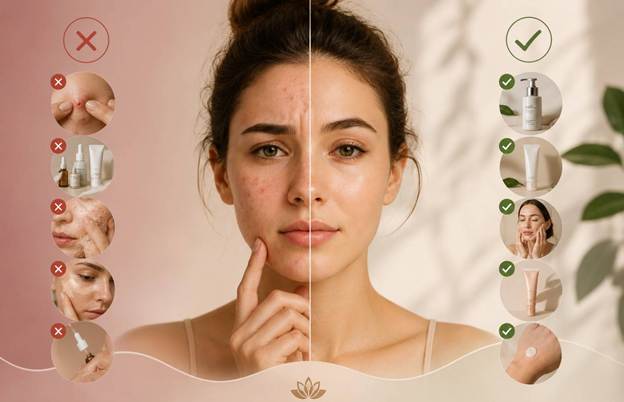
Worth being direct about this because the panic response is almost universal and almost universally counterproductive:
- Popping it. Always feels like doing something. Never actually helps. By breaking the skin, spreading the bacteria laterally, adding new bacteria from your hands (through contact), and creating an injury that will take (generally) longer to heal than just leaving the original acne alone (and introducing the real risk of leaving a visible scar); then proper acne spot treatments treat the material within the pore from the outside in, thus eliminating the need to break the skin-open without compromising the integrity of the original pimple.
- Applying three different spot treatments at the same time. The logic is that more activity equals faster results. It is a fact that the application of multiple treatments based on conflicting formulations on irritated skin results in irritations, flaking, and, in extreme cases, even chemical burns to the neighboring tissues. One carefully selected product will always do better than several poor-quality products.
- Cleaning the area up, the physical exfoliation part on a pimple that is active and kind of inflamed tends to spread bacteria around. It also strips the nearby skin barrier, then it really ramps up the inflammation, you know. So the area needs proper treatment, not harsh abrasion; just let it calm down first.
- Putting on a thick concealer straightaway, without kind of prepping first. You end up trapping bacteria, so none of the active ingredients can really do their work on the pimple, and it kind of seals the pore up more, which then usually leads to a nastier little spot the very next morning than if you had never put the concealer there in the first place.
- Trying a brand new product the night before. Untested ingredients on already-stressed skin without time for a patch test is how a manageable pimple becomes a full allergic reaction that is significantly harder to deal with than the original spot.
Conclusion
A last-minute breakout before a wedding, interview, or date can feel like terrible timing, but honestly, it is often the predictable result of stress-driven hormonal changes already going on under the skin. While no acne spot treatment can wipe out a pimple instantly, using the right mix of ingredients, at the right moment, can really cut down redness, swelling, and overall noticeability, even with that short window you have. The whole trick is not to panic or do too much, and definitely not to go aggressive with picking. It should be steady, targeted care that supports the skin instead of battling it. Once you figure out what is fueling the breakout and you respond with ingredients that are proven rather than pure desperation, a sudden pimple turns into a manageable nuisance instead of being the centre of attention all day.
Frequently Asked Questions
Q1. How fast can an acne spot treatment work before an event?
For surface pimples, redness may start reducing within 1–2 hours, with noticeable shrinking in 4–6 hours. Deeper breakouts usually need overnight treatment. The earlier you apply the treatment, the better the results.
Q2. Can I wear makeup over an acne spot treatment?
Yes. Let the treatment dry completely before applying makeup. A treated, less-inflamed pimple is easier to conceal than an untreated one. For best results, use a colour-correcting concealer after the treatment has had time to work.
Q3. What’s the difference between an instant acne remover and a regular spot treatment?
Regular spot treatments are designed for ongoing acne management over days or weeks. Instant acne removers are formulated to reduce redness, swelling, and visibility within hours, making them ideal for last-minute breakouts before important events.
Q4. What makes California Skin+ 1 Hour Acne Spot Relief different?
It combines 3% Colloidal Sulfur, 2% Salicylic Acid, Zinc PCA, and Calamine to target oil, bacteria, redness, and inflammation at the same time. The concentrated formula is applied directly to the breakout, helping deliver visible improvement within hours.