You wake up with this annoying sore lump at the edge of your mouth, like right there, corner-ish. Maybe two. Maybe a whole cluster sitting along your chin like they got a group booking. You did not eat anything terrible. You cleansed your face. You even remembered to moisturize. So why is this happening again?
Here is the thing most people never figure out: perioral acne, meaning breakouts specifically around the mouth, lips, and chin, often comes from sources that have nothing to do with traditional acne causes. Your toothpaste. Your lip balm. That flavored Chapstick you have been using for years. These are the things nobody tells you to look at, and they are silently trashing your skin every single day. When these unexpected triggers strike, reaching for a powerful, targeted acne spot treatment is your best line of defense to quickly calm the inflammation and clear the skin while you track down the root cause.
About 50 million people in the US deal with acne every year, according to the American Academy of Dermatology, and a huge chunk of adult breakouts, especially in women, camp out in the lower third of the face. Hormones play a role, but the whole story is much more complicated than that.
Your Toothpaste Is Probably Up To More Than Just Cleaning Your Teeth
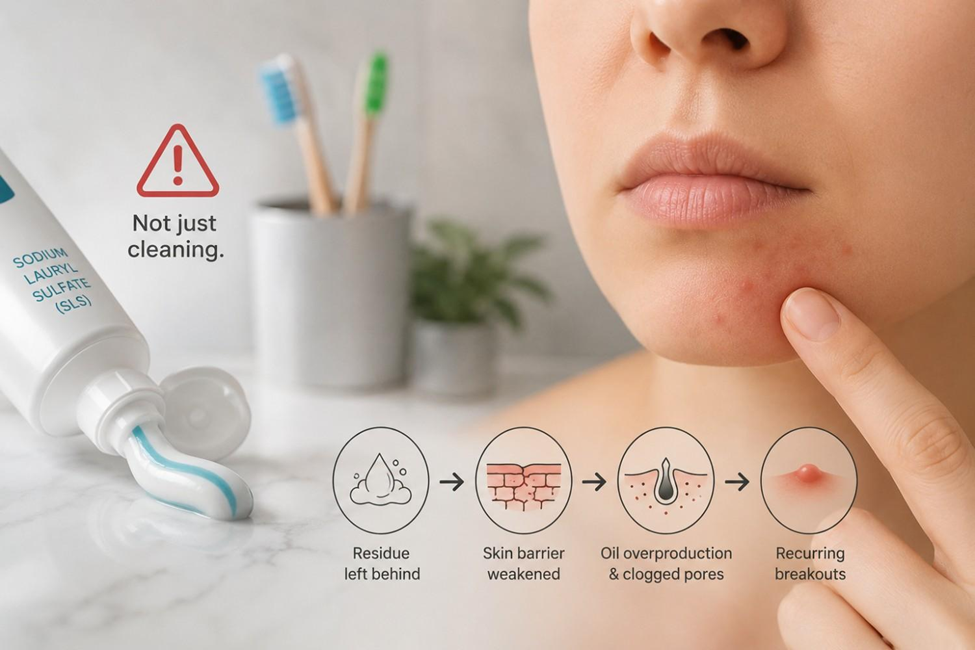
This is the one people always push back on, but hear me out. However, it has been observed that the standard brands of toothpaste actually contain sodium lauryl sulfate. This is one of the main foaming agents used in toothpaste. While it may not irritate everybody’s skin, there are many people whose skin will get irritated because of it. You rinse, sure, but not always completely. And if you pat your face dry right after without fully rinsing the lip line and chin area, that residue sits there.
Over days, weeks, and months of this, the skin barrier around your mouth takes a quiet beating. A compromised barrier overproduces oil as a defense mechanism. Clogged pores follow. Then you are applying an acne spot treatment to the same spot every single week, wondering why it keeps coming back.
The fix here is actually simple:
- Try switching to an SLS-free toothpaste and give it 4 to 6 weeks to see if it makes a difference
- After brushing, rinse your chin and lower lip area with water the same way you rinse your mouth
- Pat that area separately and gently, do not drag the towel across your mouth zone
- If you already have an active breakout sitting there, apply your acne spot treatment after your full routine, on clean, dry skin, not right after a steamy bathroom session
It sounds so unsexy as a skincare tip, but genuinely, this change alone has cleared up persistent chin acne for a lot of people.
Lip Balm and the Pore Suffocation Problem
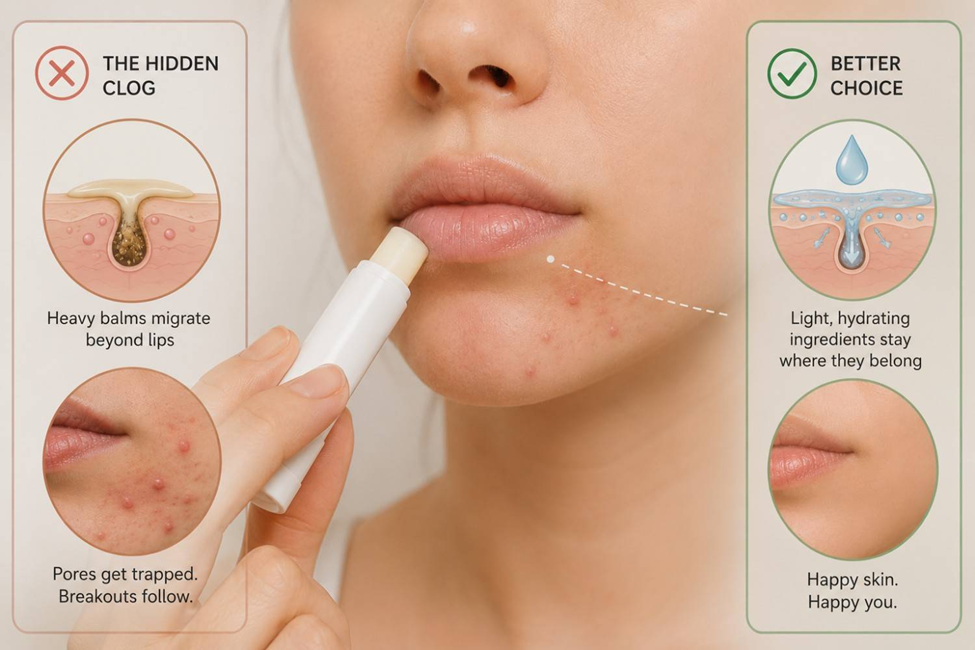
Lip balm gets a free pass in most skincare conversations, and it should not. The ingredients in a lot of popular lip balms, petrolatum, lanolin, mineral oil, and heavy waxes, are intensely occlusive. That is great for your actual lip tissue, which does not have pores. It is bad news for the skin millimeters away from your lips that absolutely does.
Every time your lips move, talking, eating, smiling, licking them, the product migrates outward. It is not a dramatic transfer, but it is constant. Most of the occlusive formula will end up trapped near your mouth, on the perioral area (the skin around the mouth), causing the buildup of sebum and dead skin cells inside the pores, and this results in acne caused by cosmetic products. This term is recognized by dermatologists as acne cosmetica (acne caused by products).
Research published in the Journal of Clinical and Aesthetic Dermatology has identified comedogenic (pore-clogging) cosmetic ingredients as the second most overlooked reason for healthy adults with persistent acne. If you use a topical acne treatment regularly, but are still experiencing breakouts around your mouth despite having a good skincare routine, evaluate the ingredients in your lip balm (check your lip balm). It may be as simple as switching to a lip balm made with hyaluronic acid or glycerin rather than a petroleum-based, waxy lip balm. (Source)
The Other Stuff Nobody Connects to Mouth Breakouts
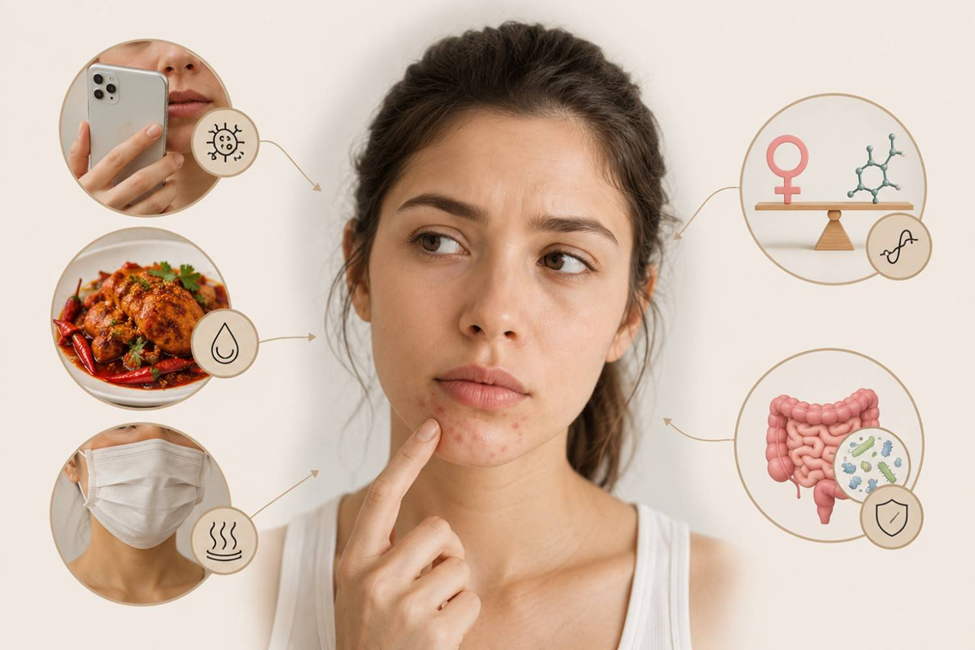
- Toothpaste and lip balm are like the two biggest, but kind of overlooked, culprits, though they aren’t the only ones. There are a few other things that quietly mess up the perioral skin, more than you’d think
- To begin with, first of all, your phone is constantly pressed to your face, including the area where your skin comes in contact with the cheek and chin, and it is full of bacteria, together with other impurities such as oil from the surfaces that it came in contact with.
- Moreover, spicy foods can create a film of residue on your skin, especially in areas close to the mouth, which can lead to irritation if the skin is not cleaned after meals. Especially sauces or oils that can remain in the areas near the corners of your mouth.
- Fabric masks create a warm, humid little environment right where pores are already working overtime. It seems the mouth and chin area is usually the first to break out under mask use, for most people
- Hormonal shifts your cycle, stopping birth control, and perimenopause, cause a measurable spike in sebum production focused on the lower face. A 2021 review in Gut Microbes also found a real connection between gut microbiome health and inflammatory acne, so what you eat matters more than just the food touching your face
If you’re experiencing your hormonal phases, then the best thing to do is to be equipped with your acne spot treatment the very moment that an unwanted bump appears on your face. Timing is key in order for you to make sure that the pimple does not last long.
What Ingredients Are Worth Your Trust
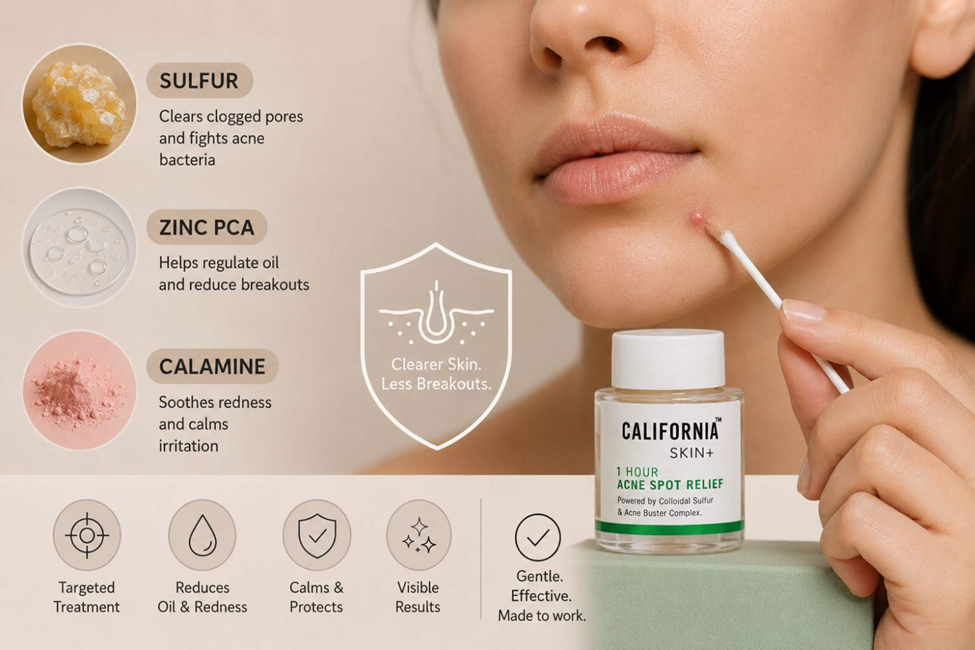
You have probably tried a dozen things. Some worked a little. Some made everything worse. Let me talk about what the research actually supports for targeted breakout treatment.
Sulfur – Unglamorous But Genuinely Effective
Sulfur has been used for skin issues for a very long time, and not just because people lacked better choices, but because it actually works. The sulfur acne treatment is said to work via a process called keratolysis, where it loosens up and clears out those dead skin cells that are clogging pores, and at the same time, it makes the pore environment unfriendly for acne-causing bacteria. A few studies that compare sulfur acne treatment to benzoyl peroxide have found that it can bring about similar reductions in lesions, yet with noticeably less irritation, which is a big deal when you’re treating skin around the mouth that is already dealing with daily aggravation.
The other reason sulfur acne treatment makes a lot of sense for perioral breakouts specifically is that it does not bleach your pillowcase, your towel, or anything near your face the way benzoyl peroxide does. If you have darker skin and you are worried about post-inflammatory marks from pimples, sulfur acne treatment is also gentler in terms of hyperpigmentation risk.
The Acne Drying Lotion Method – That Pink Stuff You Keep Seeing
If you have been on skincare corners of the internet for any amount of time, you have seen the famous pink bottle with the sediment settled at the bottom. The whole idea behind a good acne drying lotion is concentration and precision. You do not shake it. You dip a cotton swab directly into the sediment and apply only that pink layer onto a dry, individual pimple. That is it.
The reason this approach works is that it delivers a concentrated dose of actives, typically sulfur, zinc compounds, and calamine right onto the breakout without spreading to the surrounding skin. Research on zinc PCA specifically has shown it can reduce surface sebum levels by up to 67% under controlled conditions, and calamine has well-documented anti-inflammatory properties that visibly reduce the redness and swelling of an active pimple. A properly formulated acne drying lotion that stacks these three together is hitting the pimple from multiple angles at once.
Zinc PCA – The Quiet Regulator
Zinc gets mentioned a lot in acne skincare, but zinc PCA specifically is a more refined form. Zinc that is bonded to pyrrolidone carboxylic acid is, kinda, more easily absorbed through the skin than other forms of zinc, and it may work on a more cellular level to help regulate sebum output from sebaceous glands. In fact, a meta-analysis from 2020 in Dermatologic Therapy basically reviewed 17 clinical trials, and it suggested that topical antioxidants with zinc produced meaningful decreases in both inflamed lesions and non-inflamed ones linked to acne. For the chin and mouth area, where oiliness tends to run high, this kind of sebum regulation from your acne spot treatment is not optional; it is the part that stops the breakout from refilling within a week.
Calamine – Underestimated and Underused
Calamine is not a trendy ingredient. It will not be the star of someone’s viral skincare routine. But if you have ever had an itchy, inflamed, irritated skin reaction and put calamine on it and felt immediate relief, you already understand what it does. When it comes to dealing with acne-related spot treatments, the active ingredient calamine (with zinc oxide and ferric oxide) will reduce visible redness while simultaneously calming swelling, while the rest of the topical actives will work directly on the inside of the pore. Some breakouts that occur around the mouth tend to be red, sore, or very noticeable → soothing the skin on the surface is no small deal.
Putting Together a Routine That Actually Sticks
Getting on top of perioral acne is part habits and part products. You need both.
During the morning, it would be better to use an adequate cleansing product such as a skin drying lotion. For instance, do not use harsh soap products on the skin. In case the skin has become dry due to the usage of drying agents, the oily zones of the skin may start producing more oil, resulting in acne. Moisturizing your skin, even though it is oily, is vital, and remember to wear an SPF cream, but it should be non-comedogenic SPF.
Cleanse your face properly during the evening using a double cleansing process, in case there were any cosmetic products used on your face. After cleansing, use your acne spot treatment according to directions using a cotton swab or your clean finger on active pimples before going to bed. Let it dry completely. Get a clean pillowcase on rotation because bacteria buildup on fabric is a real contributor to recurring breakouts in the same spot.
Each week, think about the products that you place close to your face. Look at the labels on your lip gloss. Inspect your toothpaste. Dehydration causes your skin to produce more oil, so drink more water.
The timing of your acne spot treatment matters too. The earlier you apply it to a forming pimple, the less the breakout has to progress. Waiting until it is fully inflamed and visible means more recovery time. At the first sign of a little tenderness under the skin, a subtle bump, that is when your acne spot treatment earns its place in your routine.
FAQs
Is my toothpaste actually causing these breakouts, or is it hormonal?
Usually both. Hormones increase oil production around the chin and mouth, while toothpaste residue or heavy lip balms can trigger irritation and clogged pores. Managing both the internal and external triggers works best, along with using a targeted acne spot treatment at the first sign of a breakout.
What should I look for in an acne spot treatment for sensitive skin?
Look for gentle but effective ingredients like colloidal sulfur, Zinc PCA, calamine, and zinc oxide. These help reduce acne, oiliness, and redness without overly drying or damaging sensitive skin. A dermatologically tested acne drying lotion is often the safest option.
What’s the difference between an acne drying lotion and a regular acne spot treatment?
Regular spot treatments are usually gels or creams spread over the skin. An acne drying lotion uses concentrated sediment applied directly onto the pimple with a cotton swab, delivering stronger targeted treatment with less irritation to the surrounding skin.
What makes California Skin+ 1 Hour Acne Spot Relief different?
California Skin+ 1 Hour Acne Spot Relief combines 3% colloidal sulfur, Zinc PCA, zinc oxide, and calamine in an acne drying lotion formula designed to reduce pimples, oil, and redness quickly. Its targeted application method and fast-action formula make it especially useful for sudden breakouts, hormonal spots, and recurring chin-area acne.