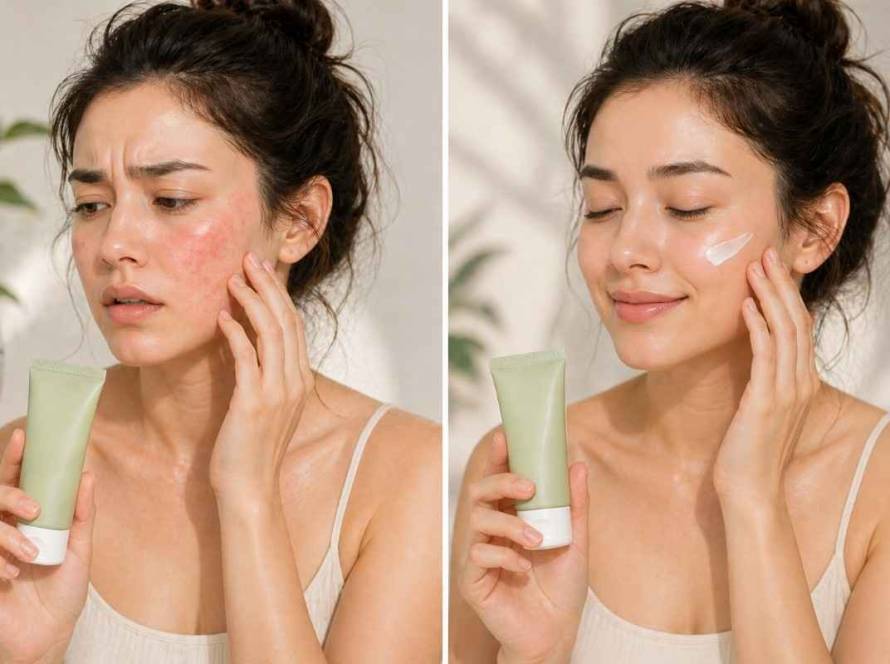
Having nursed a persistently stubborn breakout for weeks, only to see everything fall back apart because of using SPF three days later, is extremely demoralizing. You have done everything correctly to make your skin calm; then you have put sunscreen on, and everything returns to being a complete mess.
It makes sense that so many people quietly stop wearing it altogether. Not because they don’t know better, but because the products available have let them down enough times that skipping it starts to feel like the more rational choice.
That’s a genuinely bad situation, and it’s one that better anti acne sunscreen formulations are starting to actually solve. Willow bark extract is a big part of how.
The Sun Is Not Doing Your Skin Any Favors, Even When It Looks That Way
There’s a persistent summer rumor that the sun dries out pimples. The logic isn’t completely absurd. A fresh tan mutes redness temporarily. The skin’s surface can look less oily for a few hours on a hot afternoon. Things genuinely appear better for a moment.
What’s happening beneath the surface is a different story entirely
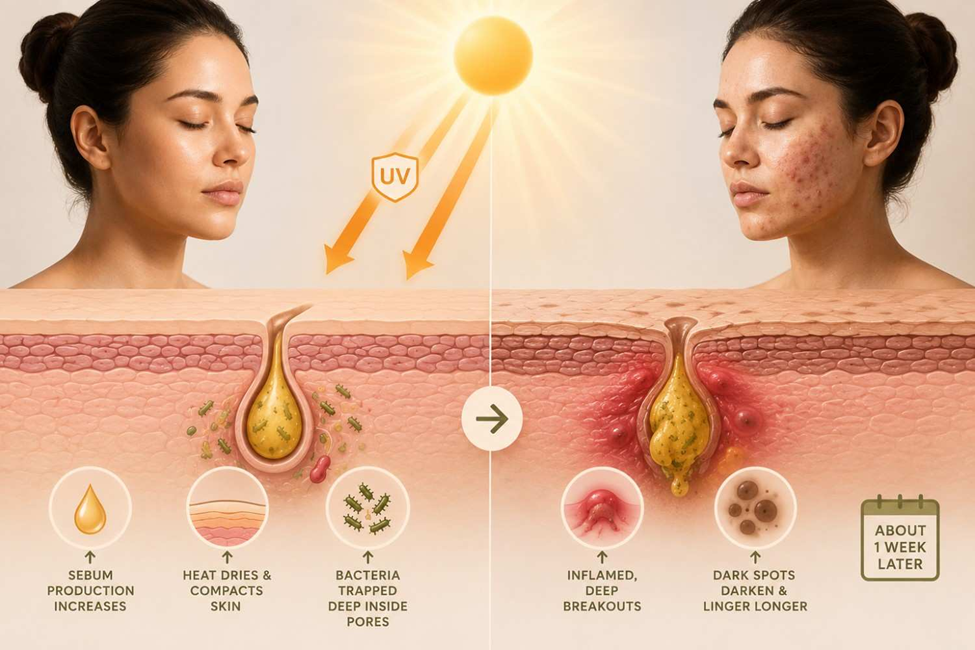
When unprotected skin meets UV radiation, the skin registers it as damage and responds accordingly. Sebum production increases further as a defense mechanism, while heat dries out the outer layer of dead skin cells and compacts them into stiff structures. This means there’s lots of oil fighting to get out through pores that are harder than ever to do so, which makes it easier for bacteria to be trapped deep inside our skin.
About 1 week later, from when I got my tan and it started to fade, I have a whole new set of inflamed, deep breakouts. Dark spots that were left on my skin from previous breakouts have also darkened from UV exposure, making the spots darker than before, b/c uv rays speed up pigmentation. When you have dark spots, they tend to linger longer on your skin when they have an elevated level of UV exposure without being protected from it.
Forgetting about using the non-comedogenic sunscreen to ensure a spot-free complexion is not the healthy choice. Instead, it replaces one issue with many others.
Willow Bark: What It Actually Does Inside the Pore
Black willow tree bark extract has been a traditional herbal remedy for hundreds of years. It is used to create modern skin care products. Out of all the interesting components contained in willow bark, the most important when considering how willow bark extracts can be beneficial to treating acne is salicin.
Salicin is the biological building block that produces salicylic acid. If you have used any BHA (beta hydroxy acid) or used a topical product that contains beta hydroxy acid, you have a basic idea of how salicylic acid works. The meaningful difference is in how the two actually behave on skin, particularly over extended daily use.
Synthetic salicylic acid at active concentrations can be harsh. It strips. It causes flaking. When heat is involved or you’re in the sun for too long, it can make skin feel reactive, sensitized and kinda more irritated than it was before. It becomes a real headache when you’re trying to wear it right under a sunscreen in the middle of summer.
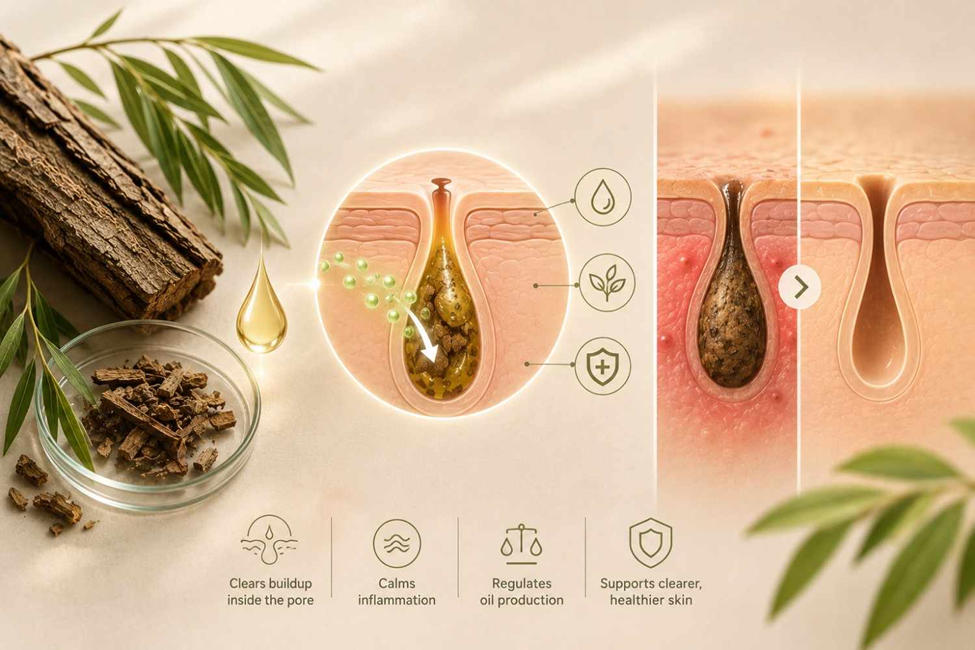
Willow bark tends to work more slowly, but it also feels gentler. Since salicin is oil-soluble, it can move through the surface sebum instead of just sitting on top of the skin. Then it makes its way into the pore lining, and it softens the piled-up debris plus the dead skin cells that lead to blackheads and that clogged-up congestion look. It doesn’t force anything. It creates the conditions for the pore to clear naturally, over time, without the aggressive reaction that harsher acids can trigger.
Beyond the pore-clearing mechanism, willow bark also contains tannins and flavonoids with genuine anti-inflammatory activity. Active blemishes that are red and tender respond to topical calming throughout the day. Having that soothing botanical contact consistently present makes a visible difference in how quickly inflammation settles.
Why Regular Sunscreen Has Always Struggled With Oily Skin
To get a grasp of why a willow-bark-enhanced anti-acne sunscreen actually matters, you kind of have to see first how the usual formulas can become an issue for congestion-prone skin
Most traditional sunscreens rest on a stable emollient base, so the UV filters can stay in suspension and spread evenly on the skin. But when the base feels a little heavy, or when the balance of calming agents isn’t quite right, clogged pores can start acting up, even if the protection part is technically fine. The base has historically been made up of heavy emollients, or a mixture of mineral oils and synthetic waxes. This richness is very beneficial for those with dry or aging skin. For skin that already produces excess oil, it creates a real problem.
If a thick, dense product is used on or in conjunction with an oily skin type, it essentially creates a closed environment on the surface of the skin. Any sebum produced by the skin, perspiration created by heat, pollutants in the air, and even bacteria get trapped against the skin in this type of warm, closed environment. This is how the term “acne cosmetica” was developed; it is used clinically to identify breakouts caused purely by topical products and not by internal factors.
A good non-comedogenic sunscreen has been specially designed and tested to eliminate all of the ingredients known to cause this type of pore blockage. The label means something when it appears on a product that has genuinely been designed with congestion-prone skin in mind. Pairing that lightweight, breathable base with willow bark’s continuous clearing activity gives acne-prone skin both protection and active pore management in a single step, without the breakout tax that older formulas carry.
Where Cica Sunscreen Comes In
Clearing pores addresses one part of the problem. The inflammation side of acne needs equal attention, and that’s where cica sunscreen formulas bring something that single-ingredient products simply can’t offer.
Centella Asiatica is more commonly known as “Cica,” and it has long been used in traditional Asian medicine for things such as wound healing, tissue restoration, and soothing irritations on the skin. The two active ingredients in Cica, madecassoside and asiaticoside, have been thoroughly researched within the context of dermatology.
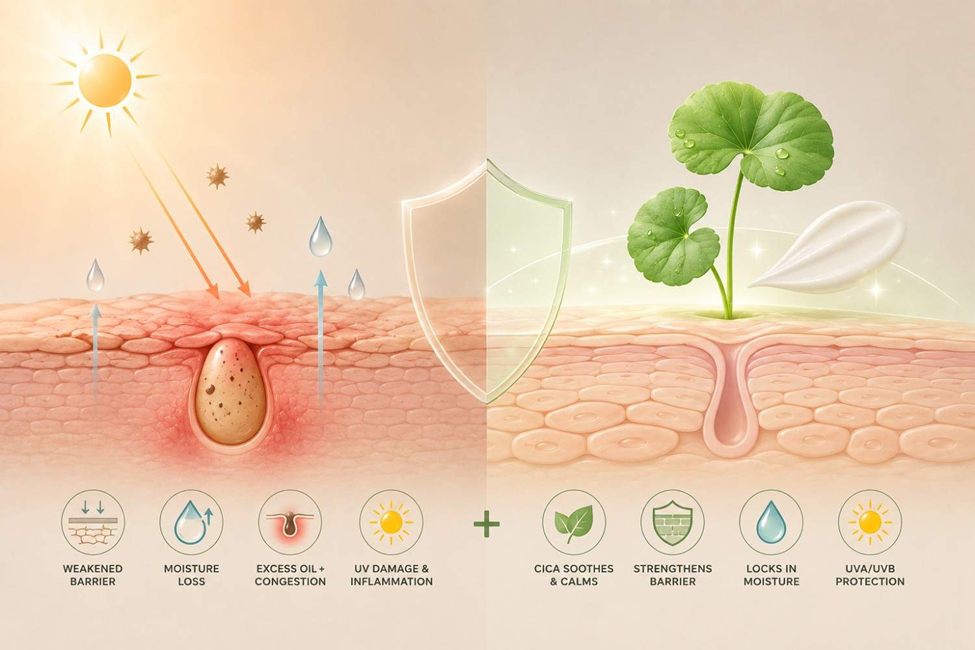
For those individuals who have a propensity to develop acne, Cica’s relevance is obvious. When there is inflammation from an active breakout, the skin’s protective barrier is compromised. The moisture that would normally stay in the skin is lost at a fast rate, resulting in excessive oil production as a compensatory mechanism, perpetuating the cycle of congestion. The outer layer of skin is now exposed to the damaging effects of UV radiation, which increases oxidative stress on the compromised area and increases the temperature of the skin.
A cica sunscreen brings barrier-supportive, anti-inflammatory activity into the daily routine without adding any extra steps. While willow bark keeps the pore environment clear, cica helps the skin retain moisture, reduces surface inflammation, and supports the recovery of existing damage. Active blemishes get healing support at the same time UV protection is happening. This combination of benefits is what makes an effective therapy for acne treatment, versus a simple sun protection product targeting acneic skin.
What the Research Actually Shows
There is much substance to the scientific explanation behind botanical-based sunscreen formulas meant for combating acne.
Acne among adults has seen significant growth in the past decade, with almost 40 percent of adults suffering from it. Women comprise a considerable majority of that population. The demand for sun care that functions therapeutically rather than just cosmetically reflects this reality directly. A large population of adults managing chronic breakouts needs daily products that actively support their skin, not products that require damage control afterward.
Black willow bark extract has been tried in a laboratory and seems to show real antimicrobial properties against Cutibacterium acnes, the bacteria that turn clogged pores into inflamed, painful lesions. So it’s not just a hand-wavy thing about how “natural ingredients” are supposed to be good for skin, it’s a concrete, measurable finding
Also, there are several studies on Centella Asiatica, showing a meaningful decrease in transepidermal water loss. When skin can hold onto moisture better, it doesn’t need to swing into overdrive with oil production as much, or at least that’s the idea people usually mention. Fewer congestion cycles follow naturally from that stabilization. The mechanism is well-supported and logically coherent.
Then there’s a consumer survey finding that puts the whole conversation in sharp relief. About seventy percent of individuals who suffer from active acne choose not to wear sunscreen on a routine basis because they think that wearing sunscreen will compromise their overall skin condition. This is true for most of the individuals who require the most UV protection; however, this is not due to a lack of knowledge, it is because there are several different kinds of sunscreen, and there is no one type that has been successful enough to provide enough positive results for the person who is using it to warrant their future use of that particular type of sunscreen. A non comedogenic sunscreen that is well designed with true therapeutic ingredients could change this pattern in a significant way.
Using Anti Acne Sunscreen So It Actually Delivers Results
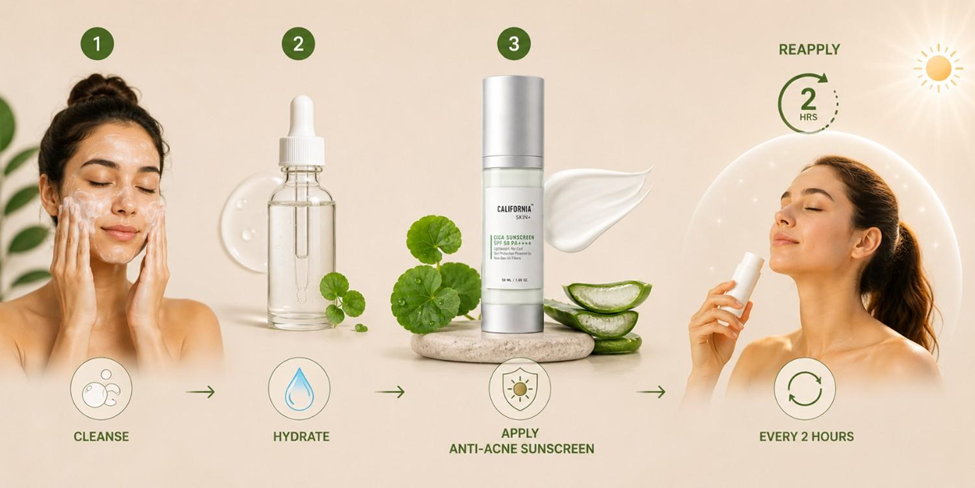
The formula matters a lot, but the little routine around it matters too, as a weird trade-off you can feel. In the morning, cleansing should be soft, not aggressive. A gentle sulfate-free cleanser that lifts the overnight oil without taking the skin barrier apart completely is usually the safer move. Too rigorous a cleansing process in the mornings may cause the skin to secrete more oils because it makes the body feel the need for doing so. Thus, during mid-morning, there is a lot of oil visible on the face.
After that layer, the next step is lightweight hydration. All skin requires moisture, including acne-prone skin; the difference is that acne-prone skin requires moisture in a lighter format that doesn’t clog the pores. Water-based hyaluronic acid serums or gel moisturizers provide skin cells with what they require for hydration, without the heaviness associated with the application of a rich cream in a morning routine.
Subsequently, the use of an anti-acne sunscreen in liberal amounts will follow. The dermatologist’s standard for applying sufficient product to achieve the listed SPF on the bottle is two full finger lengths worth of product. Using a truly non-comedogenic sunscreen will allow an even application of the sunscreen so that it doesn’t leave behind any residue or feel heavy, greasy, or suffocating.
Reapplication is the step most people skip, and it genuinely matters. UV filters degrade with sun exposure and sweat. Every two hours of outdoor time means reapplication is needed to maintain the actual level of protection the formula is designed to provide.
Other Botanicals Worth Looking For in a Formula
A well-designed anti acne sunscreen rarely relies on a single active ingredient. A few additional botanicals that consistently earn their place in thoughtful formulas are worth knowing about.
Neem leaf extract has been used for purifying skin for ages, and it tends to hold up surprisingly well in humid situations where sweat, plus environmental pollution, are mixing with sebum right there on the surface. Aloe vera, on the other hand, gives quick cooling and this enzymatic calm down for skin that’s been warmed up by UV exposure, it also brings vitamins and soothing compounds right into the strained tissue. Probiotic ferments are still kind of newer compared to classic daily sun care, but they’re showing up more and more in quality formulas. They help support the skin’s surface microbiome. And where this balance is maintained, the chances of growth of the bacteria associated with inflammatory acne become reduced.
Each component serves a particular function. In an optimally formulated acne-fighting sunscreen, they complement the action of willow bark and cica, instead of merely existing in its list of components.
Conclusion
Until recently, there was no choice at all for acne-prone people because they either had to use sunscreen and face breakouts or choose not to use the product and get sunburns, increased pigmentation issues, and skin health deterioration.
A genuinely well-formulated anti acne sunscreen, built on a non comedogenic sunscreen base with willow bark providing continuous clearing activity and cica sunscreen benefits supporting barrier recovery and inflammation control, removes that false choice. Skin gets protection and active therapeutic care in the same step, every morning, without the dread of what’s coming a week later.
For anyone who has been in that cycle for a while, that’s not a small development. It’s the thing that was missing.
FAQs
Will an anti acne sunscreen leave a white cast or sticky residue on my face?
No. Modern anti acne sunscreens are formulated with lightweight UV filters that absorb quickly into the skin without leaving behind a heavy white cast or greasy residue. They provide a smooth, breathable, and shine-free finish suitable for all skin tones.
How does a non comedogenic sunscreen help prevent breakouts?
A non comedogenic sunscreen is designed without pore-clogging oils and heavy ingredients that can trap sweat and bacteria. Instead, it uses lightweight hydrators and skin-balancing ingredients that help keep pores clear and reduce the chances of new breakouts forming.
Can I use a cica sunscreen if I have sensitive skin or rosacea?
Yes. Cica sunscreen is ideal for sensitive and reactive skin types. Centella Asiatica helps calm redness, soothe irritation, and strengthen the skin barrier, making the skin feel more comfortable during sun exposure.
What makes California Skin+ CICA Sunscreen SPF50 PA++++ suitable for oily and acne-prone skin?
California Skin+ CICA Sunscreen SPF50 PA++++ combines broad-spectrum UV protection with a lightweight, non-greasy texture specially designed for oily and acne-prone skin. Its formula includes soothing Cica, hydrating Sodium Hyaluronate, and botanical extracts like willow bark, neem, and aloe vera to help control excess oil, calm irritation, and keep skin fresh throughout the day.