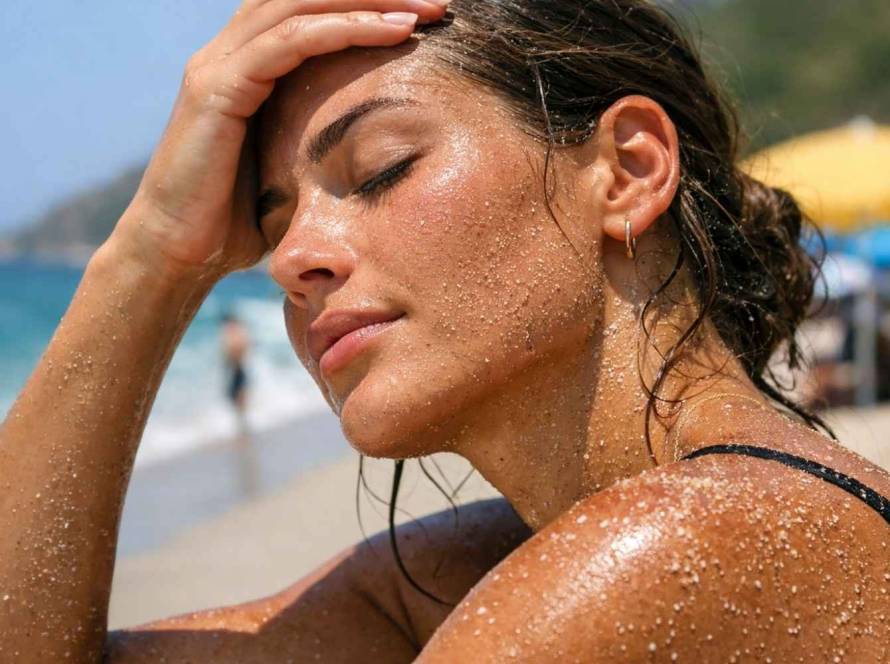
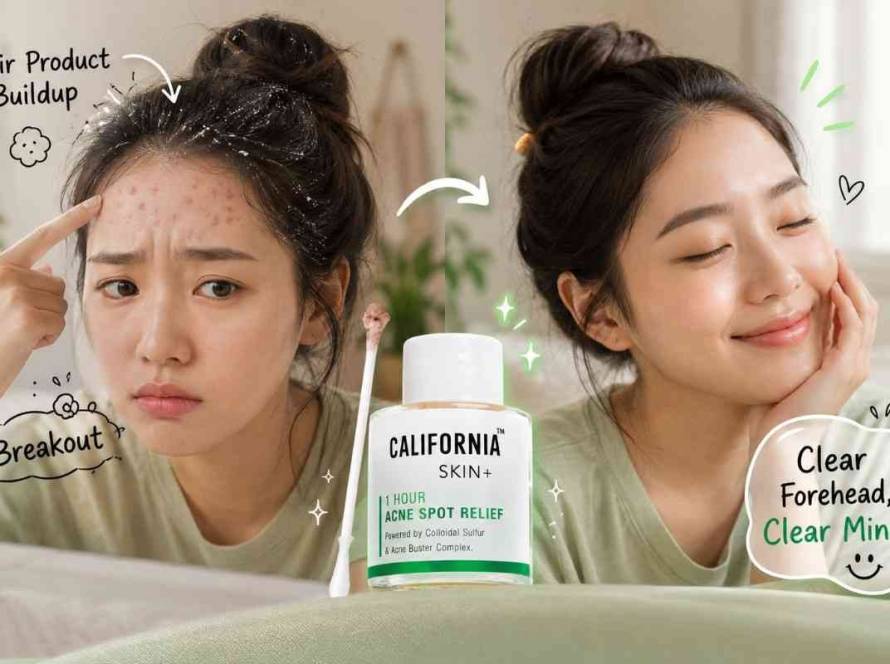
Teenagers can absolutely use sunscreen for sensitive skin during acne breakouts. In fact, skipping sun protection during active breakouts isn’t a neutral decision; it’s one that tends to backfire in ways that don’t show up immediately, and by the time they do, they’re harder to deal with than the original pimple. The key isn’t avoiding sunscreen altogether. It’s finding a sunscreen for sensitive skin that was actually built for this situation.
What’s Actually Happening Inside Teenage Skin
Puberty doesn’t only mess with mood and energy. It also really seems to reshape skin from the inside and out, like, somehow the whole system changes. During the teenage years there’s this hormonal wobble, especially when androgen hormones rise, and that makes the sebaceous glands grow bigger, almost like they get called up. With larger glands, you get more sebum being produced. And then that sebum mixes with dead skin cells, which normally shed from inside the follicle. When that stuff clogs up, it causes an obstruction. After that, those blockages turn into warm sort of sealed spaces where Propionibacterium acnes (the bacteria tied to acne) can settle in, grow, and multiply.
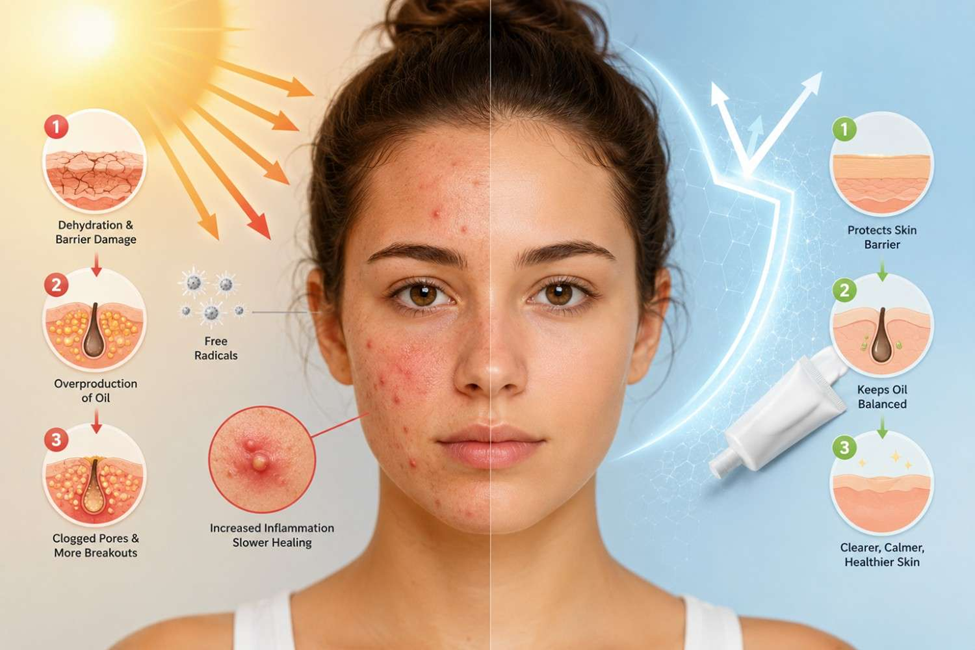
That process is already happening regardless of what goes on the skin. But solar radiation adds another layer of stress onto an environment that’s already under pressure. UV exposure doesn’t just sit on the surface; it gets into the tissue and triggers inflammatory responses that amplify what’s already going on underneath. The skin that was barely managing to stay balanced gets pushed past its threshold faster than it would have otherwise.
Choosing the right sunscreen for sensitive skin during this phase isn’t just about sun damage prevention in some distant, abstract sense. It’s about not making an already reactive situation worse on a daily basis.
The “Sun Dries Out Pimples” Myth And What’s Actually True
This one travels far. Almost every teenager has either heard it or believed it at some point, because there does seem to be evidence for it: spend a day outside and the skin can look clearer, calmer, and less angry. The redness seems to tone down, and the breakouts look less obvious.
What’s actually happening has nothing to do with drying or healing. UV rays cause a mild surface dehydration that temporarily flattens and darkens the appearance of the skin. It’s essentially a shallow, UV-induced effect that evens out skin tone temporarily and makes blemishes look less pronounced against the surrounding skin. It’s cosmetic. It wears off. And underneath that temporary improvement, the skin is taking damage that will show up a few days later in a noticeably worse way.
The Chain of Events After UV Exposure
- Barrier Compromise: UV exposure compromises the moisture barrier.
- Reactive Hyperseborrhea: The skin, sensing that it’s losing hydration rapidly, compensates by producing more sebum. This is basically the skin trying to seal itself off from further moisture loss.
- Micro-comedones: That extra oil, combined with the dead skin cell buildup that UV exposure also accelerates, creates the conditions for a fresh wave of micro-comedones forming beneath the surface. These are small, invisible blockages that haven’t surfaced yet but will, usually within three to five days.
- Prolonged Inflammation: UV radiation actively worsens the inflammatory component of acne. It is not a problem of bacteria only but also an inflammatory disorder. When light from the sun penetrates the inflamed area, pro-inflammatory cytokines and free radicals are released straight to the damaged tissue. Instead of lasting for three days, the pimple could now last seven days.
The skin’s normal repair mechanism slows down, and the temporary clear skin from Tuesday looks like a cruel joke by Saturday.
Post-Inflammatory Hyperpigmentation: The Real Long-Term Problem
Most teenagers are focused on the active breakout. The mark that ends up being left behind afterward can kind of catch people off guard, especially when it’s still hanging around for months.
Post-inflammation hyperpigmentation (PIH) and post-inflammation erythema (PIE) are both flat discolored spots left behind after a pimple has healed. Brown marks fall under PIH, while red or pink ones fall under PIE. Neither is a scar in the structural sense, but both can be just as visible and, in some cases, take significantly longer to fade than the original breakout lasted.
Clinical data puts the figure at roughly 50% of acne patients experiencing persistent PIH. The length of time it takes for a natural fading to occur can be anywhere between 3 months and 2 years, depending on how deep the pigmentation is and whether or not the skin has been adequately protected during the healing process.(Source)
There is a link between UV and this process. When healing tissue is subjected to UV rays from the sun, the epidermal melanocyte (the cell in your epidermis from which your pigment is produced) overproduces melanin at the same site as the healing wound. The skin thinks that UVA radiation means the skin’s health is being jeopardized and therefore, its pigment will increase in order to protect itself. In this context, a darker pigment placed in the healing tissue will produce a darker mark that remains deeper than normal. A lightweight sunscreen for sensitive skin applied every morning essentially blocks that signal before it reaches the melanocytes, giving the healing skin a chance to recover evenly and without the mark becoming more entrenched.
Why the Old Formulas Earned That Bad Reputation
The instinct to skip sunscreen on acne-prone skin didn’t just show up out of nowhere. It came from having used the wrong kinds of sunscreens: the thick and heavy beach-formulated emulsions that were made to stay put on the skin and block water, wind, and sun for hours on end. Those formulas worked pretty well for what they were meant for, but on a sweaty, oily teenage face, they were just awful.
A heavy sunscreen that sits on top of already overactive sebaceous glands basically keeps everything trapped underneath it: sweat, oil, environmental dust particles, and even dead skin cells. That little sealed-up environment turns into a sort of breeding ground for the precise setup that leads to cosmetic acne breakouts that happen not because of hormones or bacteria inside the follicle, but more because of surface congestion.
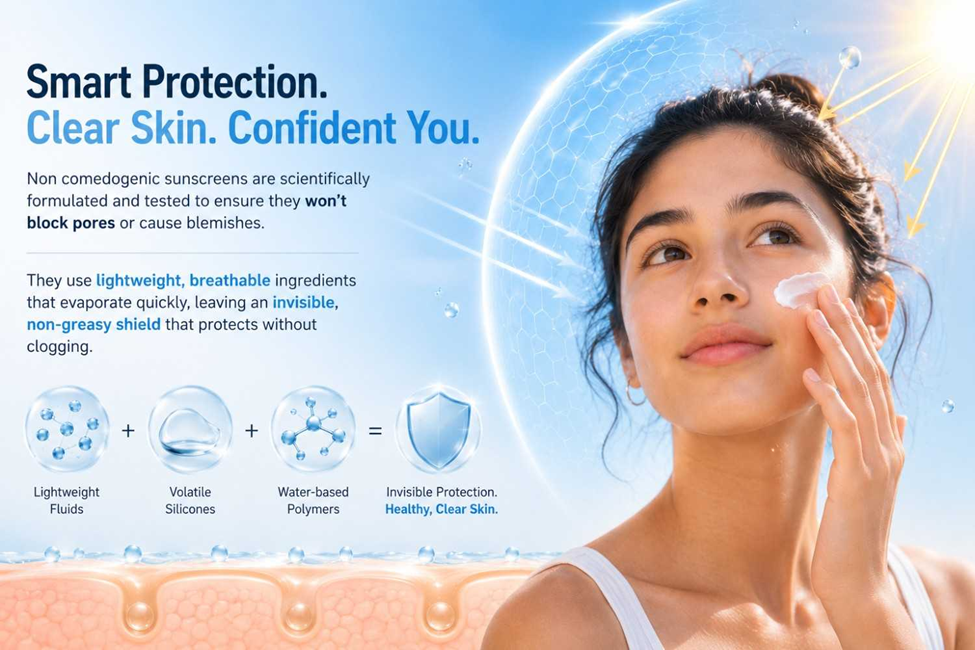
The formulas available now are genuinely different. A non-comedogenic sunscreen goes through testing specifically to verify that the ingredients won’t cause that kind of surface congestion. Rather than utilizing heavier oils and waxes, such products opt for lighter oils, water-soluble polymers, and ingredients that quickly evaporate upon making contact with the skin surface, thereby resulting in the formation of the UV-absorbing film on the skin’s surface without blocking pores. The pores can function, and the sunscreen can do its job without creating new problems in the process.
How Cica Changed the Game for Acne-Prone Skin
The conversation around sunscreen for reactive skin shifted quite a bit once formulators started incorporating botanical actives instead of just stripping out the problematic bits. It was a change in direction really, because rather than only reacting and filtering out irritants, they began using gentler plant extracts and related supportive compounds too. The goal became not just “doesn’t clog pores” but “actively helps the skin while protecting it,” and that’s where cica sunscreen became a genuinely useful category.
What is Cica?
Cica refers to Centella Asiatica, a plant with a long history in traditional medicine across parts of Asia that has since accumulated real clinical backing. Its active compounds (madecassoside, asiaticoside, and asiatic acid) have demonstrated consistent anti-inflammatory, antioxidant, and wound-healing effects in research settings.
On inflamed, reactive skin, these aren’t abstract benefits. The burning, the tight redness around an active pimple, and the raw feeling after using exfoliating acne treatments—cica works directly against all of those.
A cica sunscreen addresses two distinct problems at once. It protects the skin from UV radiation throughout the day and simultaneously delivers a steady calming effect that makes the skin feel less reactive. For teenagers who are using salicylic acid toners, benzoyl peroxide spot treatments, or even just a stronger acne face wash each morning all of which gradually chip away at the skin barrier over time, the cica sunscreen becomes a useful counterbalance. It supports collagen synthesis and also helps the skin hold onto moisture more effectively. These are two things that most acne treatments end up working against, so it evens out the whole situation.
What the Ingredient List Should Actually Look Like
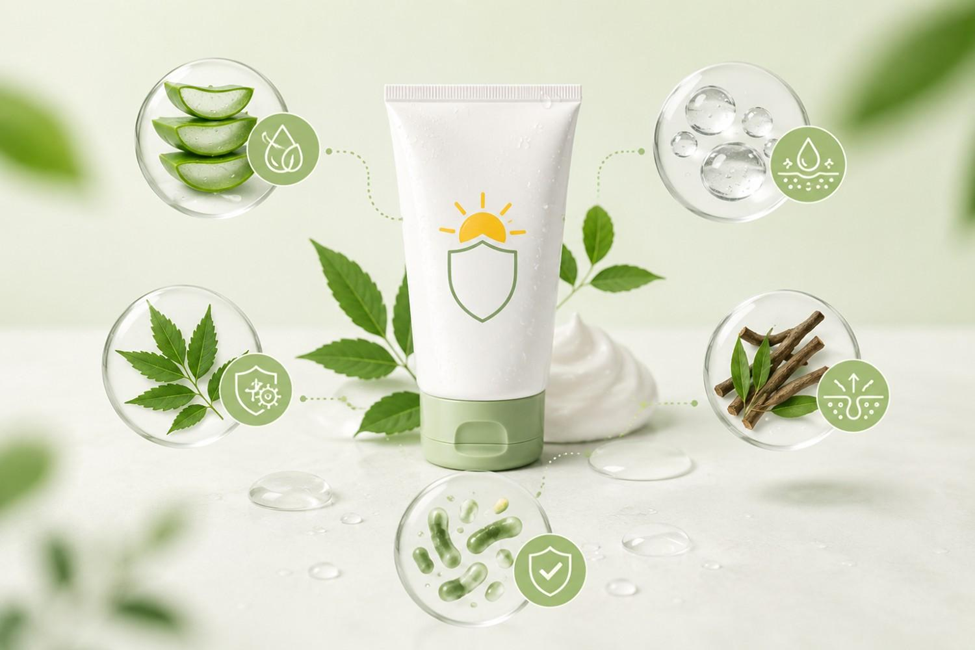
Marketing language on sunscreen packaging can make almost anything feel like its “for” sensitive, acne-prone skin, but if you read past the front label into the formulation part, it matters a lot. The real story is in what the product is made of, not the shiny wording alone.
| Ingredient | Primary Benefit for Acne-Prone Skin |
| Aloe Vera Extract | Brings immediate relief to inflamed, hot skin. It reduces surface temperature and calms redness without introducing heavy oils. |
| Hyaluronic Acid | Works by drawing moisture into the skin cells themselves. Well-hydrated skin is less prone to compensatory oil production. |
| Neem Leaf Extract | Has natural antibacterial properties that help manage bacterial populations on the skin’s surface across the day. |
| Willow Bark Extract | Contains salicin, providing very gentle, ongoing exfoliation within the pore without the intensity of a dedicated salicylic acid product. |
| Probiotic Ferment | Helps reinforce the skin’s microbiome, keeping harmful, acne-triggering bacteria from taking over. |
A sunscreen for sensitive skin that combines these ingredients alongside solid UV filters stops being just a protective step. It becomes something that’s actively working in favor of clearer, calmer skin throughout the day.
Applying Sunscreen Without Making Breakouts Worse
Technique matters more than people tend to realize, especially with active, inflamed skin. Rubbing sunscreen on roughly can burst pustules, spread bacteria across the face, and drag irritated skin across itself in ways that worsen things.
- Preparation: Ensure that your face has been cleaned with a gentle, non-fragrant cleansing lotion so as not to strip the barrier. Allow sufficient time for any topical anti-acne medications or moisturizers to be absorbed (generally, about 5 to 10 minutes is sufficient).
- The Two-Finger Method: Use two parallel lines of sunscreen squeezed along your index and middle fingers to measure out the proper amount needed for your face.
- Application: Dot the sunscreen on the five main zones of your face (forehead, both sides of your cheeks, nose, and chin). Gently press and pat the sunscreen into your skin with your fingers in the direction of hair growth, avoiding any dragging or rubbing of the skin.
- Setting: Wait fifteen minutes before heading outside to let the formula set properly. If makeup is part of the routine, this wait also helps stop the sunscreen from blending poorly with whatever you put on top.
Addressing the Two Most Common Complaints
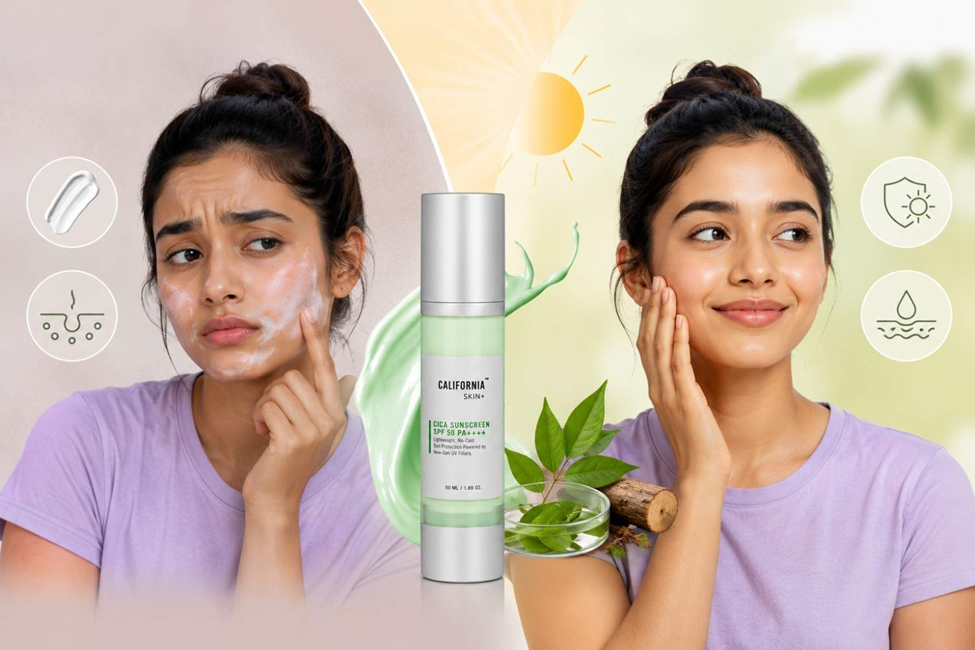
- The White Cast: This frustration tends to come mostly from older mineral formulas that use larger particle zinc oxide or titanium dioxide, which is extra noticeable on medium to deep skin tones. Newer versions of these formulas use micronized mineral particles, and many modern options use photostable chemical filters that become invisible almost immediately after application.
- Midday Shine: This is a genuine concern for teenagers whose skin already produces more oil than adult skin. While some sunscreens amplify that shine significantly, choosing a formula that avoids heavy waxes and utilizes water-soluble polymers ensures the pores can function normally without creating unwanted surface congestion.
Conclusion
It is essential for teenagers who deal with breakouts to put sunscreen on a daily basis as part of their skincare routine; honestly, doing sunscreen on an ongoing basis tends to bring up positive results for your face. When you’re going through an active breakout, you run the risk of harming your skin by letting UV rays hit it without any cover. That can stir up more inflammation, push increased oil production, and end up leaving dark marks on skin that’s still healing from the earlier breakout. When these things join together, they compound the problem instead of making it simpler.
A well-chosen cica sunscreen handles this pretty well without adding new issues. Broad-spectrum protection, a calming effect when there’s active redness, barrier support, and a light feel that doesn’t clog up pores too much, all of that makes daily sun protection more than just another routine you work around. It actually helps the skin instead of being something you tolerate.
Frequently Asked Questions
Will using a sunscreen for sensitive skin cause more pimples if my skin is already oily?
No, a properly formulated sunscreen for sensitive skin will not trigger extra breakouts if it uses lightweight, non-comedogenic ingredients. The right formula protects the skin without clogging pores or leaving behind a greasy layer.
How can a teenager tell if a sunscreen is truly non-comedogenic?
Check for the “non-comedogenic” label on the packaging or product page. It’s also helpful to avoid heavy ingredients such as coconut oil, cocoa butter, and lanolin, which can clog pores.
Why is California Skin+ CICA Sunscreen SPF50 PA++++ recommended for acne-prone teenage skin?
It combines strong UV protection with calming ingredients such as Cica, Aloe Vera, and Hyaluronic Acid to soothe redness and keep the skin hydrated and balanced. The lightweight texture also helps prevent greasy buildup.
What is the best way to remove sunscreen at the end of the day to avoid clogged pores?
Use a gentle foaming cleanser and massage it onto damp skin for about 60 seconds. This helps remove sunscreen residue, excess oil, sweat, and dirt that water alone cannot fully wash away.