You wash your face and kind of expect that instant fresh vibe and a clean finish, but then your skin suddenly feels dry, kind of pulled tight, or honestly just plain uncomfortable, like it’s not agreeing with you anymore. This is a problem for a lot of people after using a deep cleansing face wash especially when they think that that squeaky clean feeling, almost screaming clean means that the cleanser is working better. But really, that tight feeling is often just a kind of signal that the skin barrier is having a hard time keeping moisture in, and the whole thing can go a bit sideways. If you figure out what’s behind it, you can adjust your routine early on, before the irritation, the extra sensitivity , or those small breakouts start to escalate.
Why Does Skin Feel Tight After Cleansing?
Healthy skin kinda naturally holds onto oils, water, and those guarding lipids that help the barrier stay balanced. But when cleansing removes too much of these protective things, the skin tends to lose moisture fast, like really fast. Then you get that not-so-great tight feeling most people notice right after washing, it just shows up immediately.
A deep cleansing face wash is often made to clear away extra oil, sweat, grime, sunscreen, and bits of pollution from the skin, or whatever is stuck around. While that can be helpful for oily or acne‑prone complexions, going too far can make the skin feel “stripped,” not really refreshed. Sometimes it feels like the barrier is getting a bit too much, and then it just does n’t feel right, not like it should.
Some folks take that sensation as if it’s cleanliness, but skin that then feels a bit too dry after washing is usually trying to signal a kind of imbalance, not purity, and well it can be a little bit misleading.
Is Your Cleanser Too Harsh?

1. Overly Strong Surfactants
Surfactants are ingredients that kind of help with lifting dirt and oil from the skin, you know. Some cleansers include harsher surfactants that remove natural oils in a pretty aggressive way. When a deep cleaning face wash has strong foaming agents it might clean well, but it can also weaken the skin barrier over time. This happens a lot more often in people who have sensitive skin, or combination skin, too.
2. Washing Too Frequently
Cleansing several times a day can cause odd dryness that feels, um, unneeded. Lots of people clean up right after waking , then after workouts too, and then once more right before bed. When it happens too much the protective oils get removed again and again, so the skin basically loses that good shield.
Even a mild, deep cleansing face wash can lead to that “tight” feeling if you use it too often, and then you do not add enough hydration right afterward.
3. Hot Water Damage
Hot water might feel sort of soothing, but it can strip moisture from skin real fast too. When you pair it with a heavy duty face wash, that duo can make dryness and irritation appear earlier than you’d expect, like all at once.
Going with lukewarm water usually feels like the better compromise, it still cleans effectively , but it doesn’t assault the skin barrier quite as aggressively.
4. Low Humidity and Environmental Stress
Dry weather, with air conditioning, pollution, and all those indoor cooling systems can, in a way, weaken the skin barrier, yes. And in those moments if you go for a deep cleansing face wash but skip the right moisturizing step then the feeling of tightness might come across as more obvious.
Also, under environmental stress skin tends to get nudged toward redness, flaking, and even higher sensitivity, like it moves into a more reactive state sorta.
Warning Signs Your Skin Barrier Is Compromised
A skin barrier that is damaged does not always look super dramatic right away. The symptoms can start in a subtle way and then, little by little, begin to worsen, as if it’s almost gradual and quiet about it.
Some common warning signs like:
- Tightness right away after washing
- Flaky patches around the nose or mouth
- Redness, or irritation in general
- More oiliness even though the skin feels dry
- A sudden sensitivity to skincare products, almost like out of nowhere
- A burning sensation after applying serums or moisturizers
Ironically a lot of people keep using some stronger, deep cleansing face wash, like it will just sort everything out, but the skin really needs a softer, little more tender kind of help and gentler support, not all that harsh stuff.
How Cleansing Affects Your Skin Type
Not every skin type reacts the same to cleansing products, sometimes it’s just totally different. A cleanser that feels flawless for oily skin may end up seeming way too severe on dry or sensitive skin, and then you’re just there wondering why it stings a little.
| Skin Type | Common Reaction to Over-Cleansing | Recommended Approach |
| Oily Skin | Temporary dryness followed by rebound oiliness | Use balanced cleansing twice daily |
| Dry Skin | Tightness, itching, peeling | gentle surfactants in moisturizing formulas |
| Combination Skin | Dry cheeks with oily T-zone | Focus on lightweight hydration |
| Sensitive Skin | Redness and burning sensation | Avoid fragrance and harsh foaming agents |
| Acne-Prone Skin | Irritation and inflamed breakouts | Choose calming ingredients alongside cleansing |
Getting to know your skin type helps, figure out if your deep cleansing face wash is really giving results or if it ’s quietly doing the opposite, like eroding your barrier a bit.
The Myth of Squeaky Clean Skin
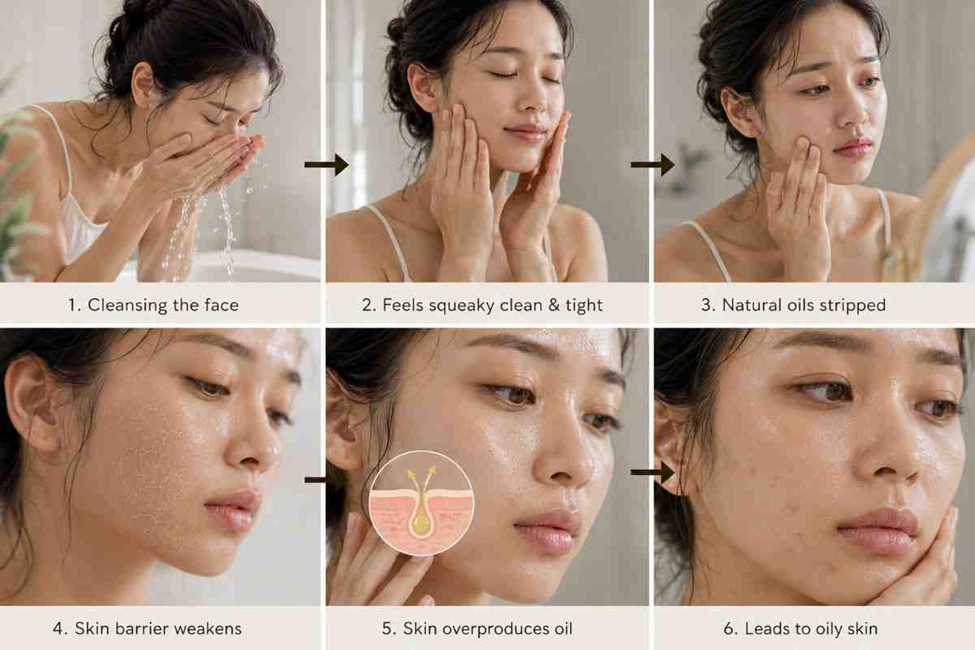
For years, folks thought squeaky clean skin was, you know, the same as effective cleansing. But nowadays, dermatology experts get that skin which is too stripped can end up being more prone to irritation and dehydration, like a bit more sensitive overall than people expect.
An oil free acne wash, that’s properly formulated, should get rid of impurities while still letting the skin feel at ease afterward. It should feel refreshed, not that sharp, painfully tight kind of sensation.
And, when the skin barrier starts to loosen up a bit it can lead to excess sebum production as some kind of trade off, like trying to make up for that moisture loss. And then there is this slightly annoying little loop of someone cleansing more aggressively thinking that will fix the whole thing, but it just nudges the imbalance further. So then you end up with even more of the same problem again.
The “Squeaky Clean” Feeling May Actually Be Hurting Your Skin
A survey found that 80% of people wash their face kinda incorrectly, with many saying they feel tightness, redness, and dryness after cleansing. Dermatologists explained the whole thing is often tied to over cleansing, using harsh face washes, and routines that end up damaging the skin’s natural protective barrier, like it just gets a little weakened.
This is important because a lot of people still link that tight , squeaky clean vibe with cleansing that really works. But really, the stretched, pulled kind of feeling after you wash can be a clue that your cleanser is taking away more than it should from the skin’s natural hydration. Over time it can make the skin feel kinda more sensitive, more water depleted too, and maybe more likely to get annoyed or irritated.
Substances That Could Cause Sensation Of Tightness

Some ingredients are more likely to leave the skin, feeling pretty dry after cleansing, it’s kind of common, you know.
Sulfates
Sulfates make that rich foam feel nice, but they can also peel away protective oils rather aggressively, like in a kinda harsh way sometimes.
High Alcohol Content
Alcohol based cleansers can evaporate too quickly, and then the skin feels kinda dehydrated, like it loses that moisture, afterwards.
Excessive Perfume
Some fragrance can irritate sensitive skin and even make the feeling of dryness worse when the barrier is compromised.
Strong Acne Actives
Salicylic acid, and benzoyl peroxide are usually effective for acne, but if you combine them with a deep cleansing face wash, they might make you feel kind of tight, if you use them too often. Sometimes the skin acts like it needs a little more breathing.
This does not mean these ingredients are bad, it just means that they have to be balanced right within the routine.
How to Use a Cleanser Without Damaging Your Skin
A few small adjustments can make cleansing way more comfortable and effective , too, but honestly it depends on your rhythm.
Use Lukewarm Water
Avoid extremely hot water during cleansing.
Limit Cleansing Time
Rubbing a really deep cleaning face wash onto the skin for about 20 to 30 seconds is usually enough, if you do it gently and not too fast.
Moisturize Immediately After Washing
Applying moisturizer while the skin is a bit damp, helps reduce the rate of water loss, like it kinda holds on better.
Don’t Scrub Too Hard
Rough rubbing with towels, or cleansing brushes can actually enhance that tightness.
Watch for Seasonal Changes
In colder months, skin can become kind of drier, and it may need gentler cleansing help, too . Sometimes you’ll notice the barrier feels weaker, so a softer, routine supportive cleanse can be better.
Why Oily Skin Can Still Feel Tight
People with oily skin often think that dryness can’t really happen to them, it’s kind of, a given right? But if they wash too much or go all in on over-cleansing, it can start removing a lot of that surface oil and then the skin slips into this guarded mode, producing additional sebum than it actually needs.
It means your skin could feel kinda tight right after using a deep cleansing face wash, but then, later on look sort of shiny and greasy after a few hours. Basically, your skin is trying to get that lost moisture and protective barrier back, in a roundabout sort of way. Balancing oil production takes gentle consistency, not that aggressive stripping thing.
Conclusion
That mildly annoying, kind of tight feeling right after washing isn’t really something you can just act like it’s fine, no. It often signals your skin barrier is letting go of too much water during cleansing, like it’s doing that in an, honestly excessive way for just one day. Sure, a deep cleaning face wash can help lift away grime and oil, plus whatever the city leaves on your face, and even that stubborn buildup, but if you grab the wrong type of formula, or you scrub too hard, the skin can get a bit overstimulated, go dry, and start feeling, genuinely uncomfortable. Setting up a balanced routine, with mild cleansing habits , smart hydration, and barrier-support skincare in the mix can help your skin feel more stable and easier over time. Also, picking the right medical face wash for your particular skin type can make a noticeable difference for staying clean and keeping your skin barrier in better condition.
FAQs
1. Why does my skin feel dry immediately after washing my face?
This usually happens when your cleanser removes too much natural oil from the skin barrier. Hot water, harsh surfactants, and excessive cleansing can all contribute to this tight feeling. Hydrating properly after washing can help reduce discomfort.
2. Can oily skin still become dehydrated from cleansing?
Yes, oily skin can absolutely become dehydrated. Over-cleansing may strip away protective moisture, causing the skin to produce even more oil in response. This often creates a cycle of tightness followed by greasiness.
3. How often should I wash my face daily?
For most people, cleansing twice a day is enough. Washing more frequently may weaken the skin barrier, especially if strong cleansing products are used repeatedly throughout the day.
4. Is tightness after cleansing a sign that my skin is clean?
Not necessarily. Skin that feels excessively tight may actually be signaling irritation or moisture loss. Healthy cleansing should leave the skin feeling refreshed and comfortable rather than dry or stretched.
5. Can California Skin+ Acne Control Cleanser deeply cleanse without making skin feel overly dry?
Yes, a well-balanced acne cleanser can help remove excess oil, sweat, dirt, and pore buildup without leaving the skin feeling excessively tight afterward. The key is using a formula that cleans effectively while still supporting the skin barrier. When paired with proper moisturization, it can help acne-prone skin feel fresh, cleaner, and more comfortable instead of stripped or irritated after every wash.