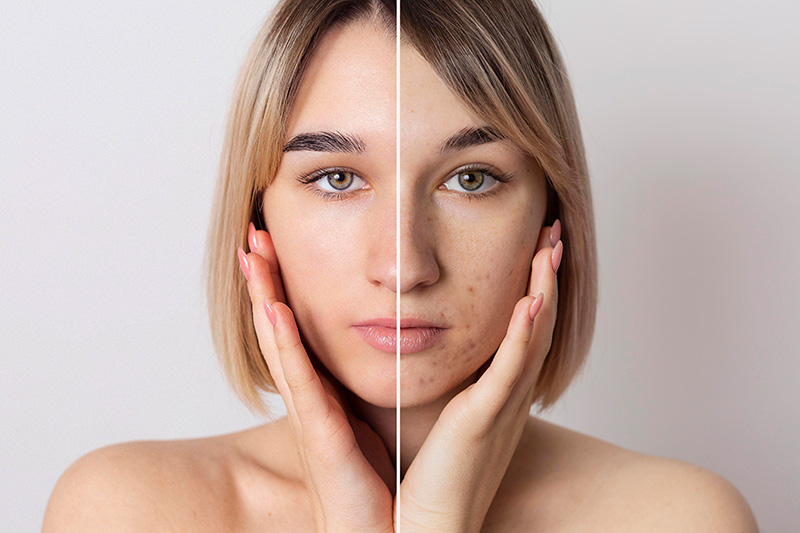
If you happen to be someone with oily skin, then you must know very well that your experience with skincare products has involved a lot of trial and error. The conventional wisdom regarding oils always seemed to be that you needed to “strip” yourself of them at all costs. This resulted in using highly foaming cleansers and alcohol-based toners because it was believed that having an oily skin surface implied that you needed to make sure your skin remained squeaky clean. Moisturizing never even occurred to us because we thought our skin had enough moisture.
As skincare science advances, we’re discovering that while a quality moisturizer is key to protecting the moisture barrier, it may not be sufficient to remedy the root cause of excess oil production. This is where face serums specifically created for oily skin can play the most important role in your daily regimen.
Unlike traditional creams, serums have been developed with smaller-sized molecules so they can get deeper into the epidermis. While moisturizers remain as surface products to keep moisture from leaving your skin surface, a quality Face Serum for Oily Skin delivers concentrated amounts of active components directly to the source of the problem, unlike a cream! If you suffer from oily skin in the middle of the day, have large pores, or have constant clogged pores, you need to start looking for alternative options than what you would normally use by way of face cream, and figure out what a targeted treatment can provide for you.
The Science of Sebum: Why Moisturizers Fall Short
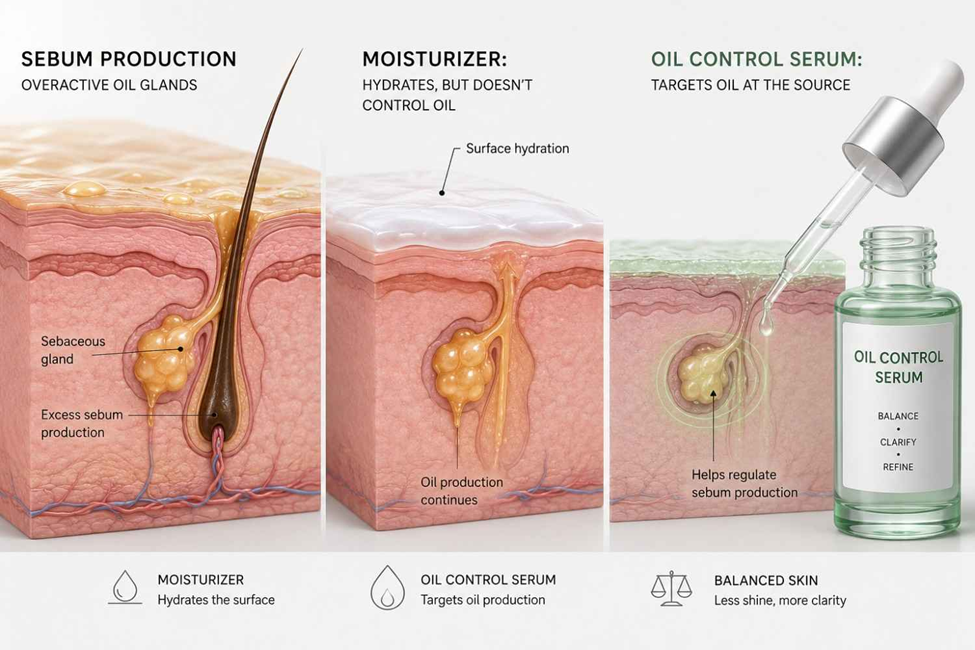
The essential need for an oil control serum becomes clear through understanding the skin’s operational mechanisms. Sebum contains a combination of triglycerides and wax esters, squalene, and free fatty acids, which the sebaceous glands produce. The glands of people with oily skin conditions produce excessive amounts of oil because their hereditary traits, hormonal changes, and environmental factors interact with each other.
Most of the moisturizers work as occlusives or emollients. What they do is form a film around your skin, which will hold on to moisture. As much as this helps in hydration, it hardly does anything to control the secretion from the sebaceous glands. You could even end up piling on the oil since most moisturizers tend to be heavy. However, in A Face Serum for Oily Skin, the product is water-based and also contains actives.
Research indicates that the “overproduction” of oil isn’t just a surface issue. A study published in the Journal of Clinical and Aesthetic Dermatology noted that sebum composition in acne-prone and oily individuals often lacks specific linoleic acids, leading to “stickier” oil that clogs pores. A moisturizer cannot change this chemistry; a Face Serum for Oily Skin enriched with the right acids and minerals can.
The Power of Niacinamide and Zinc PCA
When searching for the perfect Face Serum for Oily Skin, two ingredients stand out as the gold standard: Niacinamide (Vitamin B3) and Zinc PCA.
A niacinamide serum for oily skin is a powerhouse because it is multi-functional. Not only does it help strengthen the lipid barrier, but it is clinically proven to reduce the sebum excretion rate. According to a study in the Journal of Cosmetic and Laser Therapy, topical application of 2% niacinamide was found to significantly lower sebum levels after just four weeks of use. This makes a niacinamide serum for oily skin a non-negotiable for anyone looking to refine their skin texture and reduce that constant “greasy” feeling.
When you pair Niacinamide with Zinc PCA, the results are amplified. Zinc is a known anti-inflammatory and antibacterial agent that specifically targets the enzymes involved in oil production. By incorporating an oil control serum that utilizes these ingredients, you aren’t just masking the shine; you are training your skin to behave more like “normal” skin.
Why Exfoliation Matters in Your Serum
Another reason a Face Serum for Oily Skin outperforms a standalone moisturizer is the inclusion of oil-soluble exfoliants like Salicylic Acid (BHA). Since BHA is lipophilic, it can travel through the oil in your pores to dissolve the “glue” holding dead skin cells together.
If you only use a moisturizer, those dead cells stay trapped under the surface, leading to blackheads and breakouts. Using an oil control serum that contains Salicylic Acid ensures that your pores stay clear while simultaneously managing oil. This dual-action approach is what eventually leads to the “shrunken” appearance of pores, which are often stretched out by excess sebum.
Breaking Down the Key Ingredients for Success
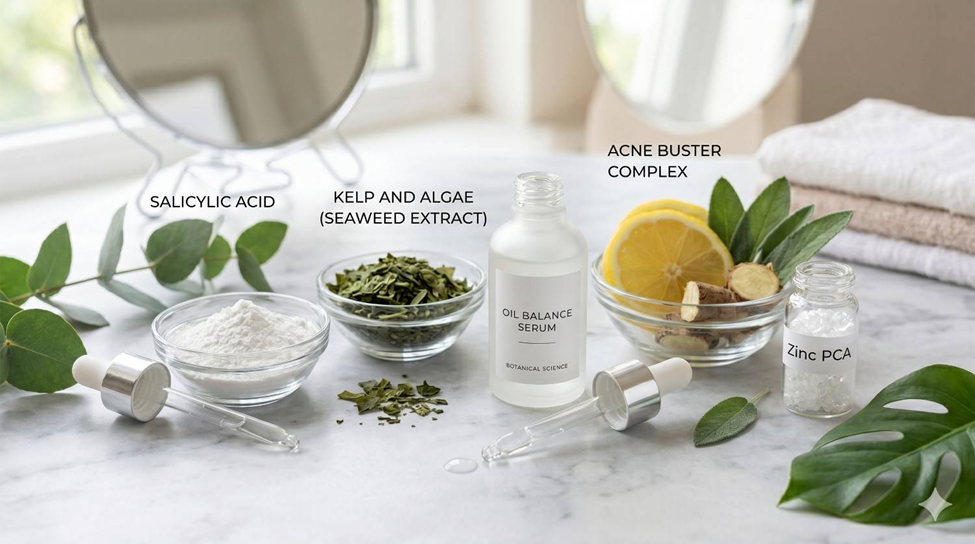
If you are looking for the best Face Serum for Oily Skin, you should look for a formula that combines traditional science with modern botanical extracts. Here are the heavy hitters you should look for on the label:
- Salicylic Acid: As mentioned, this is the deep cleaner for your pores. It prevents the formation of microcomedones.
- Seaweed Extract: Often overlooked, certain seaweed species have incredible mattifying properties. They provide essential minerals without adding weight or oil.
- Acne Buster Complex: This is often a blend of several botanical extracts (like Great Burdock, Lemon, or Sage) designed to fight the bacteria that thrive in oily environments.
- Zinc PCA: This is the ultimate “balancer” that keeps the surface of the skin matte while soothing redness.
By using a Face Serum for Oily Skin with these specific components, you are providing your skin with a comprehensive defense system that a basic moisturizer simply cannot provide.
How to Layer Your Face Serum for Oily Skin
The efficacy of your oil control serum depends heavily on how you apply it. For the best results, follow this “light-to-heavy” rule:
- Cleanse: Use a gentle, pH-balanced cleanser. Avoid anything that leaves your skin feeling tight, as this triggers oil production.
- Prep: While the skin is still slightly damp, apply your Face Serum for Oily Skin. This allows the active ingredients like Niacinamide and Salicylic Acid to penetrate more effectively.
- Target: If you are using a niacinamide serum for oily skin, focus on the T-zone (forehead, nose, and chin) where oil glands are most concentrated.
- Seal: Now, apply your lightweight, oil-free moisturizer. This “locks in” the serum, ensuring the actives stay in the skin rather than evaporating.
The Role of Research and Statistics in Oily Skincare
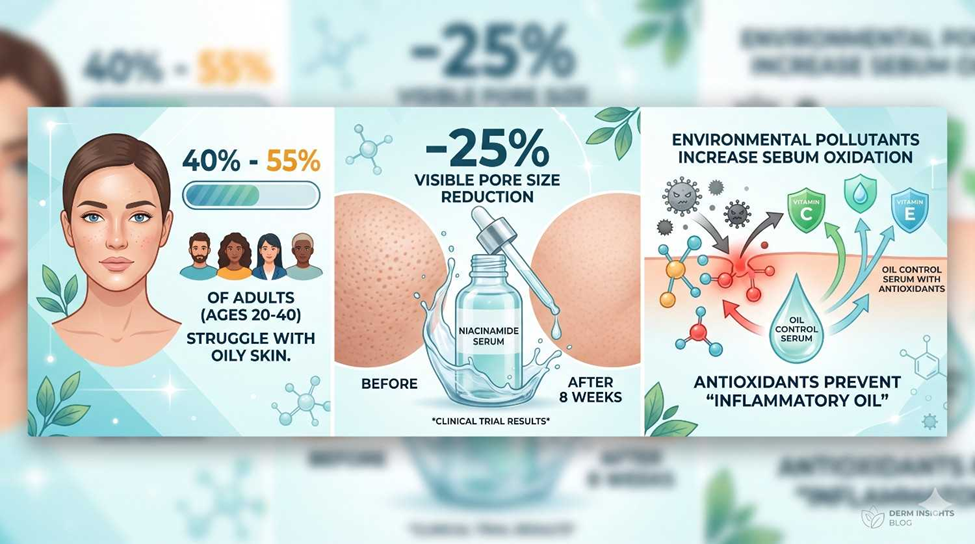
The demand for an effective Face Serum for Oily Skin is backed by significant market and clinical data. Recent dermatological surveys show:
- Approximately 40% to 55% of the adult population aged 20-40 struggle with oily skin and persistent congestion.
- In clinical trials, users of a niacinamide serum for oily skin reported a 25% reduction in visible pore size after 8 weeks of consistent use.
- Research suggests that environmental pollutants can increase sebum oxidation, making it more irritating. An oil control serum often contains antioxidants that prevent this oxidation, protecting the skin from “inflammatory oil.”
Consistency is Key
The most important thing to remember is that a Face Serum for Oily Skin is not a “one-and-done” fix. Because the sebaceous glands are constantly active, you need a consistent delivery of ingredients to keep them in check. Many people try a niacinamide serum for oily skin for three days and give up because they don’t see an immediate change. However, skin cell turnover takes about 28 to 40 days. You need to give your Face Serum for Oily Skin at least a full month to show its true potential.
Common Myths About Oily Skin
One myth is that oily skin doesn’t age. While it’s true that natural oils can keep the skin looking “plump” longer, oily skin is still subject to “inflammaging,” aging caused by chronic inflammation from clogged pores and oxidized sebum. Using a Face Serum for Oily Skin helps mitigate this inflammation, providing anti-aging benefits alongside oil management.
Another myth is that you can “dry out” oily skin with sun exposure. While the sun may temporarily dry up surface oil, it actually damages the skin barrier and thickens the top layer of the skin, eventually leading to more trapped oil and worse breakouts. Instead of the sun, rely on a stabilized oil control serum to manage your complexion safely.
Final Thoughts on Choosing a Face Serum for Oily Skin
Investing in a Face Serum for Oily Skin is an investment in the long-term health of your complexion. By choosing a formula that features Niacinamide, Salicylic Acid, and Zinc PCA, you are moving away from the “strip and scrub” mentality and moving toward a “balance and nourish” philosophy.
Remember, your moisturizer is the shield, but your Face Serum for Oily Skin is the strategist. It does the hard work of regulating, exfoliating, and soothing so that your skin can finally find its equilibrium. Stop settling for a routine that only handles half the problem. Add an oil control serum to your shelf and notice the difference that targeted, high-density actives can make.
With the right niacinamide serum for oily skin, you’ll spend less time blotting away shine and more time enjoying a refined, healthy glow that comes from within, not from excess grease.
Frequently Asked Questions
Can I use a Face Serum for Oily Skin both morning and night?
Yes, most serums designed for oil control are safe for twice-daily use. Using your Face Serum for Oily Skin in the morning helps manage shine throughout the workday, while applying it at night allows the Salicylic Acid and Niacinamide to work on pore congestion while your body is in repair mode. Just ensure you follow up with a broad-spectrum sunscreen during the day, as some exfoliating ingredients can increase sun sensitivity.
How long does it take for an oil control serum to show results?
While you may notice a slight mattifying effect immediately after application, the real structural changes, like reduced pore size and more balanced sebum production, usually take between 4 and 6 weeks. Consistency is vital when using a niacinamide serum for oily skin because the ingredients need to influence the skin’s natural cycles over time.
Is California Skin+ Acne Control Serum suitable for sensitive but oily skin?
The California Skin+ Acne Control Serum is specifically formulated to balance potency with soothing properties. It contains Niacinamide and Zinc PCA to regulate oil, and Salicylic Acid to clear pores, but it also incorporates Seaweed Extract and the Acne Buster Complex to ensure the skin remains calm. It is an excellent choice for those who need a high-performance Face Serum for Oily Skin without the irritation often associated with harsh acne treatments.
Should I stop using moisturizer if my serum feels hydrating enough?
Even if your Face Serum for Oily Skin feels moist, it is generally recommended to still use a very light, non-comedogenic moisturizer. The moisturizer acts as a barrier to prevent “Trans-Epidermal Water Loss” (TEWL). Without that seal, the water in your skin can evaporate, which might ironically signal your oil glands to produce even more sebum to protect the surface. Stick to the serum-first, moisturizer-second rule for the best results.