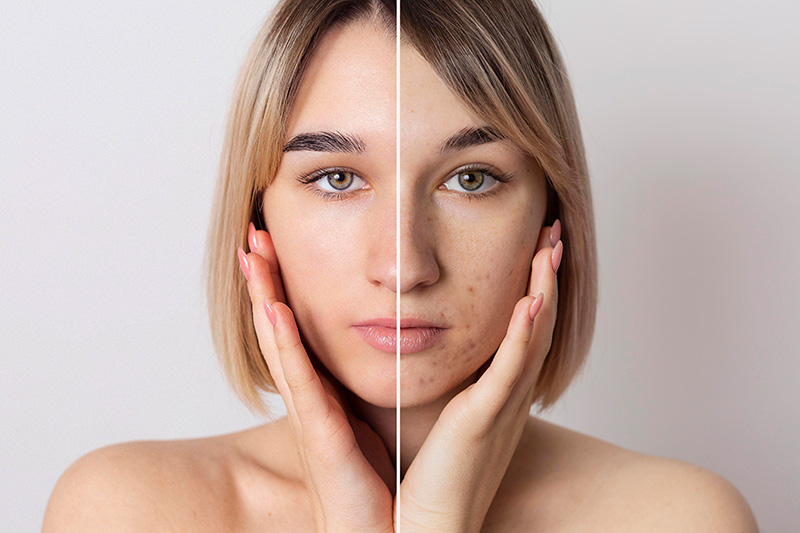
A fresh wave of pimples in a spot that already healed might feel like a punchline nobody asked for. But also, it can cause a great deal of frustration due to the recurrent irritation that comes from breaking out again so soon after clearing up a blemish (usually two or three weeks). If you’ve ever been left scratching your head, thinking, ‘Why am I getting it?’, you aren’t alone. And that’s where an effective blemish spot treatment can make all the difference, targeting stubborn breakouts precisely where they appear.
In this piece, we’ll delve into the science of recurring acne, real-life instances of those with this condition, reasons for this condition, and ways to end this cycle, as well as an informative product mention that can counter your needs.
Understanding Recurring Acne
- Hair follicles could still be partially plugged even if the pimple is cleared, which would then lead to the follicle becoming more prone to inflammation again later on.
- The amount of sebum secretion differs from one face to another, and some parts, such as the bottom of the face, for instance, under the chin and along the bottom of the jaw, tend to secrete more, causing pores to keep on clogging.
- Hormonal changes, whether in the form of periodic releases or hormone changes exacerbated by stress, can stimulate oil secretion in a predictable pattern, resulting in the occurrence of acne in the same area.
- Dermatologists will say that acne is never random, that it always results from clogged pores, sebum, and inflammation, so if it’s already been irritated in a particular follicle, it becomes a “weak link” that welcomes future occurrences of acne.
Acne Relapse Statistics
Understanding how common acne relapse is can help you realise you’re not alone:
Acne Relapse Data
| Study Focus | Rate of Acne Relapse | Notes |
| Relapse, after undergoing treatment with oral isotretinoin | 15 incidents of relapse per 100-person years | Highlights how acne can return even after strong therapy. |
| Relapse follow-up in large cohort | ~12.9 per 100 person-years | Nearly 13 relapses are expected per 100 patients yearly. |
| General acne relapse range | 10–60% across studies | Depends on treatment type and duration. |
These figures show that acne is not always “one-and-done” – it is a chronic condition for many, and relapse (even in the same area) is far from rare.
Expert commentary:
If you’ve ever pondered why a pimple always seems to appear in this one spot and this spot only, experts say there is always a reason for this occurrence. “Noticing that pimples keep cropping up in one spot can be attributed to the fact that this particular pore or hair follicle did not heal properly after the outbreak,” says Dr. Joshua Zeichner, board-certified dermatologist and director of Cosmetic and Clinical Research in Dermatology at The Mount Sinai Hospital in New York City.
Real Stories: Recurring Acne in Real Life
A Public Figure’s Struggle
The TV personality, Danni Menzies, recalls her experience, saying, “No matter how hard I’ve tried, acne just breaks out regularly.” Her acne would flare up regularly despite trying lasers and antibiotics to rid the condition.
Everyday People, Same Frustration
Throughout online health forums and skincare groups, people report having a cycle of pimples in one spot after another. One person reported, for instance, that they would have the same bump on the forehead every six months, as if there is some sort of “weak pore” that won’t really heal.
These stories illustrate a common truth: that acne which recurs in the same place is not just a cosmetic nuisance, but rather like some kind of vicious spiral or endless loop.
Usual Causes Behind Recurring Acne
This is a list of reasons why your acne might continually appear in the same spot:
1. Incomplete Healing of Follicles
If the initial breakout is not completely resolved, bacteria and pus can be left in the follicle, and this can cause future blockages.
2. Too Much Sebum Production
Some areas of the face, for example, the T-zone, are more oily and thus more susceptible to blockages and redness.
3. Hormonal Changes
One of the main causes that contributes to pimples quite often is hormones. Hormones play a huge role, particularly around the jaw line or chin area.
4. External Irritants
Your touch to your face, soiled pillowcases, or even your smartphone screens can end up transferring oil or germs to the same areas multiple times.
5. Skincare Choices That Don’t Suit You
Rich or comedogenic products can block pores, resulting in recurring breakouts of pimples.
The Reason Stubborn Acne Continues After Treatment
Another factor worth exploring is that of skin memory. It can happen that because a pore is irritated so frequently, tiny pockets of tissue can develop faint damage. The hurdle is cleared by dermatologists in a rather poetic but rather fascinating manner. It is stated that a pore with some inflammation can resolve with a healing process that is less than perfect, such that tiny scarring occurs. Consequently, a pore can become more apt to get choked with all those things, flesh cells, oils, bacteria, and therefore develop inflammation once more in exactly the same spot.
Another aspect that plays a larger part than many people might think is environmental factors. Things such as resting one’s chin on one’s hand or wearing a tight mask or helmet can cause friction and pressure from one’s facial contacts. This type of environmental irritation to one’s skin is called acne mechanica. When parts of one’s face experience consistent irritation due to a continuum of a particular facial area in constant contact with one’s hands or headgear, the facial region is then at a greater risk for breakouts.
Another factor not being given due attention is the inappropriate treatment of acne. This is because people often stop using treatment containing active ingredients the moment they notice a pimple flattening out, effectively thinking the problem is solved. The challenge, however, is that sometimes acne may be developing in the follicle for several weeks even before one notices the issue. Stopping treatment for acne at the wrong time means one is creating the perfect conditions for acne to come back.
Why Proper Treatment and Timing Matter
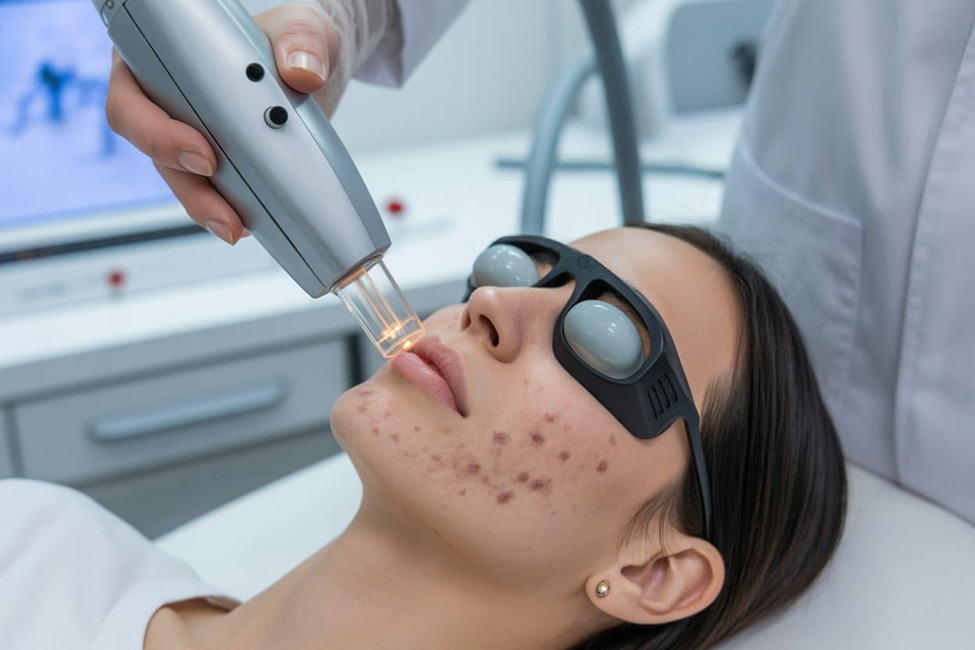
In those whose condition involves frequent flares, expert care might become a consideration. Beyond topical and oral medications, or even hormones, dermatologists would recommend a plan for treatment depending on the condition, which could include chemical peeling or a laser treatment in order to alleviate the inflammation affecting the skin.
One aspect that is not given adequate emphasis is patience in the process. The body does have a skin regeneration cycle that lasts for about four to six weeks, and when deeper irritation is present, it may take longer for resolution. This can lead to the skin being irritated further due to being worked too hard in a bid to see faster results.
It is essential to understand the signals sent out by the skin instead of struggling against them. With the right approach and treatment, even the toughest patterns of acne will be improved.
Conclusion
Having recurring acne at the same spot can sometimes give you the feeling that you are stuck in a loop, but believe it or not, there is actually a lot of scientific backing that goes with acne returning again and again.
Figuring out what triggers breakouts opens the door to stopping acne for good. A steady routine, matched with well-chosen products, builds the foundation for better skin. Months might pass before marks fade completely. Yet teaming up with a dermatologist while applying a targeted acne marks removal serum could speed things along – bringing clearer results earlier than most expect.
FAQs
Q1: Is it correct that every time you have acne, it will be in the same place?
Yes, it is quite a common occurrence, for which reason, one can attribute it to the presence of blocked or inflamed follicles that haven’t healed yet.
Q2: Do I spread acne by touching my skin?
Of course. All kinds of skin interaction, such as pressing and squeezing, might lead to additional erythema, edema, and poor healing as well.
Q3: Does stress cause and/or contribute to inflammation?
Such imbalance in the hormonal system in the body is caused by stress, which makes it secrete oil, thereby breaking out sometimes.
Q4: Does skin quality get influenced by what food is being eaten?
A dietary plan is not involved in the causative effect of the occurrence of acne but has a role regarding the level of hormones, which has indirectly caused the occurrence of acne.
Q5: Is it possible for a serum to prevent spots from returning?
If the acne control serum provided by California Skin+ is used according to directions in conjunction with additional effective topical products, it should provide effective results.