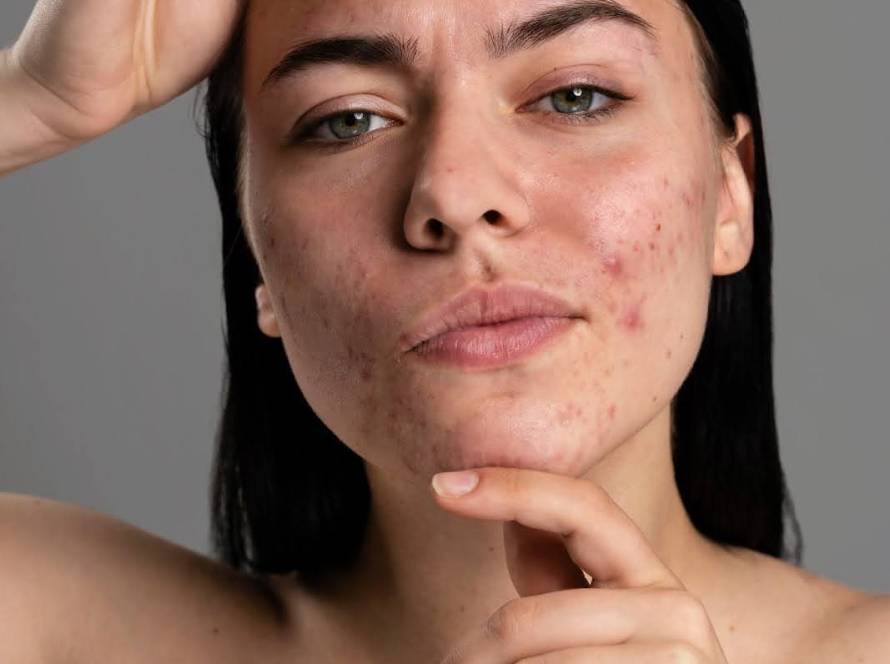
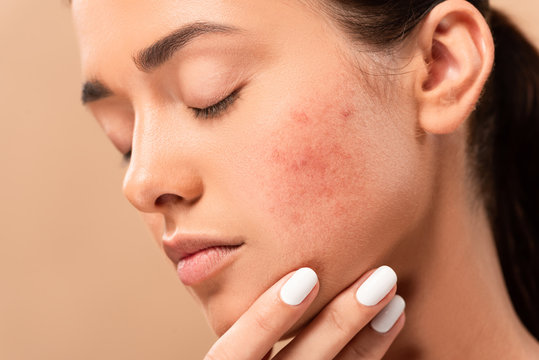
Breakouts can feel like a mystery but understanding why they happen is the first step to a clearer skin. There is a strange sort of honesty in human skin. Even though you might wear the most stunning clothes, rehearse the most effective speech, and show utmost serenity, if such a situation found you sleeping only three hours at night and being anxious all day, it’s very likely that you will be exposed by your skin.
Your body produces cortisol during stress; the scientific name is the stress hormone. Cortisol is your body’s way of keeping you attentive amidst the disorder, but the skin gets the hardest hit. The hormone signals the sebaceous gland to output a greater quantity of oil or sebum.
Research has indicated that the intensity of stress acne during high-stress periods such as tests, work pressure, and emotional exhaustion goes up. Simply put, when your mental health is deteriorating, your skin is also affected.
The Statistics of the “Always-Online” Era
If you feel like you’re the only adult still dealing with “teenager” skin, I promise you are not.The data from the past few years is actually crazy and shows how we are in the middle of a skin crisis. It feels as if we have more skin problems than we have had in the past in our lifetime, and the data actually shows we are right. This is a time in which our bodies are perfectly set up to be in a constant state of stress.
The American Academy of Dermatology has noted a significant rise in adult acne over the last decade. It’s no longer a phase people grow out of. Adult acne and a growing percentage of men globally. When you look at the why, the answer is almost always the same. Over 50% of adults in these studies point to emotional stress as the primary trigger for their skin issues.
We are also dealing with digital stress, a relatively new phenomenon where the constant connectivity of 2026 keeps our bodies in a state of low-level “incident.” A report highlighted that doom-scrolling isn’t just bad for your mood; the blue light and the psychological tension keep your skin in a pro-inflammatory state. We are essentially wearing the world’s chaos on our foreheads.
The Science Behind the Stress Skin Axis
In a turmoil situation your organism activates the so-called HPA axis, which stands for Hypothalamic Pituitary Adrenal axis. This pathway is responsible for the release of cortisol, the primary hormone during stress. Cortisol’s main function is to protect you from hard times. However, on the skin, it is rather troublesome.
Cortisol instructs your sebaceous glands to release more sebum. More oil leads to more probability of pore obstruction. And when pores clog, acne shows up uninvited.
Your skin also releases something called CRH, or corticotropin releasing hormone, when you’re stressed. CRH directly stimulates oil glands and increases inflammation in the skin.
Stress also slows down your skin’s healing process. So that one pimple you expected to disappear in three days? It sticks around. Besides that, stress has a detrimental effect on the immune system. The inflammation goes up and that makes the already red and irritated acne even more difficult to treat.
And let’s not ignore the lifestyle side of stress.
When you’re stressed, sleep usually takes a hit. Your diet gets chaotic. You touch your face more. You pick at pimples. Skincare routines become optional. All of this adds fuel to the breakout fire. There’s real research backing this up too.
A Stanford University study looked at students during exam season and found that acne severity increased alongside stress levels. Same diet. Same routine. Just higher stress. More breakouts. Your skin really does mirror your mental state.
So what this really means is, stress doesn’t just mess with your mood. It rewires how your skin behaves. Your face feels what your mind is going through.
Identifying the Types of Acne
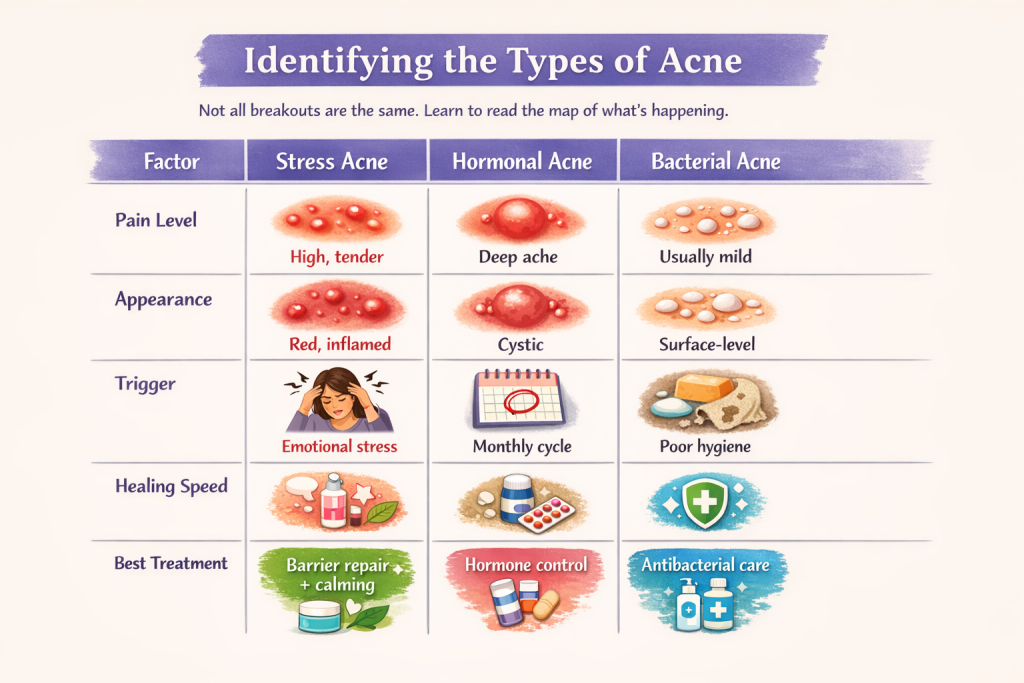
Not all breakouts are the same, and one of the most interesting parts of skin health is learning to read the map of what’s happening. Stress acne has a very specific way that separates it from the usual suspects.
| Factor | Stress Acne | Hormonal Acne | Bacterial Acne |
| Pain Level | High, tender | Deep ache | Usually mild |
| Appearance | Red, inflamed | Cystic | Surface-level |
| Trigger | Emotional stress | Monthly cycle | Poor hygiene |
| Healing Speed | Slow if untreated | Moderate | Fast |
| Best Treatment | Barrier repair + calming | Hormone control | Antibacterial care |
How Stress Affects Acne Lifestyle Wise
Stress doesn’t work alone. It brings along disorder. Stress is often the major factor that leads to the deprivation of sleep. Inadequate sleep, wandering mind during the night, and insomnia interfere with the regeneration process of your skin. Your face needs rest to heal. No sleep means slower recovery and more stubborn breakouts.
Then there’s routine. The lowest stress can often make us more frustrated in even taking care of those basic care routines when it comes to skincare.Cleansing gets rushed. Moisturizing gets skipped. Sometimes makeup stays on longer than it should. Your skin notices.
And let’s be honest, stress makes people touch their face more. You start picking at pimples without realizing it. Pushing, rubbing, and excessively checking the mirror. Consequently, bacteria are spread, inflammation is raised, and the small acne turns to large ones.
Moreover, eating habits are altered. The cravings that come with stress are normally for sugary things, unhealthy snacks, and comfort food. Thus, these foods may result in body inflammation which is seen on your skin in the form of redness, swelling, and an increase in acne.
So no, stress isn’t acting solo. It messes with your sleep, habits, hygiene, and diet. All of these team up to make breakouts worse.
Your skin doesn’t just react to stress.
It reacts to everything stress makes you do.
Smart Ways to Manage Stress Acne
To go back to the basics is the key to starting again. A skin care routine should be quite simple; what it should be is consistent every single day. It is imperative that you follow the routine of soft cleansing and intense moisturizing without the use of comedogenic products that tend to clog pores, especially if the skin is irritated from stress.
Next up, manage the stress itself. Sleep is not optional. Your skin repairs itself while you rest.The absence of sleep means the absence of recovery. Deep breathing exercises, brief walks, light exercises, or simply five minutes of quiet can calm your nervous system. Meditation doesn’t mean you need to become a monk. It means you need to calm your brain so that your skin can breathe. Then there’s the habit check. Stop touching your face. Stop picking. Quit picking every single zit as if they have personally wronged you. Doing so only causes more infections and delay healing. Drink water as if your skin owes it all. Cut down on sugar and ultra-processed junk when stress hits.The consumption of these foods can initiate the process of inflammation, and the signs of it are your face all the more red, puffy, and with pimples.
The truth is, though, that;
Reducing stress will not eliminate acne overnight like magic. However, it does help in reducing break-outs, in the healing process, and in stopping things from deteriorating. You can think of it as skin damage control. But if you find that the breakout keeps recurring, is hurting you, or depressing your spirits, then don’t try to fight it off by yourself. A dermatologist may be of great help to you in using your skin instead of fighting it.
You can’t control all the stressful events.
But you can control how your skin handles it.
Final Thoughts
As stress is not the reason that acne exists, but it has great skills in exacerbating the problem. It boosts the sebum, causes inflammation, hinders the healing process, and turns a small problem on the skin into a major event called acne. Your face doesn’t just react to products. It reacts to pressure, emotions, and burnout too.
The good news? You don’t need a perfect life for better skin. You just need awareness. Notice when your breakouts show up. Be mindful of your habits. Look after your routine. Look after your mind like you look after your face.
If acne keeps holding you hostage, stop guessing your way through it. A dermatologist recommended routine can actually work for your skin.
Your skin hears your stress.
Make sure it also feels your care.
FAQs
1. Why is my skin oily in the office but dry at home?
That’s Office Stress. The combination of recycled AC air and high cortisol environments makes your skin panic and produce oil to protect itself, leaving you greasy but dehydrated.
2. Are World of California products actually better?
Yes, when your skin is stressed, it’s raw. Products with high alcohol content or fragrance will make a stress zit turn into a chemical burn. Investing in a high quality serum is like buying a better insurance policy for your face.
3. Does coffee make stress acne worse?
Yes. Caffeine can raise cortisol, your main stress hormone, which increases oil production in the skin. More oil means a higher chance of clogged pores and breakouts.
4. How do I know the difference between a purge and a stress breakout?
A purge happens in areas where you usually get acne after starting a new active ingredient. A stress breakout happens randomly and usually feels hot or angry to the touch.
5. Is California Skin+ dermatologist recommended?
Yes, dermatologists often recommend the key ingredients in California Skin+ for acne-prone skin.
6. The quickest way to eliminate a stress zit?
Use hydrocolloid patches and a drop of a calming serum. It keeps your hands off it and sucks out the gunk while you sleep without drying out the surrounding skin.