The search for the best sunscreen product leads people to observe that all items display SPF 50 PA++++ on their product packaging. The product seems impressive because its name sounds sophisticated yet most people can understand only a tiny portion of its actual meaning. The truth is, people believe these numbers represent their actual protective capabilities yet they lack understanding of their complete meaning.
The process operates in a simpler manner than people perceive it to function. It becomes simple after you learn how sunscreen labels function. The purpose of a sunscreen extends beyond sunburn prevention for one day. Your skin requires protection from harmful effects, which develop gradually and result in future pigmentation and dullness and premature ageing.
Understanding UV Radiation and Its Impact
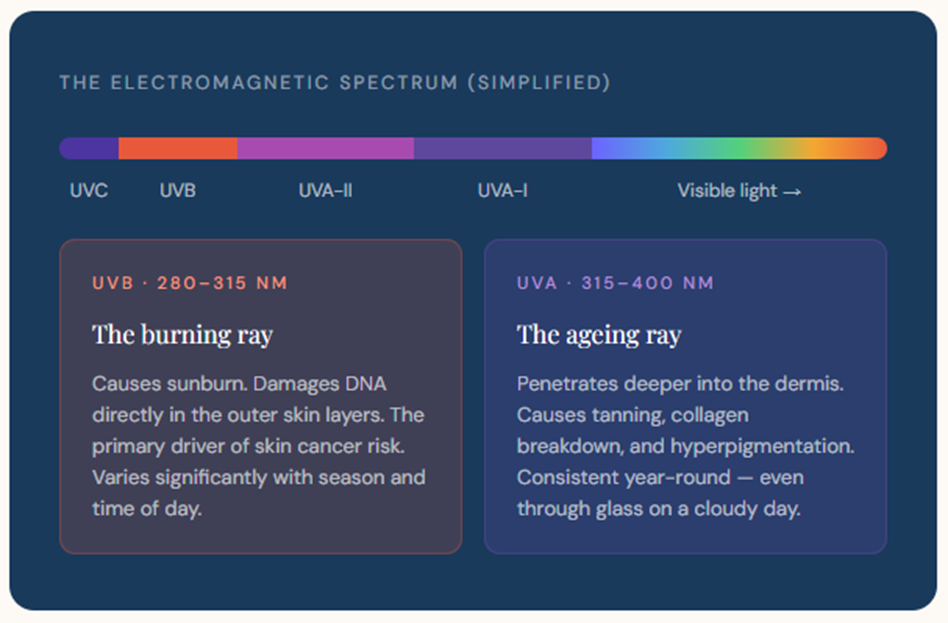
Sunlight contains ultraviolet radiation, which is the primary cause of most skin concerns related to exposure. Even though it is invisible, your skin responds to it constantly. There are two main types of UV rays that reach your skin, and each one affects it differently.
- UVB rays are responsible for surface level damage. They cause sunburn, redness, and irritation, especially when exposure is high. These rays are strongest during peak sunlight hours and are closely linked to more serious concerns like skin cancer.
- UVA rays, on the other hand, penetrate much deeper into the skin. They are responsible for tanning, pigmentation, and long term ageing. What makes them more concerning is their consistency. They remain present throughout the day, across seasons, and can even pass through glass. This means your skin is exposed even when you are indoors or not directly under the sun.
This dual exposure is exactly why sunscreen needs to protect against both UVA and UVB. Focusing on only one type leaves your skin vulnerable to the other.
What SPF 50 Really Means
SPF stands for Sun Protection Factor, and it specifically measures protection against UVB rays. It does not account for UVA protection, which is why SPF alone is not enough when choosing a sunscreen.
In simple terms, SPF indicates how much UVB radiation is blocked before it reaches your skin. SPF 50 blocks about 98 percent of UVB rays, which means only a small fraction gets through. While the difference between SPF 30 and SPF 50 may seem small numerically, that extra level of protection becomes significant over time.
What matters more is how sunscreen performs in real life. Most people apply far less product than required, which reduces the level of protection they actually receive. This means an SPF 50 sunscreen often performs at a much lower level in everyday use. Starting with a higher SPF gives your skin a safety buffer against under application, sweat, and daily wear.
What PA++++ Indicates for Your Skin
While SPF focuses on UVB, the PA rating measures protection against UVA rays. This is especially important when it comes to concerns like pigmentation, uneven skin tone, and premature ageing.
The PA system is graded using plus signs, with more plus signs indicating stronger protection. PA++++ represents the highest level currently available, meaning the sunscreen offers extremely high protection against UVA exposure.
For anyone living in a climate with strong sun exposure or dealing with skin concerns like dark spots or dullness, this level of protection becomes essential. UVA damage is subtle but persistent, and over time it has a visible impact on your skin’s overall health and appearance.
How Sunscreens Actually Protect Your Skin
Sunscreens work through a combination of UV filters that either absorb or reflect harmful rays before they can damage your skin.
There are two main types of filters used in modern formulations:
- Chemical filters absorb UV radiation and convert it into heat, preventing it from penetrating the skin
- Physical filters, such as zinc oxide, sit on the surface and reflect UV rays away
Most modern sunscreens combine both types to provide balanced, broad spectrum protection. This ensures coverage across both UVA and UVB ranges while maintaining a lightweight and wearable texture for daily use.
Why Sunscreen Alone Is Not Always Enough
Even with a high SPF and PA rating, your skin may still show signs of damage if the overall routine is not supporting it properly. One of the most overlooked aspects of sun care is the condition of your skin barrier.
When your skin barrier is compromised, it becomes more reactive to environmental stress, including sun exposure. This can lead to increased sensitivity, breakouts, and pigmentation. This is where a barrier repair moisturizer plays an important role.
Instead of only focusing on external protection, supporting your skin internally helps it respond better to daily exposure. A healthy barrier ensures that your skin retains moisture, stays resilient, and recovers more effectively from stress. When sunscreen and barrier repair work together, your overall protection becomes much stronger.
Common Sunscreen Mistakes That Reduce Effectiveness
Many people use sunscreen regularly but still experience damage, often because of small mistakes in application and habits.
Some of the most common ones include:
- Applying too little product, which reduces the actual SPF protection
- Skipping reapplication, especially during long hours outdoors
- Assuming higher SPF means all day protection
- Not using sunscreen on cloudy days or indoors
Each of these may seem minor, but together they significantly impact how well your sunscreen performs. Consistency and correct usage matter just as much as the product itself.
How to Read a Sunscreen Label at a Glance
Once you understand the basics, reading a sunscreen label becomes straightforward and intuitive.
A few key things to look for:
- SPF 50 indicates strong protection against UVB rays and helps reduce sunburn risk
- PA++++ ensures maximum protection against UVA related damage like ageing and pigmentation
- Broad spectrum confirms coverage against both types of UV rays
- Water resistant means temporary durability during sweat or water exposure, but still requires reapplication
These elements together define how effective a sunscreen truly is in real world conditions.
The Bottom Line
SPF 50 PA++++ is not just a marketing label. It represents a combination of high level protection against both immediate and long term sun damage. Understanding what these terms mean allows you to make better decisions for your skin instead of relying on assumptions.
At the same time, sunscreen works best when it is part of a complete routine. Applying enough product, reapplying consistently, and supporting your skin with the right care ensures that the protection actually delivers results. Good sun protection is not complicated once you understand it. It is consistent, intentional, and one of the most important habits for maintaining healthy skin over time.
FAQs
1. What does SPF 50 PA++++ actually protect against?
SPF 50 protects your skin from UVB rays that cause sunburn, while PA++++ offers the highest level of protection against UVA rays that lead to pigmentation and premature ageing.
2. How does California Skin+ sunscreen fit into a daily routine?
California Skin+ sunscreens are designed for lightweight, everyday wear with high protection. They work best when applied as the final step in your morning routine and paired with consistent reapplication for all day protection
3. Do I need to reapply sunscreen even if it is SPF 50 PA++++?
Yes, reapplication is essential. Sunscreen breaks down due to sweat, oil, and sun exposure.
4. .Is SPF 50 really better than SPF 30 for daily use?
Yes, SPF 50 offers slightly higher protection and, more importantly, creates a safety buffer since most people apply less sunscreen than required.
5. Can I use a California Skin+ barrier repair moisturizer with sunscreen?
Yes, using a California Skin+ barrier repair moisturizer before sunscreen helps strengthen your skin barrier, making your skin more resilient to sun exposure and improving overall skin health over time.