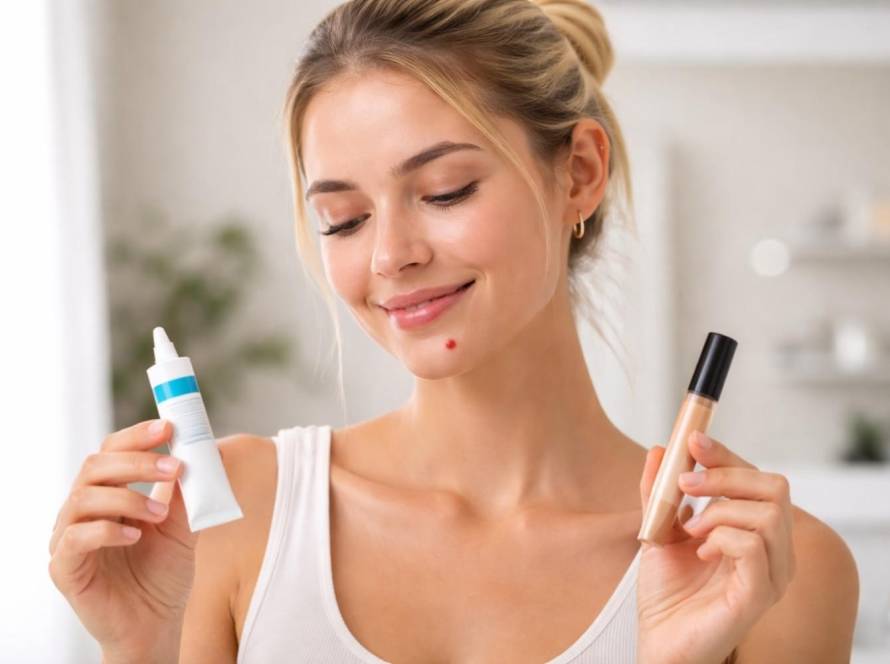
Open Instagram and it looks like having good skin as a teenager requires a twelve step routine, four different serums, a prescription retinol, a vitamin C treatment, two types of exfoliants, and a glazed donut finishing oil. The products stack up. The routine takes thirty minutes. The shelf fills with bottles. And somehow the skin is still breaking out.
Here is the truth that dermatologists will tell you and that social media never will: teenagers do not need most of what is being sold to them. In fact the complicated routines that have become normal for Gen Z are actively damaging teenage skin by over exfoliating it, stripping its barrier, and introducing actives that teenage skin is simply not ready for. The right routine for a teenager is not ten steps. It is three. And it starts with a proper acne face wash and ends with knowing what not to buy.
Why Teenage Skin Is Different
Teenage skin is going through one of the most significant biological transitions it will ever experience. The hormonal surge of puberty dramatically increases androgen production, which directly stimulates sebaceous glands to produce significantly more sebum than they ever did before. More sebum means oilier skin, larger pores, and the clogged follicles that produce the blackheads, whiteheads, and inflammatory spots that most teenagers deal with to some degree.
But here is what makes teenage skin different from adult acne prone skin: it is resilient. Teenage skin has high collagen density, fast cell turnover, and a robust barrier recovery rate. It responds quickly to simple targeted treatment. It heals fast. And it does not need aggressive intervention to produce results. What it needs is consistent basic care and a firm understanding of what not to do to it.
The Problem With What Teenagers Are Actually Using
The average teenager influenced by beauty social media is using products that are far too advanced for their skin. Retinol is a vitamin A derivative that regulates cell turnover and stimulates collagen production. It is a powerful ingredient with a significant adjustment period involving purging, peeling, and sensitivity. It is designed for adult skin dealing with the slowing cell turnover of the late twenties and beyond. Teenage skin already has rapid cell turnover. Retinol does not help it. It disrupts it.
High percentage AHAs and BHAs used daily, vitamin C serums layered under niacinamide serums layered under retinol, and ten step routines involving multiple exfoliating actives are producing an epidemic of compromised skin barriers in teenagers whose skin would have been perfectly manageable with three simple products and consistency.
The irony is that teenagers are spending more money on skincare than any previous generation and getting worse results because of it. Simpler is not just more affordable. For teenage skin it is actually more effective.
Product 1: The Right Face Wash
Cleansing is the non negotiable foundation of any teen skincare routine and the step where most teenagers get it most wrong. Using a bar of soap, a body wash, or a harsh foaming face wash strips the acid mantle, triggers rebound oil production, and makes the oiliness and breakouts that teenagers are trying to control significantly worse.
The right teen cleanser is gentle, pH balanced, and ideally contains salicylic acid. Salicylic acid is a beta hydroxy acid that is oil soluble, meaning it can travel inside the pore and dissolve the sebum and dead skin cell buildup that causes blackheads and pimples. Used twice daily in a gentle formula it progressively clears congestion without stripping the barrier or triggering the rebound oiliness that harsh cleansers cause.
Use it in the morning and in the evening. Apply for 60 seconds before rinsing. After gym, sport, or any significant sweating, cleanse as soon as possible. The longer sweat sits on teenage skin the more it contributes to breakouts. Keeping a travel size in a gym bag or school bag makes post activity cleansing practical wherever you are.
Product 2: A Simple Moisturizer
This is the step most teenagers skip because the logic seems backwards. If my skin is already oily why would I add more? But oiliness and hydration are two completely different things. Sebum on the surface is not the same as water content in the skin. Teenagers who skip moisturizer because their skin is oily are setting themselves up for dehydration driven excess oil production that makes their skin oilier and more breakout prone than it needs to be.
A lightweight, oil free, non comedogenic gel moisturizer is everything teenage oily skin needs. It provides the hydration that the skin barrier requires to function properly without adding any heaviness or clogging risk. Apply after cleansing while skin is still slightly damp for better absorption. Morning and evening. Takes thirty seconds. Makes a significant difference to how balanced the skin behaves throughout the day.
Do not use a heavy cream moisturizer, a rich balm, or any product containing coconut oil or heavy plant oils on oily teenage skin. These contribute to the congestion that causes breakouts rather than preventing it.
Product 3: SPF
Every dermatologist in the world agrees on one thing: SPF is the most important skincare product available regardless of age. UV damage is cumulative and invisible until it manifests as premature ageing, dark spots, and skin cancer risk years or decades later. The UV damage you accumulate as a teenager contributes directly to how your skin looks at 30, 40, and beyond.
For teenagers, SPF 50 applied every morning as the last step of the routine is the single highest return skincare investment available. Use a lightweight fluid formula that does not feel heavy, does not leave a white cast, and does not clog pores. Apply it and go. No argument, no exceptions, even on cloudy days and even when staying mostly indoors.
What to Do When a Pimple Actually Shows Up
Even with the best routine, pimples happen on teenage skin. Hormonal surges, stress, diet, and genetics mean that some breakouts are inevitable no matter how consistently you cleanse. What matters is how you respond when one appears.
The answer is not to squeeze it. Squeezing pushes infected material deeper into the skin, spreads bacteria to surrounding pores, and dramatically increases the risk of a permanent scar. Every squeezed pimple is a lottery ticket for a dark mark that can take months to fade or a depressed scar that may never fully resolve.
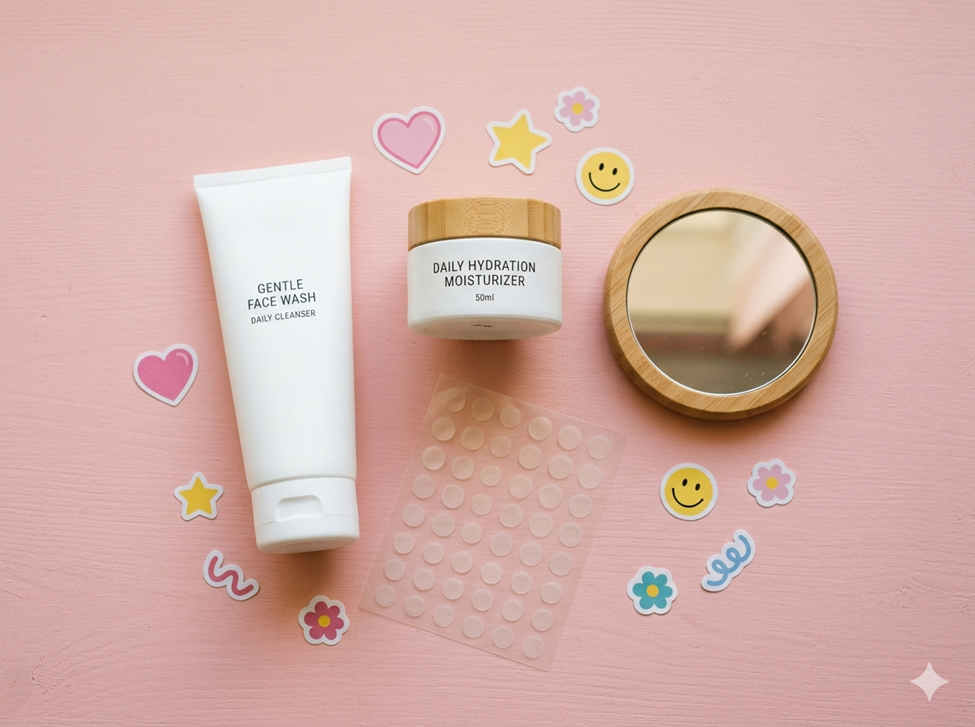
The answer is pimple patches for teens. Apply a medicated pimple patch over the spot the moment you notice it. The patch absorbs the fluid from the pimple, delivers active treatment directly to the spot, and physically prevents you from touching or picking it. It treats the pimple and stops it from being made worse simultaneously. Apply before bed and remove in the morning. The difference overnight is visible and the picking habit is broken before it creates damage.
What Teenagers Should Absolutely Not Use
Retinol: not for teenage skin. Strong AHAs (glycolic acid above 5%, lactic acid above 10%v) used daily: not for teenage skin. Vitamin C serum layered with multiple other actives: not for teenage skin. Physical scrubs: never, for any skin type, at any age. Coconut oil as a moisturizer: absolutely not for acne prone teenage skin.
Anything that a content creator is being paid to recommend via an affiliate code: approach with significant scepticism. The incentive is their commission, not your skin health.
The Bottom Line
Teenage skin does not need a complicated routine. It needs three products used without fail every day, an understanding of what not to buy, and the behavioral discipline not to pick at spots when they appear. The skincare industry benefits from teenagers believing their skin is a problem that requires an expensive solution. It is not. It is a normal biological process that responds beautifully to simple consistent care.
Start simple. Stay consistent. Keep your hands off your face. And trust the process enough to give it the eight weeks it needs to show you what it can do.
FREQUENTLY ASKED QUESTIONS
Q: What age should a teenager start using skincare?
A: A basic routine of cleanser, moisturizer, and SPF is appropriate from the start of puberty, typically around 11 to 13 years old.
Q: Should teenagers use retinol?
A: No. Retinol is designed for adult skin dealing with slower cell turnover and collagen loss. Teenage skin already has rapid cell turnover and high collagen density.
Q: Why does teenage skin get so oily?
A: Puberty causes a significant increase in androgen hormones which directly stimulate sebaceous glands to produce more sebum.
Q: Do pimple patches actually work for teenage acne?
A: Yes. Pimple patches work by creating a moist sealed environment over a pimple that absorbs fluid, delivers active ingredients, and physically prevents picking.
Q: Which California Skin+ products are best for teenagers?
A: The California Skin+ Acne Control Cleanser is the ideal starting point for teenage skin. Its salicylic acid formula clears pores and controls oil without stripping the barrier, making it safe for twice daily use on oily and acne prone teenage skin.
Q: Is the California Skin+ Acne Control Cleanser safe for daily teenage use?
A: Yes. The California Skin+ Acne Control Cleanser is specifically formulated for daily use on oily and acne prone skin. Its pH balanced gentle formula and effective salicylic acid concentration make it safe and effective for twice daily cleansing on teenage skin.