You’ve tried everything on your FYP. You’ve cut dairy, you’ve stressed less (kind of), you’ve done the whole drink more water thing. But you’re still breaking out in the same spots, jaw, chin, cheeks, like clockwork every month.
Here’s what nobody tells you clearly: your skincare products might be making your hormonal acne worse. Not because you’re doing it wrong, but because certain ingredients, some of them in products literally marketed for acne-prone skin, are secretly feeding the cycle. Even something as basic as choosing the wrong sunscreen for acne prone skin can quietly clog pores and trigger those recurring breakouts. This is the list. Finally, in one place, without the clinical jargon.
What makes hormonal acne different
Before we get into ingredients, this part matters. Hormonal acne isn’t caused by dirt or bacteria the way teenage T-zone acne is. It’s driven by androgen fluctuations, spikes in testosterone and DHT, that signal your sebaceous glands to overproduce oil. That excess oil mixes with dead skin cells inside the pore and creates the perfect breeding ground for acne bacteria.
Because the root cause is internal, your skin is already in a reactive, inflamed state before any product even touches it. The barrier is more fragile. Pores are working overtime. This means ingredients that are totally fine for someone without hormonal acne can be genuinely inflammatory for your skin. You’re not more sensitive because something is wrong with you. You’re more sensitive because your skin is already dealing with a lot.
The categories that cause the most damage are pore-clogging ingredients, things that strip your barrier and trigger rebound oiliness, ingredients that disrupt your skin’s microbiome, and synthetic fragrance that quietly inflames already-reactive skin.
The ingredients to avoid.
01 · Coconut oil and most heavy plant oils
Coconut oil is one of the most shared skincare ingredients on the internet and also one of the worst choices if you have hormonal acne. It has a comedogenic rating of 4 out of 5, which means it is highly likely to clog your pores. It doesn’t just sit on the surface either. It slowly works its way into the follicle and blocks it. The fact that it’s natural means absolutely nothing here. Heavy plant oils like wheat germ oil, flaxseed oil, and palm oil fall into the same category. Use squalane, jojoba oil used sparingly, or rosehip oil instead. All three have low comedogenic ratings and won’t betray you.
02 · Isopropyl myristate and isopropyl palmitate
These are in hundreds of moisturisers, primers, and foundations because they feel silky and luxurious on application. They’re also rated comedogenic 5 out of 5, the maximum possible. They penetrate the follicle and physically block it. The frustrating thing is they’re often buried in the middle of an ingredient list under names most people don’t recognise. Check your makeup primer and foundation first because those are the most common hiding spots. Switch to water-based, oil-free formulas instead.
03 · Sodium lauryl sulfate in cleansers
SLS is a harsh detergent surfactant that strips your skin’s natural oils very aggressively. It sounds like a good idea for oily skin and that’s exactly why so many acne-marketed cleansers use it. But when your barrier gets stripped too hard, your sebaceous glands panic and produce more oil to compensate. The result is a rebound oil surge that makes hormonal acne significantly worse over time. That squeaky-clean feeling after washing your face? That’s your barrier crying. Switch to gentle sulfate-free cleansers with amino acid-based surfactants. Your face should feel comfortable after cleansing, not tight.
04 · Heavy silicones in thick formulas
Lightweight silicones in thin serums are generally fine. The issue is high concentrations of heavy silicones in thick creams because they create a film over skin that’s already congested and struggling to regulate itself. Hormonal skin needs to breathe. Cyclopentasiloxane specifically has also been flagged in some studies for potential hormone-disrupting effects, which is a particularly bad pairing when hormonal imbalance is already the root cause. Lightweight gel moisturisers that are water-based are a much better call.
05 · Lanolin
Lanolin comes from sheep’s wool and it’s an intensely occlusive moisturiser. Brilliant for dry, compromised skin. Genuinely terrible for hormonal acne. It’s comedogenic rated 4 out of 5 and shows up in a lot of richer moisturisers and lip balms. It’s one of those ingredients that sounds deeply nourishing and ends up being a pore disaster for anyone with an acne tendency. Replace it with ceramide-based moisturisers or hyaluronic acid for deep hydration without any occlusion.
06 · Algae extract and spirulina
This one genuinely surprises people. Algae and spirulina are marketed as antioxidant, brightening, and deeply nourishing and they do have those properties. But they’re also consistently flagged as comedogenic by dermatologists. If you’ve switched to a clean or natural skincare line and your breakouts have gotten worse, check for algae-derived ingredients on the label before blaming anything else. Use niacinamide for brightening and vitamin C in a lightweight stable serum for antioxidant action instead.
07 · Denatured alcohol in high concentrations
Alcohol in skincare isn’t automatically bad. It depends entirely on where it sits in the ingredient list. If alcohol denat., SD alcohol, or ethanol appears in the first five ingredients, that’s a problem. High-alcohol toners and serums give an immediate mattifying, tightening effect that oily skin loves in the moment. But they strip the barrier, cause rebound oiliness, and create microtears that let bacteria in more easily. It’s a short-term fix that makes the long-term situation worse. Niacinamide-based toners or oil-control formulas that use clay or zinc are a far better trade.
08 · Fragrance and essential oils
Fragrance is the single most common hidden irritant in skincare. It’s listed as parfum or fragrance on ingredient lists and can contain dozens of individual chemical compounds, none of which have to be disclosed individually. For skin that’s already inflamed from hormonal activity, even low levels of synthetic fragrance can trigger an inflammatory response that looks and feels like a breakout. Most essential oils fall into the same category. Tea tree oil is the exception at low concentrations around 5%, but even that can sensitise skin if overused. If a product’s main selling point is that it smells incredible, it is genuinely not for your skin right now. Go fragrance-free across the board.
09 · Physical scrubs
Walnut shell, apricot kernel, sugar. Anything with a gritty physical texture is actively damaging to breakout-prone skin. Scrubbing an inflamed pimple spreads bacteria across the skin’s surface and creates microtears that worsen post-inflammatory hyperpigmentation. The skin feels smooth immediately after but you’ve essentially traumatised it. Physical scrubs need to leave your shelf entirely. Replace them with chemical exfoliants only. Salicylic acid works inside the pore and polyhydroxy acids are a gentler alternative if your skin is particularly reactive.
What to actually use
| Safe ingredient | Why it actually helps hormonal skin |
| Niacinamide (2–5%) | Regulates sebum, fades PIH, strengthens barrier, the hormonal skin holy grail |
| Salicylic acid (0.5–2%) | BHA that dissolves inside the pore; anti-inflammatory not just exfoliating |
| Azelaic acid (10–20%) | Kills acne bacteria, fades marks, and is safe for sensitive and pregnant skin |
| Zinc (in serums or sunscreen) | Naturally regulates oil production and has mild antibacterial action |
| Centella Asiatica (Cica) | Calms inflamed breakouts without clogging; speeds post-acne healing |
| Willow bark extract | Natural salicylate source; gentler exfoliation, anti-inflammatory |
| Probiotic ferment | Balances the skin microbiome disrupted by hormonal fluctuations |
| Hyaluronic acid | Hydrates without any oil or occlusion, safe for all acne skin |
| Lightweight SPF (PA++++) | Non-negotiable; unprotected skin darkens every PIH mark permanently |
How to actually read an ingredient label
Ingredients are listed in descending order of concentration, which means the first five to seven ingredients tell you most of what you need to know. And once you understand this, it actually becomes empowering, not overwhelming. Instead of avoiding everything, you can start choosing smarter. For example, in a good oil control cleanser, you want to see gentle surfactants paired with balancing ingredients like niacinamide, green tea, or salicylic acid closer to the top. That’s a sign the product is actually designed to support acne-prone skin, not just market to it.
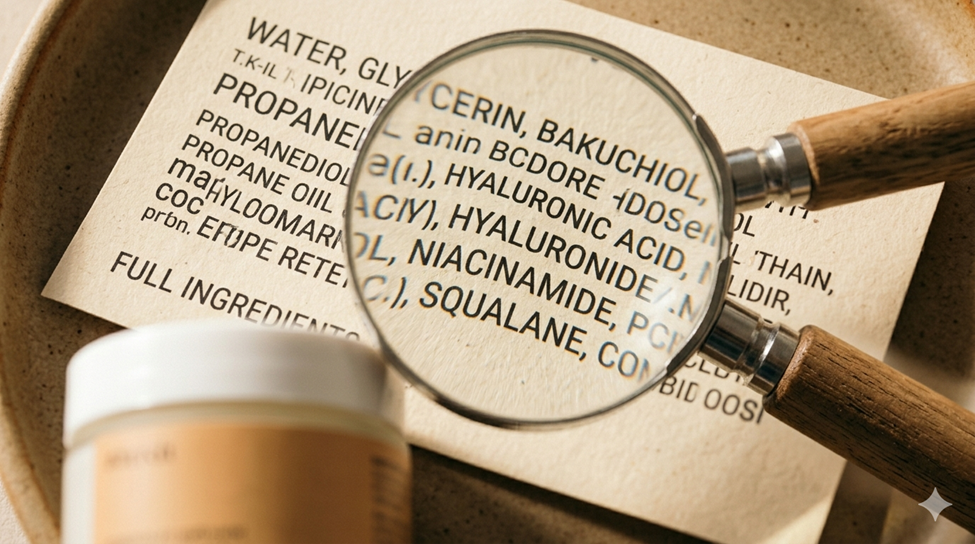
Reading labels also helps you identify what your skin likes, not just what to avoid. If your skin feels calmer and clearer with certain ingredients, spotting them in the top half of a formula becomes a green flag. It turns skincare from trial-and-error into something more predictable and consistent.
And here’s the best part: once you stop relying on front-label claims like “non-comedogenic” and start understanding ingredient lists, you gain control. You’re no longer buying into trends or hype, you’re making decisions based on what your skin actually needs. That’s when your routine starts working with you, not against you.
The golden rule
Introduce one new product at a time, two weeks apart. If you switch five products at once and your skin flares, you have no idea what caused it. Change one thing, wait two weeks, observe. That’s the whole system. Your skin isn’t broken. It’s just reacting to the wrong inputs. Change the inputs.
Hormonal acne is driven from the inside but your skincare can either support the healing or quietly keep the cycle going. The biggest offenders are coconut oil and heavy plant oils, isopropyl myristate and palmitate, SLS in cleansers, lanolin, synthetic fragrance, physical scrubs, and high-alcohol formulas. Switch to niacinamide, salicylic acid, azelaic acid, Cica, probiotics, and alightweight sunscreen and your skin genuinely has a chance to calm down.
FAQs
1. What is hormonal acne and how is it different?
Hormonal acne is caused by internal hormone fluctuations that increase oil production, unlike regular acne which is more surface-level and often linked to clogged pores or bacteria.
2. Can the wrong skincare products worsen hormonal acne?
Yes, ingredients like coconut oil, SLS, lanolin, and fragrance can clog pores or irritate the skin, making hormonal breakouts worse.
3. What should I look for in an oil control cleanser?
Look for gentle surfactants with ingredients like niacinamide or salicylic acid. A good oil control cleanser like the California Skin+ Acne Control Cleanser cleans your skin without leaving it tight or stripped.
4. How do I know if a product is clogging my pores?
If you notice consistent breakouts in the same areas after starting a new product, it may be comedogenic or too heavy for your skin.
5. Is the California Skin+ oil control cleanser good for hormonal acne?
Yes. It’s designed to support acne-prone and hormonal skin by controlling excess oil without stripping your barrier, which is key to preventing rebound breakouts.