The search for oils and moisturizers turns into a challenge as people have to decide on the choice. The very first thing that you are supposed to think about is how you can make sure that your skin is moisturized. The most important thing that you should consider is ensuring that your skin remains moist. This hydrating process has to take place since it is not only good for the health of your skin but also for your skin appearance. The maintenance of skin moisture needs to happen because it improves your physical appearance while also benefiting your health. Every skin type requires hydration, which includes people with dry skin, oily skin, acne-prone skin, and sensitive skin. While many may care more about what is applied, such as, the most effective pimple patch for your problem skin, for any effective skin regime, medication relies heavily on moisture levels.
If you now find yourself shopping for a moisturizer then one of the questions you will be inevitably confronted with in their selection process will be: natural oils or artificial moisturizers?
Both products possess single benefits but are by no means interchangeable, and can be simply unsuitable for some skin types. So, to enable you to make the best choice for your skin type, perhaps understanding the range of each product,
Understanding Natural Oils
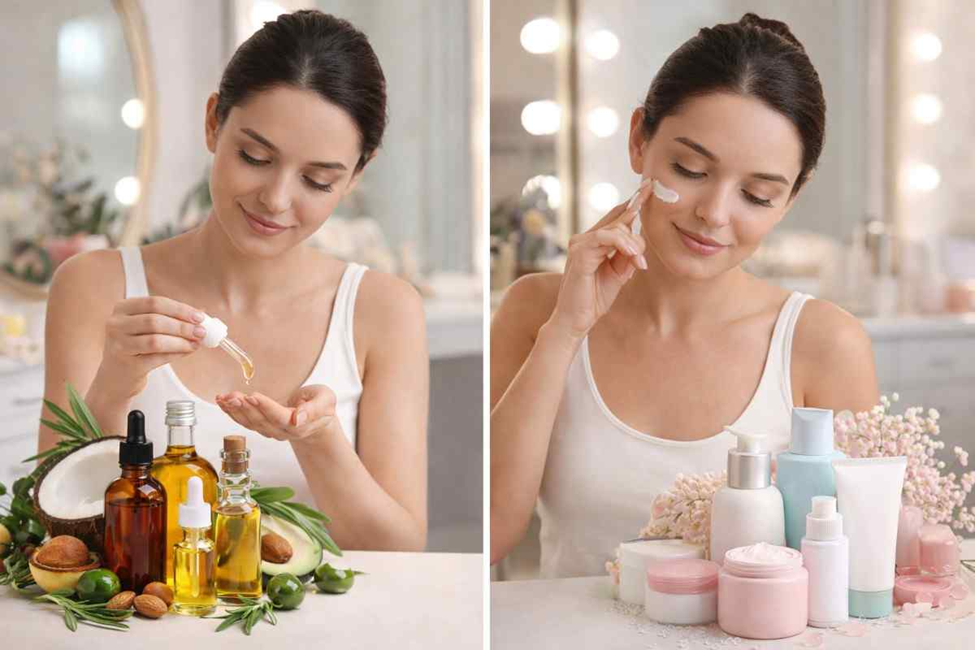
Natural oils are obtained from plant materials which include seeds and nuts and fruits. The most common natural oils include jojoba oil and argan oil and rosehip oil and coconut oil and almond oil. The oils provide skin nourishment through their content of fatty acids and vitamins and antioxidants.
Natural oils serve two primary purposes as they function as occlusives and emollients. The products create a barrier which retains skin moisture while they maintain the skin’s outermost protective layer. The majority of oils contain either linoleic acid or oleic acid which determines their effects on acne prone skin and dry skin conditions.
The natural oils provide three main advantages which include their unprocessed state and their absence of artificial additives and their essential nutrients which contain vitamin E and antioxidants and their ability to create strong protective barriers which safeguard dry and damaged skin and their capacity to be used on facial skin and body skin and hair. The natural oils which exist in nature do not work for all skin types. Acne-prone individuals should avoid using coconut oil because it blocks their pores. The application of heavier oils creates a greasy sensation which becomes more intense in humid weather.
Understanding Synthetic Moisturizers
The laboratory synthesizes synthetic moisturizers as products that contain humectants and emollients and occlusives in specific controlled proportions. The products usually contain glycerin and hyaluronic acid and silicones and ceramides and peptides. The formulations aim to solve particular problems which include oil control and anti aging and acne treatment and barrier restoration. Synthetic moisturizers provide controlled moisture distribution to users whereas single ingredient oils do not deliver this benefit.
Key benefits include:
- Precisely engineered formulations
- Non comedogenic options for acne prone skin
- Lightweight textures for oily or combination skin
- Stability and extended durability
Synthetic moisturisers tend to be the best choice for individuals who desire reliable performance from their moisturizer and less chance of clogged pores.
How Each Works on the Skin Barrier
The skin barrier was designed as a protective mechanism which uses its lipid and cellular components to stop water from escaping while it defends against external environmental threats. The skin develops three conditions of dryness and irritation and acne breakouts when this barrier function of the skin gets damaged.
Natural oils function mainly to strengthen the protective layer of lipids which they contain. These products are designed to create a barrier on the surface of the skin to prevent water from escaping, helping the skin to retain moisture.
Synthetic Moisture products usually serve its purpose by providing three main functions:
- Humectants to draw water into the skin
- Emollients to smooth and soften
- Occlusives to seal moisture
This layered approach can make synthetic formulations more adaptable across skin types.
A Statistical Look at Using Moisturizers
Users grew for every type of moisturizer evaluated in the 2013 Survey of the National Health and Nutrition Examination Study. People of dry and sensitive skin should use moisturizers regularly because they decrease irritation and aid in the preservation of moisture in the skin. One of the simplest things you can do to your skin is to use moisturizer every day as the American Academy of Dermatology recommends. As well, a report in the Journal of Clinical and Aesthetic Dermatology reveals that moisturizer users have the potential of reducing their (water) skin moisture loss by up to 30% percent.
Comparison Table: Natural Oils vs Synthetic Moisturizers
Here’s a simple comparison between natural oils and synthetic moisturizers to show their differences.
| Feature | Natural Oils | Synthetic Moisturizers |
| Source | Plant derived | Lab formulated |
| Main Function | Occlusive and emollient | Blend of block, emollient and humectant |
| Best For | Dry and barrier damaged skin | All skin types depending on formula |
| Risk of Clogging | Moderate depending on oil type | Low in non comedogenic formulas |
| Customization | Limited to oil properties | Highly customizable formulations |
| Shelf Stability | Moderate | High |
Which Type of Skincare is best with Oily, Acne-prone Skin?
Light but hydrating preparations are a necessity, in case of oily acne-prone skin.The natural oils are so heavy that they do not suit the skin, but light oils help keep the skin hydrated and prevent additional breakouts.
The artificial moisturizers that producers formulate for oily skin contain two types of ingredients, because they are formulated with oil-free humectants and ingredients that support the skin’s protective barrier. They offer skin hydration without making your face appear more oily than it already is.
If you experience frequent breakouts:
- Select gel and lotion products which have lightweight textures
- Heavy oils such as coconut oil should be avoided
- Watch out on labels which are non comedogenic
What Is the Better one on Sensitive or Dry Skin?
The dry and sensitive skin needs stronger barriers repair than other skin types. Linoleic acid-containing natural oils aid in re-establishing the lipid balance of the skin. Two well-liked skin care products that most people can use are rosehip and argan oil.
The synthetic moisturizers which contain ceramides, cholesterol, and fatty acids work to replicate the natural lipid structure found in skin. This treatment approach helps doctors achieve full skin restoration when patients show severe skin damage.
People who have eczema or very dry skin should choose synthetic barrier creams which deliver medical grade hydration. This provides better results.
Sustainability and Ethical Factors
Natural oils are believed to be nature friendly yet the sustainability of the oils is determined by the source of raw material of the oils. Farmers must spend a lot of money cultivating certain plant oils.
The production of synthetic ingredients leads to greater environmental impact although they need fewer natural resources for their creation. Brands of today have started to adopt environmentally friendly manufacturing methods for their products.
People who want to make ethical choices between natural and synthetic moisturizers should pick products which do not involve animal testing, and contain ingredients obtained through responsible methods.
Texture, Feel, and Daily Wear
People determine how well they can use things through their ability to detect different textures. People have mixed opinions about natural oils because these substances create a luxurious appearance, which some people find unappealing. The market offers synthetic moisturizers which come in various forms including creams, gels, lotions, and emulsions.
People who wear makeup prefer synthetic products which absorb quickly and do not form pellets on their skin.
Conclusion
Modern skincare benefits from two main types of moisturizing products which include natural oils and synthetic moisturizers. Natural oils provide basic formulas which contain high amounts of nutrients but synthetic moisturizers deliver specialized hydration solutions which address particular skin issues. People who have acne or combination skin should use synthetic products because these products deliver more consistent results. People who have dry skin or damaged skin barriers should use nutrient-rich oils together with ceramide-based creams to achieve better results. Skin type knowledge together with ingredient response understanding allows people to understand their skin needs. Your skin will achieve balance through proper hydration when you combine it with niacinamide zinc face serum which supports oil management to create clear skin.
FAQs
- Can plain natural oils be used as a moisturizer?
Certain oils will moisturize dry skin alone. What most need is to use the oil along with a humectant to obtain optimal results.
- Are all moisturizers suitable for sensitive skin?
Not all, but many are lubricants and tests are done on sensitive skin first.
- Are natural oils pore clogging?
Some are. In particular oleic rich oils can clog some pores with acne.
- Can you apply oil over a moisturizer? Is it safe?
Yes as long as this is used as a final step it will keep all that has been put on into it and lock the moisture in.
- How long before I should expect to see a visible result from my new moisturizer?
Immediate effects of the moisturizer will be seen after use but repairing the barrier will take approximately 2-4 weeks of continual use.