Most individuals face difficulties when they need to select their skincare products because they must decide which option between expensive products and cheap products provides better results. The outcome depends more on which components are used and their amounts than on their production costs. The most essential aspect of a product is its active components which determine skin absorption through their specific extraction methods. An effective serum to fade acne marks more effectively than a costly cream which contains no potent active ingredients. The blog will show you which ingredients and delivery methods and scientific research distinguish between luxury and drugstore creams so you can select the best product for your specific skin type and skin issues.
How Skincare Ingredients Work
Every skincare product consists of three essential components which are active ingredients and base components and supporting compounds. Active ingredients are what target specific concerns such as aging, pigmentation, dryness, or breakouts. The base component of the product provides two benefits which are improved texture and better skin absorption. Supporting compounds enhance product stability while providing hydration and helping with barrier restoration.
Luxury products showcase their worth through the demonstration of their advanced materials and their exclusive component mixtures. The products contain active ingredients which include peptides and rare botanical extracts and modern antioxidant technologies. Drugstore creams use established active ingredients which researchers have studied extensively including hyaluronic acid and niacinamide and salicylic acid and mild retinoids. The primary distinctions between these two items exist in three areas which include their formulation accuracy and their ingredient strength and their method of product distribution.
Ingredient Breakdown: The Main Differences
The following table outlines key actives and formulations commonly found in luxury versus drugstore creams and what they do:
| Ingredient Category | Luxury Creams | Drugstore Creams | Top Benefits |
| Vitamin C | Stabilized, high potency forms | Basic forms like ascorbic acid | Brightens and evens tone |
| Hyaluronic Acid | Multiple molecular weights | Standard weight | Deep and surface hydration |
| Retinol | Encapsulated/slow release | Standard retinol | Anti‑aging, texture improvement |
| Niacinamide | In conjunction with peptides | Niacinamide in its purest form | Cuts Down on Inflammation |
| Peptides | Peptides in proprietary mixtures | Rarely included | Supports firmness |
| Botanical Extracts | Rare or exotic | Common botanical extracts | Antioxidant/soothing support |
| Sunscreen Filters | Advanced broad spectrum | Standard SPF | UV protection |
Focus and Structure
The success of a product lies in the amount of concentration of the ingredients.The active ingredients in luxury creams can reach higher levels, yet products do not achieve better results through increased active ingredients unless their stability and delivery mechanisms receive proper optimization. A product which contains a high Vitamin C percentage will experience rapid potency loss because light and air exposure will affect its unstable container.
Drugstore products sometimes offer straightforward, stable actives at effective concentrations. The active ingredients of these products undergo safety testing and performance evaluation because they are controlled substances. The results of drugstore products reach the same level as their luxury counterparts after users apply them consistently.
Delivery Systems and Absorption
High-end skincare products use advanced delivery systems that include microencapsulation and liposomes and nanoemulsions as their primary delivery methods. The technologies provide two benefits because they enable enhanced ingredient absorption and they keep products stable. The innovations improve product performance but their benefits extend beyond high-end products. Many mid-range drugstore products now use similar delivery systems at lower cost points.
Luxury brands will allocate additional resources to develop fragrances and sensory elements which will create better user experiences despite not improving product effectiveness. The additives present in this product will heighten the risk of causing skin irritation for individuals with sensitive skin.
Packaging and Ingredient Protection
The packaging design of a product determines how long its components will remain usable. Luxury products often use airless pumps or opaque jars that protect sensitive actives like retinol and Vitamin C from degradation. The drugstore products use basic packaging designs which fail to protect unstable ingredients but the product performance remains unchanged because the formulation remains effective.
Clinical Insight: Price is Not Safety or Efficacy
A comparative study on the ingredient profile of expensive and cheap moisturizers was conducted in 2018. The researchers conducted their study to identify potential allergens and sensitizers which exist in the products together with actual active components of the products. The study found that both luxury and drugstore moisturizers contained the same quantity of these substances.The results demonstrate that consumers who pay for expensive products will not receive formulations that provide better skin protection. The study results show that product effectiveness depends more on how ingredients are chosen and combined and how stable the product is than on brand name and product pricing. The study shows that consumers can find identical moisturizing and skin barrier protection results by using drugstore products instead of expensive creams.
Supporting Ingredients Other Than Actives
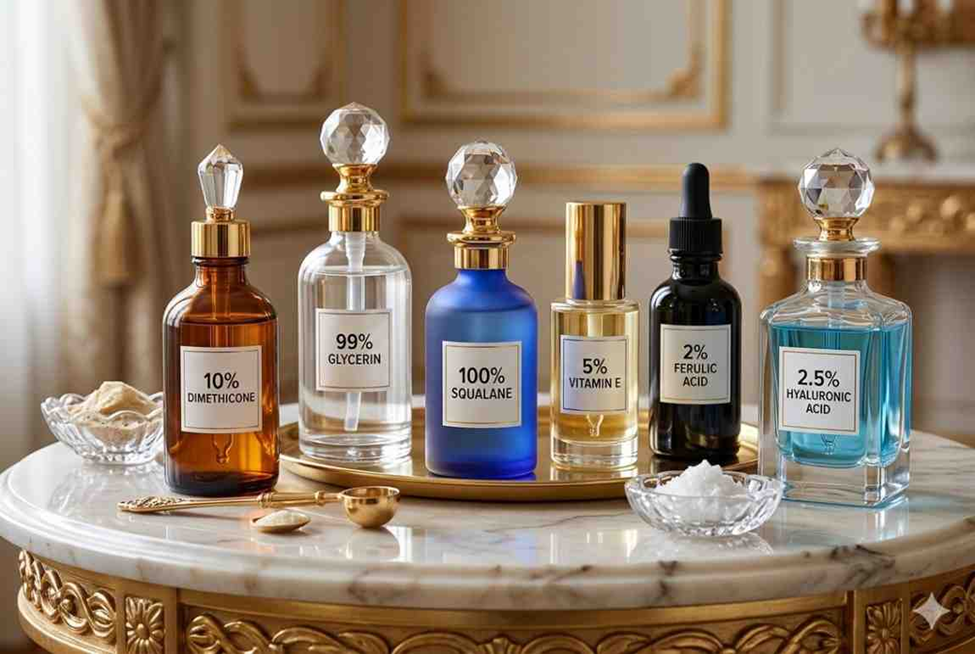
Other than the active ingredients, some other important ingredients are also used as secondary ingredients to the end product:
- Humectants: Glycerin and hyaluronic acid assist in attracting the moisture into the skin.
- Emollients: Squalane has a softening and smoothing effect on the skin.
- Occlusives: Dimethicone also assists in avoiding loss of moisture by skin.
- Antioxidants: Vitamin E, green tea extract and ferulic acid are used to prevent environmental stress on the skin.
High-end products may contain a combination of several supporting ingredients. Over-the-counter products contain the essential supporting ingredients without compromising on price.
Choose Based on Skin Type
The skin type will also need to be considered when buying products:
● Oily Skin: Light non-greasy formulations are the most appropriate. Niacinamide or salicylic acid in the drugstore are effective.
● Dry Skin: Humectants and lipid support can be helpful on dry skin; the complicated oil combinations are found in the luxury formulas sometimes.
● Delicate Skin: At all costs, fragrance-free formulas incorporate sensitive skin.
● Aging Concerns: Luxury formulas have the potential to provide extra assistance since they contain more potent retinoids and peptides.
The reaction of your skin to ingredients can be considered much more significant than the name on the jar.
Advantages and Disadvantages of Luxury Vs Drugstore
Luxury skincare products deliver a complete premium experience through their advanced skincare delivery systems which contain higher active ingredient concentrations. The product creates a pleasing sensory experience which helps people develop a habit of using it regularly. The premium price of the product exists because it includes brand value and packaging design and marketing efforts in addition to its actual performance capabilities.
Drugstore creams remain accessible to consumers because they provide affordable pricing and use medically verified ingredients. The products receive advantages from their strict regulatory requirements which lead to thorough testing procedures. The primary constraint of the system exists because it uses basic materials instead of the high-end delivery methods which premium products offer.
The Secret to Making the best of your skincare products
- Read ingredient lists first before proceeding with other ingredients.
- Patch tests are to be conducted, especially in case of using strong and new ingredients.
- Put light serums first and then creams so that the former is properly layered.
- One should be consistent. Its maximum effect is obtained through daily use.
- Apply sunscreen in the morning in order to shield yourself against the sun.
Conclusion
The effectiveness of both luxury and drugstore creams depends on their specific formulation and ingredient concentration and their designated purpose. The active ingredients in drugstore creams deliver clinically proven results at affordable prices while luxury products provide advanced delivery systems and unique ingredient combinations. You should select your skin concerns’ matching ingredients and use your selected products at all times to achieve maximum benefits. The initiation of smart skincare behaviors including an effective acne treatment regimen, is better than the analysis of product prices or brand recognition. Regularity, tolerance, and knowledge of your skin type is important to attain a visibly healthier, radiant, and balanced own skin with time.
FAQs
1. Does price guarantee better skincare results?
The success of a product rests on its special formulation in combination with how it can be used with your type of skin.
2. Are drugstore creams safe in treating individuals with sensitive skin?
Yes. Many affordable products contain no fragrances and their design specifically targets people with sensitive skin.
3. Do luxury products provide value that matches their price tag?
The assertion holds true where the products contain active components that remain in business due to sophisticated delivery systems.
4. So what is the duration of time you should apply a skincare cream?
It will take six to eight weeks before any skincare cream starts compliance with any visible result.
5. Should you discontinue using a product in case you do not achieve instant results?
Not immediately. Results take time. Users should stop using the product if they experience irritation and should seek professional help from a dermatologist.