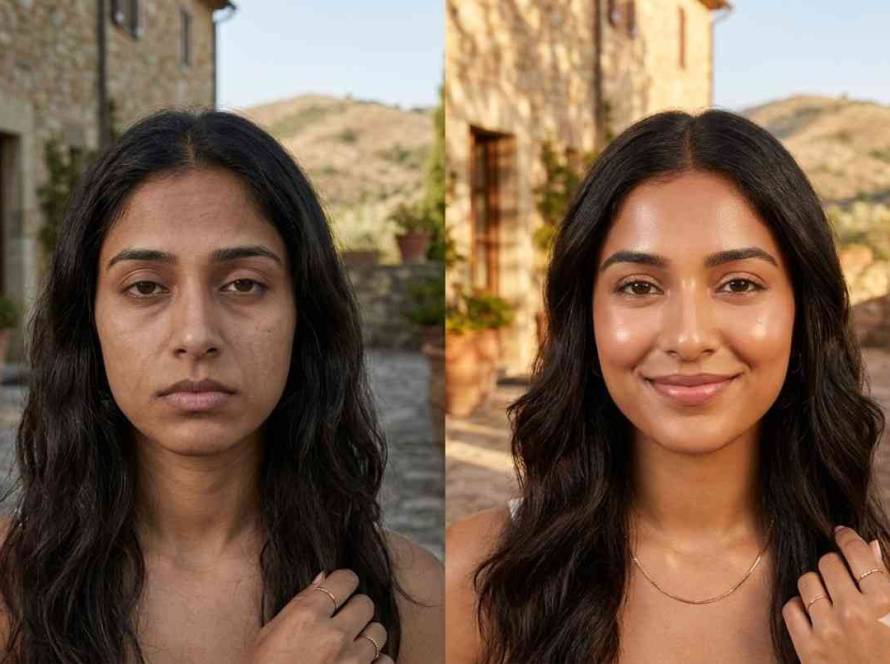
Let’s be honest about something most skincare content glosses over. You can do everything right for months. Every single night, routine done. Actives applied. Not one lazy skip. Life takes unexpected turns when people face disrupted schedules which start with their travel commitments and continue through their demanding workdays and their incomplete sunscreen applications. Your skin returns to its January appearance when you observe yourself in the mirror during the afternoon.
Your fear does not represent paranoia. Your self-assessment does not create an accurate evaluation of your abilities. The complete effects of ultraviolet radiation become visible after even minimal exposure starts to operate without interruption.
People fail to understand the underlying reasons behind this situation because experts do not provide clear explanations which create lasting memory. The truthful explanation shows you actual sun protection knowledge which will help you protect yourself from excessive sun exposure instead of making you feel guilty for not using it.
And before anything else, if brightening is the goal right now and a proper centella asiatica sunscreen is not already at the end of every morning routine, that is the conversation that matters most today.
What Your Skin Is Actually Doing When the Sun Hits It

Your skin is not passive when UV light lands on it. It reacts, fast, and with a very specific intention which is to protect itself.
Melanocytes exist as living cells which reside deep within skin tissue. Their whole purpose centers on creating melanin which serves as the pigment responsible for determining skin color and which protects against ultraviolet radiation. The moment your skin gets sunlight contact your skin cells receive a chemical signal which triggers them to produce more of their pigment. The skin uses this relationship between melanin and protection as its operational logic.
But here is where it becomes a problem for anyone looking to even out dark spots or change their tone. That alarm signal does not have a minimum threshold. That means there is no amount of sun exposure that your skin thinks is too small to react to. A few minutes waiting for a taxi. Driving in the sun. Standing near a window making coffee. All of it.
A study published in the Journal of Investigative Dermatology back in 2025 found something that honestly stopped a lot of people in their tracks. The production of melanin in the skin continues for days to weeks after exposure to UV rays, as cells in the skin will continue to receive melanin from other cells until their normal skin cycles are complete. One time exposure to UV rays (like going outside at lunch) will have many hours to damage the skin (the UV rays have been absorbed by the skin) after the sun goes down. (Source)
In addition, the slow and steady work of the brightening agents that suppress melanin production take a considerable amount of time (at least 8-12 weeks) to reach the point of being able to see a change in the skin. The agents are effective in inhibiting tyrosinase in the melanocytes that signal the skin’s melanocytes to create melanin. If you expose your skin to a week of UV light, the progress made over the past 12 weeks could all be reversed in days.
The Data Is Uncomfortable But Worth Knowing
A study published in the International Journal of Cosmetic Science revealed that everyday exposure to UV light, like what an average person would get during their daily commute to work or from a window in their office, can increase melanin concentration in the outer skin cells by as much as 300 percent in just one week.
Three hundred percent. In one week.
Here is how the timelines actually compare when you put them side by side:
| Skin Concern | Time to See Improvement | Time for UV to Reverse It |
| Visible reduction in dark spots | 6 to 8 weeks | 3 to 5 days |
| Evening out overall skin tone | 10 to 12 weeks | 5 to 7 days |
| Fading post-acne marks | 12 to 16 weeks | 1 to 2 weeks |
| Melasma becoming less visible | 16 to 24 weeks | 7 to 10 days |
Take a look at that right column for a second. The damage is done somewhere between ten and fifteen times faster than the healing. And that, my friends, is why the brightening without the sun protection is not a slower version of the brightening with the sun protection. It is not a brightening process. It is a process on a treadmill, wondering why the scenery doesn’t change.
How People With Sensitive Skin Will Pay More
Sensitive/Reactive Skin Types Experience All Of This To An Extreme; therefore, Understanding Why Sensitive Skin Types Experience Sensitivity and/or Reactive-ness to the same extent as others reasons are important because they issue your discomfort with sun damage, extend beyond just feeling uncomfortable by sun damage.
Sensitive Skin Types Usually Have A Skin Barrier That Is Not Operating At Full Capacity. In this case, the UV Radiation Has Less Resistance And Penetrates Deeper Into The Skin Than It Should. The Greater Depth Penetration Into The Skin, The Greater Level of Inflammation Created By The UV Radiation; and the Greater Level of Inflammation Created By The UV Radiation Causes Something Called Post-Inflammatory Hyperpigmentation Which Is An Additional Darkening In Addition To The Direct Tanning Change Of Color. While Both Of These Things Are Causing Two Mistakes Simultaneously To Create An Increased Depth of the Skin.
Nobody Talks About What Dry Skin Does to Your UV Vulnerability
This connection almost never comes up in brightening conversations and it really should.
Your skin barrier in its current state directly impacts how exposed you are to damage from the sun. When your skin barrier is weakened, whether from over-exfoliation, harsh products, dry weather, or just dehydrated skin that never really gets a break, UV rays are met with even less resistance on their way in. They penetrate deeper, cause more inflammation, produce more melanin, and brightening ingredients that are already working on you slowly are suddenly met with a much, much higher mountain to climb.
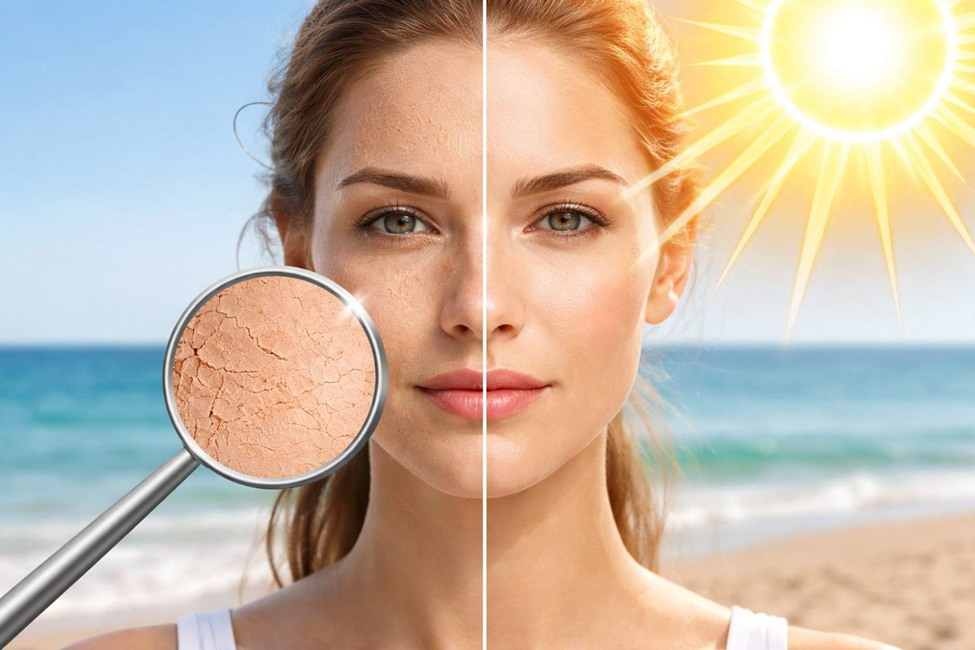
Very dry skin has an additional problem. When skin is flaking or cracked, UV absorption becomes uneven across the surface. Certain areas absorb more than others, which leads to patchy, irregular pigmentation that is significantly harder to treat than smooth, even hyperpigmentation. Using a deep moisturizer for very dry skin is not a comfort step sitting separately from the brightening routine. It is part of what makes the brightening routine possible.
There is also a real difference between a moisturizer that adds hydration to the surface and one that actually rebuilds the lipid structure of the barrier itself. Surface hydration gives you comfortable skin for a few hours. Barrier repair gives you skin that holds moisture better, defends against environmental damage more effectively, and responds to actives the way it is supposed to. Anyone struggling with both dryness and pigmentation issues needs their barrier to be solid before making the progress that’s been waiting to happen the entire time.
The Acne Situation Makes Everything More Complicated
The two conditions active breakouts and hyperpigmentation create a distinct form of exhaustion because they interact with each other and both conditions become worse through UV exposure.
Post-inflammatory hyperpigmentation is caused by the inflammatory process that results from lesions caused by breakouts. When you have a breakout, the body develops new hyperpigmented areas which can become further aggravated due to subsequent sun exposure after an active breakout. Most active acne treatments – especially retinoids and chemical exfoliants – create increased sun sensitivity in acne-prone areas. Thus, during active treatment of acne, those with acne-prone skin experience greater vulnerability to UV-induced setbacks.
The cleanser is where a lot of this can be quietly made better or worse without people realizing it. A stripping, harsh cleanser causes the skin to overproduce oil as a rebound response. More oil leads to more congestion. More congestion leads to more breakouts. More breakouts lead to more dark marks. It is a loop, and it starts at the very first step of the routine every morning.

An oil free acne wash that keeps the skin clean without throwing its balance off breaks that loop at the source. People with skin that does not require continuous healing from skin removal procedures experience lower levels of inflammation and skin blockages which result in slower skin mark development than their existing skin marks can fade.
Putting It All Together in a Routine That Actually Holds
Protection starts in the morning but it needs to follow an exact procedure which cannot be made up. The required steps include using a cleanser together with active ingredients and moisturizer and sunscreen. The steps must be followed exactly at all times because you must complete them before you leave home and all weather conditions must be treated as emergencies.
About 20 percent of ultraviolet (UV) rays get filtered by clouds while 80 percent of UV rays continue to reach the ground. Glass windows provide complete protection against UVB rays but they allow all UVA rays to enter the building. The ultraviolet A (UVA) wavelength range contains rays that most severely damage human skin through hyperpigmentation and collagen degradation. Many people do not know that drinking coffee at a window which faces the sun exposes them to harmful rays without any form of protection.
People need to maintain both their quantity and their consistent work performance. The SPF rating system evaluates sun protection according to established product application requirements. Most people apply a fraction of that without realizing it which means the SPF on the label is not what the skin is actually receiving. The correct amount to start with for face and neck application is approximately one quarter teaspoon.
Nighttime is when the repair happens. Brightening actives do their most effective work while the skin is in recovery mode and not dealing with fresh UV assault. A good barrier moisturizer at night restores what the day took out. The compounding effect of consistent nights is real and visible over time, but only when daytime protection is making sure those nights are not being undone every morning.
Conclusion
Months of consistent brightening work is a real investment and not just in products. In patience, in discipline, in all the mornings where doing the routine felt like a chore but you did it anyway. Losing that progress to a few days of unprotected sun exposure is not a small setback. It is genuinely months of work reversed in days.
Protecting it is not complicated but it does require the right things actually being in place. A soothing sunscreen for sensitive skin worth wearing every single morning without dreading it. A barrier-strengthening oil free acne wash that stops the breakout cycle from creating new marks faster than brightening can clear the old ones. And a deep moisturizer for very dry skin that keeps the barrier solid enough to actually do its job as a defense system.
Sun protection is not a bonus step at the end of a brightening routine. It is what makes a brightening routine worth doing at all.
Frequently Asked Questions
How fast does sun damage actually show up on the skin?
Usually within 48 to 72 hours for most skin tones. Deeper skin tones sometimes see it delayed by up to a week, which makes it easy to assume nothing happened when in reality the response just takes longer to surface.
Can brightening progress still happen with inconsistent sunscreen use?
Realistically, no. Every unprotected day hands UV a window to reactivate the melanin production that brightening actives have been slowly dialing down. Occasional protection is not enough for the progress to actually accumulate.
Is centella asiatica in sunscreen actually functional or just a trend ingredient?
The research backs it up. Centella asiatica has consistent evidence behind its ability to calm inflammation, support barrier repair, and reduce skin reactivity, which are exactly the things UV exposure disrupts. It earns its place in a formula.
Do California Skin+ products work better together or is picking one enough?
Together is where the real difference shows. Each product handles a different layer of the same problem and when all three are working in sync, the skin environment becomes stable enough for brightening to actually happen without constantly being undermined.