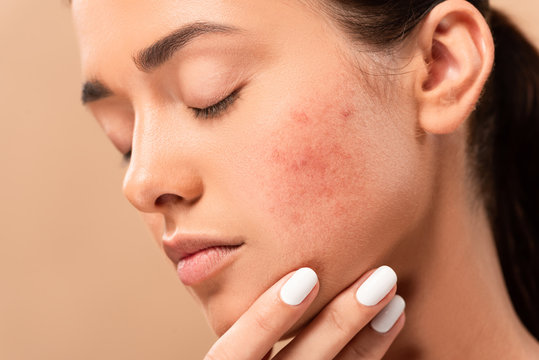
Air pollution has evolved from being an environmental problem to becoming a daily skincare problem which people face in cities where AQI levels reach their highest points. The connection between acne and pollution now shows how air contamination leads to skin problems which result in clogged pores and continuous skin outbreaks. California Skin+ Cica Sunscreen SPF 50 PA++++ as a protective measure which completes their skincare routine because it protects them from environmental skin damage. Your skin care routine will become effective when you learn about how pollution affects your skin.
What is AQI and Why Does It Matter for Your Skin?
The Air Quality Index AQI provides measurements of air pollution levels which determine their effects on human health. The system evaluates the presence of PM2.5 particles PM10 particles nitrogen dioxide gas sulfur dioxide gas and ozone gas as pollutants. The pollutants which people usually link to breathing difficulties also produce major effects on skin health.
The skin functions as the body’s largest organ which serves as its initial defense mechanism. The skin develops a layer of microscopic particles when people breathe air that contains pollution. The particles have a size that enables them to enter skin pores and break through the skin’s protective barrier.
Research has shown that almost 90 percent of the world’s population is exposed daily to polluted air, meaning that this is an everyday concern for most of us.
How Pollution Triggers Acne
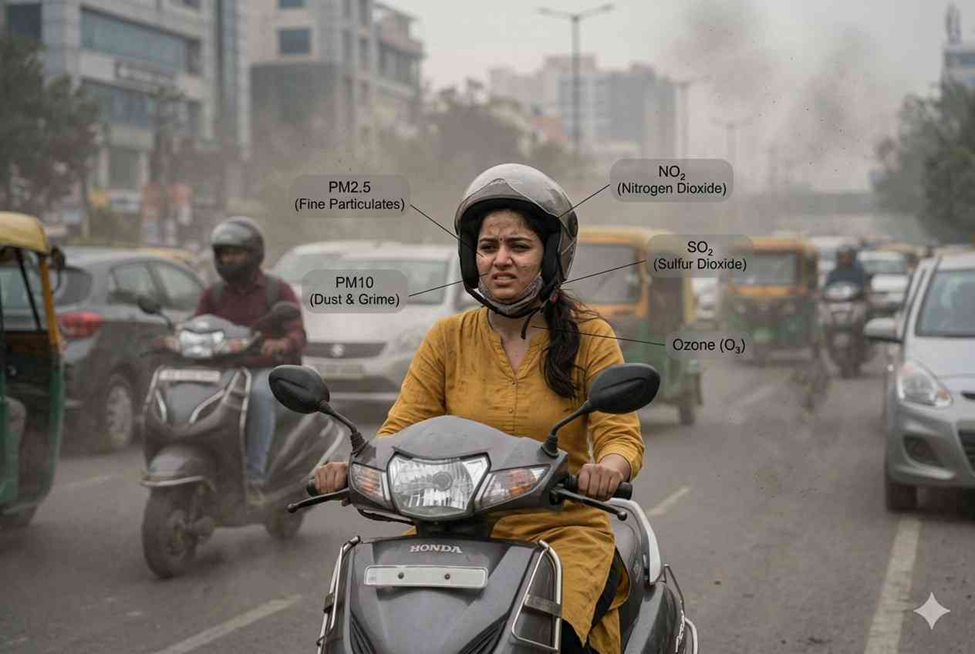
Pollution causes acne through various biological pathways that operate within the human body. The problem extends beyond simple skin contamination from dirt. The issue involves the way pollutants combine with skin oil and bacteria and the body’s natural defense mechanisms.
1. Increased Sebum Production
Pollutants provoke skin to secrete more oil and clog the pores with dirt and dead skin surfaces.
2. Oxidative Stress
Air pollutants generate free radicals which create damage to skin cells. This process leads to skin barrier deterioration which results in increased susceptibility to skin inflammation.
3. Inflammation and Sensitivity
Irritant dermatitis can affect the face, scalp, buttocks, and any other area where there occurs repeated or prolonged exposure to fibrous material.
4. Microbiome Disruption
The path, through which the inflammation is induced, is the interaction between the microbial flora of great and evil.
Studies have shown that there were increased concentrations of pollutants associated with PM2.5, NO2, and visitors.
The Science Behind Pollution and Skin Damage
Pollution affects the skin at a cellular level. Skin receives harmful effects from particulate matter which settles on it because it reacts with skin’s natural oil to create oxidized lipids. The oxidized compounds lead to acne development while they speed up the process of skin aging.
Pollutants decrease skin antioxidant levels which include vitamin E and squalene. The skin requires proper treatment to maintain its protective function against environmental damage. The skin requires proper treatment to maintain its ability to heal and defend itself against environmental dangers.
Over time, the outcome of this process is:
- Persistent breakouts
- Enlarged pores
- Uneven skin tone
- Premature aging
Statistical explanation: Pollution and Acne
The global epidemiological data have given some of the most compelling insights.
Multiple studies have established that people who experience higher levels of air pollution face increased chances of visiting outpatient facilities for acne treatments in urban areas where air quality index scores reach their highest levels. Environmental pollutants which include PM2.5 and nitrogen dioxide cause three distinct skin conditions that result in more severe acne.
This perch is growing increasingly relative to the evidence of environmental influences on the regulation of certain forms of acne.
Common Pollutants and Their Effects on Skin
The table is an effort to clarify the manner in which various types of pollutants affect the skin.
| Pollutant | Source | Effect on Skin | Acne Impact |
| PM2.5 | Vehicle emissions, industrial smoke | Penetrates pores, causes oxidative stress | High |
| PM10 | Dust, construction | Clogs pores, irritates skin | Moderate |
| NO₂ | Traffic pollution | Triggers inflammation | High |
| SO₂ | Industrial emissions | Weakens skin barrier | Moderate |
| Ozone | Sunlight reacting with pollutants | Damages skin lipids | High |
This table clearly shows that pollution is not one distinct issue, rather a compilation of factors damaging the skin.
Why Urban Skin Suffers More?
Cities experience three types of pollution which arise from vehicular traffic and industrial emissions and the crowded conditions of urban areas. The urban environment creates a situation where pollutants combine with ultraviolet radiation and high temperatures and high humidity to create additional dangers for people.
This combination creates what dermatologists often call “urban skin stress.”
Urban skin tends to show:
- Frequent breakouts
- Increased oiliness
- Faster aging
- Dull complexion
Where the humidity is fairly substantial-such as in Mumbai-coupled with sweat and oil contaminants, the exacerbation of the situation.
The Role of UV Rays in Pollution Damage
The combination of pollution and UV radiation creates a situation which causes increased skin damage. UV radiation makes the skin barrier weaker which allows pollutants to enter the skin at deeper levels.
When combined, they increase:
- Free radical formation
- Collagen breakdown
- Inflammatory responses
For this reason, sun protection must be ensured whether it is cloudy or even if they are registering high pollution.
Ingredients in Skin Care Products That Help Fight Pollution
In order to avoid pollution, you need to make sure that the last pass is not done.
Some good ingredients are as follows:
- Vitamin C and Vitamin E are examples of antioxidants
- Niacinamide for barrier repair
- Ceramides to strengthen the skin barrier
- Salicylic acid to unclog pores
These components help to neutralize free radicals and deal with inflammation caused by all kinds of environmental pollutants.
Daily Habits That Protect Your Skin
Depending on your prevailing lifestyle patterns, the pollution in the environment would indeed have a conflicting impact on your skin. Your body will experience significant improvements from making minor modifications to your routine.
- People must cleanse their faces twice a day for the elimination of all harmful substances from the skin.
- The act of touching your face needs to be stopped by people because they should touch their face only in exceptional circumstances.
- It is important for the well-being of the skin that people drink enough water.
- It is imperative for people to apply skin care products like sunscreen for women constantly. They must avoid outdoor activities amidst the day when the pollution level reaches its peak.
Consistency greatly helps when facing environmental terrors.
The Hidden Impact of Indoor Pollution

Outdoor pollution receives most public attention, yet indoor pollution also impacts your skin health. The sources of indoor air pollution include cooking fumes and dust and inadequate ventilation. The skin absorbs indoor pollutants which stay airborne at home just as outdoor particles do, causing skin problems that include clogged pores and irritation. The implementation of air purifiers together with effective ventilation systems works to decrease this particular risk.
The Outcomes of Pollution on Skin
It will cause skin problems that last a long time if you don’t treat it right.
- Acne that won’t go away
- Hyperpigmentation
- Wrinkles that come too soon
- Loss of stretchability
The skin gets weaker and more likely to get hurt as time goes on.
Conclusion
The connection between AQI and acne is no longer a theory. Scientific evidence shows that pollution acts as a major factor which triggers and intensifies acne breakouts. Pollutants create different skin damage through their effects which range from oxidative stress to inflammation.
Acne treatment requires multiple methods because modern acne management needs more than essential treatment methods. It requires protection, prevention, and consistency. The right skincare habits and protective measures and products should be used to reduce pollution-related impacts.
The process of maintaining skin health in areas with high pollution requires a complete skin care routine which includes facial cleansing, skin moisture maintenance and non-comedogenic face wash application.
FAQs
1. Can pollution alone cause acne?
Pollution may not be the sole cause, but it is a significant contributing factor that can trigger or worsen acne.
2. How often should I cleanse my face in polluted environments?
Twice daily cleansing is generally recommended to remove accumulated pollutants.
3. Does pollution affect all skin types equally?
No, oily and acne-prone skin tends to be more affected due to excess sebum.
4. Is sunscreen necessary even on polluted days?
Yes, UV rays combined with pollution increase skin damage, making protection essential.
5. Can California Skin+ Acne Control Cleanser help reduce pollution-induced acne?
Yes, a gentle cleanser can remove pollutants, excess oil, and impurities that contribute to breakouts.