Most people figure out late that after trying what feels like every Barrier Repair Moisturizer, serum, and cleanser on the market, the ones recommended by dermatologists, the ones trending on every skincare forum, the ones with thousands of glowing reviews, skin can still be an absolute mess. Breaking out in the same spots. Going red for no reason. Stinging from products it used to love. Tight and uncomfortable by noon even after moisturizing in the morning.
A barrier repair moisturizer is not the exciting answer. It is not the product that is going to go viral or make for a satisfying before and after. It is genuinely kind of boring. But for skin that will not settle no matter what, it is almost always the missing piece. Here is why.
What the Skin Barrier Actually Is?
Forget the clinical explanation for a second. Think of the skin barrier as a brick wall. The cells are the bricks. The lipid ceramides, fatty acids, cholesterol are the mortar holding everything together between them. The wall keeps the good stuff in, meaning moisture, and keeps the bad stuff out, meaning bacteria, pollution, irritants, UV damage, all of it.
When the mortar starts crumbling, the wall develops gaps. Moisture leaks out. Everything you do not want getting in starts getting in. Inflammation builds. And the skin starts behaving like it has completely lost the plot.
Here is the part that catches most people off guard. The damage does not always look like the dramatic, flaky, peeling skin people associate with a damaged barrier. A study published in the Journal of Investigative Dermatology in 2023 found that nearly 60 percent of people who considered their skin sensitive had measurable barrier dysfunction with zero visible symptoms at the time of testing. The skin looked normal. It just was not functioning normally underneath. (Source)
Which means a huge number of people walking around with reactive, unpredictable, frustrating skin are not dealing with a skin type. They are dealing with a barrier that has been quietly failing for months, maybe longer, while they kept buying new products trying to fix something that no product was ever going to fix on its own.
The Everyday Things That Break the Barrier Down
This is the part nobody wants to hear because none of it sounds like a mistake.
That foaming cleanser that leaves skin feeling genuinely clean, almost squeaky? It is stripping the lipids out along with the dirt. Every single time. Done twice a day for long enough and the barrier just cannot keep up. The tight feeling after washing is not clean skin. It is skin that has been stripped of what it needs.
Stacking actives is another one. Retinol, glycolic acid, vitamin C, benzoyl peroxide are all genuinely effective ingredients. But on a compromised barrier, they do not behave the way they are supposed to. They absorb too fast, go too deep, and instead of doing their job they cause inflammation. Then you treat the inflammation, which stresses the barrier more, which makes the activities less predictable, and suddenly you are in a cycle that just keeps going.
And then all the environmental stuff that feels completely out of control. Hot showers. Central heating. Cold wind. Cumulative sun exposure. None of it feels like damage in the moment. All of it adds up to a barrier that is being worn down faster than it can repair itself.
The Signs That Are Easy to Ignore (But Shouldn’t Be)
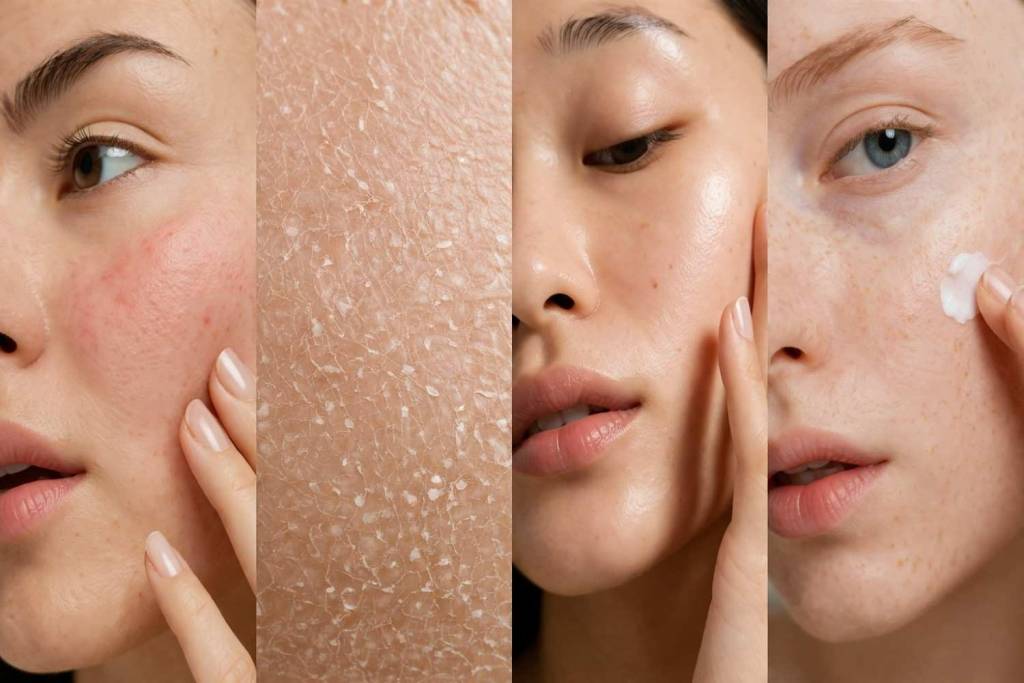
Barrier Repair Moisturizer that stops working within an hour. Skin that feels tight and uncomfortable before the morning is even over. Products that used to be completely fine now causing stinging or redness on contact. Texture that stays rough regardless of how often exfoliation happens. Redness that appears and disappears without any clear reason. Breakouts in new places. Skin that takes weeks to recover from literally anything: a new product, a flight, a stressful week, a change in weather.
Most people respond to those signs by doing more. Trying a stronger product. Switching the whole routine. That almost always makes things worse. Because the skin at that point does not need more. It needs a barrier repair Barrier Repair Moisturizer and the patience to actually let it work.
What Has to Be in a Barrier Repair Moisturizer for It to Actually Do Anything?
This genuinely matters more than the brand, the packaging, or the price. A barrier repair moisturizer without the right ingredients is just a regular Barrier Repair Moisturizer with better marketing.
Ceramide Complex. Ceramides make up about half of the skin’s natural lipid layer. They are the first thing that depletes when the barrier breaks down and the most critical thing to replenish. A ceramide complex means multiple ceramide types are present together, the way they exist in healthy skin. Not one ceramide listed near the bottom of an ingredient list for the sake of being able to put it on the label. A real ceramide complex, positioned high enough in the formula to actually do structural work.
Cica Extracts. Derived from Centella Asiatica. The research on this ingredient for barrier recovery is not just marketing hype; a 2024 meta-analysis in the International Journal of Cosmetic Science confirmed it measurably accelerates barrier repair and reduces reactive redness in damaged skin. Cica became popular because it works, which is honestly not always how skincare trends go.
Nonapeptide. This is the ingredient that works at a level the others cannot reach on their own. Signal peptides like nonapeptide communicate with skin cells and support repair from within, helping to regulate the inflammatory responses that keep reactive skin stuck in a constant cycle. It is the kind of ingredient that does not make for exciting marketing copy but makes a real difference in outcomes.
Olive Squalane. Behaves almost identically to the skin’s natural sebum. Fills lipid gaps in the barrier without being heavy or occlusive. Absorbs without leaving a greasy finish. Does not block pores. For skin that is already reactive and sensitive, olive squalane is one of the most compatible and least risky lipid ingredients available.
Pentavitin. For skin that moisturizes fine but loses everything within an hour, this is the ingredient that explains why that keeps happening and actually addresses it. Pentavitin binds to skin proteins and anchors moisture in place rather than just drawing it to the surface and hoping it stays. It is the difference between a barrier repair moisturizer that holds through the day and one that does not.

The Microbiome Thing That Almost Nobody Talks About
There is an entire side to barrier health that most skincare content completely ignores and it is worth knowing about.
The skin is not just a physical structure. There is a whole community of microorganisms living on the surface that actively participate in how the barrier functions. They help regulate inflammation. They keep pathogenic bacteria from taking over. They contribute to the overall stability of the skin environment. When the barrier is disrupted, this microbial community gets disrupted right alongside it.
The result is chronic low-level inflammation that has no obvious trigger. Skin that flares for no apparent reason. Reactivity that never fully settles even when nothing in the routine has changed. Research from the Global Skin Microbiome Consortium in 2023 found that ceramide-based formulas help restore microbial balance on the skin surSface as well as repair the physical lipid layer. California Skin+ barrier repair moisturizer is solving two problems at once. Most people using one only know about the first one.
The Habits That Either Help or Quietly Undo Everything
The right product can only do so much if the surrounding habits keep working against it.
SPF every morning without fail. UV exposure directly degrades ceramides. Summer skin that becomes noticeably more reactive every year is often just reflecting accumulated barrier damage from months of sun exposure without proper protection. SPF 30 minimum, every single morning, no exceptions.
Water temperature actually matters more than people think. Hot water dissolves lipids efficiently every time the face is washed. Switching to lukewarm water is such a small change that it feels like it cannot possibly make a difference. It does, over time, in a way that compounds.
Rest nights from actives give the barrier repair moisturizer space to actually work. If something is stressing the barrier every night, retinoids, acids, anything exfoliating, the Barrier Repair Moisturizer is always playing catch-up. Two or three nights a week dedicated only to the barrier repair moisturizer, nothing competing with it, changes the recovery rate noticeably.
And then the part that is genuinely difficult. Staying with it long enough. Six to eight weeks is what real barrier repair takes. Most people give it ten days, feel like nothing dramatic has happened, and move on to something else. But in ten days the repair is happening at a structural level that is not yet visible. Stopping then is stopping right before the point where it would have started to show up.
FAQs
Will a barrier repair moisturizer clog pores on acne-prone skin?
A well-formulated barrier repair moisturizer that uses non-comedogenic ingredients like ceramide complex, olive squalane, and pentavitin will not block pores on acne-prone skin. The key is checking that the formula is built around lipid-replenishing ingredients rather than heavy occlusive oils that sit on the surface.
How long before a barrier repair moisturizer actually does something visible?
Tightness and sensitivity tend to ease within the first one to two weeks of consistent use. Real texture improvement takes four to six weeks. For pigmentation concerns being addressed alongside barrier repair, the full eight to twelve weeks is realistic. It feels slow because skin regeneration is slow. That timeline is just how biology works.
Can a barrier repair moisturizer be used morning and night?
Yes, and for skin dealing with significant barrier damage, applying it both morning and night is often the most effective approach. In the morning it provides a stable base before SPF. At night it works alongside the skin’s natural repair cycle, which peaks during sleep.
What makes California Skin+ barrier repair moisturizer different from regular moisturizers?
California Skin+ formulated their barrier repair moisturizer as a genuine repair system rather than a standard hydration product. The formula combines ceramide complex, cica extracts, nonapeptide, olive squalane, and pentavitin in a balanced ratio designed to restore the barrier’s structural function, not just temporarily relieve dryness. The difference shows in how the skin behaves over time, not just immediately after application.
Conclusion
Nobody gets excited about a skin repair moisturizer. There is no viral moment attached to applying the same product consistently for eight weeks. The skin does not glow overnight. There is no before-and-after that gets thousands of saves.
But the results are real. And they last. And for skin that has been reactive and tight and unpredictable for years, getting to a place where it just behaves where products do not sting, where the redness is not a daily negotiation, where the barrier is actually doing what it is supposed to do, that is worth more than any trending ingredient ever delivered.
A barrier repair moisturizer built around ceramide complex, cica extracts, nonapeptide, olive squalane, and pentavitin is where that process starts. Not a quick fix. Not exciting. Just the thing that actually works, done consistently, for long enough to let it.