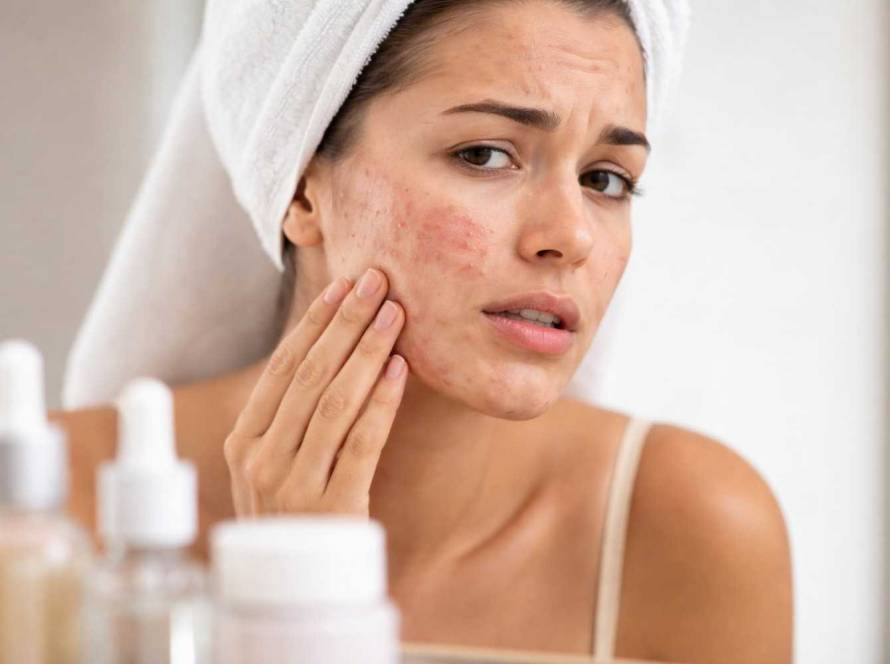
Acne is a painful thing in and of itself. But long after acne has cleared, for some people, there is an even worse pain: the skin where the pimple used to be is the last thing to go and can take a long time to heal (sometimes taking months to years). This “red place,” or “darkened place,” or proof of a pimple’s existence in an uneven texture, are also no longer just what should be there but rather formulas created by an actual biological process that occurred every time your skin produced a pimple. Learning how the pimple-to-scar process occurs is the first step toward overcoming this process and learning how to properly choose an acne scar gel for your use is the second step.
The Stats on Acne Scarring
Scarring from acne is the worst outcome of this common skin problem.
| Statistic | Data |
| Global population affected by acne | ~9.4% (over 700 million people) |
| Teens and young adults with acne | Up to 85% will have acne from age 12-24 |
| Acne patients that develop PIH (Post-inflammatory hyperpigmentation) | Up to 65% of those with moderate to severe acne |
| People with Fitzpatrick skin types IV–VI more prone to PIH | 2–3x more likely than lighter skin tones |
| Average time for untreated PIH to fade | 6–24 months without treatment |
| Time reduction with active ingredient treatment | Can reduce fading time by up to 50–70% |
Acne Scarring is definitely much more than simply a small percentage of the population. Most who get acne breakouts also develop scars. Unaddressed, the marks created by acne can last for more than twelve months or longer before disappearing on their own.
Stage 1: The Breakout Forms
Inflammation is the reason behind each scar. When a pore becomes clogged with excess sebum, dead skin cells, and acne-causing bacteria, primarily Cutibacterium acnes; the body’s immune response will occur. White blood cells will travel to the site, thereby causing the redness, swelling, and tenderness of a pimple.
This inflammation occurs both on the surface of the skin and has an effect on the lower level. The longer/stronger the inflammation, the more probable that some residual will be left after the inflammation resolves.
This is exactly why using a fast-acting acne spot treatment the moment a breakout begins is so critical. Reducing inflammation early shortens the duration of the assault on your skin tissue. The California Skin+ 1 Hour Acne Spot Relief is designed to intercept this process at the earliest stage. Powered by 3% Colloidal Sulfur, 2% Salicylic Acid, Zinc PCA, Calamine, and the brand’s proprietary Acne Buster™ Complex, it visibly shrinks pimples within one hour and reduces the redness and swelling that, left unchecked, pave the way for scarring. Think of this acne spot treatment as your first line of defense in the pipeline.
Stage 2: The Wound Healing Cascade
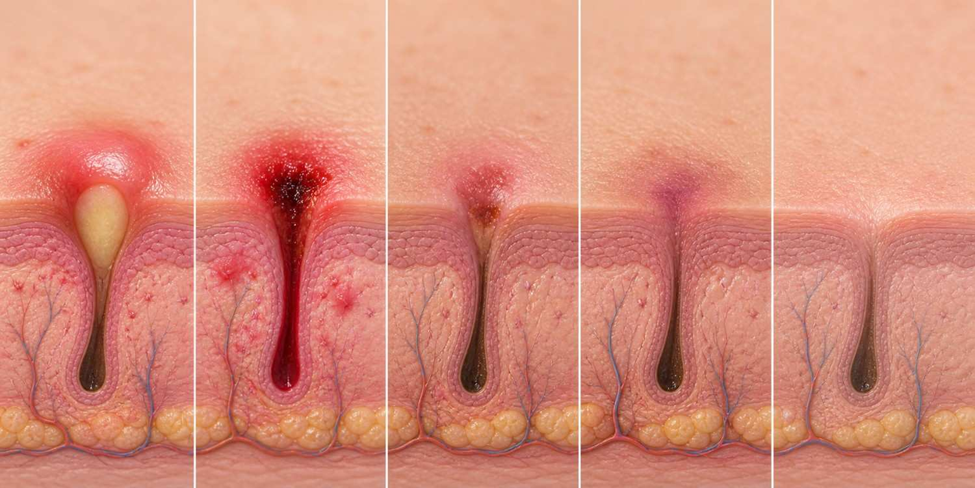
Once the acute inflammation subsides, your skin enters a repair phase. This is where the scarring decision is essentially made.
Post-Inflammatory Hyperpigmentation (PIH): The most common aftermath. Melanocytes (the skin cells responsible for pigment) go into overdrive during healing and deposit excess melanin at the site of the breakout. The result is a flat, dark, or reddish mark that can range from light pink to deep brown depending on your skin tone. PIH is not a true scar in the structural sense, but it can take many months to fade on its own.
Atrophic Scarring: When the inflammation is deep and the collagen destruction is significant, the skin cannot fully rebuild itself. The result is a depression, a pitted or sunken area. Ice pick, boxcar, and rolling scars are all types of atrophic scarring and are far more difficult to treat than PIH.
Hypertrophic or Keloid Scarring: Less common in acne, this occurs when the body overproduces collagen during healing, creating a raised scar. More common in people with darker skin tones.
The type of scar you develop is influenced by genetics, skin tone, how deeply inflamed the original breakout was, whether you picked or squeezed the pimple, and how quickly you began treatment.
Stage 3: What Picking Does to the Process
Research consistently shows that mechanical manipulation of a pimple, squeezing, popping, or picking, dramatically increases the risk of significant scarring. When you squeeze a pimple, you push the bacteria and inflammatory contents deeper into the dermis rather than clearing them out. This causes a secondary wave of inflammation that is often worse than the original.
A 2021 survey published in the Journal of Clinical and Aesthetic Dermatology found that over 74% of acne patients admitted to picking their lesions despite knowing the consequences, and those who picked were significantly more likely to report post-inflammatory marks and textural changes. This is one area where early use of a targeted acne spot treatment pays dividends: when a product is actively shrinking and drying a pimple, the temptation and opportunity to pick is greatly reduced. (Source)
Stage 4: The Long Wait (and Why You Need an Acne Scar Gel)
If no treatment is applied after a breakout resolves, the skin is left to heal at its own pace. For PIH, that means months of melanin slowly dispersing. For textural scars, collagen remodeling continues for up to two years, but without assistance, the improvement is minimal.
This is the stage where a good acne scar gel becomes non-negotiable. The skin is biologically active during this post-inflammatory period and is highly receptive to active ingredients that support melanin inhibition, gentle cellular turnover, and collagen support.
The right acne scar gel works on multiple mechanisms simultaneously rather than targeting just one pathway, which is why multi-active formulations consistently outperform single-ingredient approaches in clinical literature.
The Science of What Works in an Acne Scar Gel
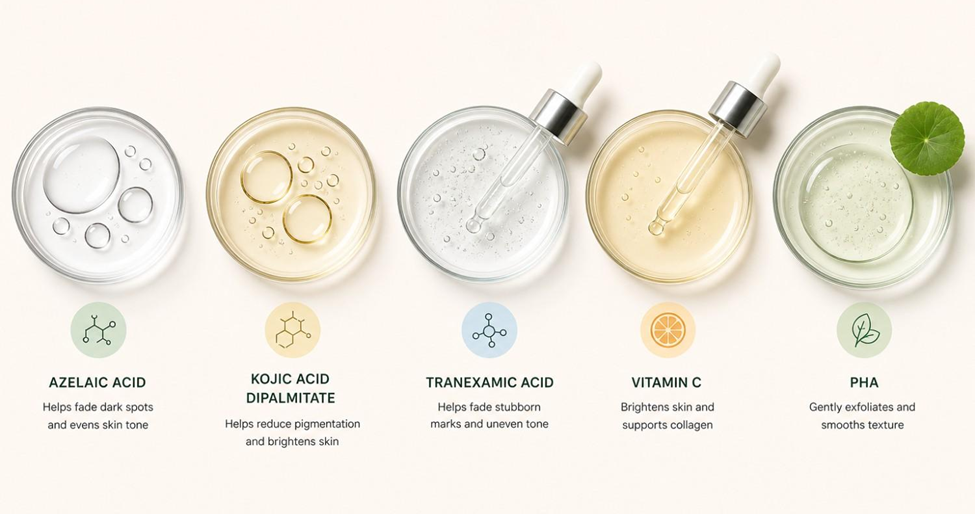
Not all ingredients in an acne scar gel are created equal. Research points to a clear set of actives that address PIH and textural irregularities most effectively:
Azelaic Acid inhibits tyrosinase, the enzyme responsible for melanin production. At concentrations of 15–20%, it has been shown to reduce PIH comparably to 4% hydroquinone with fewer side effects. It also has mild anti-inflammatory and antimicrobial properties, helping prevent new breakouts from forming.
Kojic Acid Dipalmitate is a stabilized, more skin-friendly derivative of kojic acid. It works alongside azelaic acid to further suppress melanin synthesis, and research indicates synergistic effects when the two are combined in a single acne scar gel formulation.
Tranexamic Acid is one of the newer actives generating significant research interest. It works by blocking the interaction between keratinocytes and melanocytes during the inflammatory response, effectively intercepting pigment deposition at its source. Studies have shown measurable reduction in PIH with concentrations as low as 2–3%.
Vitamin C (Sodium Ascorbyl Phosphate) is a potent antioxidant that inhibits melanin formation while also promoting collagen synthesis. Its brightening properties make it an ideal complement to the melanin-suppressing actives in a well-rounded acne scar gel.
PHA (Gluconolactone) is a gentle chemical exfoliant that promotes cellular turnover without the irritation associated with AHAs, making it safe for sensitive and post-acne skin. Regular exfoliation prevents the buildup of melanin-laden dead cells that make dark spots appear darker and deeper than they are.
The Product That Addresses the Full Pipeline
For those dealing with existing post-acne marks and textural unevenness, the California Skin+ Triple Action Acne Scar Clear brings all of these evidence-backed actives together in one targeted formulation. Powered by Azelaic Acid (5%), Gluconolactone PHA (5%), Kojic Acid Dipalmitate (2%), Sodium Ascorbyl Phosphate Vitamin C (2%), Tranexamic Acid (2%), and Allantoin (1%), it functions as a comprehensive acne scar gel that targets pigmentation, supports skin renewal, and calms residual inflammation simultaneously.
Unlike single-active treatments that address only one step of the post-acne process, this acne scar gel is built around the multi-pathway approach that dermatological research supports. It is suitable for oily, combination, and acne-prone skin types, as well as sensitive skin that needs gentle but effective exfoliation. When used consistently morning and evening on clean skin, it works progressively to fade marks and improve overall skin clarity.
Building the Right Routine: Stop the Pipeline Before It Starts
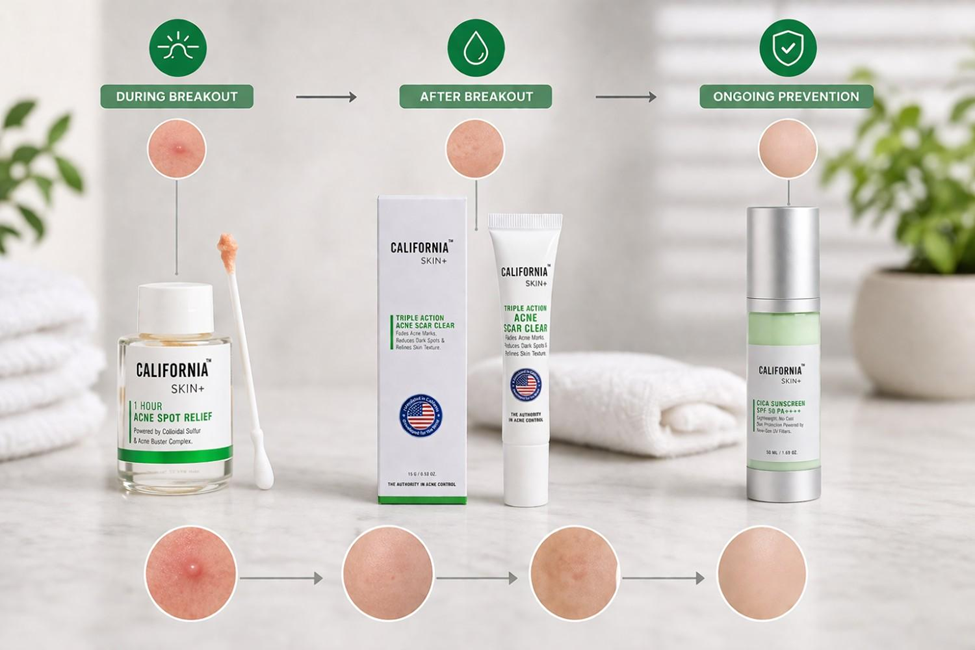
The most effective strategy combines early intervention at the breakout stage with consistent post-breakout treatment using an acne scar gel. Here is how to approach each phase:
During an active breakout:
- Apply the California Skin+ 1 Hour Acne Spot Relief directly to the pimple using a clean cotton swab
- Do not squeeze or pick under any circumstances
- Use the acne spot treatment up to three times daily until the active lesion subsides
- Avoid harsh scrubs or stripping cleansers that worsen inflammation
After the breakout clears:
- Begin applying your acne scar gel to the affected area twice daily
- Use SPF 30 or higher every morning without exception (UV exposure darkens PIH significantly and undoes the work of any acne scar gel)
- Be consistent for at least 8 to 12 weeks before assessing results, as cell turnover cycles take time
- Avoid introducing too many new actives simultaneously, which can compromise your skin barrier and slow healing
Ongoing prevention:
- Maintain a stable, gentle skincare routine to reduce the frequency of future breakouts
- Keep the acne scar gel in rotation as a preventive measure on areas prone to recurring marks
- Reassess product fit seasonally, as skin behavior changes with humidity, temperature, and hormonal shifts
Why Sun Protection Multiplies the Effectiveness of Your Acne Scar Gel
This point deserves its own mention because it is so frequently overlooked. UV radiation directly stimulates melanocyte activity. Every time your healing skin is exposed to sunlight without protection, the body’s melanin response is amplified, making existing dark spots darker and slowing the fading process significantly.
Research from the American Academy of Dermatology confirms that consistent daily SPF use is one of the most clinically impactful additions to any acne scar gel routine. A broad-spectrum SPF 30 to 50 applied every morning, rain or shine, can dramatically accelerate visible improvement and protect the skin from re-pigmentation triggered by the environment.
Conclusion
Acne scars do not appear overnight. They develop through a step-by-step inflammatory process that begins with an active breakout and continues long after the pimple itself has disappeared. That is why the most effective approach is not just treating scars after they form, but interrupting the entire acne-to-scar pipeline from the very beginning. Using a fast-acting acne spot treatment during the early stages of a breakout helps reduce inflammation, swelling, and bacterial activity before deeper skin damage can occur, while a targeted acne scar gel supports the healing phase by fading pigmentation, encouraging healthy skin renewal, and improving overall texture. Together with consistent SPF use and a gentle skincare routine, this combination creates a complete strategy for clearer, healthier-looking skin. With the right products and consistent care, post-acne marks no longer have to become a long-term reminder of every breakout.
FAQs
Q1: How long does it take for an acne scar gel to show visible results?
Most people begin noticing improvement in post-acne marks within 4 to 8 weeks of consistent use. However, deeper pigmentation and older marks may require 10 to 16 weeks of twice-daily application for more significant fading. Because skin renewal happens gradually through natural cell turnover cycles, consistency and daily SPF use are key for the best results.
Q2: Can I use an acne spot treatment and an acne scar gel at the same time?
Yes, and using both together is often the most effective strategy. An acne spot treatment helps calm active breakouts, reduce inflammation, and minimize the risk of deeper post-acne marks forming. Once the breakout subsides, the acne scar gel helps fade leftover pigmentation and improve overall skin clarity and texture.
Q3: Is an acne scar gel safe for sensitive skin?
Many acne scar gel formulations are designed to work well with sensitive skin, especially those containing gentle exfoliants like PHAs instead of harsher AHAs. Ingredients such as Allantoin and Glycerin also help support the skin barrier and reduce irritation during treatment. As with any active skincare product, patch testing before full use is recommended.
Q4: What makes the California Skin+ 1 Hour Acne Spot Relief different from regular spot treatments?
California Skin+ 1 Hour Acne Spot Relief uses a concentrated pink sediment formula that is applied directly onto the pimple with a clean cotton swab. The formula combines Colloidal Sulfur, Salicylic Acid, Zinc PCA, and Calamine to visibly reduce pimple size, redness, and swelling within one hour while helping prevent the inflammation that often leads to post-acne marks and scarring.