Acne healing is not a one step process, it’s more like a slow sequence that kind of drifts forward. The skin has to go through inflammation, then it does repair work, then collagen rebuilding, and that gradual fading phase before it starts looking smoother again. Throughout all of this, using the right products at the right stage can influence how noticeable the marks, and the surface texture are later, sometimes a lot. This is why acne scar gel often gets brought up in conversation. It does not usually act like some quick, overnight miracle, instead it tends to work with the skin’s own repair rhythm, to help with hydration, barrier recovery, and the way scars look over time.
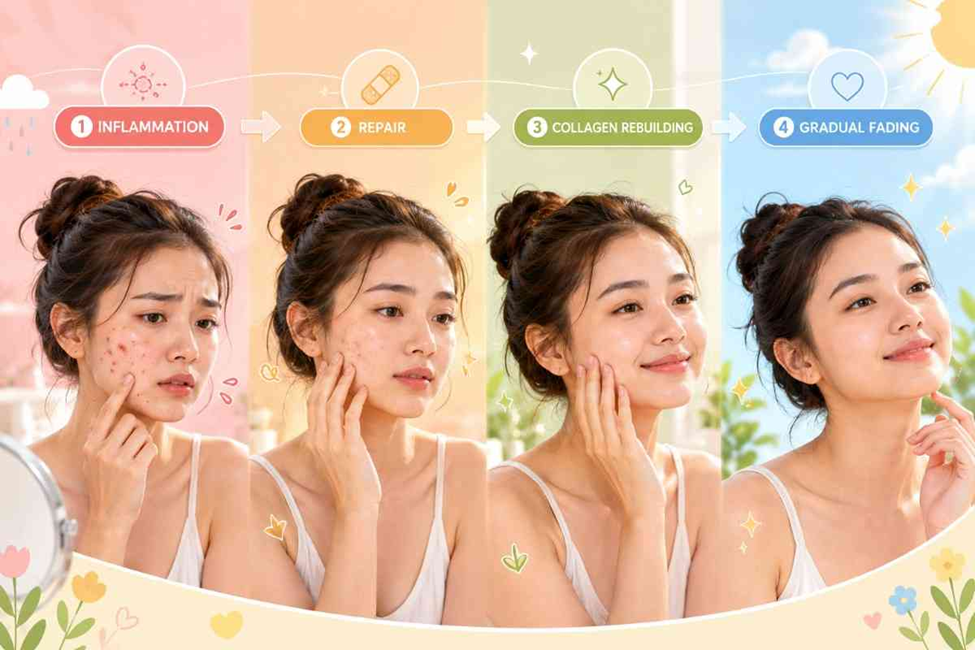
Most people think acne scars only start after severe breakouts, but it’s kinda the opposite, it starts way earlier than that. As soon as inflammation messes with collagen deep inside the skin, the body flips into a healing wound mode. If that healing response is uneven, then the marks can turn into scars. That’s why dermatologists usually push for early action instead of waiting until the signs become permanent, and you just can’t ignore them anymore.
A scar is basically the skin’s memory of inflammation, though it can feel like something else. Some scars end up as darker patches , while other ones seem to go caved-in or maybe slightly puffed up. Different kinds of scars mend at their own pace, so treatment schedules can get a bit unpredictable, for the most part based on the person.
Understanding The Healing Phases Before Using Acne Scar Gel
After acne inflammation, the skin usually starts to heal in about four wide stages, at least in most cases, and it tends to flow somewhat step by step, although it can be a little messy at times.
| Healing Stage | What Happens in the Skin | Typical Duration | Role of Scar Care |
| Inflammation | Redness, swelling, active breakouts | Days to weeks | Calm irritation and prevent picking |
| Early Repair | Skin closes damaged areas | 1 to 3 weeks | Hydration and skin barrier maintenance |
| Collagen Remodeling | New collagen forms under skin | Several weeks to months | Support smoother texture |
| Scar Fading | Marks gradually soften and lighten | Months | Consistent topical support |
This timeline matters, because putting strong actives in too early can make irritation worse, kind of quickly. But if you wait for too long, it can let those marks and scarring deepen even more, and that is kinda not what you want.
In the early repair phase, the skin barrier gets, like, extremely sensitive. Hydrating ingredients and calming formulations are usually the best choice right here. After the active acne is brought under control, acne scar gel is often introduced to help enhance texture and reduce discoloration, little by little.
One reason scar healing can feel slow is basically because collagen turnover takes time, like its own schedule. The body does not instantly swap in new tissue right away, it just cant. So even when a breakout seems gone, the deeper layers may still be rebuilding themselves, for months, quietly, without much noise.
Research also shows how pretty common acne scarring really is. A 2023 meta analysis, found that around 47% of people who have acne end up with those acne scars . It’s kind of higher than many people expect, even if you think it will stay mild, and honestly the numbers don’t lie. The same study also connected late treatment and more severe flare ups with a higher risk of scarring.
That statistic kind of explains why prevention is also just as important as treatment, i mean really, it’s pretty connected. Once collagen loss gets to be significant, then bringing back skin that’s fully smooth again, becomes harder to achieve.
Why Timing Changes Results
Many people start treatment only after those scars end up really visible. But, skin healing seems to do better when you intervene sooner, closer to the recovery stage, instead of waiting years later and then trying to fix everything.
For example:
- Fresh post acne marks can sometimes respond faster to direct topical care
- Mild skin texture irregularities are often easier to get better than deeper ice pick scars, if you stay patient
- Consistent hydration helps support a healthier barrier recovery, sort of smoothing the whole situation
- Reducing repeated inflammation also helps prevent new scar formation later on
Because of this, acne scar gel is usually sort of considered a part of a long term skin recovery routine, not just a spot treatment.
Another big factor is keeping inflammation in check. If you keep getting breakouts over and over in the same spot, it can stop collagen rebuilding, kinda over and over. And then it becomes this weird cycle where the skin never really gets to finish mending before fresh irritation starts, again, before it can fully finish.
People with sensitive skin might notice that aggressive exfoliation somehow slows progress instead, like it’s counterintuitive at first. Overusing acids or scrubs can end up weakening the skin barrier, and then redness sticks around longer. On the other hand, calmer “recovery focused” products tend to blend in more naturally with the healing timeline.
The Connection Between Collagen And Acne Scar Gel
Collagen is one of the most important proteins for scar recovery really. When acne inflammation messes up collagen fibers in an uneven way, the skin can end up healing with little depressions or a rough, almost gritty texture, and it can also look sort of inconsistent.
This is why a bunch of scar focused formulations kind of seem to pack in ingredients that are more or less tied to collagen support, like:
- Niacinamide
- Centella asiatica
- Retinoids
- Silicone based protectants
- Peptides
- Hydrating humectants
Different ingredients work in their own way, depending on where healing is at that moment. Retinoids might push up cell turnover later on in recovery, sort of “after things settle,” while those soothing ingredients are more helpful in the sensitive phase, when everything feels a bit fragile.
At this point in the timeline, acne scar treatment cream is often used pretty consistently for a few weeks, because collagen remodeling is kinda slow on its own, naturally. Most of the visible improvements usually come in a gradual sort of way, not something immediate right away.
People sometimes stop the treatment a bit too soon, because the scars don’t simply vanish within a few days. Yet, the skin renewal rhythm often takes like 4 to 6 weeks, and the deeper remodeling sort of stuff can keep going for a few months, more or less.
Acne Scars Vs Acne Marks
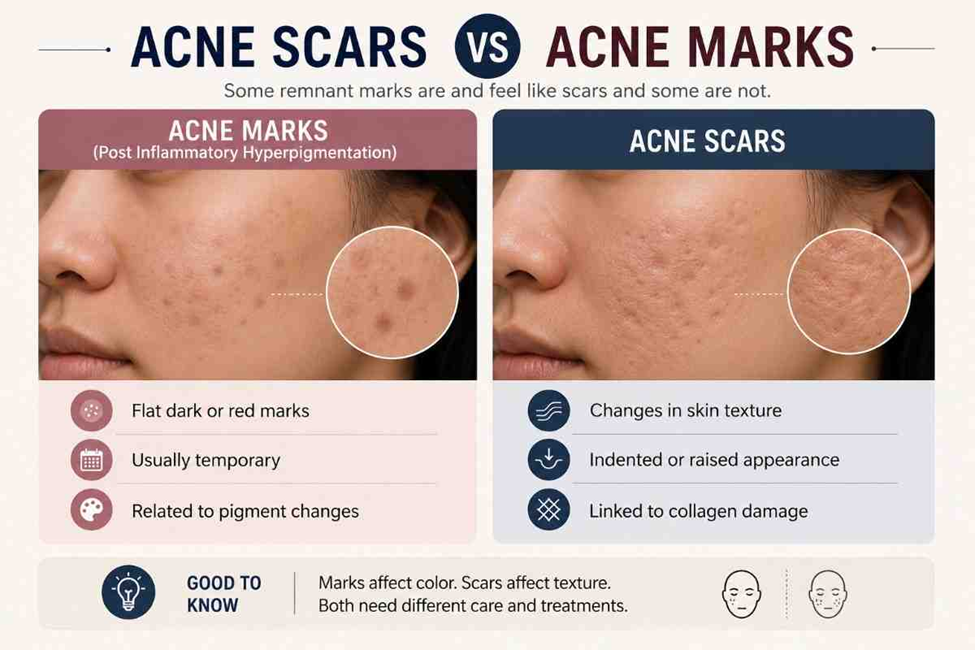
Some remnant marks are and feel like scars and some are not.
Post inflammatory hyperpigmentation (PIH):
- Flat dark or red marks
- Usually temporary
- Related to pigment changes
True acne scars:
- Changes in skin texture
- Indented or raised appearance
- Linked to collagen damage
Some people only need a little fading aid for pigmentation, while others end up needing a more intensive texture – focused recovery. In a lot of situations, an acne scar gel is used for both needs, because hydration and barrier backing help the overall repair process.
How Skin Type Influences Recovery
Oily skin, dry skin, and sensitive skin they all heal kinda differently. Like, oily skin may still be getting breakouts while scar treatment is happening, and that makes healing a lot more complicated, ya know. Meanwhile sensitive skin can react rather strongly to more aggressive actives so it often needs a slower onboarding of products, even if the formulas are supposed to be gentle, and it matters.
Environmental factors also matter:
- UV exposure can darken healing marks
- Poor sleep may interfere with repair processes
- Stress can increase inflammation
- Picking at acne increases scar risk significantly
Healing can be kind of affected by a whole bunch of things at once, so topical products tend to work better when they’re paired with consistent skin habits, sort of like a steady routine.
When To Introduce Acne Scar Gel Into A Routine
The ideal time is often, after the active inflammation starts settling down a bit. Putting scar treatments straight on top of broken or quite severely irritated acne can sometimes make things feel more uncomfortable, and yeah it can be a little counter productive.
A simplified routine timeline may look like this:
During Active Breakouts
Focus on:
- Cleansing
- Oil control
- Lessening inflammation
- No picking
During Early Recovery
Focus on:
- Hydration
- Barrier repair
- Gentle soothing ingredients
During Scar Support Phase
Introduce:
- acne scar gel
- Collagen supporting ingredients
- Sunscreen for pigmentation protection
This progression lines up better with how the skin actually mends itself, instead of kinda overwhelming it while it’s in those vulnerable, early stages.
Why Sunscreen Matters During Scar Healing
One often overlooked thing is UV exposure . Fresh acne marks can be quite sensitive to darkening once they are seen by sunlight , and this can keep the discoloration sticking around. Also, even indoor UV exposure, say near a window, can play a role in how long the pigmentation persists.
Without actual sun protection, the healing timeline can feel stretched out, like noticeably longer. Dermatologists will often suggest that you combine scar care products, with a broad spectrum sunscreen as well, because UV harm kind of messes with collagen’s recovery, and it does interfere.
How Long Do Scars Generally Take To Heal?
There is no universal timeline because scar depth, skin type, genetics and inflammation levels all play roles.
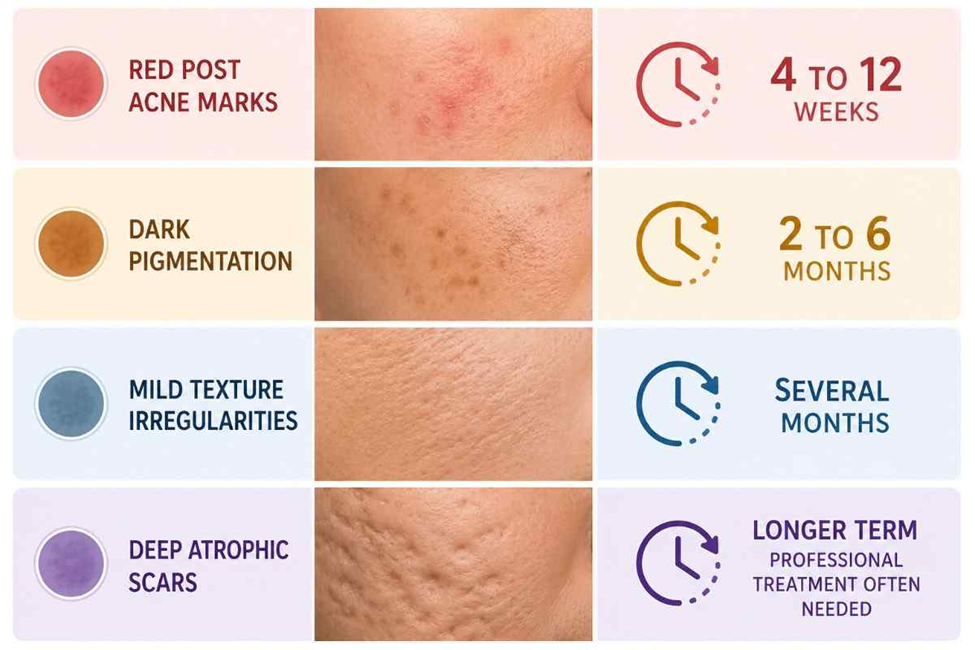
However, general expectations may look like this:
| Concern | Approximate Improvement Window |
| Red post acne marks | 4 to 12 weeks |
| Dark pigmentation | 2 to 6 months |
| Mild texture irregularities | Several months |
| Deep atrophic scars | Longer term professional treatment often needed |
Topical care works best for mild to moderate concerns and that early intervention part. Deep scars sometimes go with microneedling or selected lasers, or even chemical peels, but it should always be handled with professional supervision, because doing it on your own can go sideways.
Even so, keeping up a supportive home routine, like using an acne scar gel can help as well, complements those treatments and helps the whole recovery process.
Conclusion
The skin healing timeline after acne is kind of more involved than most folks think it is. You have inflammation doing its thing, then collagen rebuilding, barrier repair, and pigmentation fading… all of it happens slowly, and sometimes in overlapping ways. Once you get a sense for how these phases move, it makes more sense why sticking with a routine matters way more than chasing some quick fix, and honestly, it’s pretty common to overlook that part. Scar support creams often turn out better when they’re brought in at the right moment, and when they’re matched with soothing skin care , consistent moisturization, and actual sun guarding. If someone is looking at fresh post acne marks, or they’re working through older roughness and surface unevenness, patience is still one of the most key components of recovery. A well put together acne scar removal cream can support the overall process, but noticeable progress typically comes from working alongside the skin natural healing cycle rather than rushing it, even if it feels tempting to do otherwise.
FAQs
1. Can acne scars heal naturally over time?
Some mild marks can fade gradually, especially pigmentation related spots. However, deeper scars linked to collagen loss often improve slowly and may need targeted skincare or professional treatments for more visible changes.
2. How long should someone continue a scar focused skincare routine?
Most people need at least several weeks to notice visible improvement because collagen turnover takes time. Consistency is usually more important than using many strong products at once.
3. Is it safe to use scar products while acne is still active?
It depends on the formula and skin condition. Very irritated or broken skin may need calming care first before stronger scar focused ingredients are introduced into the routine.
4. Does sunscreen really affect scar healing?
Yes. UV exposure can darken healing marks and slow down recovery. Daily sunscreen use helps protect collagen and prevents pigmentation from becoming more stubborn over time.
5. How does California Skin+ Triple Action Acne Scar Clear fit into the skin healing timeline?
This product fits well during the recovery and scar support stages because it focuses on helping the skin look smoother while supporting hydration and barrier comfort. Compared to harsher treatments that may overwhelm sensitive post acne skin, it can work more gently alongside the natural healing process. Its approach is beneficial for people who want help with post acne marks and uneven texture while still maintaining overall skin balance. Regular use, especially alongside sunscreen and a barrier friendly routine, may help the skin appear more even and healthier over time.