When you open your bathroom cabinet and see a collection of half-used moisturizers (the “moisturizer graveyard”), you probably notice all kinds of that smell great in the store but didn’t work for your skin once you got them home (in about the same time as you tried them). That’s probably happened to you too, and trust me, you’re not alone and you’re also not at fault;
One of the reasons why so many people have gotten frustrated with moisturizers is that it can take a lot of trial and error to find one that actually works for your needs, especially when you’re looking for one that really repairs your skin barrier rather than just creating a temporary fix. Once you learn how to identify whether or not you’ve found a good barrier repair moisturizer, the process of searching for it becomes much less of a guessing game.
According to research published in 2022 by the International Dermal Institute on 1,000 participants and how long they had used an ‘incorrect’ product (the term used for products that did not work for their skin type) before receiving professional advice, about 67% had spent over a year using the wrong moisturisers and had sustained damage each time they applied them all without knowing it! To me, that statistic demonstrates why many people can’t seem to get their skin ‘under control’, when in fact, it’s just the products they are using daily that are the issue, not their skin.
If you suspect you’ve found the right product for your skin type, here are 5 things your skin (and not the packaging/marketing/reviews) will tell you that it’s the one!
Sign 1: It Absorbs Properly and Your Skin Just Feels Normal
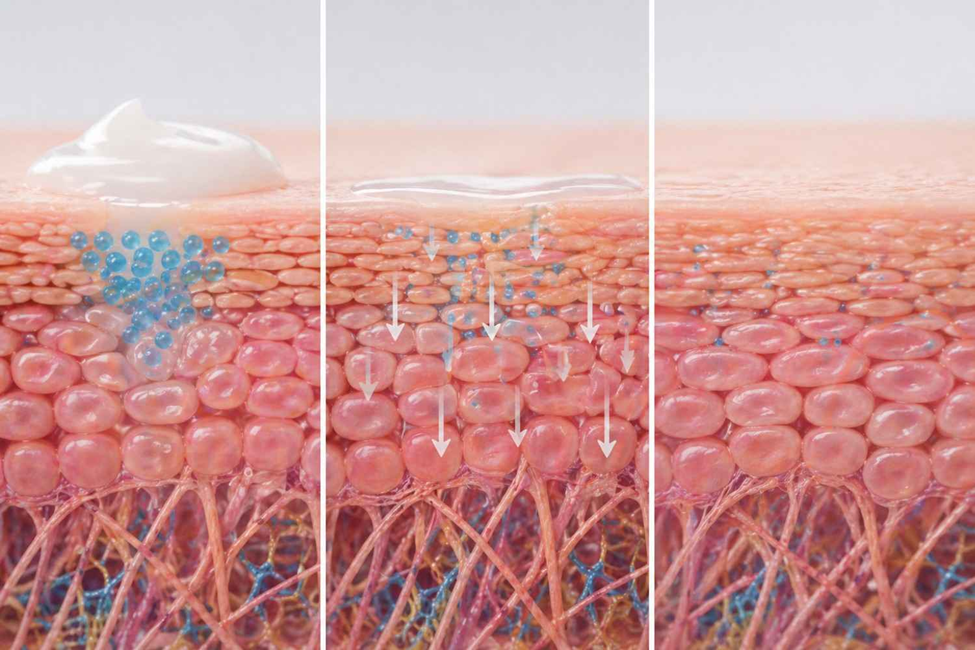
This sounds simple, but it’s harder to find than it should be. When a moisturizer is genuinely right for your skin, you apply it and then kind of forget about it. It sinks in, your skin feels comfortable, and you move on with your morning. That’s it. There’s no greasy film that transfers onto your phone screen, no tight feeling that makes you want to splash your face with water, and no pilling when you try to apply sunscreen on top.
What’s actually happening when a moisturizer does this properly is that it’s working with your skin’s biology rather than against it. The right barrier repair moisturizer doesn’t coat the surface. It replenishes the lipids your skin barrier is actually composed of. Ceramides are a big part of this. They’re the structural fats that hold your skin cells together, and when they’re depleted from weather, from stripping cleansers, from acne treatments, the barrier becomes porous and reactive.
Research published in the Journal of Clinical and Aesthetic Dermatology showed ceramide-based moisturizers improved skin hydration by up to 78% over four weeks of consistent use. That’s not a surface result. That’s the barrier actually functioning better.
If your current moisturizer still feels present on your face an hour later, or if your skin feels stripped again by midday, those are signals worth listening to.
Sign 2: The Redness and Reactivity Quiet Down
Here’s something a lot of people normalize when they shouldn’t: that slight sting after cleansing, or the flush that shows up on your cheeks after a shower, or the way your skin seems to throw a small fit every time you introduce something new to your routine. These aren’t just personality quirks of sensitive skin. They’re signs that your barrier is struggling.
When you introduce the right barrier repair moisturizer, one with genuinely soothing ingredients rather than just marketing language, that reactivity starts to ease. Not immediately, and not dramatically. But over a week or two, you’ll notice the post-cleansing sting becomes less sharp. The redness doesn’t linger as long. Your skin stops treating every new product like a threat.
A 2021 study in Dermatology Reports found that barrier-focused moisturizers led to a 52% reduction in skin sensitivity markers over six weeks. What that looks like in real life is a face that feels less at war with itself.
This is especially important for anyone going through acne treatment. Retinoids, benzoyl peroxide, salicylic acid, these actives are effective but genuinely harsh on the barrier. The burning and peeling that often comes with them isn’t something you just have to endure. A well-chosen moisturizer creates enough of a buffer that you can actually stay consistent with your treatment without your skin falling apart in the process. The soothing isn’t a luxury. It’s part of the strategy.
Natural skin care products that include Cica extract, green tea, and marine botanicals have shown real anti-inflammatory results in clinical settings, not just in brand claims. When these are part of a barrier repair moisturizer formulation, the calming effect tends to be both faster and more sustained than synthetic alternatives alone.
Sign 3: You Stop Thinking About Your Skin by Lunchtime
Pay attention to this one, because it’s more telling than people realize.
If your skin is on your mind at 11am because it feels tight, or suddenly looks shiny, or you’re wondering if you need to top up your moisturizer, that’s a product issue, not a skin issue. Good skin care products, especially a barrier repair moisturizer that actually suits your skin, should essentially disappear into your day.
The reason many moisturizers fail to deliver this is that they work superficially. They deposit something on top of the skin that temporarily feels hydrating but doesn’t actually influence how well your skin holds onto water itself. Once that surface layer wears off, everything goes back to how it was before or worse, your skin overcorrects.
Ingredients like Pentavitin change this dynamic. It’s a clinically studied compound derived from plants that bonds directly to keratin proteins in the skin and has been shown to maintain hydration for up to 72 hours, even after washing your face. When a barrier repair moisturizer contains actives like this, you’re not just putting moisture on your skin. You’re improving your skin’s ability to retain it on its own.
Sign 4: Your Breakouts Start to Change
Counterintuitive as it feels, moisturizer is one of the most underrated tools in acne management. Not because it fights acne directly, but because a compromised, dehydrated skin barrier is one of the main reasons acne becomes so difficult to control in the first place.
When the barrier is weak, it can’t regulate what gets in or out effectively. Bacteria penetrate more easily, inflammation spreads more readily, and the skin, sensing that it’s losing moisture, cranks up oil production to compensate. So you end up with skin that feels both dry and oily at the same time, which is its own special kind of frustrating. A lightweight, non-comedogenic barrier repair moisturizer addresses this cycle from the root, not the surface.
A 2020 study in the Journal of the American Academy of Dermatology found that acne patients who added a non-comedogenic barrier repair moisturizer to their treatment routine showed 40% better skin barrier function scores and reported fewer new breakouts compared to those who skipped moisturizer entirely. (Source)
What to look for in natural skin care products designed for this purpose: olive squalane is one of the better ingredients for acne-prone skin because it’s structurally very similar to the skin’s own sebum, which means it hydrates without clogging pores or triggering more oil production. Combined with peptides that support healing, the right barrier repair moisturizer also helps post-acne marks fade more quickly because your skin’s repair processes are being supported rather than neglected.
If you’ve been using a moisturizer consistently for a few weeks and your breakouts are becoming less angry, less frequent, or clearing up faster than they used to, that’s your skin telling you something has genuinely shifted.
Sign 5: Your Skin’s Texture Gets Better Without You Trying
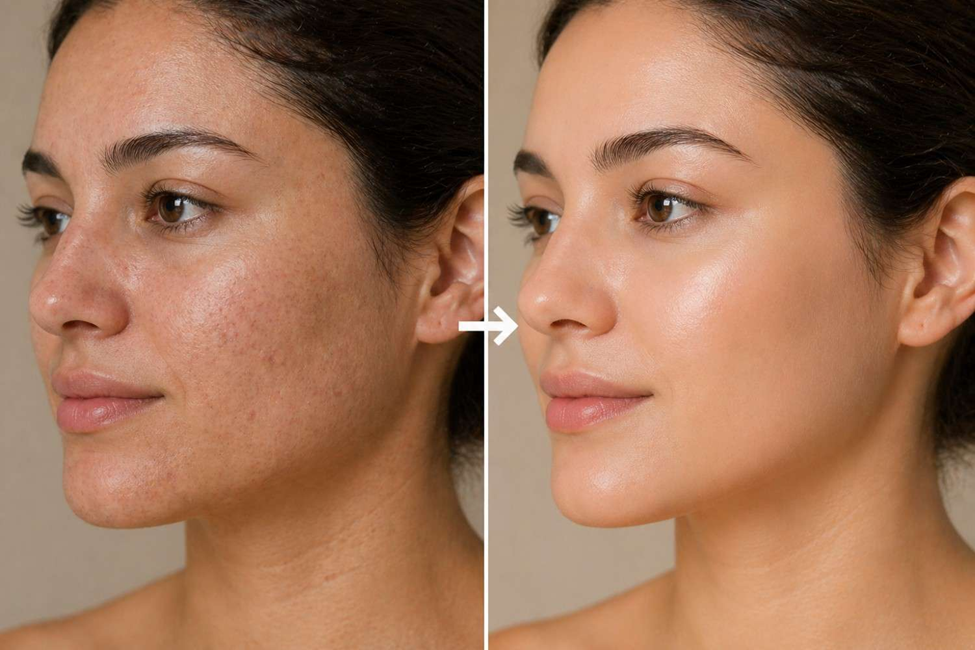
Texture improvements are one of those things that sneak up on you. You’re not sitting there measuring pore size week by week. You just reach up one day, touch your cheek, and notice it feels different, smoother, somehow more even. Or you catch your face in a certain light and realize the rough patches that used to always be there are just gone.
Peptides are a key part of this. Research from the Journal of Cosmetic Dermatology found that nonapeptide formulas produced measurable improvements in skin smoothness within twelve weeks. When those peptides are paired with ceramides and long-acting hydrators inside a well-built barrier repair moisturizer, the texture results tend to be real and lasting rather than temporary.
What to Actually Look for When Choosing a Barrier Repair Moisturizer
If you’re actively shopping for one, here’s what matters beyond the front-of-label claims:
- Three essential ceramides, not one: Ceramide NP, AP, and EOP work together to structurally repair the barrier. A barrier repair moisturizer with only one ceramide type is doing a fraction of the job.
- A proven long-acting hydrator: Ingredients like Pentavitin or sodium PCA actually bind to skin and influence how it retains water, not just how it feels immediately after application.
- Real botanical anti-inflammatories: Cica extract, green tea, red marine algae. These have clinical backing, not just wellness appeal. In a barrier repair moisturizer, they make the soothing effect meaningful rather than cosmetic.
- Non-comedogenic and tested for oily skin: This should be a stated claim, not something you have to infer from the ingredient list. Especially for anyone using it alongside acne treatments.
- Peptides for texture and repair support: They work slowly but they work. Nonapeptides in particular support collagen and skin smoothness in ways that become visible over consistent use.
Among the natural skin care products currently designed with acne-prone skin as the actual starting point, not an afterthought, the California Skin+ Barrier Repair Moisturizer stands out for pulling all of these elements into one lightweight, daily-use formula. Three essential ceramides, Pentavitin for clinically proven 72-hour hydration, nonapeptides, olive squalane, and Cica extract, built specifically for skin that’s reactive, oily, or has been beaten up by acne treatment. It’s the kind of moisturizer that works quietly, which is exactly how the right one should work.
How to Use a Barrier Repair Moisturizer So It Actually Works
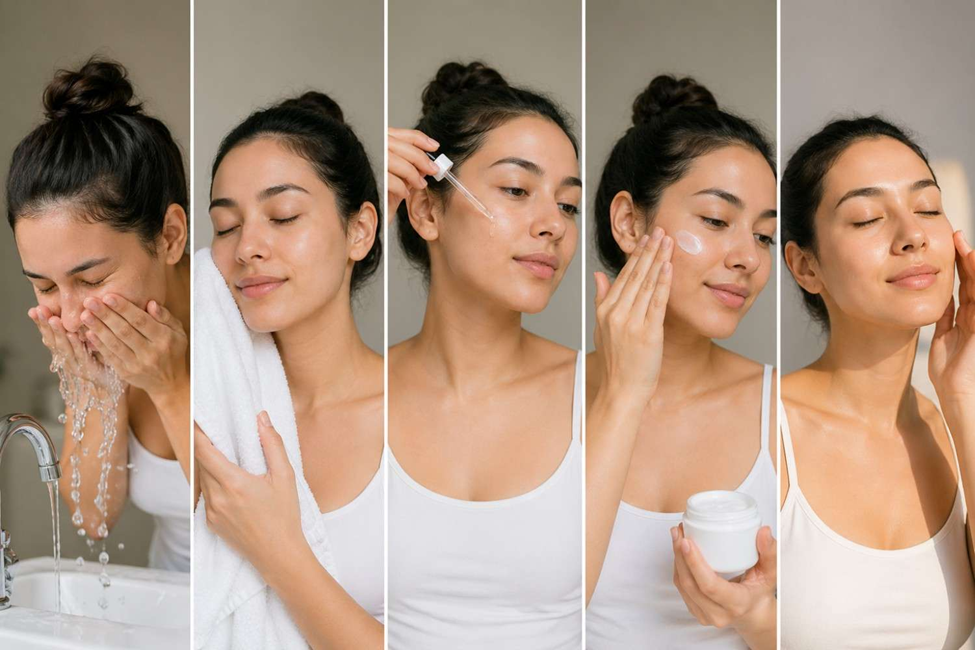
Even a well-formulated barrier repair moisturizer can underperform if it’s used at the wrong step or the wrong time. A few things worth knowing:
- Apply it after serum, on skin that’s clean and dry. This lets your actives do their job first, then the moisturizer locks everything in.
- Use it morning and night. Overnight is when your skin does most of its repair work. Skipping the PM application means missing the window when a barrier repair moisturizer does its best work.
- Give it 60 to 90 seconds before applying SPF. Most lightweight formulas absorb quickly and layering too fast can affect both products.
- Don’t expect week-one results. The barrier repairs gradually. Two to four weeks of consistency is usually where the real shift begins.
The American Academy of Dermatology consistently points to daily, consistent moisturizing as one of the single highest-impact habits for long-term skin barrier health, above most actives, above most treatments. It’s not the most exciting recommendation, but it’s one of the most evidence-backed ones in skin care.
Conclusion
At a certain point, finding the right barrier repair moisturizer stops being about comparing labels and starts being about listening to your skin. When it absorbs without a trace, keeps your skin calm through the day, supports rather than fights your acne routine, and gradually improves texture without drama, those are not small wins, they’re indicators that your barrier is finally functioning the way it should. The real shift isn’t just better-looking skin, but more stable, predictable skin that doesn’t demand constant correction. And once you reach that point, skincare becomes less about trial and error and more about maintaining what’s already working.
FAQs
Q1. How long does it take for a barrier repair moisturizer to show results?
Most people feel early improvements less dryness, irritation, and sensitivity within the first 1–2 weeks. Visible changes like smoother texture, reduced redness, and fewer breakouts usually appear between 4–8 weeks. Studies on ceramide-based formulations show measurable barrier repair in about 4–6 weeks. The key is consistency, since the skin barrier recovers gradually.
Q2. Can a barrier repair moisturizer be used on oily and acne-prone skin?
Yes, and in many cases it’s essential. Oily, acne-prone skin is often barrier-compromised, which can lead to increased oil production as the skin tries to compensate. A lightweight, non-comedogenic barrier repair moisturizer helps restore balance, reducing excess sebum and supporting clearer skin over time.
Q3. Are natural skincare products effective for barrier repair?
Effectiveness depends more on formulation than on whether ingredients are natural or synthetic. Plant-derived ingredients like Cica, green tea, and olive squalane have strong evidence for soothing and hydration. However, ceramides and peptides often lab-synthesized are critical for structural repair. The most effective products combine both approaches.
Q4. What makes California Skin+ worth considering for barrier repair?
California Skin+ is formulated specifically for acne-prone, oily, and reactive skin. Its Barrier Repair Moisturizer includes essential ceramides, Pentavitin for long-lasting hydration, peptides for smoother texture, olive squalane for lightweight nourishment, and Cica for calming irritation. The formula focuses on repairing the skin barrier while supporting acne management, rather than just targeting breakouts.