Getting hit with a sudden breakout is one of those universal frustrations that sends most of us on a desperate hunt for a solution that actually works. When a massive blemish decides to show up right before a high-stakes meeting, a first date, or a big family event, your focus shifts instantly from long-term “skin goals” to immediate crisis management. This brings up a debate many of us have had while standing in front of the bathroom mirror: Is Acne Spot Relief just a temporary band-aid to hide a problem, or is it actually an essential part of a smart skincare routine?
To really figure out where an Acne Spot Corrector fits into your life, you have to look at what’s actually happening under your skin. Acne isn’t just a surface issue; it’s an inflammatory process. That “spot” you’re seeing is essentially the final explosion of a timeline that started weeks ago with clogged pores, oil overproduction, and bacteria moving in. While your daily wash and moisturizer handle the general environment of your face, a targeted treatment is like a precision strike. Its function is to intervene when the body experiences inflammation — to prevent continued injury and to accelerate healing from this injury.
The Real Reason Acne Spot Relief Matters
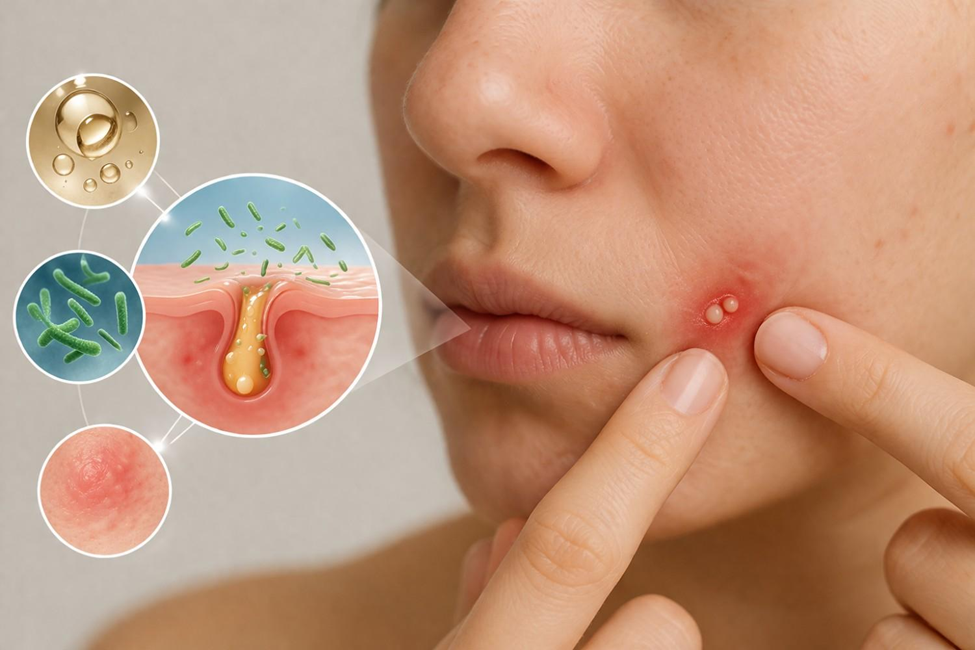
The efficacy of your high quality Acne Spot Corrector Gel lies in the way it delivers its active ingredients. A regular face cream covers your entire face, but a spot treatment delivers all its active ingredients directly to the area affected by acne. These solutions work by penetrating the skin directly at the location of the problem. The intention is to remove the excess oil that causes the problem; destroy the C. acnes bacteria and reduce the inflamed redness of the pimple while leaving the healthy skin surrounding the pimple unaffected.
From a dermatological perspective, timing is everything. If you let a blemish sit there and stay inflamed for days on end, you’re much more likely to end up with Post-Inflammatory Hyperpigmentation (PIH) , those annoying dark spots that last way longer than the actual pimple or even permanent physical scars. Using an Acne Spot Relief product isn’t just about looking better for a Saturday night; it’s a functional way to protect the long-term texture and health of your skin.
What Makes an Acne Spot Corrector Actually Work?
By inspecting the ingredient list for acne spot correctors while shopping, you can tell if it is a fancy version of drying lotion versus a pharmaceutical strength product. Most effective gels are composed of a mixture of exfoliant and calming ingredients.
Salicylic Acid is the classic heavy hitter. As an oil-soluble Beta Hydroxy Acid (BHA), it’s able to dive into the pore and break up the “glue” made of dead skin and oil. But the skincare world has evolved. We aren’t just relying on old-school acids anymore; we now have delivery systems that help these ingredients work at lightning speed.
If you’ve ever been in a situation where you needed a blemish to shrink “yesterday,” you know that traditional treatments can feel like they take forever. This is where advanced options like the California Skin+ 1 Hour Acne Spot Relief come into play. By focusing on rapid absorption and high-potency calming agents, it’s designed to tackle the visible size and redness of a breakout in a very short window. For anyone with a busy schedule, that kind of rapid intervention is a total game-changer.
Research Insights: Does Speed Truly Change the Outcome?
Dermatological research suggests that “catching” a breakout early changes everything. If you apply an Acne Spot Corrector Gel when you first feel that tell-tale tingle or see a tiny bit of pinkness, what experts call the “pre-pimple” stage you can often stop the blemish from ever fully forming.
| Phase of the Breakout | How Spot Relief Works | The Final Result |
| Early Tingle/Redness | Shuts down the inflammatory signal | Pimple may flatten before it peaks |
| Active Whitehead | Dissolves the plug and dries fluid | Faster drainage and less swelling |
| Post-Blemish Healing | Blocks excess pigment production | Fades red or brown marks faster |
Studies in aesthetic journals show that using concentrated anti-bacterials on a single spot can reduce the physical size of a lesion by nearly half within the first 24 hours. This confirms that Acne Spot Relief isn’t just a psychological comfort; it’s a biological shortcut to clearer skin. (Source)
Why You Should Stop Viewing Acne Spot Relief as a “Cheat Code”
Most people think of acne spot corrector as an emergency tool. They only use it when their skin already looks like it’s on fire. But if you switch your mindset from “cheat code” to “skincare staple,” you’ll get much better results.
Using a spot treatment allows you to be surgical.Using a strong acne wash to attack several places together will increase drying and flaking for the parts of your face that were otherwise fine. This has a very negative impact on the skin barrier (which in turn causes even more breakouts). With a more precise acne spot corrector, you can keep the strong solution only where you need it and maintain normal levels of moisture in the remaining areas of your face.
Matching the Treatment to the Trouble
Not all bumps on your face are created equal so neither should your treatment.
- The Angry Red Bump: If a red bump on your skin is sore and angry and has no head, look for spot corrector gels that contain niacinamide or zinc. They will help reduce inflammation by calming blood vessels to eliminate the emergency look.
- The Clogged Pore: If you see a white or blackhead, you need a spot corrector with a high concentration of BHA (Beta Hydroxy Acid). BHA penetrates and dissolves the clogged debris in the pore so that the pores can close.
- The “I Have a Meeting in Two Hours” Spot: This is when you need maximum strength. A formula like California Skin+ 1 Hour Acne Spot Relief is specifically tuned for these moments, focusing on shrinking the appearance of the blemish as fast as humanly possible.
How to Master the Application
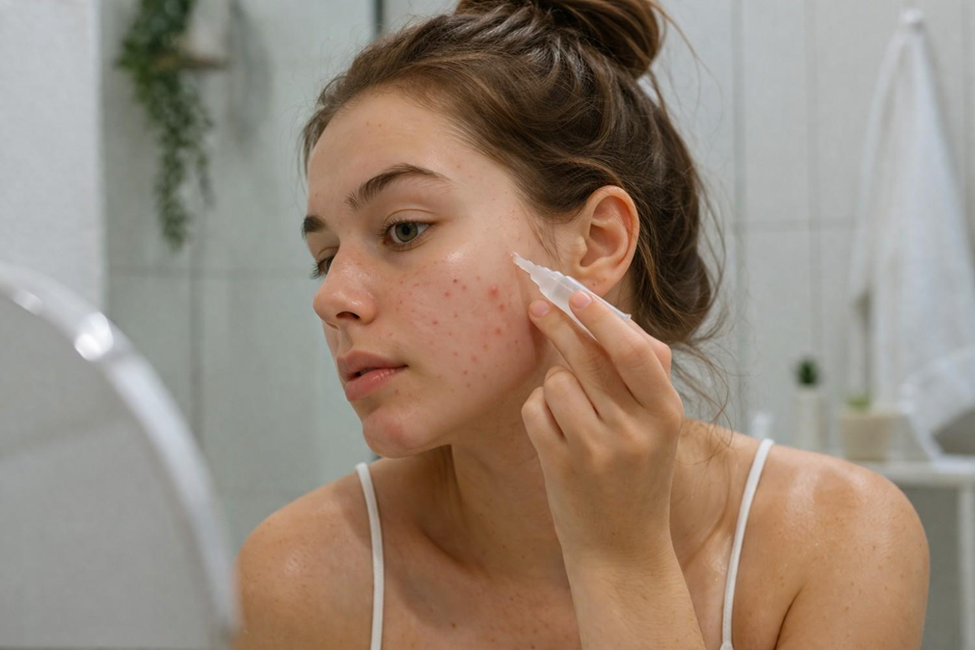
To get the most out of your Acne Spot Relief, you need to think about the “order of operations.” If you use an acne spot corrector gel by putting it on over make up or a thick night cream, it will not be helpful.
To get the best results from using acne spot corrector gel, apply gel to freshly cleansed and dried skin. This will provide no barriers between the medication and your pore. After applying the gel, allow it to dry for about one or two minutes until it feels set, and then apply your moisturizer or sunscreen not touching the gel area. When applying moisturizer over the gel, lightly pat the moisturizer into the area instead of rubbing the moisturizer into the area to prevent smearing of the treatment away from the affected area.
The Long Game: Preventing the “Ghost” of Pimples Past
One of the biggest mistakes people make is stopping their Acne Spot Relief the second the bump goes down. Even when the swelling is gone, there’s often still a little bit of lingering bacteria or inflammation deep down. Continuing to use your Acne Spot Corrector for an extra day or two ensures the “root” of the pimple is gone, which prevents those annoying “revolving door” breakouts where the same spot flares up every two weeks.
In addition, most contemporary treatment creams contain active substances that prevent excessive melanin production during healing. It is the most efficient method for preventing post-inflammatory hyperpigmentation, which will leave traces on your face even when the acne disappears.
Conclusion
Skincare has moved past the era of “scrubbing your face into submission.” We now know that the best results come from being gentle to the skin overall while being very firm with specific problems.
The Acne Spot Corrector is the ultimate tool for this philosophy. Using a gel will allow you to manage a crisis of this magnitude without interrupting your everyday routine. You will feel more confident when you have an effective gel with you whether you experience frequent breakouts or only occasional stress-related breakouts.
The California Skin+ 1 Hour Acne Spot Relief product uses advanced technology to provide customers with more than just symptom relief because it enables them to achieve faster skin recovery and enhanced beauty and long-term skin health.
Frequently Asked Questions
Is it okay to put Acne Spot Relief on a pimple I already squeezed?
It’s a common urge, but try to be careful. If the skin is raw or open, some gels might sting quite a bit. It’s better to use a very thin layer of a soothing Acne Spot Corrector Gel to keep the area clean and prevent bacteria from getting back into the open pore, but don’t overdo it or you might cause a scab that takes longer to heal.
How many times a day can I actually use an Acne Spot Corrector?
Usually, twice a day (morning and night) is the sweet spot. If your skin is particularly oily and the blemish is stubborn, you might be able to get away with a third application. Just keep an eye out for peeling; if the skin starts to flake, back off a bit and let it breathe.
Why should I choose the California Skin+ 1 Hour Acne Spot Relief over a generic store brand?
The difference usually comes down to how the ingredients are delivered into the skin. While a cheap generic might just sit on the surface and dry out the top layer of your skin, the California Skin+ formula is engineered to penetrate quickly. This means you get visible results much faster without the excessive peeling often caused by lower-quality products.
Can I use these treatments if I have sensitive skin?
Yes, but you have to be strategic. The beauty of a spot treatment is that you aren’t putting it all over your face. If you have sensitive skin, an Acne Spot Corrector Gel is actually your best friend because it allows you to treat the acne effectively while keeping the rest of your sensitive skin safe under a gentle, calming moisturizer.