For years, one thing was clear: the fear of the possible cancellation of vitamin D production due to sunscreen being another barrier to add to the artful abyss of tried and true skincare regimens. People who need to protect their skin from the sun’s rays stay away from sunscreen because they believe it will cause them vitamin deficiency even when they use products like sunscreen for acne prone skin which help their skin. An inquiry was posed to determine whether vitamin D is decreased by sunscreen, or if this is an exaggerated perception.
How Vitamin D Is Produced in the Skin
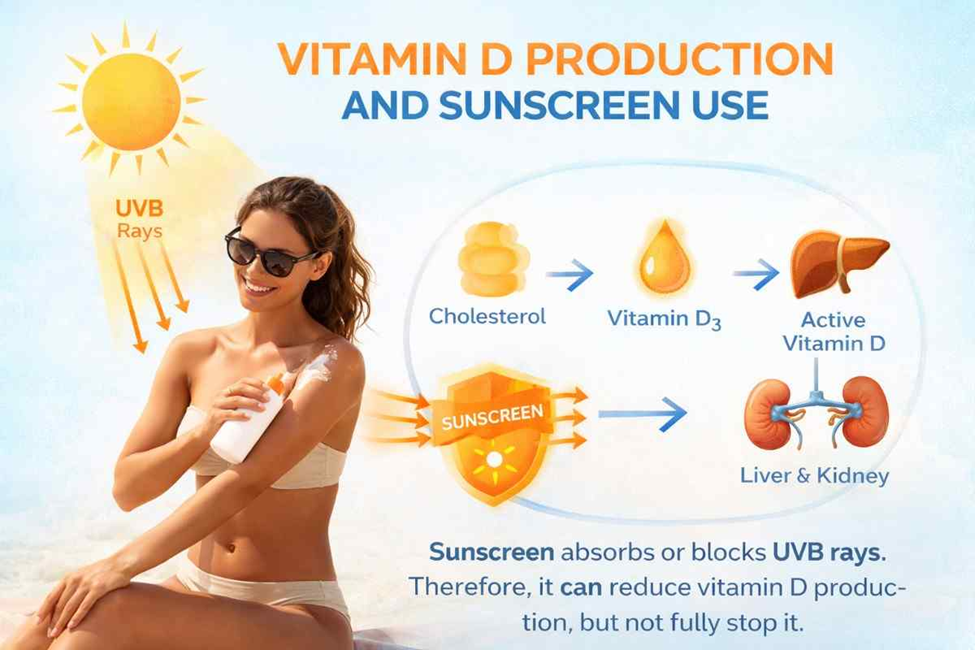
Human skin produces vitamin D through its reaction to ultraviolet B sunlight exposure. The process begins with a chemical reaction that transforms cholesterol into vitamin D3. The body then converts vitamin D3 into its active form through liver and kidney functions.
Sunscreen functions as a UVB elusion method because it blocks or absorbs these particular ultraviolet rays. The assumption that sunscreen prevents the production of vitamin D completely appears to follow from this fact. People apply sunscreen in various ways which creates a complex situation that needs to be examined.
What Science Says About Sunscreen and Vitamin D
Scientific studies have explored this relationship extensively because researchers often fail to understand their findings. Controlled studies demonstrate that sunscreen products can effectively decrease skin vitamin D production. SPF 50 sunscreen blocks up to 98 percent of UVB radiation according to research studies.
The actual results from scientific research studies provide evidence that contradicts the expected outcomes. A review published in the British Journal of Dermatology concluded that regular sunscreen use has little to no significant impact on vitamin D levels in most individuals.
It means prolonged exposure to natural radiation cannot be completely ruled out by sunscreen.
The Gap Between Theory and Reality
One of the frequently overhyped reasons in discussions of the above type is the delta between the best application one can make of a particular theory and how that theory is empirically confirmed, indeed traversing a long journey.
In theory:
- Sunscreen is liberally and uniformly applied.
- Every exposed area is covered.
- Every two hours, reapplications are made.
In reality:
- Many people do not make the extra effort which may be needed.
- Few parts of the body-forearms, backs of the neck, and ears-are avoided.
- Reapplication is erratic.
As a consequence, these little habits permit the skin to be exposed to UVB rays, creating optimal conditions for the secretion of vitamin D.
Statistical Insight on Vitamin D Levels
The meta analysis results showed that people who used sunscreen regularly experienced only a minor decline in vitamin D levels which measured 2 ng/mL lower than that of people who did not use sunscreen.
In regard to healthy individuals, the intensity of these reductions is considered minimal and thereby clinically insignificant.
Factors That Affect Vitamin D More Than Sunscreen
Many factors besides sunscreen use interfere concerning the circulating vitamin D.
Some of the most important include:
- Geographic location and sunlight intensity
- Exposure to sunlight
- Melanin synthesis in the skin
- Skin tan
- Age and overall health
Another example would be noted if city living or indoor environments are not endowed with sufficient quantities of vitamin D. The requirement for sunscreen use does not protect them from this health risk.
Comparing the Effects of Vitamin D and Sunscreen Use
To illustrate the overall situation of how sunscreen fits with the analogy, consider this:
| Scenario | Vitamin D Production | Skin Health Risk |
| No sunscreen, prolonged sun exposure | High | High risk of sun damage |
| Perfect sunscreen use (lab conditions) | Significantly reduced | Low risk |
| Typical daily sunscreen use | Slightly reduced | Balanced protection |
| Minimal sun exposure overall | Low | Higher deficiency risk |
The table demonstrates that sunscreen use does not serve as the main cause of vitamin D deficiency. The primary determinant of vitamin D deficiency arises from both lifestyle choices and exposure patterns.
Why Sunscreen Is Still Essential
Most dermatologists insist people sunburn unless there is a sun-injuring reason. The UV rays from the sun cause three main dangers which people experience when they spend time in the sun.
- The skin develops fine lines and wrinkles which show early signs of aging.
- The skin condition results in two visible problems which include uneven skin tone and hyperpigmentation.
- A higher chance of developing skin cancer
Despite no evidence regarding its harm, Vitamin D is considered to be obligatory to consume every day.
Practical Ways to Maintain Healthy Vitamin D Levels
Once you have concerns about vitamin D and are using sunscreen, there are safe and effective options to go for to keep you out with good vitamin D levels.
- You require outdoor time during mild sunlight for short durations.
- Your diet should contain vitamin D sources which include fatty fish eggs and fortified dairy products.
- You should take supplements only when a healthcare professional advises you to do so.
The methods enable you to safeguard your skin while maintaining your complete health.
The Role of Skin Type and Concerns
People who have particular skin problems which include acne and skin sensitivity need to apply sunscreen as their essential skincare procedure. The decision to skip this treatment because of vitamin D deficiency concerns will lead to worse skin problems which include inflammation and post-acne marks and uneven skin texture.
You need to choose the correct formulation because it provides both protection and matches your specific skin type needs. The current design of sunscreens allows users to apply them during daily activities because the products remain light and non comedogenic and do not obstruct skin pores.
Is the Concern Overhyped?
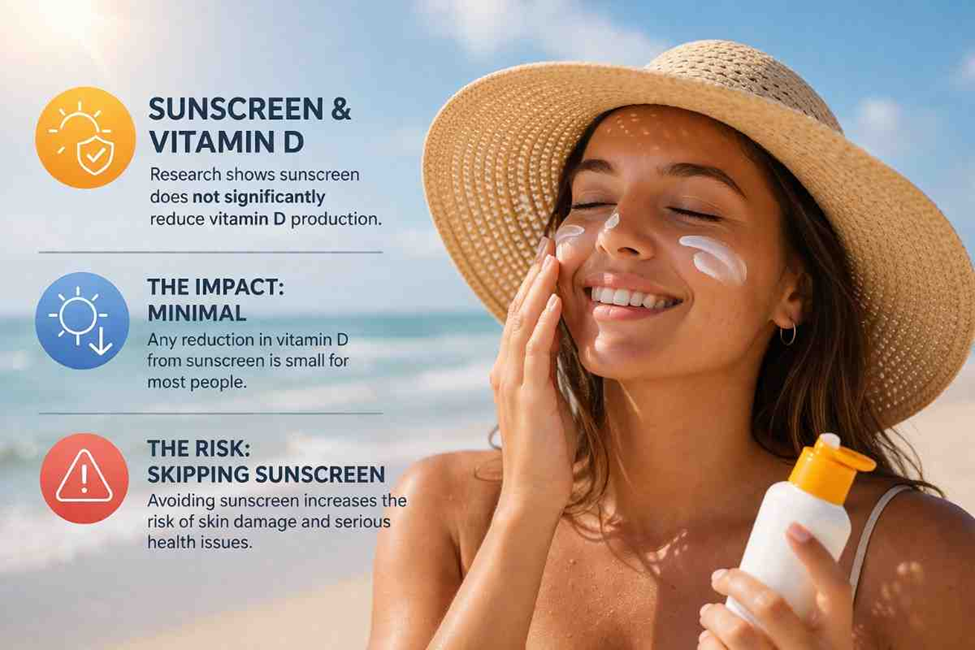
The current scientific research evidence shows that using sunscreen products creates no major obstacle that prevents human beings from producing vitamin D through sun exposure. The claim has theoretical support but actual data demonstrates that it affects most people only to a slight degree. People who totally avoid using sunscreen face greater health risks because this behavior leads to permanent skin damage and serious medical problems.
The Role of SPF Levels and Application Habits
Another important aspect often overlooked in the sunscreen and vitamin D discussion is the role of SPF levels and how people actually use these products. The Sun Protection Factor which people commonly refer to as SPF shows how well a sunscreen protects against UVB radiation. Higher SPF products mean better protection against sun damage, although even though they block most UV rays.
The SPF 30 sunscreen protects against 97% of the UVB radiation and SPF 50 sunscreen protects against 98 percent. The vitamin D production process does not stop completely because of this small difference between the two options. High SPF sunscreens permit a minimal amount of UVB radiation to penetrate the skin, particularly when users do not apply them correctly.
Application habits further reduce the likelihood of vitamin D interference. Most individuals:
- Use less than the recommended amount of sunscreen
- Miss certain areas of the face and body
- Do not reapply after sweating or prolonged exposure
The skin continues to receive UV rays throughout the day because of the existing gaps in its protection. Most people receive sufficient vitamin D production from their incidental exposure to sunlight.
Sunscreen Use in Different Climates and Lifestyles
The effectiveness of sunscreen to block UV radiation interacts with two factors which are geographical location and personal lifestyle choices. People who live in sunny areas can produce enough vitamin D through their outdoor activities which need only brief exposure to sunlight. Persons who inhabit cold places and spend more extended times indoors have low vitamin D levels because outdoors does not protect against sunscreen in cold weather.
Sun exposure patterns have considerably changed for city dwellers independently from alterations in tasks deemed as commonplace. People who use closed vehicles for their travel and work in indoor environments and take short outdoor breaks during peak sunlight hours. The duration of outdoor exposure provides a better assessment of vitamin D levels than sunscreen application in this situation. The most important message here is that modern lifestyle users undergo a higher risk for vitamin D deficiency than, in fact; are just the users of sun-screen products.
Balancing Skin Protection and Nutritional Needs
People should view sunscreen as an essential component of their health protection while vitamin D absorption for their bodies. Proper methods enable people to protect their skin from the sun and simultaneously maintain their necessary nutrient requirements.
A balanced routine may include:
- Daily sunscreen use to prevent UV damage
- Brief periods of sun exposure during low intensity hours
- Inclusion of vitamin D rich foods in the diet
- Supplementation when necessary
To ensure complete wellness in the usual and intrinsic ways, an integrated approach must ensure good care to the skin and nutrition.
Sunscreen should not be avoided because scientific evidence and actual behavior patterns demonstrate its safety. The product should be applied with full confidence because it serves as a fundamental element in complete skincare routines and wellness practices.
Conclusion
The primary function of sunscreen products exists to protect skin from dangerous ultraviolet radiation while their advantages exceed all possible negative impacts on vitamin D synthesis. The fear that sunscreen causes deficiency is not strongly supported by real world evidence. People should practice safe sun exposure and healthy eating and regular skincare as their main approach to maintaining their skin health.
Applying sunscreen as part of your daily regimen, along with other supportive products for instance some anti pimple face wash, can help maintain skin health in the vast context of general well-being without any penalties.
FAQs
1. Does sunscreen completely block vitamin D production?
No, sunscreen does not completely block UVB rays in real world use, so some vitamin D production still occurs.
2. Can daily sunscreen use cause vitamin D deficiency?
For most people, daily sunscreen use does not lead to deficiency. Other factors like limited sun exposure and diet play a larger role.
3. How much sun exposure is enough for vitamin D?
Short periods of sunlight exposure on uncovered skin a few times a week are usually sufficient.
4. Should I skip sunscreen to get more vitamin D?
No, skipping sunscreen increases the risk of skin damage and is not recommended.
5. Can California Skin+ Cica Sunscreen SPF 50 PA++++ reduce vitamin D absorption significantly?
No, regular use does not significantly impact overall vitamin D levels in real-life conditions.