Anyone who has been through a breakout phase knows that the actual pimples are almost the manageable part. They come, they hurt, they eventually go. The place where the dark marks have been left will still be present long after the breakout has gone. It is still flat and stubborn but also now appears to be much more visible at times, depending on the light, than the original spot ever was. If you are one of the many that have been looking at their mark(s) and wondering when they will disappear, there is a “yes” answer, however, the truth is that without some form of treatment for the dark marks it can be 2 years or more before they will fade out completely. Two Years is a long time to wait for something that you didn’t do anything wrong to get or for it to go away on its own or with other treatments.
Historically, people have taken to using many different types of products after their acne has cleared, many of which contain different types of ingredients that claim they will help address these marks. Some of these include vitamin C in one product, retinol in another and niacinamide in yet another. Because so many people have been jumping from one type of product to another without knowing what type of ingredient works best or how to combine them, the outcome is very unpredictable.
Three ingredients have earned genuine clinical attention for post acne marks treatment and they work together in a way that makes more biological sense than most combinations being sold right now. Azelaic acid, kojic acid, and tranexamic acid. Same goal, three completely different mechanisms, and when they come together in a properly formulated triple action acne scar clear product, the results move faster and more consistently than anything working through a single pathway alone.
Why Post Acne Marks Stick Around as Long as They Do
The dark mark a breakout leaves behind is not leftover infection or damaged tissue. It is the skin’s own pigment response to inflammation.
When a breakout causes inflammation in the skin, the melanocytes in that area, the cells that produce pigment, receive a signal that reads as trauma and respond by producing excess melanin. That melanin gets deposited into surrounding skin cells and shows up on the surface as a flat dark or reddish mark once the active spot has resolved. The skin did not do anything wrong. It was protecting itself the way it knows how.
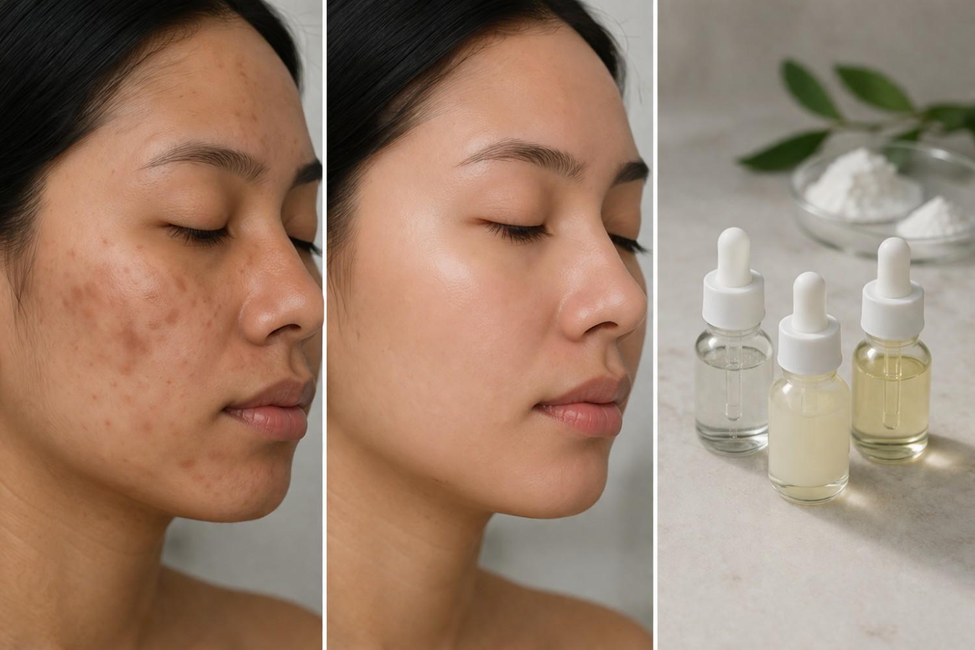
The stubborn part is that melanin deposited in the deeper layers of the skin does not just disappear when the threat is gone. It takes time to cycle to the surface through natural cell turnover and shed. Without any active intervention that process takes three months on the short end and up to two years on the longer end depending on skin tone, how deep the pigmentation settled, and how much sun exposure happened during the waiting period.
The last element, sun exposure, is what stretches out timelines the furthest. UV rays are actively working to increase melanin production in already pigmented areas. Every unprotected day is not a neutral day; it is a day in which the marks are being pushed deeper and the natural fading is being pushed further away.
According to research published in the Journal of Clinical and Aesthetic Dermatology, post-inflammatory hyperpigmentation is more persistent in medium to deeper skin tones where melanocyte activity is naturally higher, and treatment that targets the melanin production pathway directly produces significantly faster results than surface-level approaches alone. (Source)
What Each of These Three Ingredients Is Actually Doing
The reason this triple action acne scar clear combination works is not because three ingredients are better than one in some vague general sense. It is because each one is targeting a different specific point in the process that creates and sustains post acne marks.
| Ingredient | How It Works | What It Targets |
| Azelaic Acid | Selectively inhibits tyrosinase enzyme | Abnormal pigmentation in inflamed areas |
| Kojic Acid | Blocks tyrosinase via copper chelation | Melanin synthesis at the cellular level |
| Tranexamic Acid | Disrupts UV and inflammation signaling | New pigmentation triggers and existing redness |
Azelaic Acid and Why Selectivity Matters
Azelaic acid blocks the function of tyrosinase which serves as the signal for melanocytes to create melanin. The treatment stands out from other tyrosinase inhibitors because it shows specific blocking effects. The treatment restricts its effects to abnormal melanocyte activity which arises from inflammation while it allows normal melanin production to continue. The fading of post-acne marks by azelaic acid occurs without causing lighter-than-surrounding-skin patches which result from aggressive brightening treatments. The product provides two functions because it treats pigmentation issues while its anti-inflammatory effects control skin reactivity which leads to new marks.
Kojic Acid and the Copper Mechanism
Kojic acid uses a unique strategy to address the same enzyme in a different way.Kojic acid attaches to copper ions, which prevents tyrosinase from producing melanin as quickly as it would like. Tyrosinase need copper ions to function. Doctors have been employing this well-researched technique as an efficient skin-whitening product for more than 40 years. Because azelaic acid and the other chemical hinder melanin formation in two separate ways, they inhibit tyrosinase through different paths.
Tranexamic Acid and the Signaling Pathway
Tranexamic acid functions through its own unique mechanism of action. The substance prevents UV radiation and skin injury from activating keratinocyte and melanocyte communication, which occurs through UV radiation and skin injury. The signaling pathway activates melanocyte overproduction while it causes delays in the fading process of post-acne marks. Tranexamic acid blocks that signal. The treatment shows evidence of decreasing both post-acne marks’ redness and pink phase while it effectively treats their brown pigmentation, which makes it valuable for initial treatment stages when marks maintain their inflamed appearance.
Why Three Mechanisms Beat One Every Time
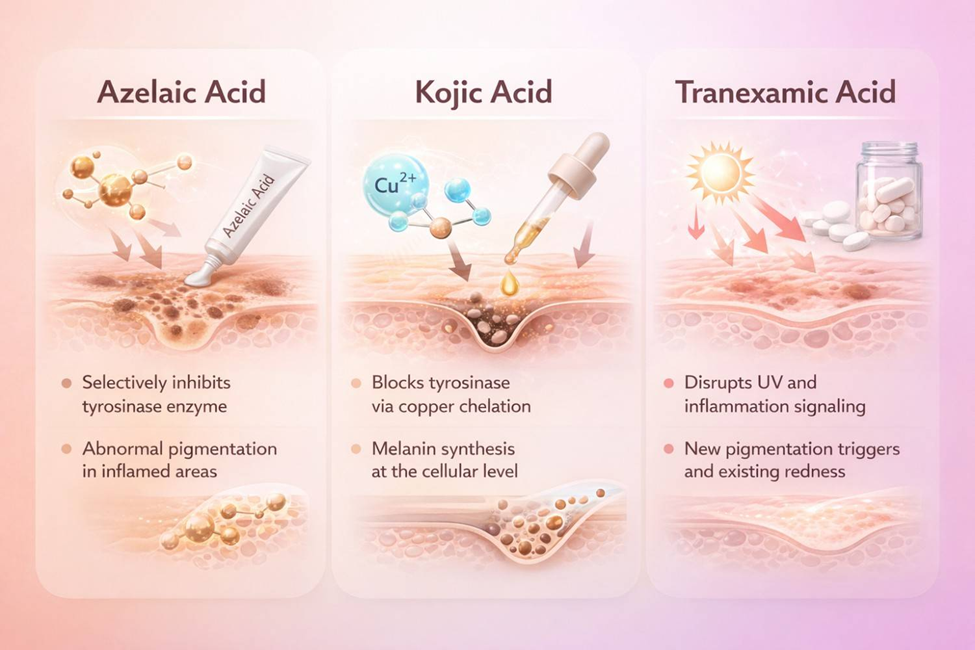
When using only azelaic acid, Tyrosinase suppression occurs; however, the signaling pathways responsible for activating Tyrosinase via UV exposure and inflammation do not stop reactivating. If using only tranexamic acid, Tyrosinase Activity is inhibited by providing no other methods for activation. Kojic Acid also inhibits Tyrosinase Activity through a different mechanism than Azelaic Acid activation so therefore after either method has been used long enough to deactivate a particular pathway completely, the other way will continue to be a viable alternative to activating Tyrosinase Activity.
The melanin production process has genuinely fewer routes available to run through when all three are active at once. This is not a theory or a marketing claim. It reflects how the pigmentation pathway actually works biologically and where it can be most comprehensively interrupted. Clinical comparisons of multi-ingredient versus single-ingredient approaches to post acne marks treatment consistently show faster and more sustained results when multiple mechanisms are addressed rather than one.
What the Rest of the Routine Needs to Be Doing
A triple action formula does its best work when the surrounding routine is genuinely supporting it rather than creating new problems at the same time.
The cleanser is where a lot of people quietly undermine their own results without connecting the dots. A harsh stripping cleanser triggers two things that directly work against post acne marks treatment. Inflammation from stripped skin and rebound oil production that feeds new breakouts. New breakouts mean new inflammation. New inflammation means new post acne marks forming while the treatment is still working on the existing ones. It is a cycle that never fully resolves because the input keeps running.
An oil free acne wash that clears the skin without stripping it stops that cycle at its source. Balanced skin is also a better surface for actives to absorb evenly rather than being taken up more aggressively in some areas and barely penetrating in others.
The serum layer matters for a separate reason. Oil production and bacterial activity that are not being regulated mean new congestion keeps forming underneath while brightening treatment is working on the surface. An acne face serum applied before the treatment formula creates a regulated skin environment where the triple action acne scar clear ingredients can work on existing marks without constantly being outpaced by fresh damage being generated below. The treatment handles what is already there. The serum prevents new marks from joining the queue. The surface will remain receptive to new products by using a cleanser as long as all three work together consistently; this is what makes your efforts to remove visible scars take an unrealistically long amount of time compared to what will show up in the mirror.
When Results Actually Start Showing Up
Honest timelines matter here because people abandon effective routines when results do not arrive on the schedule they imagined.
In the first two to three weeks the most noticeable change is usually in the redness and inflammation of existing marks rather than the actual brown pigmentation. Tranexamic acid begins disrupting UV and inflammation signaling relatively quickly and marks tend to look less angry and slightly less raised as a result.
Between weeks four and six, the combined azelaic and kojic acid activity typically begins producing visible lightening in more superficial marks. Deeper pigmentation that has been sitting in the skin for longer takes more time to respond.
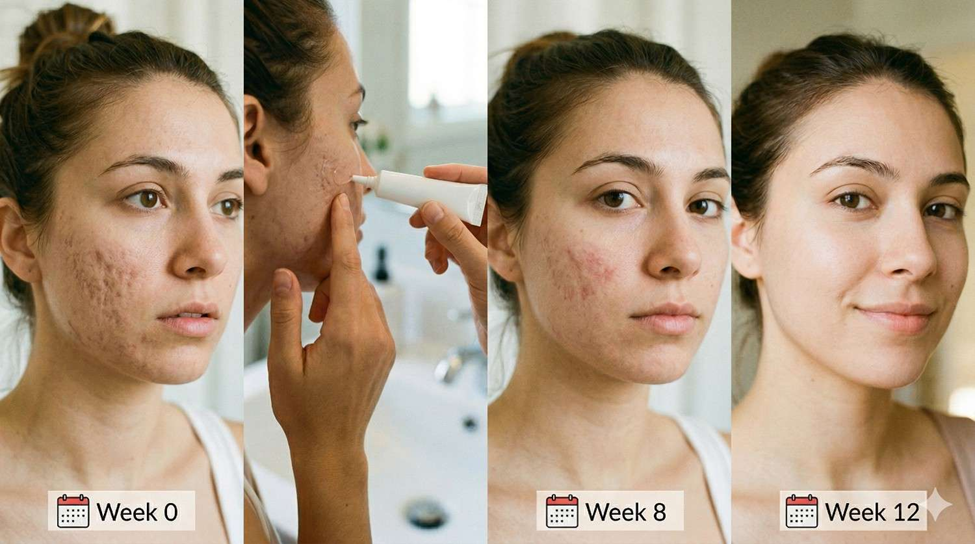
By weeks eight to twelve, significant clearing is realistic for most post acne marks that are not deeply embedded. Marks that have been present for six months or more and received UV exposure during that time need a longer window. Sun protection every single day during this entire process is not optional. It is the difference between the treatment working and the treatment running against a tide that keeps pushing back.
Conclusion
Azelaic acid, kojic acid, and tranexamic acid are not just three trendy ingredients put together because they sound impressive in a product name. They work through different biological mechanisms that cover different points in the melanin production pathway, and that coverage gap is exactly why single-ingredient post acne marks treatment moves so slowly for so many people.
The triple action acne scar clear approach makes biological sense and the clinical evidence behind each individual ingredient supports the logic of combining them. Pair that with an oil free acne wash stopping new damage at the cleansing step and an acne face serum regulating the skin environment underneath, and the whole routine is finally working toward the same outcome rather than pulling in different directions.
That is the difference between a routine that produces results you can actually see and one that just keeps you busy.
Frequently Asked Questions
How quickly does Triple Action Acne Scar Clear show visible results on acne marks?
Redness may reduce within 2–3 weeks, while brown spots usually start lightening between 6–10 weeks with consistent SPF use.
Can azelaic acid, kojic acid, and tranexamic acid be used on sensitive or reactive skin?
Yes, they are generally well tolerated. Start slowly and increase usage gradually to avoid irritation.
Do older acne marks that have been present for months still respond to treatment?
Yes, but they take longer. Marks older than 6 months typically need at least 3–4 months of consistent use.
Does the cleanser you use affect how well the treatment works?
Yes. Harsh cleansers can cause inflammation and new breakouts, slowing results. A gentle cleanser supports better outcomes.
Why choose California Skin+ Triple Action Acne Scar Clear for acne marks and pigmentation?
California Skin+ Triple Action Acne Scar Clear targets both redness and dark spots with proven actives while staying gentle enough for daily use.