If your AM routine currently looks like a shelf of serums, a separate SPF, and three must have steps you read about online at midnight, you are not alone. Most skincare enthusiasts have built routines that take twelve minutes, require a specific product order, and quietly fall apart the moment life gets busy. And when the routine falls apart, the product that gets skipped is almost always the SPF.
The rise of multifunctional sunscreens is not just another formulation trend. It is a fundamental rethink of what a sun care product can accomplish. When seven carefully chosen actives are engineered into a single SPF 50 PA++++ sunscreen, the morning routine does not just get shorter. It gets smarter, more consistent, and significantly more effective at delivering the protection and skin benefits that actually matter.
This guide breaks down exactly what is inside a well formulated multifunctional sunscreen, why the combination works as best sunscreen for oily skin, and how to make the switch without sacrificing anything your skin currently depends on.
The Problem With the Traditional AM Routine

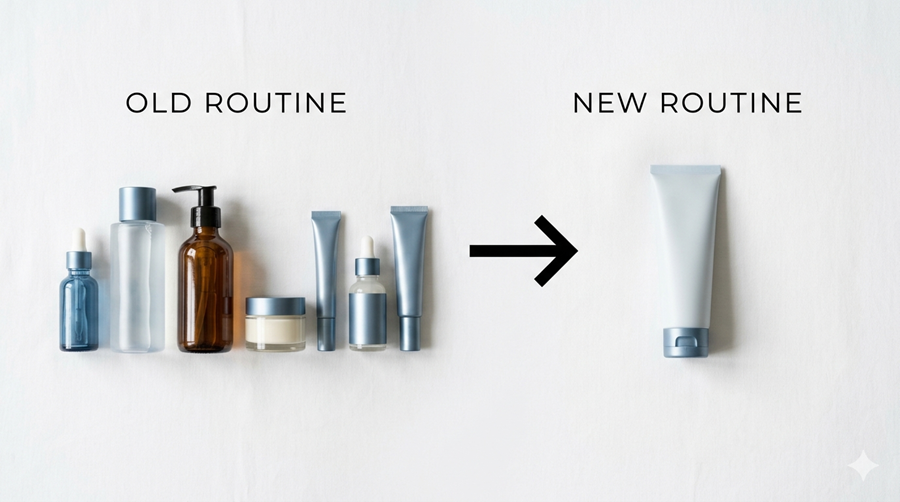
The average skincare enthusiast’s morning routine in the mid 2020s involves between five and nine products. Cleanser, toner, vitamin C serum, hyaluronic acid serum, eye cream, moisturizer, and finally sunscreen for oily skin. Each applied in a specific order with waiting time between layers to allow proper absorption. It sounds rigorous. In practice it has two fundamental and largely unaddressed problems.
The first is layering conflicts. Not all active ingredients coexist comfortably. Vitamin C in its L ascorbic acid form is destabilized by certain UV filter molecules when they come into contact before the vitamin C has fully absorbed. Some moisturizers dilute sunscreen concentration when applied immediately before it, reducing the effective SPF below the labeled amount. Many people are unknowingly undermining the efficacy of individual products by applying them in rapid succession.
The second problem is consistency collapse. The longer a routine, the less reliably it gets followed on rushed mornings, travel days, and the many other occasions when a twelve minute ritual is simply not feasible. An SPF 50 bottle sitting on the bathroom shelf at 8:47am provides exactly zero protection. The multifunctional sunscreen solves both problems simultaneously. It consolidates the active steps and ensures that UV protection, the one genuinely non-negotiable morning step, always makes it onto the skin because it is carrying everything else with it.
Meet the 7 Actives Inside a Multifunctional SPF
A well formulated multifunctional sunscreen is not a sunscreen with a few extra ingredients thrown in for marketing purposes. It is a thoughtfully engineered formula where each active serves a specific, evidence backed function and where the combination has been formulated to remain stable and effective across the full product lifespan.
| # | Ingredient | Role | What It Does | Best For |
| 01 | Advanced UV Filters (SPF 50 PA++++) | Primary protection | Broad spectrum UV filters block 98% of UVB and provide maximum grade UVA protection | All skin types |
| 02 | Cica (Centella Complex) | Barrier support | Centella Asiatica calms post UV redness, strengthens the skin barrier, and reduces sensitivity | Sensitive, acne prone |
| 03 | Sodium Hyaluronate | Deep hydration | Draws moisture from the air into skin cells and prevents the dry tight feeling common in high SPF formulas | Dry, dehydrated |
| 04 | Aloe Vera Extract | Cooling and soothing | Immediately cools sun stressed skin, reduces inflammation, and delivers lightweight hydration | Sunburned, reactive |
| 05 | Willow Bark Extract | Pore clearing | A natural source of salicin, willow bark gently exfoliates and keeps pores clear without stripping | Oily, acne prone |
| 06 | Neem Leaf Extract | Breakout control | Antimicrobial properties keep acne causing bacteria in check while supporting a healthy skin microbiome | Acne prone, combination |
| 07 | Probiotic Ferment and CCT | Texture and comfort | Probiotic ferment strengthens the skin’s microbial barrier. CCT delivers a silky non greasy finish | All skin types |
The important thing to understand about this combination is that effective concentrations are not the same as high concentrations. Cica, hyaluronic acid, and probiotic ferment all work at very low percentages when properly formulated. A well-engineered blend in the California Skin+ sunscreen formulation delivers genuine efficacy without requiring serum-level doses that create instability in a sunscreen base.
Which Skin Types Benefit Most?
Not all multifunctional SPFs are equally suited to every concern, and the active profile matters significantly in matching a formula to your specific skin needs. The table below maps the most common skin concerns to the actives most relevant to each.
| Skin Type or Concern | Key Actives to Look For | Why It Works |
| Oily and Acne Prone | Neem + Willow Bark + Probiotics | Controls sebum, keeps pores clear, prevents breakouts without clogging |
| Dry and Dehydrated | Sodium Hyaluronate + Aloe + CCT | Layers hydration deep and at the surface while CCT seals moisture in |
| Sensitive and Reactive | Cica + Aloe + Probiotics | Calms inflammation, strengthens barrier, and balances the microbiome |
| Pigmentation and Melasma | PA++++ + Willow Bark | Maximum UVA block prevents new pigmentation while BHA action gently resurfaces |
| Normal and Combination | All 7 actives | Full spectrum formula handles multiple concerns simultaneously in one step |
The most universally beneficial formulation is one that contains the full complement of all seven actives, since even skin types without a single dominant concern benefit from the combined protection, hydration, and barrier support the complete formula delivers. For acne prone skin specifically, the combination of neem, willow bark, and probiotic ferment makes this type of product significantly more relevant than a standard SPF.
How to Apply a Multifunctional SPF Correctly
The benefits of a seven active formula are only fully realized if application is correct. The most common mistake is under application. Most people apply approximately a quarter of the amount needed to achieve the labeled SPF, which can reduce effective protection to as low as SPF 10 to 15 in practice.
The correct amount for the face alone is approximately one quarter teaspoon, equivalent to two to three pumps of a pump bottle or a generous squeeze from a tube. This sounds like more than most people are currently applying. It is. The rating on the bottle is tested at this quantity.
Application technique also matters. Apply in gentle upward strokes rather than rubbing aggressively. Aggressive rubbing disrupts the UV filter film before it has set and reduces even coverage. Allow 60 to 90 seconds before applying makeup. The formula sets quickly and does not require a long wait, but a brief absorption window improves how well it sits under foundation.
Reapplication matters significantly on outdoor days, post swimming, and after heavy perspiration. SPF does not accumulate with multiple applications. Each application provides the rated duration of protection from that moment, not from the original morning application. Midday reapplication over makeup is most practically achieved with an SPF powder or SPF setting mist.
Building Your New Morning Routine Around a Multifunctional SPF
The transition from a seven product routine to a multifunctional SPF anchored one does not need to happen all at once. The most sensible approach is to identify which products in your current AM routine are performing a function that the multifunctional SPF already covers, and retire those first.
Moisturizer is almost always the first to go. If your multifunctional SPF contains sodium hyaluronate, CCT, and aloe vera, it is providing hydration that a separate lightweight moisturizer was providing. Running both is redundant and adds the dilution risk that the myth above warns against. The serum step is the second candidate, particularly if it was providing hydration rather than a specific active ingredient function that the SPF does not replicate.
What remains is a morning routine of cleanser, optional toner, and multifunctional SPF. Three steps. Under four minutes. Every single morning without exception. For most skin types, this three step routine applied consistently produces better real world results than a seven step routine applied inconsistently.
The Bottom Line
The multifunctional sunscreen is not a shortcut or a compromise for busy people who do not care about their skin. It is the logical endpoint of two decades of advanced formulation science applied to the one step in every routine that actually cannot be skipped under any circumstances.
When UV filters, Centella, hyaluronic acid, aloe, willow bark, neem, and probiotic ferment are engineered into a single SPF 50 PA++++ formula, the morning routine does not get worse. It gets leaner, more consistent, and more effective because the best routine is the one you actually follow every single morning without negotiation. Seven actives. One step. No compromises.
FAQs
1. What is a multifunctional SPF?
A sunscreen that combines UV protection with skincare actives like hydration, soothing, and acne control in one formula.
2. Can I skip moisturizer if I use sunscreen?
Yes, if it contains hydrating ingredients like hyaluronic acid and emollients, it replaces a lightweight moisturizer.
3. Is California Skin+ sunscreen suitable for acne-prone skin?
Yes, it includes neem, willow bark, and probiotics to help manage breakouts while protecting skin.
4. How much sunscreen should I apply?
About a quarter teaspoon for the face to get the full SPF protection mentioned on the label.
5. Can I use makeup over it?
Yes, just wait 60–90 seconds for it to set before applying makeup.
6. What makes California Skin+ sunscreen different?
It’s engineered with 7 targeted actives that work together without destabilizing each other.