There is a very specific kind of dread that settles in when you catch yourself in the mirror a week before something that actually matters and there is a fresh breakout sitting right in the middle of your face. A wedding you have been looking forward to for months. A job interview you worked hard to get. A reunion where you genuinely wanted to feel good about yourself for once. Whatever the event is, your skin has apparently decided this is the perfect moment to betray you.
Here is the thing though. Seven days is more than most people think it is. It is not enough to completely transform your skin or fade old marks that have been sitting there since winter. But it is absolutely enough to calm what is currently inflamed, stop new spots from forming before they even surface, and flatten what is already there to the point where you actually feel like yourself walking into that room.

When it comes to acne treatment, how you approach things is the biggest distinction between successful individuals and those that suffer through their acne while present with a breakout at an event. A ‘panic buy’ five different treatments and then apply all of them on the same night will create a manageable breakout and have it develop into a painful, irritated, and flaking acne by the time an event occurs.
Start with the right base. A good anti acne serum covering the full face from day one is what separates a routine that actually works this week from one that is just wishful thinking.
Why the Week Before an Event Is When People Damage Their Skin the Most
Urgency makes people irrational about skincare. That is just the truth of it.
The tendency, of course, is to throw everything at the breakout as soon as it appears, especially at the worst possible time. New mask purchased at midnight. Three different spot treatments applied simultaneously. Exfoliating twice a day because someone on a forum said it worked for them. Picking at a spot because it feels like doing something is better than waiting.
Every single one of those responses makes things worse. Scrubbing active breakouts spreads bacteria to pores that were perfectly clear five minutes ago. Layering three different active ingredients on inflamed skin does not triple the effect, it creates a new problem called chemical irritation that turns your face red, flaky, and reactive in a way that no amount of makeup will fix cleanly. And picking, which almost everyone does despite knowing better, turns a pimple that might have resolved on its own into an open wound with a darker mark that will still be visible months later.
The seven day routine works because it is built on restraint as much as treatment. Every day has a specific job. Nothing gets added just because anxiety is high.
Before Getting Into the Days, Be Honest About What One Week Can Do
People experience higher levels of panic during weekday times because they create unreasonable goals for themselves.
A complete week of following a strict schedule will produce fundamental skin improvements which include complete acne disappearance and a major reduction in redness and the prevention of new acne and the creation of an even texture that enables foundation application and the achievement of a peaceful skin appearance which resembles good health rather than an overactive state.
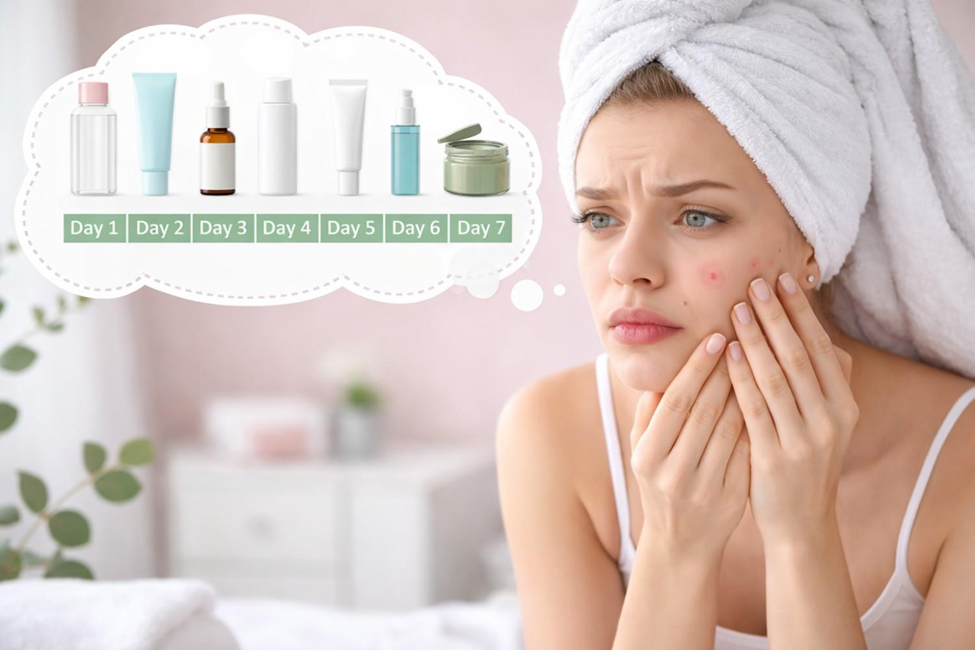
The transformation of post-inflammatory dark marks which have existed for weeks needs more than seven days to achieve complete disappearance. The treatment fails to eliminate cystic acne which has developed during the last month. The treatment requires 168 hours to reverse six months of uneven skincare practices. The process of setting your expectations from the beginning helps you maintain your exercise schedule throughout the entire week because it stops you from quitting on day four when you realize your progress exceeded the scheduled time.
Day One and Two: The First Priority Is Stopping What Has Not Started Yet
Most people focus entirely on the pimples they can already see. The smarter move is thinking about the ones that are not visible yet.
When a breakout appears on the surface, the bacterial activity and congestion that caused it has been building for days already. There are almost certainly other pores in the surrounding area that are in various stages of that same process but have not surfaced yet. Left untreated, several of those become new visible spots over the next three to four days, right in the middle of your emergency routine week.
The first 48 hours are about cutting that process off before it progresses any further.
The day one and day two routines of the morning routine are easy. You need to use an oil-cleansing product that removes oil and dirt from the pore without taking away your skin’s moisture. This is very important to the success of your skincare. When you use a product to cleanse your skin and it leaves your skin feeling tight or too squeaky, your skin will start to produce even more oil to replace the moisture that has been taken from it and this leads to a lot of build-up in the skin. The goal is to cleanse your skin and have Bala water on it, not to have your skin dry.
After cleansing, the anti acne serum goes on across the entire face. Not just the spots you can see. The whole face. A serum formulated for acne control works systemically, suppressing bacterial activity across all pores and regulating the oil production that feeds new breakouts. This is the step that handles the invisible future breakouts while everything else handles what is currently visible.
Evenings on day one and two are simple: cleanse, serum, moisturize. That is it. The temptation to do more on night one is strong, but it needs to be fought. Let your serum do its job without interference from three other products you’re simultaneously introducing.
Day Three and Four: Now You Go After the Visible Spots Directly
The serum has had two full days to begin regulating the skin environment. Day three is when targeted spot treatment enters the picture and the difference in approach here is important.
A sulfur acne treatment applied directly to active inflamed spots works differently from the serum. Where the serum manages the broader skin environment, sulfur goes directly after the problem at the source. It draws excess sebum out of congested pores, disrupts the bacterial environment keeping the pimple inflamed, and helps the spot resolve faster without the aggressive peeling or dryness that other spot treatments are notorious for causing.
Sulfur has been used in dermatology for a very long time and that track record exists for a reason. For active, visible, inflamed spots, it is one of the more reliably effective options available without a prescription. Applied after the serum has absorbed and left on for at least an hour, a single application can produce a visible reduction in redness and swelling that feels almost surprising the first time you see it work.
Keep everything else minimal on day three and four. The routine is cleanser, serum, spot treatment on the specific spots, moisturizer, SPF in the morning. At night the same minus the SPF. Nothing new gets introduced. Nothing extra gets layered on top out of impatience.
Day Five: Overnight Patching Becomes the Most Powerful Step
Something shifts around day five. The spots that were deep and inflamed at the start of the week have typically moved closer to the surface after days of consistent treatment. That shift is exactly what makes overnight patching so effective at this specific point in the week.
A hydrocolloid acne patch works by creating a sealed moist environment over an active spot that draws out fluid and impurities from below the surface while simultaneously protecting the spot from bacteria, air, and the unconscious touching and picking that happens during sleep. Most people who use them overnight are genuinely caught off guard by what the patch has pulled out by morning.
The timing detail that gets missed most often is that hydrocolloid patches perform best on spots that have at least partially surfaced. Day five of this routine is the ideal moment for exactly that reason. Spots that were underground at the start of the week have had four days of targeted treatment pushing them toward resolution, and the patch can now do what it does best.
Apply after the nighttime serum has absorbed. Leave overnight. Remove gently in the morning. What is underneath will typically be visibly flatter, less red, and considerably less angry-looking than it was the previous evening.
Day Six: Stop Treating and Start Preparing
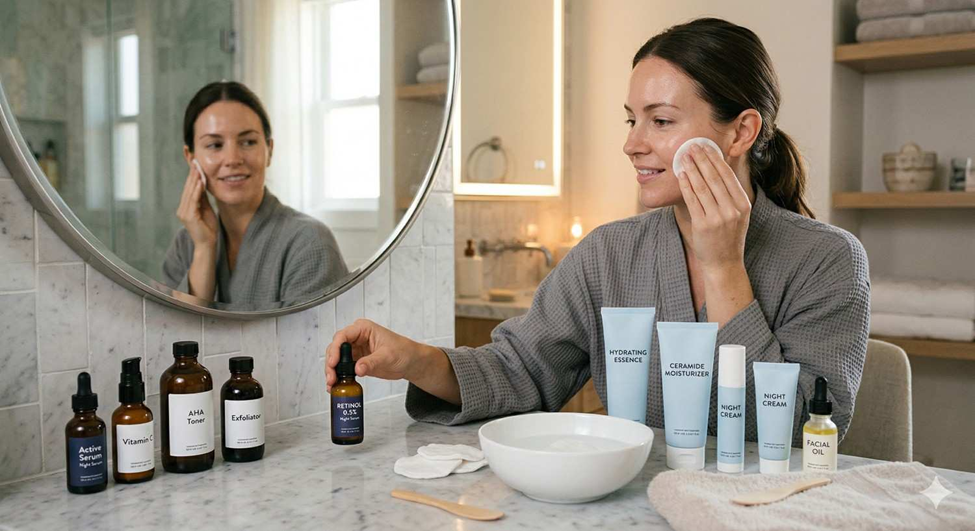
Day six is two days out and this is where the mindset needs to shift from active treatment to skin preparation.
If the routine has been followed consistently, new breakouts should not be forming at this point. Existing spots should be dramatically calmer than they were on day one. The focus on day six is getting the skin surface as smooth and even-toned as possible so that whatever you choose to wear on your face on the actual day sits properly and covers what needs covering.
The critical instruction for day six is to not introduce anything new. Not a mask that has been sitting in the cupboard since last year. Not a brightening serum that arrived in a PR package. Not an exfoliant that someone swore by in a comment section. New products on already-treated skin two days before an event can trigger a reaction within 24 to 48 hours and a reaction at that point is genuinely worse than the original breakout was. (Source)
Continue the established routine exactly. Patch anything that still needs it overnight. Keep skin hydrated because dehydrated skin makes texture and redness look significantly worse than they actually are and causes foundation to separate and cake through the day.
Day Seven: The Night Before the Event
On this, the seventh day, you should continue doing everything as you’ve been doing them since you’re probably completely & totally ready to be done with the routine. That means using a cleanser, serum, moisture and SPF products without any additions or modifications of any kind.
If, however, you still have 1 or 2 stubborn spots needing some additional care, you can use a sulfur spot treatment on those areas in the morning along with a new hydrocolloid patch applied overnight.
At night, use your cleanser, apply your serum, patch whatever is still visible and moisturizing your skin, then leave it the hell alone. On this awesome night you will have the strongest urge to do something else to help your skin out before it has to look good the next day. You might be tempted to use some random mask, or do a chemical peel or to use a new tool because you think it will help in some way. However, the truth is that you do not need to do anything else tonight to help your skin; it already has been treated aggressively for one full week and is now wearing down after treating it that way; it will not do well with anything even slightly aggressive before it needs to look its best tomorrow.
Sleep is actually doing real work here. Skin regenerates much more during sleep than it does during wake time. Sleeping well the night before your event is doing more for your skin than anything you apply to it the morning of. Lack of sleep will manifest on your skin in dullness, puffiness, and dull gray undertones, and no amount of skincare for a week can combat that in one morning.
The Reason These Three Things Work Together
There is a logic to why this specific combination produces results in a week that individual products used randomly do not.
The anti acne serum handles the systemic problem. It regulates oil production, suppresses bacterial activity across the full face, and addresses the invisible congestion that has not surfaced yet. It is working broadly and preventatively.
The sulfur acne treatment handles the specific, visible problem. It goes directly after active inflamed spots with a mechanism that is targeted and fast-acting without creating the secondary dryness and irritation that benzoyl peroxide is so often responsible for.
The hydrocolloid acne patch handles the overnight phase when nothing else can. While you sleep and your hands are near your face and bacteria from your pillowcase are a real threat, the patch is creating a sealed environment that actively draws out what needs to come out while protecting the spot from everything that would make it worse.
Three different mechanisms, three different timings, one coherent approach. That coherence is what makes seven days actually produce visible results.
The Things That Will Undo the Whole Week
Knowing what not to do during these seven days is honestly as important as the routine itself.
Stop touching your face. This sounds obvious and almost nobody manages it perfectly but even reducing unconscious face-touching significantly makes a measurable difference to how many new spots form during the week.
Change your pillow case at least every two days. Pillow cases accumulate oil, dead skin and bacteria much more than most people realize, so sleeping on that surface while trying to get clear skin is actually working against your efforts.
Try to keep your make-up as minimal and non-comedogenic as possible for the week while being treated; if you can. Foundation within the pores while undergoing active treatment is counterproductive. If you can’t live without make-up, mineral formulas are much less of a problem for you.
Dairy and high-glycemic foods have a more substantiated connection to acne than the beauty industry tends to acknowledge. Cutting back for seven focused days while doing everything else right is not going to hurt.
Conclusion
A week before an important event is not a hopeless skin situation. It is actually a workable timeline when the approach is steady and the products being used are doing the right jobs.
An anti acne serum treating the full face from day one. A sulfur acne treatment going directly after the visible spots from day three. A hydrocolloid acne patch doing the overnight work that nothing else in a routine can replicate. These three things working together across seven structured days is the actual difference between dreading your reflection the morning of the event and genuinely feeling ready.
The routine is not complicated. Sticking to it when anxiety is telling you to do more is the hard part. That discipline is what the result depends on.
Frequently Asked Questions
What if there are only five days left instead of seven?
You can shorten the routine by introducing pimple patches on day three instead of waiting until day five. Keep the routine simple, avoid anything irritating, and prioritize your serum since preventing new breakouts is more realistic than clearing existing ones quickly.
Can cystic deep spots actually improve in a week?
Deep cystic acne does not fully resolve in a week, as it develops and heals slowly. However, consistent treatment can reduce inflammation and redness, making the spot less noticeable and easier to conceal.
Is makeup okay to wear over these products during the week?
Yes, makeup is fine as long as you allow proper absorption time. Wait about ten minutes after applying serum and up to an hour after spot treatments before layering products. Choosing non-comedogenic formulas helps prevent further breakouts.
Are California Skin+ pimple patches suitable for sensitive skin?
Yes, they are generally suitable. Hydrocolloid patches work through a physical mechanism rather than active ingredients, so they are less likely to cause irritation. They form a protective seal and draw out fluid gently, which makes them well-tolerated by sensitive skin types.