Understanding PMS Skin and How a Pimple Corrector Gel Can Help
The effects of premenstrual syndrome extended beyond its impact on women’s emotional states and their food desires. Many women experience an unwanted side effect of the condition which causes their skin to develop acne. The luteal phase of the menstrual cycle brings hormonal changes which increase sebum production and create conditions that lead to clogged pores on the skin. This often leads to the development of pimples and blackheads along with the emergence of painful cystic acne. The application of pimple corrector gel as a specific treatment option will help to reduce inflammation and decrease redness while speeding up the healing process of premenstrual breakouts.
PMS skin displays sensitivity to fluctuations in estrogen and progesterone hormone levels. Estrogen levels decrease before menstruation which leads to reduced hydration and collagen production while progesterone levels increase to cause oil production. Excess oil production combined with hormonal sensitivity creates a situation where the skin becomes more susceptible to bacterial infections and inflammation and clogged pores. Women who typically maintain clear skin will experience breakouts during this time. The first step of effective management requires understanding the causes.
Hormonal Triggers Behind PMS Acne
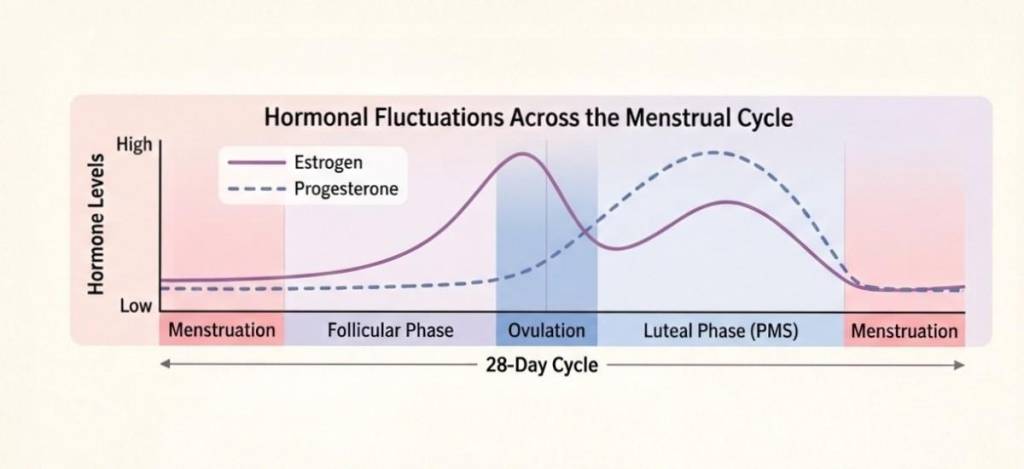
Hormonal acne that occurs during PMS develops because of changes in estrogen levels and progesterone levels and androgen levels. The skin produces excess oil because androgens stimulate sebum production which leads to the creation of an environment that attracts acne-causing bacteria. The stress hormone cortisol has the ability to increase inflammation which results in more visible pimples. Other contributing factors include:
- The human body experiences increased inflammation when people consume excessive amounts of sugar and processed foods.
- Sleep deprivation causes hormonal balance disruption because it affects the patterns of human sleep.
- Using heavy skincare products together with comedogenic products causes users to experience more severe breakouts.
People can identify their triggers which helps them select proper treatments while they learn to adjust their daily routines to reduce flare-ups.
Daily Skincare Routine During PMS
The process of maintaining a gentle skincare routine needs to be followed at all times for effective PMS skin management. The following steps should be executed in this order.
- A gentle cleanser should be used to remove all oil and sweat and impurities from the skin. Excessive cleansing results in greater skin dryness which leads to skin irritation.
- Apply pimple corrector gel to active spots for inflammation reduction and treatment acceleration.
- The skin of all people requires moisturizer because all skin types need hydration which includes oily skin. Customers should select products that feature lightweight formulas which allow their skin to breathe without obstruction.
- Daily sunscreen usage protects post-acne marks from developing hyperpigmentation according to research.
- The act of touching or squeezing pimples directly raises the possibility of creating scars and getting infected.
The process requires both essential elements which are dedication and time. It is very important to handle temporary PMS breakouts because they could become permanent skin damage.
Dietary and Lifestyle Modifications
PMS skin problems can become worse or better because of lifestyle choices. The diet requires customers to limit their consumption of sugar and dairy products and processed foods. People are required to eat more vegetables and fruits with omega-3 fatty acids. It is advisable for one to drink at least eight cups of water every day in order to keep their skin hydrated. The body needs seven to nine hours of sleep to maintain its hormonal equilibrium. The body requires seven to nine hours of sleep to achieve its necessary hormonal balance. The practice of breathing techniques together with yoga meditation enables people to decrease their cortisol levels and body inflammation. Women who want to decrease their PMS symptoms should practice these activities during their luteal phase.
When to Get Expert Assistance
The majority of PMS acne demonstrates mild symptoms, but certain cases need professional skin treatment. People should see a dermatologist when they experience:
- Pimples that develop into severe or cystic breakouts.
- Pimples that result in permanent skin damage or dark skin markings.
- Home remedy products do not help to improve their health problems.
A dermatologist assesses patient requirements to provide tailored recommendations for more powerful skin creams and medication and hormonal treatment options.
PMS Skin Patterns and Symptoms
The majority of women experience recurring patterns during their skin breakouts. The understanding of these patterns serves as a foundation for developing effective proactive treatment methods. The following cycle chart displays a standard menstrual cycle which demonstrates how hormones affect skin development throughout the cycle.
| Phase of Menstrual Cycle | Hormones Dominant | Common Skin Changes | Planned Care |
| Estrogenic/Follicular (Begins on the first day of the period) | Estrogen rising | The skin shows better moisture levels together with a reduced number of pimples | The person needs to continue using mild facewash and moisturizing products |
| The body reaches its ovulation period on Day 14 | LH peak | A little acne and greasy skin | A balanced meal plan and customised care |
| Luteal (Begins at day 15) | High Progesterone relative to Estrogen | Sensitivity, worse oiliness, and PMS outbreaks | Use light moisturiser and pimple corrector gel; stay away from heavy products |
| Menstruation (Days 1-5) | Low levels of progesterone and Estrogen | Redness, inflammation, post-acne marks may appear | Gentle care, sun protection, calming treatments |
Skincare Ingredients That Help PMS Acne
Specific active components show high efficacy for controlling PMS-induced skin breakouts.
- The ingredient Salicylic Acid reduces pore blockages while decreasing skin waste material.
- The ingredient Benzoyl Peroxide eliminates acne bacteria while stopping the formation of new pimples.
- The ingredient Niacinamide decreases skin redness while enhancing the protective ability of the skin barrier.
- Tea Tree Oil functions as a natural antibacterial agent which treats mild acne breakouts.
The use of these ingredients in cleansers and serums and spot treatments delivers specific relief for people who experience hormonal changes.
Statistical Insight
It is 44% susceptible to premenstrual acne flare-ups in women, showing that their pimples redden pre-menses in the context of changes in the menstrual cycle influencing acne.
The research published in the Journal of the American Academy of Dermatology establishes that approximately 50 percent of women experience periodic acne outbreaks which occur in conjunction with their menstrual cycle hormonal fluctuations. This finding demonstrates the existence of skin problems which are linked to premenstrual syndrome.
Home Remedies and Lifestyle
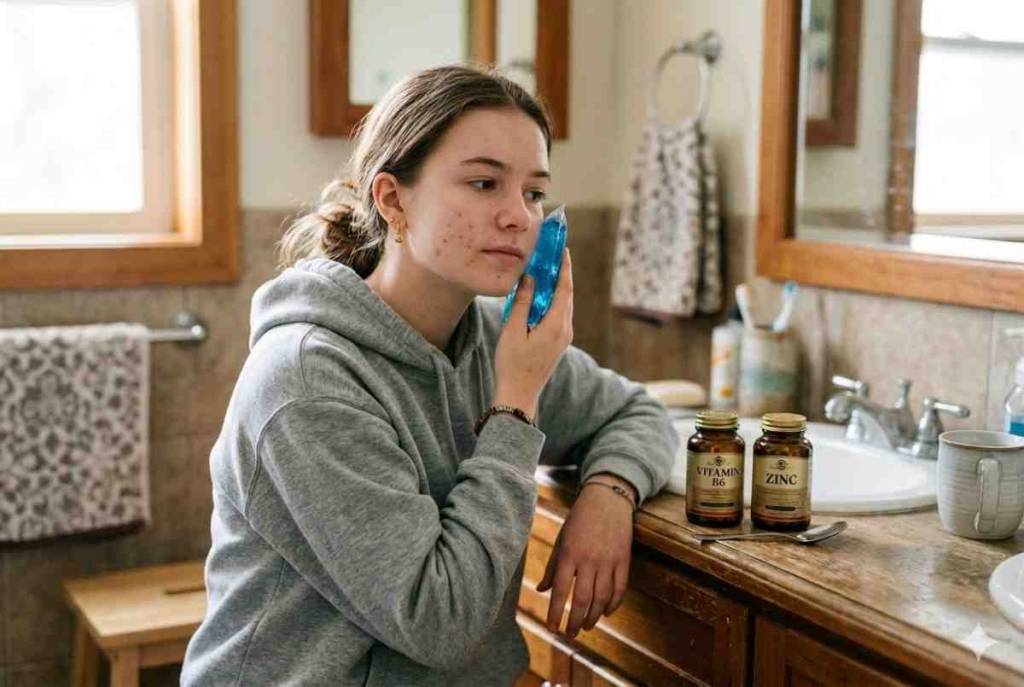
PMS acne outbreaks can be reduced by combining topical treatments with lifestyle modifications.The application of cold compresses will help decrease both swelling and skin redness. Breakouts require the use of makeup products that do not contain oil and do not block pores. People should avoid excessive exfoliation because it will make their skin become more sensitive. People should use zinc and vitamin B6 supplements after they receive professional guidance for hormone balancing. The luteal phase will experience reduced skin irritation when these steps are implemented with appropriate skincare products.
Menstrual Cycle and Skincare Planning
The best results from your skincare routine will occur when you schedule it according to your menstrual cycle.
- The pre-luteal phase requires you to start with soft cleansing methods and hydration procedures.
- The luteal phase requires you to treat developing pimples through the use of pimple corrector gel and other spot treatment methods.
- After menstruation ends the treatment process starts with barrier restoration and the use of serums and moisturizers to treat post-acne blemishes.
Your skin patterns need to be observed for multiple months which will help you learn about upcoming breakouts and make necessary changes to your skincare routine.
Conclusion: Staying Ahead of PMS Skin
PMS skin exists as a genuine condition which impacts women throughout the world. The severity of premenstrual breakouts can be reduced through understanding hormonal triggers and following a skincare routine and making lifestyle changes and implementing specific treatments. The derma face wash provides users with a gentle yet effective solution for daily cleansing which enables them to remove skin impurities and excess oil without harming their skin’s natural barrier. Women who take proactive measures can successfully manage their PMS skin while achieving a clearer complexion throughout the entire year.
FAQs
Can you still get acne from PMS even if you normally have clear skin?
Women, more often than not, have faced such stories of acne off and on, some of whom even have great skin otherwise.
When does PMS skin appear prior to menstruation?
PMS flare-ups, generally happy with results, last typically for about seven to ten days from luteal till 1-2 days before periods.
Is it valid to suggest a correlation between acne and regular dieting habits and other matters of lifestyle?
People who want to prevent imperfections should control their stress levels while they need to maintain proper sleep patterns and consume nutritious foods and drink sufficient water.
Do you think a healthcare provider should prescribe medication for treating acne during the menstruation periods?
Salicylic acid cleansers and pimple corrector gel can work wonders on mild breakouts to moderate breakouts in relation to the skin.
Is it right to put on California Skin+ Triple Action Acne Relief Pimple Patches during the night hours before the menstruation cycle’s PMS moment?
Definitely, keeping a protective patch overnight can soak up impurities and soothe irritated sites.