Let’s be honest: the skincare world has been obsessed with the microbiome for years, but most of us are still confused. The skin requires prebiotics for “feeding” while probiotics act as “supplements” for its maintenance according to our instructions. The research on skin barrier function has reached a new stage because postbiotics emerged as an important discovery which surpasses the value of bacteria. People who experience tight skin and red patches and breakouts with every new product should consider postbiotics as their solution.
People associate barrier repairs with the process of “filling in the cracks” which needs to be fixed. We reach for a peptide ceramide moisturizer to physically patch up the gaps in our skin. That is definitely a huge part of the puzzle, but postbiotics do something cooler. Instead of just being the “bricks,” they act as the chemical signals that tell your skin how to fix itself. Consider them as the “manuals” from healthy bacteria shown on your skin that aids in preventing your skin from being extremely reactive to every single instance.
The Evolution of Your Biome – Why “Pro” Alone Was Not Sufficient
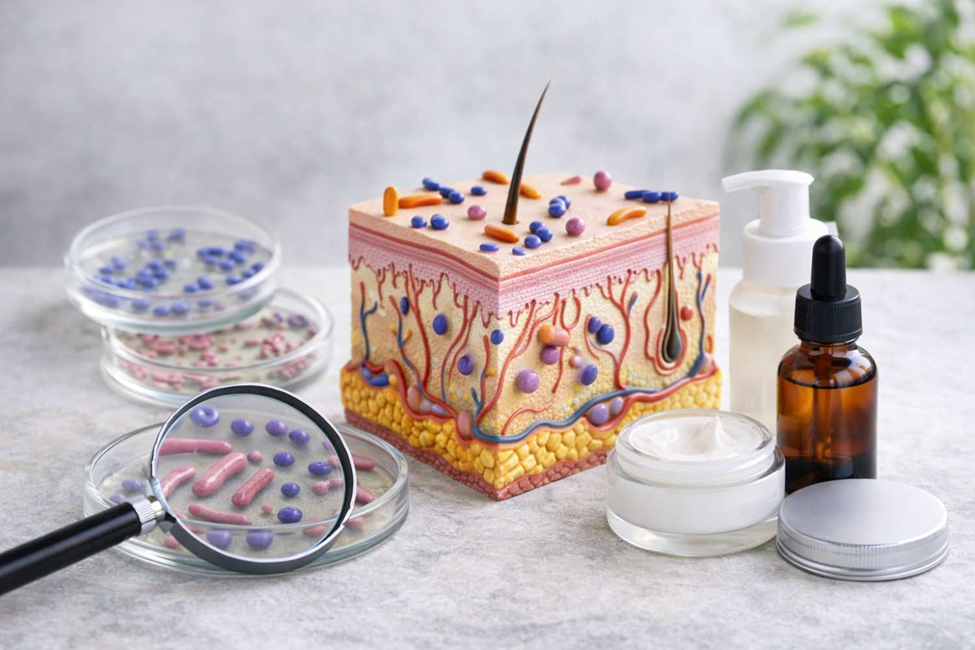
The issue with the use of probiotics for skincare is more of a logistical difficulty. Probiotics are live organisms. Keeping probiotics alive in a sealed, unheated container; an unopened jar of cream located on the shelf of a bathroom is very difficult to accomplish. Hence, most of the products marketed as ‘probiotic’ utilize bacteria that have undergone heat treatment which indicates that they are not even alive.
This is exactly why postbiotics are taking over. Because they are the byproducts of fermentation (think of them as the “super-juice” created by bacteria), they are stable, potent, and sink right into the skin. They don’t need to stay alive to work. They’re essentially a shortcut to a healthy acid mantle. When your barrier is trashed, your skin’s pH levels go haywire, which creates an open invitation for bad bacteria. Postbiotics step in to reset that pH balance, making everything else in your routine from your toners to your serums, work way harder.
The Balancing Act: Postbiotics Meet Acne Care
One of the biggest traps people fall into is thinking they have to choose between fixing their barrier and fighting acne. The majority of people experience the situation when salicylic acid serum fails to clear their pores because it causes their skin to become excessively dry and flaky. The situation presents itself as an ongoing battle between two opposing forces.
Integrating postbiotics into a routine that uses a salicylic acid serum creates a “buffer” system. The acid does the heavy lifting by dissolving sebum and dead skin cells, while the postbiotics immediately soothe the “alarm bells” your skin usually rings when it’s being exfoliated. You get the clear pores without the “raw” feeling.
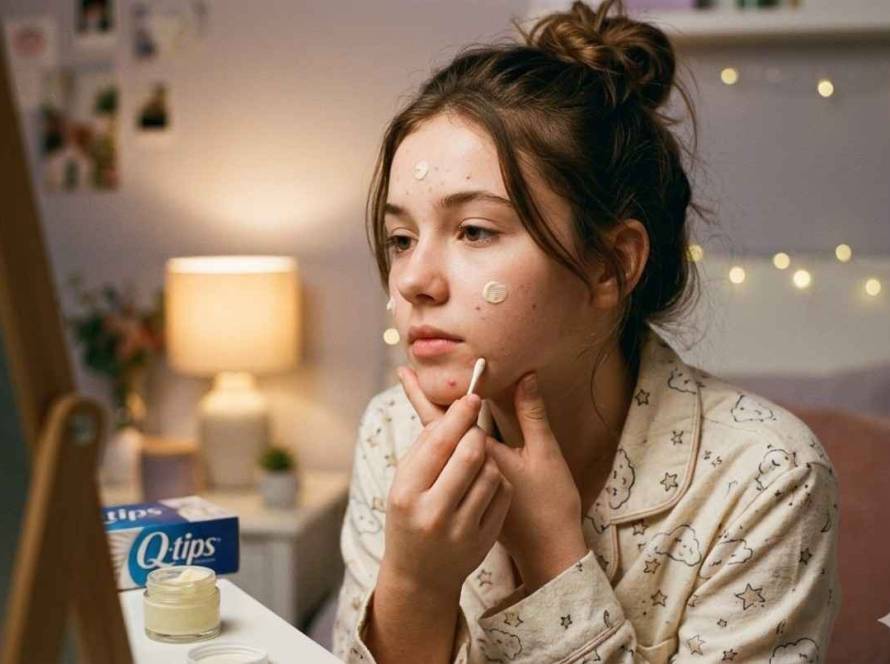
Hydrocolloid patches for acne provide an ideal solution to handle breakouts which occur at inconvenient times. The patches create an effect which resembles miniature greenhouses that preserve skin moisture while blocking external pathogens from entering the protected skin area. The patches enable you to maintain skin hydration because they cover the wound which prevents skin damage from occurring when you follow your skincare routine. The wound needs to be patched because picking the wound will lead to the fastest destruction of your skin barrier.
The Real Science of Structural Repair
While postbiotics handle the “peacekeeping” on the surface, you still need to rebuild the actual structure of your skin. This is where you need the heavy hitters. A solid peptide ceramide moisturizer is essentially a protective seal.
Ceramides make up about 50% of your skin’s natural “glue.” When you run low on them, moisture just evaporates into thin air. Peptides are like tiny messengers that tell your skin to get to work on collagen production. When you combine postbiotics with these lipids and proteins, you’re hitting barrier repair from three different angles:
- Postbiotics: They reduce skin inflammation while restoring skin equilibrium.
- Ceramides: They create a physical barrier which protects against moisture loss.
- Peptides: They enhance skin strength through their effects on facial tissue.
Research Insights: What the Data Says
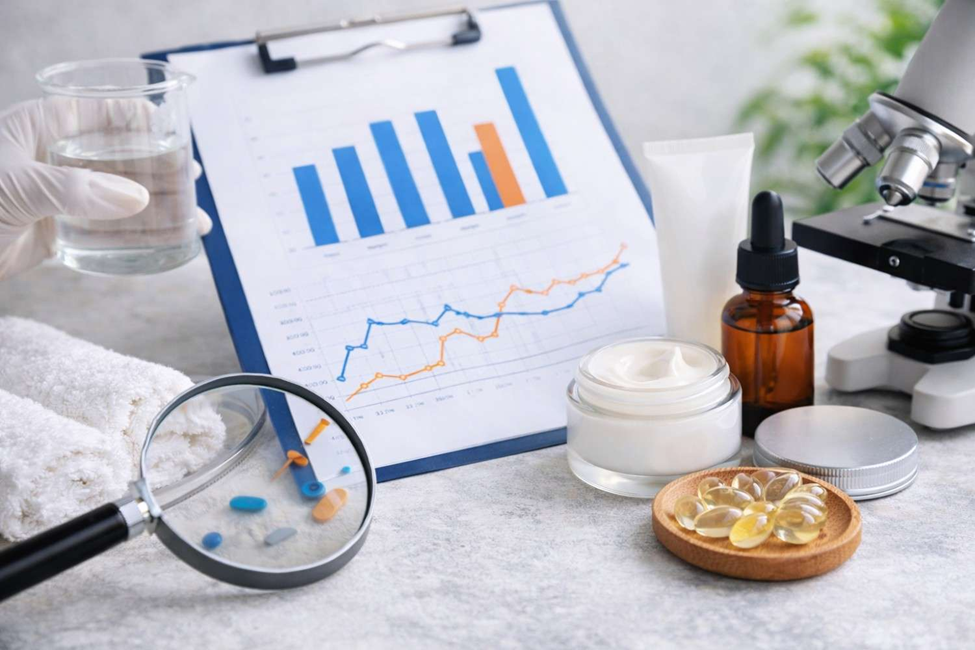
The latest research demonstrates that particular postbiotic strains such as Lactobacillus Ferment enable human skin to generate its own antimicrobial peptides (AMPs). The body contains natural defenses which protect against harmful bacteria including C. acnes.
In a study comparing barrier recovery speeds, skin treated with a mix of fermented lysates and lipids (like those in a peptide ceramide moisturizer) recovered its moisture levels 30% faster than skin treated with just basic petroleum jelly. This proves that “passive” protection isn’t enough; your skin needs active ingredients that “talk” to your cells to get them moving. (Source)
Quick Guide: Barrier Synergy
| Ingredient | What it does | Why it’s the “missing piece” |
| Postbiotics | pH Balance | Lowers sensitivity and signals repair |
| Salicylic acid serum | Pore Clearing | Keeps skin clear without the “strip” |
| Peptide ceramide moisturizer | Lipid Refill | Stops water loss and builds strength |
| Hydrocolloid patches for acne | Occlusion | Protects active spots while they heal |
How to Build Your Own Postbiotic Routine
You don’t need a 12-step routine to make this work. Your skin requires proper treatment through appropriate product application to prevent any skin issues.
Start with your “treatment” step. If you have clogged pores, apply your salicylic acid serum only where you need it, usually the T-zone. Then, follow up with a postbiotic essence or toner. Look for “ferment” on the label. This watery layer preps the microbiome for the next step.
Next, lock everything in with your peptide ceramide moisturizer. This is the most important step for keeping your barrier intact. If you have an active, “juicy” blemish, wait for your moisturizer to sink in, then dry that one specific spot and pop on one of your hydrocolloid patches for acne. The patch will pull out the gunk while the rest of your face gets a deep dose of hydration and repair.
Why a Healthy Barrier is the Ultimate Anti-Aging Secret
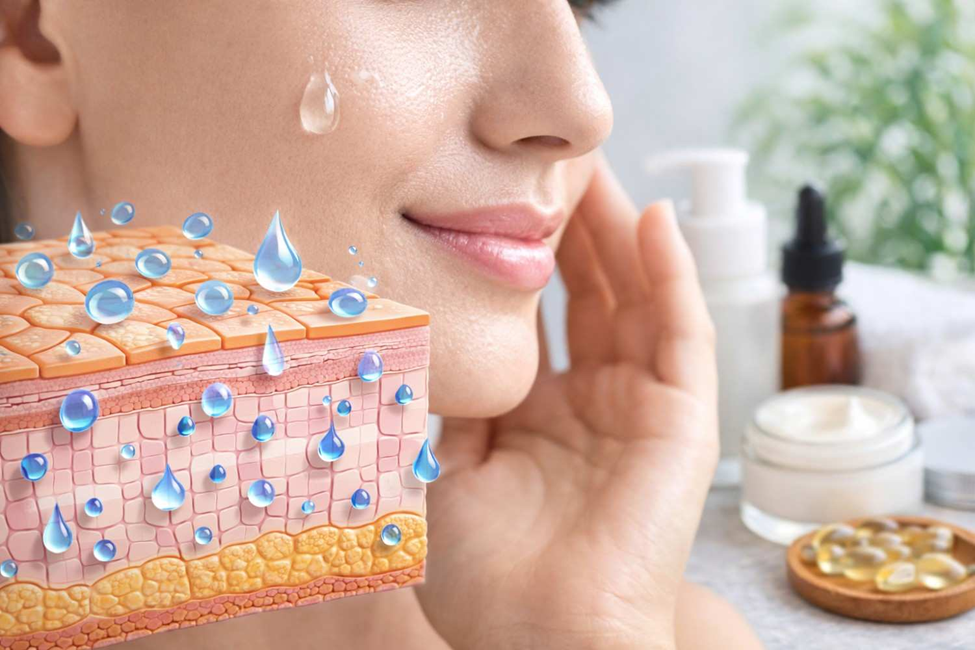
We spend so much money on “anti-aging” products, but the truth is that a broken barrier is what makes skin look old faster. When your barrier is leaky, your skin stays in a state of low-grade inflammation. This eventually breaks down collagen and leads to fine lines.
Your daily skincare routine becomes “future-proof” when you use postbiotics together with your peptide ceramide moisturizer. Your skin will require fewer intense treatments because it does not experience ongoing contact with irritants. Your salicylic acid serum will achieve better results because you apply it to your skin which remains undamaged.
Conclusion
The shift from probiotics to postbiotics serves as a better method to handle skin problems compared to current trends. It realises that our skin is an ecosystem that lives and breathes and has additional chemical needs beyond just a “coat” of water to maintain.
Your skincare routine building activities combine three products which include salicylic acid serum, hydrocolloid patches for acne protection, and peptide ceramide moisturizer. The binding power of postbiotics creates the essential connection needed to achieve successful implementation. You need to stop using temporary solutions for your skin problems because your skin barrier requires complete restoration of its vital components to achieve recovery.
Frequently Asked Questions
1. Can I use postbiotics if I have fungal acne?
Yes. Postbiotics are safe for fungal acne (Malassezia folliculitis) because they are non-living ingredients and don’t feed the yeast that causes breakouts. They also help maintain a balanced skin pH, which supports a healthier skin microbiome.
2. Should I apply my peptide/ceramide moisturizer before my serum?
No. Your serum should be applied first. Serums contain smaller molecules that need direct contact with the skin to penetrate effectively. Moisturizers are thicker and can create a barrier that reduces serum absorption.
3. How do I know if my skin barrier is damaged?
If your usual skincare products start to sting, or if your skin looks shiny but feels tight and dry, your barrier may be compromised. In that case, pause strong actives and focus on soothing ingredients like ceramides and postbiotics.
4. What helps repair a damaged skin barrier faster?
Using barrier-repair products with ingredients like ceramides, peptides, and postbiotics can help restore skin health. A moisturizer such as California Skin+ Barrier Repair Moisturizer supports hydration and helps strengthen the skin barrier while reducing irritation.