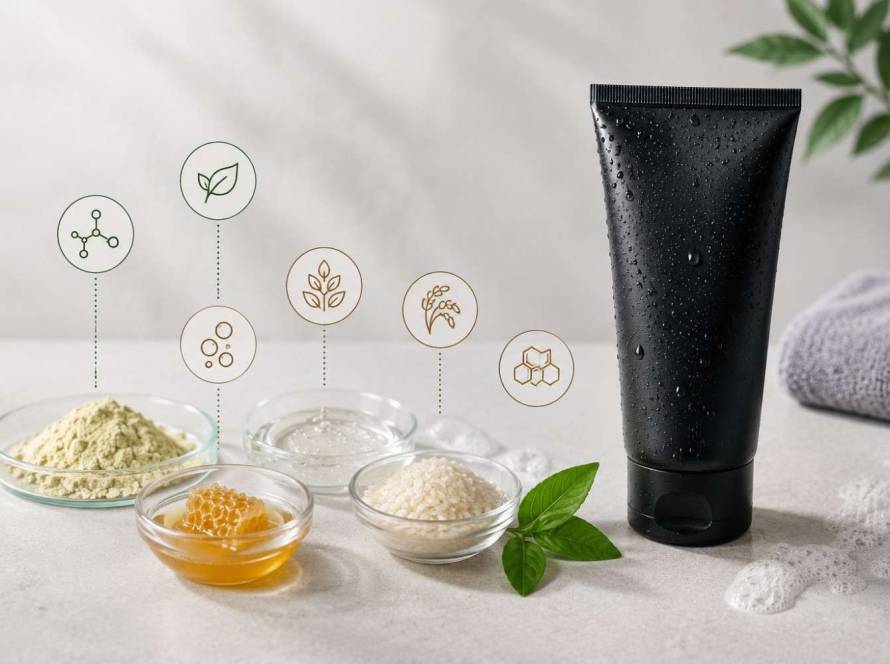
The same principle about how to season food adequately, applies to how much Skincare Actives to use properly. A little bit of Skincare Actives can go a very long way; pouring an entire bottle of Skincare Actives onto your skin would be the same as pouring the contents of an entire container of hot sauce onto your salad. It is a pattern we all tend to follow. Late at night you found out that the concentrate you just bought has such a high-level concentration that you feel you could have “glass skin” by Friday. When you used it too liberally, and two days later you had a dry potato-chip-like face with a lot of “salt” on the outside.
This is an example of the “active ingredient trap.” Highly concentrated serums are all the rage these days, but the most important thing that’s never printed on the label is this: just because it works doesn’t mean your skin can handle it on a daily basis. If the problem is acne or oily skin, the answer is rarely to just use more acid. More often than not, the answer is to just give your face a break.
What Are “Actives” and Why Do They Bite Back?
In the world of dermatology, an “active” is a type of ingredient that has a particular purpose. These aren’t just for the smell; they’re scientifically formulated to do a particular thing to the skin. A good moisturiser keeps skin hydrated, while an active ingredient is like a mechanic working beneath the hood of your car fixing the engine.
For those individuals who have oily or acne-prone skin, the following actives would likely be found in their cabinets.
Salicylic Acid (BHA): A pipe cleaner for your pores by helping to break through plugs that are causing blackheads by flushing them out.
Niacinamide – The “peacemaker” among the group, helps calm red skin and tells oil glands not to overproduce oil due to minor irritations.
Benzoyl Peroxide – Targets and kills bacteria that cause acne when it makes contact with them.
Retinoids – “The gold standard” for treating acne because they induce skin cells to renew themselves at a faster rate, causing them to push out the clogged, pore-forming skin cells before they form cystic acne.
These products are amazing, but they are also divas. Using a great acne control cleanser in the morning and at night without checking in with the skin’s comfort level can strip away natural protection faster than the skin can rebuild it.
Factors That Determine How Often You Should Use Actives
When choosing the right frequency of use with actives, there are a few things to consider:
Skin type: If you have oily skin, your epidermis will be thicker and withstand more frequent exfoliation. If you have dry/sensitive skin, you can use actives 2x/week only.
Climate: In a humid environment, your skin may be more resilient, but during the cold, dry winter months (even oily skin) may become dry/fragile with acidic products.
Concentration: (example: 0.5% Salicylic cleanser is much less irritating than 2% Salicylic liquid leave-on product)
Overall routine: If an individual has a fragrance-heavy/alcohol-heavy (or otherwise irritating ingredients) overall routine, it will create much faster irritation than an individual without an irritating product in their skincare routine.
The Real Truth About Frequency
There is no “one size fits all” when it comes to frequency because every skin barrier has a different tolerance level. Some skin types are super resilient, while others go haywire at the mere mention of glycolic acid. The most common myth regarding frequency of cleansing is that the face can be treated like the countertop in your kitchen and requires a really good scrubbing.
There are clinical studies showing how the skin’s barrier (i.e., our biological makeup) has been proven to lead to acne in adults due to over-cleansing and removing the beneficial bacteria while also removing the skin’s natural oils, which can cause the skin to react by producing excess oil to compensate for dryness and redness known as “rebound.” (Source)
- The Wash-Off Rule
When a particular active ingredient is found in a cleanser, there is more flexibility. This is because the skin is only in contact with the product for about thirty to sixty seconds before it is rinsed off.
Very Oily Skin: perform this routine up to 2 times a day.
Normal/Combination Skin: one time per day (typically at night) will remove any sweat or debris on the skin that has occurred during the day.
- The Serum Strategy
Serums are the actual workhorses. They remain on the skin for hours, hard at work while the body rests. Many individuals encounter difficulties during this process! A common mistake is to go all-in too early with a potent acne serum; applying this product nightly from the outset is an excellent method to achieve a flare-up.
The following instructions outline a gradually increasing frequency of application for treatment serums, whereby initially you apply once or twice a week, then observe your skin for any redness or irritation on subsequent mornings. If your skin reacts poorly after applying twice in a week with no irritation, increase your frequency to three times’ weekly thereafter, etc.
The Dry Surface Trick: Never put actives on damp skin. Water is a chemical superhighway, speeding them along faster and deeper than they should go. This is a common source of stinging. Wait five minutes after washing before applying any treatment.
- Spot Treatments and Pimple Patches
Spot treatments are the “emergency brake.” These are for specific areas, not the entire face. A drying spot gel should never be applied to the rest of the face only to the blemish itself. Pimple patches are a more gentle option because they shield the skin from bacteria and picking.
Application: Patches are safe to use every day. Applying a patch to a whitehead for 6 to 8 hours extracts the fluid without risking a chemical burn.
When to Use Actives: Morning vs. Night
Timing is important; some actives react positively to sunlight, while others can be rendered unstable or cause skin sensitivity due to sun exposure.
Morning: Your morning skincare routine is all about protection. Daytime is the most effective time to use niacinamide, for its oil-reducing properties all day long, but if you want to use acids in your morning routine, be sure to apply a sunscreen too.
Night: This is the time your body repairs itself, making retinoids and heavy-duty acne serums effective to apply at night because of the natural repair cycles of the body when sleeping; plus, most actives will get damaged by sun exposure and therefore will not work as well if applied during the day.
Newbie to Advanced Skincare Users – Skincare is Similar to Working Out.
When starting a new skincare routine or introducing new products to an existing skincare routine, the most important thing you will need to consider when making your product selections is how much experience you have been working with actives. In the same way you wouldn’t start using the heaviest weights in the gym as a new lifter, you do NOT want to start your new skincare regimen by introducing multiple “strong” actives into your routine (this can cause irritation).
Beginners: Start With One Active at a Time
For beginner users of active ingredients and actives, starting with one active ingredient to use each day to allow the skin to adjust, therefore it would be best to begin with a very gentle wash-off treatment like an allium compound or a lower strength niacinamide until your skin gets accustomed to using actives in your routine.
Established Users: Cycle Actives With Caution
Users who have considerable experience working with actives will often “cycle” their actives through their routine daily or stack them, however, even experienced users need to be aware that using multiple “strong” actives on consecutive days will have a cumulative effect on the skin.
Signs You’re Using Actives Too Often
The skin is very good at telling you when it needs a break. If any of these symptoms occur, return the acids to the cabinet for a few days:
- The “Plastic” Shine: If the forehead is shiny like plastic and tight and dry to the touch, it’s a sure sign of over-exfoliation.
- Stinging with Basic Products: If a gentle, “safe” moisturizer suddenly stings, the barrier is probably damaged from tiny, invisible tears.
- Random Flaking: This is usually the first sign and usually appears around the corners of the mouth or sides of the nose.
- The “Rebound” Breakout: Small, itchy red bumps that look nothing like acne can be a sign of inflammation from too many products.
The Importance of the “Bodyguard”

High-performance products don’t have to be stopped just because the skin is sensitive. They just need a bodyguard. This is where a barrier repair moisturizer comes in. Applying a layer of moisturizer before the “scary” active ingredient doesn’t prevent it from working; it just makes it work a little more slowly and a whole lot more gently on the skin.
Conclusion
Skincare is a relationship. Don’t treat your face like it is your enemy or you will have more and worse redness and breakouts. Be careful with using activities, take enough rest days in between, and always put a high priority on maintaining a healthy barrier over a clear one.
FAQs
Are there any instances when using two actives together would be advisable?
Yes, but it’s not recommended. Using actives like Vitamin C and Retinol together in the same application is a recipe for disaster. A better plan is to use one in the morning (like Niacinamide) and the other at night (like Salicylic Acid).
Why does the skin “purge” when starting a new product?
Purging occurs when an active accelerates the cell cycle. The junk that’s been sitting in the pores gets flushed out all at once. This will clear up in a month. If it persists for longer than six weeks, it’s probably irritation, not a purge.
Does a greater strength of active ingredient in a product mean it’s a superior product?
Not necessarily. A 2% salicylic acid treatment will yield similar results as a 10% salicylic acid treatment, but will result in significantly less peeling. The accumulation of results over time (through repeated use of a product) will produce greater results on your skin than strength will from one act of use.
Is it okay to skip moisturizing if your skin is oily?
No. Not using a moisturizer when skin is oily may create greater oil production in the long run because your skin will feel that it doesn’t need to produce oil because it is getting oil from a moisturizer. A lightweight water-based moisturizer is preferably suitable for oily skin than an abundant cream-based moisturizer.
What do I do to fix a damaged skin barrier?
Stop using all active ingredients. Use only very gentle non-irritating/foaming cleanser and rich moisturizers containing Ceramides for approximately one week. Once stinging/redness has dissipated, you can start introducing actives back into your routine/ use once again, but be extremely cautious.