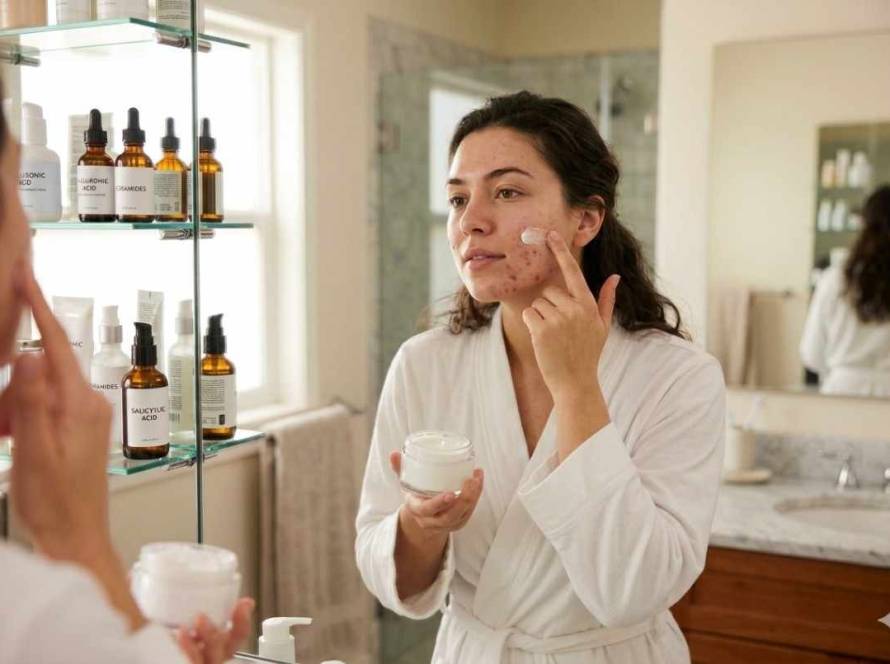
Acne is not just an issue for teens. In fact, many grown adults in their late 20’s, 30’s, 40’s, and so on face a different type of acne issue. Accordingly, if you’ve ever found yourself curious about the reasons why that little acne bump appears on your chin right before an important business meeting, or how to find a forehead pimple remover to get rid of acne that just will not go away, you’re not alone. The issue is that adult acne can be a rather disheartening situation, to say the least. Let’s investigate why adult acne is different, what causes it, and finally, how it is possible to better comprehend it.
Unlike teenage acne, which is associated with hormonal imbalances resulting from puberty, as well as an increase in hormones known as androgens and the rate of skin cell turnover, adult acne is noted to be caused by other complex mechanisms as one ages beyond the age of 25 years. It is common knowledge that adult acne cannot be attributed to poor hygiene, as research confirms that it affects a considerable population of adults, especially women, a fact that emphasizes that it does not behave like the common teenage variety of acne known as the “teenage acne.”
The difference is important to understand since adults suffering from acne may not necessarily be treated like teenagers who experience this problem. Are you curious about what causes this acne issue? Let’s delve into its science, history, and anecdotes.
What Makes Adult Acne Different
Breakouts that occur after the age of 25 have the following differences compared to teenage breakouts:
- Hormonal Fluctuations:
The provoke-power of hormones in adults is still very strong. Menstrual cycles, pregnancy, peri-menopause, menopause: all these phases affect the secretion of the skin’s sebum as well as the normal behaviors of the skin cells. The leading cause of adult acne breakouts is the change in hormones.
- Stress and Lifestyle:
The contemporary adult experience has its peculiar stressors to which adolescents may not be exposed. When not properly managed, stress has the potential to trigger an increase in levels of Cortisol, which in turn has the potential to hasten the production of oil from beneath the skin.
- Skincare and Cosmetics:
Adults may try out different skin care products, cosmetics, and even creams that remove aging. They may even clog their skin pores unintentionally without non-comedogenic products.
- Diet and Gut Health:
Food could be a factor in inflammation and hormones. Flare-ups related to the consumption of food with a lot of dairy products or refined carbohydrates may occur as an individual becomes a young adult; however, this may not be the only factor.
- Genetics and Immune Response:
Not unlike teen acnes, adult acnes may be inherited and depend on how your immune system reacts to the bacteria it harbors under your clogged pores.
Real Statistical Insight: How Common Is Adult Acne?
Adults suffering from acne are way more common than one thinks. Research reveals that 20% of adults within the range of 25 to 39 years and 9.3% of adults within the range of 40 to 64 experience acne. From this trend, one understands that acne is definitely not limited to teenage years only.
Here’s a snapshot of acne prevalence by age group from recent global data:
| Age Group (Year) | Estimated Acne Prevalence |
| 16-24 years | 28.3% |
| 25-39 years | ~20% |
| 40-64 years | ~9.3% |
| 65+ years | <5% (trend declines with age) |
This shows that though the occurrence of this skin manifestation is less with the increase of age, it is still present in great numbers. Thus, it is a skin condition that, though present among teenagers, is not restricted to this group alone, vanishing completely with the onset of old age. As the name itself suggests, it is a skin condition that is brought about due to the hormonal imbalances associated with teenagers, but one should not rule out the possibility of other factors like stress, lifestyle, nutrition, and exposure to medical conditions, along with the general behavior of people, causing this problem in the first place. While the overall prevalence of the condition in adulthood is remarkably lower in comparison to what was observed during the teenage years, it is nonetheless widespread and persistent. The alarming presence of acne as a whole demonstrates the requirement for a better perspective and view of the condition. The recognition of the overall implications and impact of the condition also works towards the removal of the stigma associated with and around the condition, prompting more and more individuals to seek the right direction and guidance rather than considering the condition abnormal or of little or negligible impact.
Common Triggers That Make Adult Acne Unique
The following are some of the underlying factors that distinguish adult acne from what most likely was experienced during their teen days:
1. Hormones Still in Play
One of the most significant factors contributing to the number of cases of adult acne is the change in the balance of the body’s hormones. For females, the balance involving the estrogen, progesterone, and androgen levels may be affected by the cycling patterns associated with the menstrual, pregnant, and menopausal periods.
2. Stress Hormones Fuel Oil Production
This will trigger the effects of stress; consequently, cortisol production will be realized. At this stage, the oil glands will be signaled to produce oil; in this regard, excess oil production will take place, as well as the reproduction of bacteria.
3. Life Choices
Stress due to a full schedule, lack of sleep, no exercise routine, and too much traveling can play havoc with your skin, and it can be attributed to another primary reason for adult acne.
4. Product Mismatch
The anti-aging products skin types may not have needed as a teenager could actually be contributing to irritation and clogging of pores as an adult. You should always check to make sure that the anti-aging products selected are non-comedogenic.
Types of Adult Acne
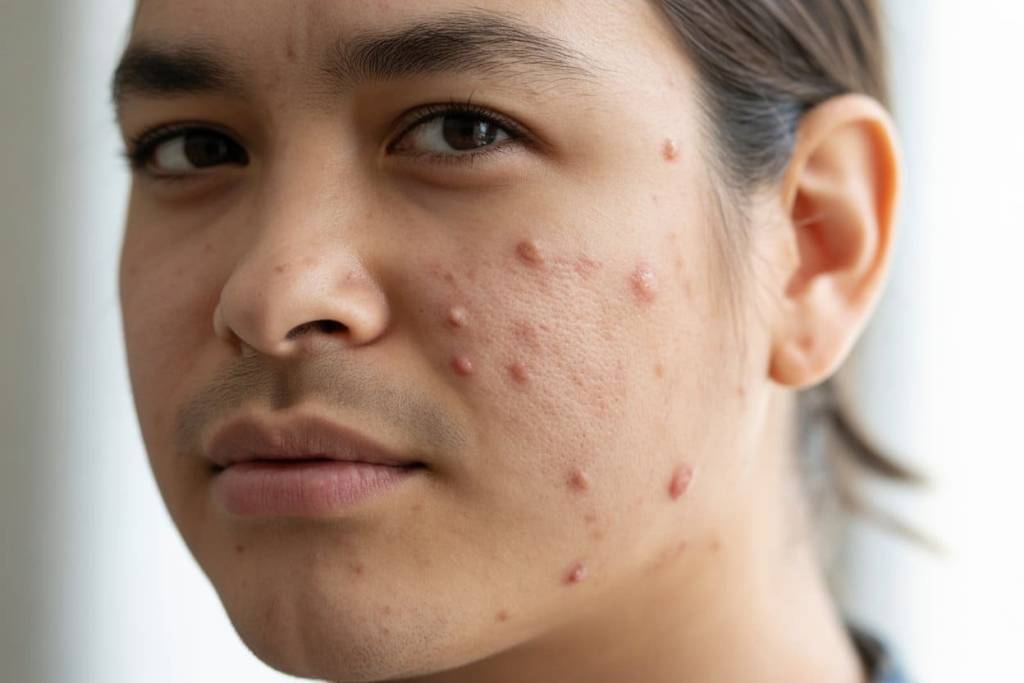
Adult acne is not necessarily similar in appearance to the whitehead or blackhead commonly suffered by teenagers. Here are a few kinds of adult acne:
- Cystic Acne: This is the presence of raised bumps which are painful to the touch, filled with fluid. This type of acne mainly affects adults.
- Inflammatory Papules and Pustules: Raised, red, swollen bumps which sometimes contain pus and are tender to touch.
- Hormonal Acne: The hormones cause it, and it occurs basically in the chin or jaw areas, at times changing in different phases of the cycle.
- Comedonal Acne: This category includes blackheads as well as whiteheads, both occurring as a result of product use, causing a blockage in pores.
Being able to identify the type of acne you have makes a huge difference in ensuring that you get the appropriate guide for your condition. This is because, unlike before, you would not be guessing, thus knowing the exact type of issue, whether it’s hormone cysts, inflammatory papules, comedonal blackheads, or maybe stress-related breakouts. In addition, most types of cystic breakouts target the system, whereas comedonal breakouts can be handled by using exfoliants like retinoids. Being able to identify the types of breakouts on your jaw line before the start of your menstrual cycle or the little bumps on your face after introducing a new product to your regimen works in an attempt to design a smarter routine for yourself.
Conclusion
In fact, acne starts to appear when one is turning 25, and it is a known fact that it is totally different from that appearing during the teenage years due to different hormonal changes, stressing, lifestyle, and products used that may not be appropriate during that period. It is, therefore, paramount to understand what causes your acne and seek almost special solutions to this problem. In order to have successful therapy, acne victims need to talk to a specialist. Setting aside the choice of the best face wash for acne prone skin, acne sufferers who want to eliminate their condition should make some radical changes in their daily routine.
FAQs
1. I never had acne as a child, so why do I have it now at age 25?
Adult acne is caused by a variety of reasons, including hormone fluctuations, stress levels, and eating habits.
2. Is adult acne more common in women than in men?
Acne in older women is primarily caused by menstrual cycles and pregnancy circumstances.
3. Does Diet Affect Adult-Onset Acne?
Even though consuming high amounts of some substances won’t directly cause the illness, they may make it worse.
4. How long does it take for treatments for adult acne to start working?
It would take six to eight weeks for the therapies to show any discernible effects.
5. Why should acne cause me to seek medical attention and begin therapy when I’m over 25 and it’s a very severe condition?
In certain situations, a doctor’s help is required for severe acne.