Painful pimples don’t show up quietly. They announce themselves. You feel them before you see them. A sort of tight soreness under the skin, usually in the worst possible spot. Chin. Jaw. Nose. And once you notice it, you can’t unnotice it.
Everyone had plenty of those over the years, and if there’s one thing you’ve learned, it’s that panic makes them worse. Rushing to dry them out, layering products, poking, checking the mirror every ten minutes. None of that helps. What helps instead is soothing the skin, which goes against the urge to cool it down if it looks angry or red.
People ask, if it can seriously shrink a pimple in an hour. Shrink it completely? Absolutely not. But calm it down, flatten it out a bit, make it less painful and less noticeable? Absolutely. But only after being done delicately rather than harshly.
The mistake that most people make is that they consider painful pimples to be like regular acne that appears on the skin’s surface. It’s not the case. These are swollen from the bottom. You’re dealing with pressure, fluid buildup, and an immune response that’s already in overdrive. Trying to “kill” the pimple usually just adds fuel to that fire.
What works better is interrupting what’s happening under the skin.
Why these pimples hurt in the first place
A painful pimple isn’t just oil sitting on the surface. It has nowhere to go and is made up of bacteria, oil, and dead skin. “Hey, something’s there,” your body says as it examines it. We need to send immune cells there.” So, the blood flow increases. Fluid builds up. Nerve endings get irritated. That’s where the soreness comes from.
Once that process starts, the skin around it becomes sensitive very quickly. This is why scrubs sting, alcohol-based products burn, and squeezing feels tempting but backfires. You’re already inflamed. Anything harsh just makes the skin push back harder.
Everything became clear once the battle with the skin ended and calming, supportive care took its place.
The first hour is about calming, not correcting
If you catch a painful pimple early, the first hour matters. Not because you can “fix” it, but because you can influence how intense it becomes. Swelling can go down. Redness can soften. The pressure can ease a little. That alone changes how noticeable it looks for the rest of the day.
Cold helps more than people expect. Not ice straight on the skin, but a cold compress wrapped in cloth. It sounds basic, but it works. Blood vessels constrict. Fluid movement slows. The area feels less hot and tight. A minute or two can have a significant impact.
In the meanwhile, there are some ingredients which start working in the background. Salicylic acid is one of them. It’s been around forever, but there’s a reason dermatologist still rely on it. Because it moves through oil, it can reach into clogged pores instead of sitting on top.
There’s actual clinical research showing that salicylic acid-based treatments improve acne severity, oil balance, hydration, and barrier health over time, not just dryness. One peer reviewed study goes into detail here if you’re the type who likes reading the data yourself – (Source)
You don’t need to memorize studies for this to work. You just need to know that calming inflammation and clearing the pore gently is more effective than drying everything out.
What you should actually do when a pimple hurt?
Start by washing my face, but gently. No scrubs, no brushes, no “deep clean” mindset. Just a face wash meant for acne and pimples. Enough to remove oil and sweat without leaving the skin feeling tight.
Then the cold compress. Always before anything else. If the skin feels less angry, everything you apply after works better.
Once the area feels calmer, Use a targeted pimple gel spot treatment. Not all over the face. Just on the pimple. Spot treatments are important in this case because they target the issue and not the skin.
Afterwards, moisturize. A lot of people who skip this step because it just seems counterproductive when you’re experiencing a pimple outbreak. Dehydration can cause the skin to overreact to the smallest stimuli. Oil production increases, and irritation tends to linger.
A lightweight barrier repair moisturizer around the area keeps the skin from freaking out while the spot treatment does its job. The pimple heals faster when the surrounding skin isn’t stressed.
Why drying pimples out usually backfires?
Everyone think that if a pimple hurt, it needed to be dried into submission. Strong products, multiple layers, anything that tingled. It only resulted in drier, irritated skin.
There is a rapid loss of water with a damaged barrier. To compensate for this, your body produces more oil. The result is that this oil helps contribute to congestion. It’s a cycle that’s difficult to get out of once you’re caught in this cycle.”
Moisturizing is not about getting rid of pimples. It is about preventing the skin from reacting in a way that makes the pimples worse.
Ingredients and what they realistically do
| Ingredient | What it tends to help with | What you might notice |
| Salicylic acid | Clears clogged pores | Redness and swelling soften |
| Niacinamide | Calms irritation | Skin looks less flushed |
| Hydrocolloid | Absorbs fluid | Pimple looks flatter |
None of these are magic. But together, used calmly and consistently, they change how pimples behave.
The Ingredients That Work When You Need Fast Pimple Relief
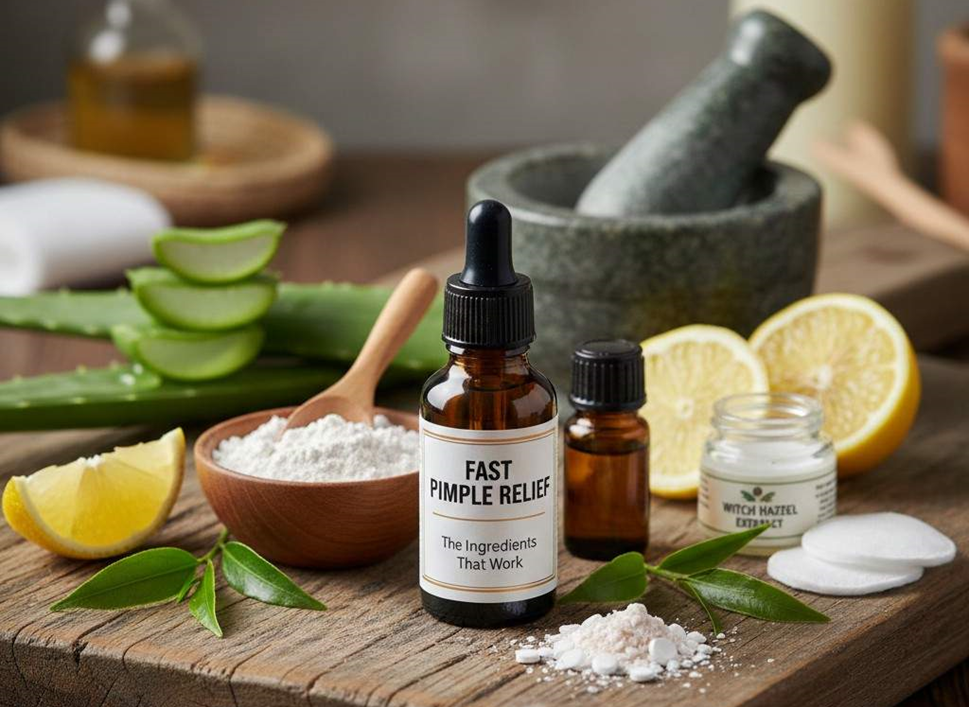
A pimple that appears out of nowhere and begins to hurt usually indicates that there is an issue beneath the skin. Not just on top. There is oil stuck inside, pores getting clogged, and irritation slowly building. This is why lighter methods of treating spots are often more effective than harsh methods that merely dry out the spots and leave the skin looking irritated.
Colloidal sulfur is one of those ingredients that has been used for years to treat acne,” said dermatologist Harold Lancer. “It has both antibiotic properties to help keep bacteria in check and oil-absorbing capabilities. “On painful pimples, it usually helps things dry down faster, but without completely wrecking the skin around it. That matters, especially when the area already feels sore or sensitive.
Salicylic acid works differently. It does not just sit there. It actually moves into the pore, where the problem usually starts. By breaking down oil and buildup inside, it can stop a pimple from swelling more. This is useful when a bump feels like it is still growing and not fully visible yet.
Zinc PCA helps in a quieter way. Oily skin often reacts badly when treated too aggressively. It produces even more oil. Zinc helps slow that reaction down. It also helps with redness, which is usually the first thing people notice when a pimple starts calming.
Calamine is more about comfort. Primarily, pimples are painful and warm to the touch. Calamine helps soothe that feeling. It does not feel harsh. It just helps the skin relax a bit while everything else does its job.
The Acne Buster™ Complex is meant to cover more than one trigger at a time. At the same time many things happen due to which pimples appear. Mainly oil, bacteria, clogged pores and inflammation are the reason for acne or pimples. It is more effective to treat all the problems at once not one by one.
All this is very effective when applied as a quick fix. Something you reach for when a red, painful pimple shows up right before plans or an important day. The goal is not perfect skin in an hour. It is making the pimple look calmer and less noticeable without irritating the skin more.
It also helps when a formula is made for acne prone and oily skin. Fast results should not come with peeling or barrier damage. When inflammation settles properly, skin usually heals better on its own afterward.
Things that almost always make it worse
Picking is the obvious one. Even when you think you’re being careful. You’re not. You’re pushing inflammation deeper.
Using too many actives at once is another. Acne skin doesn’t respond well to chaos. It likes consistency and overwashing. Washing more doesn’t mean cleaner pores. It usually means angrier skin.
How This 1-Hour Acne Spot Treatment Works (At a Glance)
| When This Happens… | This Is What Helps | What You’ll Notice |
| A painful pimple pops up overnight | Colloidal sulfur gets to work | The pimple starts drying down instead of getting worse |
| Your breakout looks red and angry | Calamine + zinc calm the skin | Redness and swelling visibly reduce |
| You feel a whitehead forming | Salicylic acid clears the pore | The bump flattens faster |
| Your skin gets oily around breakouts | Zinc helps control excess oil | Less shine, less congestion |
| Breakouts keep returning to the same spot | Acne Buster™ Complex supports healing | Fewer repeat flare-ups over time |
| Your skin reacts easily | A balanced, tested formula | Fast results without burning or irritation |
Conclusion
It’s frustrating that when it comes to acne, “prevention is more important than treatment, but the latter gets all the publicity.” The smoother your skin, the better your breakouts will be.
Gently clean the skin. Treat an area if it is painful early on. Hydrate the skin daily even if it is oily. The above practices may not seem drastic, but they will alter the frequency of painful breakouts. Over time, the goal isn’t perfect skin. It’s skin that doesn’t panic every time something clogs a pore.
FAQs
Why do some pimples hurt so much compared to others?
Painful pimples usually sit deeper under the skin. They are not just surface bumps. There is swelling underneath, and that pressure makes the area sore. That is why even brushing against it can feel uncomfortable.
Can a painful pimple actually improve in about an hour?
It can be calmed down, but it won’t go away. The swelling will lessen, the reddening will lessen, and the squeezing sensation will typically go away. For the remainder of the day, it appears less noticeable just because of that.
Does ice really help with painful pimples or is that a myth?
Ice does help, but only in a short and careful way. Cold reduces blood flow to the area, which helps bring swelling down. Additional hydration is among the effects that make the skin feel less irritated temporarily.
Is it better to have the pimple drying out with pain or to keep it smoothed by the application of moisturizer?
To dry it out may seem like a rational solution, but this can compound the problem. Dry skin can produce oil because when the skin is parched, the oil production mechanism revs up in reaction. Light hydration will soothe the skin, however, the process will not cause any more reactions.