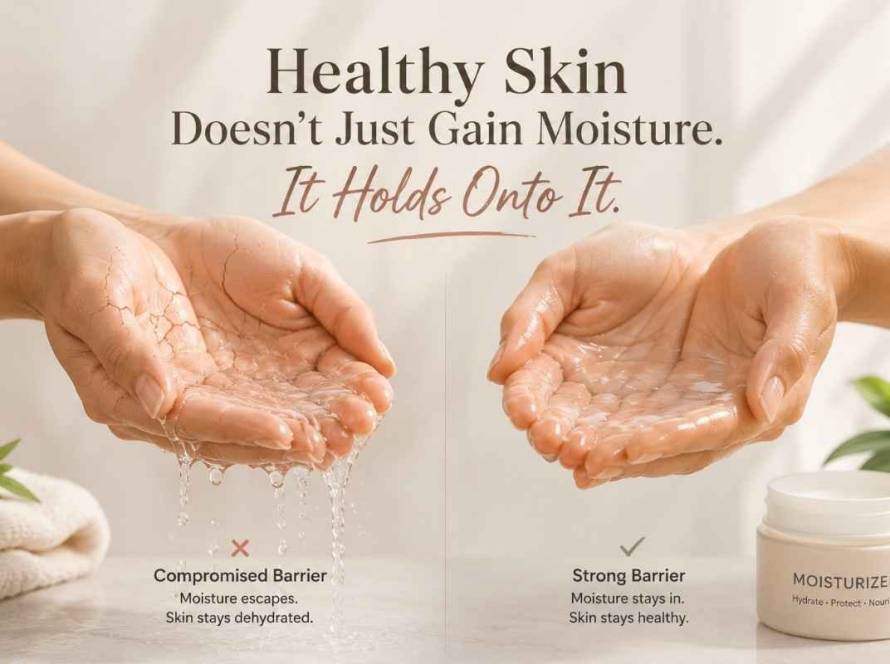
Beauty trends tend to have instant gratification to offer. Beauty trends shoot up, go viral on social media, and disappear with the same velocity. Barrier repair, though, does not belong to this category. It does not belong to the beauty domain, nor is it the result of any new trend. It is the much-needed correction to the past years, which spent more time on intensity, not on skin health, something that has made the role of a barrier relief moisturizer essential rather than optional.
Barrier repair is gaining popularity as people are seeing tangible effects from overusing exfoliants, retinoids, acids, and harsh cleaners. Redness, irritation, acne, and dryness are no longer symptoms confined to a specific condition or issue. Instead, barrier damage is now being recognized as the underlying cause of such concerns. Barrier repair is not simply recommended; it is a necessity.
What the Skin Barrier Truly Does
The skin barrier is the outer skin layer. This is the protective skin layer. The skin barrier’s major function is to retain the skin’s moisture while protecting the skin from harmful components such as bacteria, pollutants, or allergens. When the skin barrier is in good condition, then the skin is balanced and protected.
From a structural biology standpoint, it can be said that the barrier constitutes stratified skin cells, which are held together by lipids such as ceramides, cholesterol, and fatty acids.
These lipids are imperative. When they are stripped, water escapes quickly, and foreign particles easily penetrate the skin. This triggers inflammation, rosacea, uneven skin, and pimples.
Most people believe these symptoms are indicative of needing a stronger treatment solution, while in fact, these symptoms indicate a need to fix the barrier. It is at this juncture that having a high-quality Skin repair moisturizer becomes essential, not optional.
Skin Conditions and Barrier Dysfunction
| Skin Concern | How Barrier Damage Contributes | Supporting Source |
| Acne | Increased inflammation and sensitivity | Divine Dermatology |
| Chronic dryness | Loss of lipids leads to water loss | Times of India |
| Redness | Easier penetration of irritants | Real Simple |
| Sensitivity | Reduced protection from allergens | Forbes Health |
The Cultural Shift Toward Skin Health Over Skin Perfection
For a very long time, the skin care industry had a mindset of perfect skin being corrected, rather than cared for. Spots were spot-treated aggressively, textures were exfoliated away repeatedly, and redness was concealed rather than studied. The skin is no longer something that needs correction and maintenance but something that needs preservation and balance.
This is because the development has been fueled by the popularity of dermatological education by reliable sources and the recognition of the skin’s functions in the body. It is being realized by the consumer that redness is not always a precursor to healing. This is because pain is an indicator of the skin being under duress. This is what barrier repair is all about.
The Dual Role of Social Media in Modern Skincare
Social media websites also play a dual role in this transformation. Although viral skincare routines contribute to the breaking of barriers, websites such as TikTok also provide a voice for dermatologists and skin specialists who promote more gentle skincare routines based on scientific knowledge.
Psychological Aspects of the Damaged Skin Barrier
It’s also important to point out the fact that the dysfunction caused by a barrier to the skin leads to a physical reaction within the skin, but it also leads to a mental reaction, which is commonly overlooked. Having redness, breakouts, or sensitivity is a confidence killer as well as an anxiety inducer concerning skin care. People become stuck in a cycle of trying various items as a means to fix the problem, putting oil on a fire instead.
For instance, dermatologists see many patients who feel frustrated and puzzled by the fact that their skin reacts poorly even to products or treatments designed as a solution. Emotional exhaustion reinforces the value of barrier repair as a balancing measure. When a barrier is fixed, it makes the skin more predictable, such that physical discomfort as well as emotional distress becomes reduced.
A move towards a focus on barrier repair is very reassuring. In this way, the focus shifts away from trying to beautify and towards waiting and consistency. Attitudinal shifts are just as valuable as the products.
Environmental Stress and the Modern Skin Barrier
Environmental factors have also heightened the demand for barrier repair. Urban air pollution, climatic changes, higher UV radiation, and more screen usage are also adding another kind of stress to it. This means that air pollution causes the generation of free radicals in the skin, while climatic changes cause disturbances in skin hydration.
“Barrier repair” targets these new demands by improving the skin’s natural defense function. Rather than working to reverse the effects of each individual environmental factor, barrier repair enables the skin’s ability to protect itself.
Long-Term Benefits of Prioritizing Barrier Repair
The skin barrier can be repaired to produce long-term benefits in addition to alleviating immediate discomfort. The skin can tolerate the active ingredients in products more easily if the barrier function is healthy because it works in conjunction with the products to provide better benefits with reduced flares in the future. The skin is also able to age more normally because it is protected from inflammation by being supported.
“Barrier repair” also enhances skin inclusivity. This skin care concern applies to all skin types and skin tones and all ages. The issue may be acne, dry skin, or sensitive skin; it always connects back to having healthy skin barriers.
Instead, by focusing on repair, people are promoting long-term healthy skin.
Expert Insight on Barrier Repair
Dermatologists are stressing barrier repair as being central to any kind of successful skincare routine. Dr. Sandy Skotnicki recently explained that when your skin is subjected to both acid and retinoid products on a repeat basis without adequate downtime, inflammation can actually last for months.
Indian dermatologists Dr. Agarwal and Dr. Ravichandran point out, too, that most creams are simply water-binding products, providing a temporary solution to a chronic problem. “Barrier repair products reduce TEWL,” Dr. Agarwal explains, “and helps to restore lost lipids,” thereby providing lasting relief.
A Recent Real-World Incident
That year, kids started showing up at clinics with serious skin problems after trying what they saw online. A news report from India pointed fingers at TikTok clips promoting risky routines. Instead of getting better, their faces stung, flaked, turned red, and sometimes broke out worse than before. Doctors noticed a pattern – layering too many strong products every single day caused harm instead of helping. One ingredient alone might be fine; together, they overloaded young skin.
This, according to professionals, happens because one either wants resistant acne/skin, but the truth is that one has compromised barriers. Healing, as one will see, entails a total cease in any treatments and ensuring hydration and repair for months on months.
This incident highlights how easily barrier damage can occur when skincare is driven by trends rather than science.
Barrier Repair Versus Basic Moisturizing
Hydration does not mean repair. Most conventional moisturizers provide hydration to the skin without rectifying the loss of lipids. Once that water evaporates, the dryness is back. A true Skin repair moisturizer works differently by rebuilding the lipid structure and strengthening the skin’s defense system.
Conclusion
Barrier repair is not a phase of skin care, not a skin care trend. Barrier repair is the transition to a sustainable skin health routine. A healthy skin barrier layer is required if a skin product and a skin ingredient, including something as basic as an oil free face wash, are to work effectively.
“Fixing” skin barrier repair addresses a lifetime of overuse, misinformation, and undue expectation. Skin barrier repair puts functional merit ahead of cosmetic appeal and the quick fix.
FAQs
- How does one know their skin barrier is injured?
Some of the signs consist of reddening, stinging, flaking, tightening, sudden sensitivity, and acne breakouts. These can be caused by products containing salicylic acid.
- How long does barrier repair take?
Mild damage often improves within a few weeks while it may take several months of steadfast, gentle care for the badly damaged to show their improvement.
- If my skin is going through barrier repair, should I completely stop exfoliating?
Yes. Professionals recommend completely stopping actives and exfoliants until your barrier is healed.
- Can oily skin be benefited from barrier repair?
Yes, oily skin implies impaired barriers. Using a suitable acne skin moisturizer can decrease irritation and eventually give you clear skin.
- What product can help support barrier repair effectively?
A moisturizer with a barrier-related ingredient that helps replace lost lipids while protecting the skin from drying out is best. California Skin + Barrier Repair Moisturizer is one product that helps protect the barrier of the skin while correcting imbalance in sensitive skin.