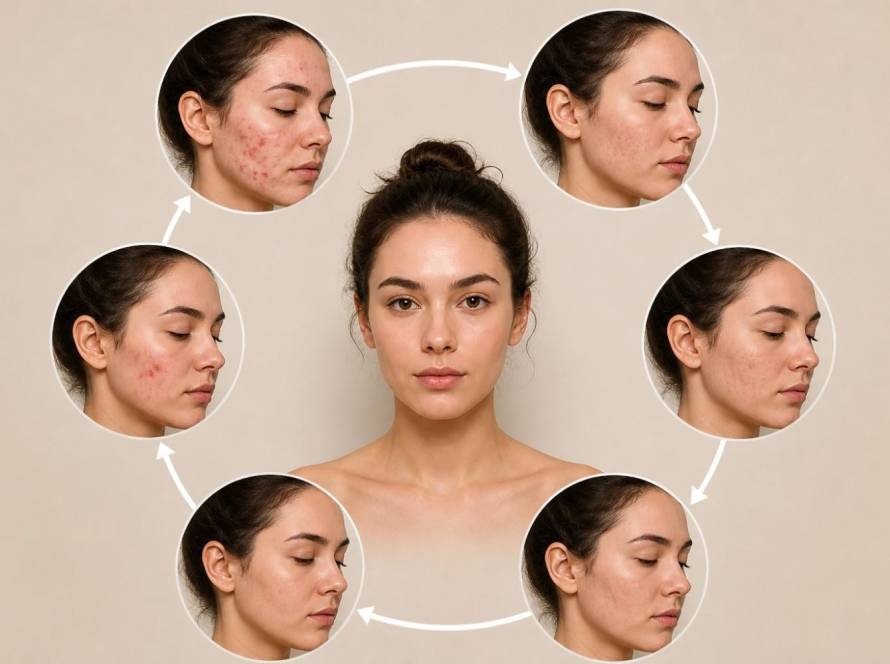
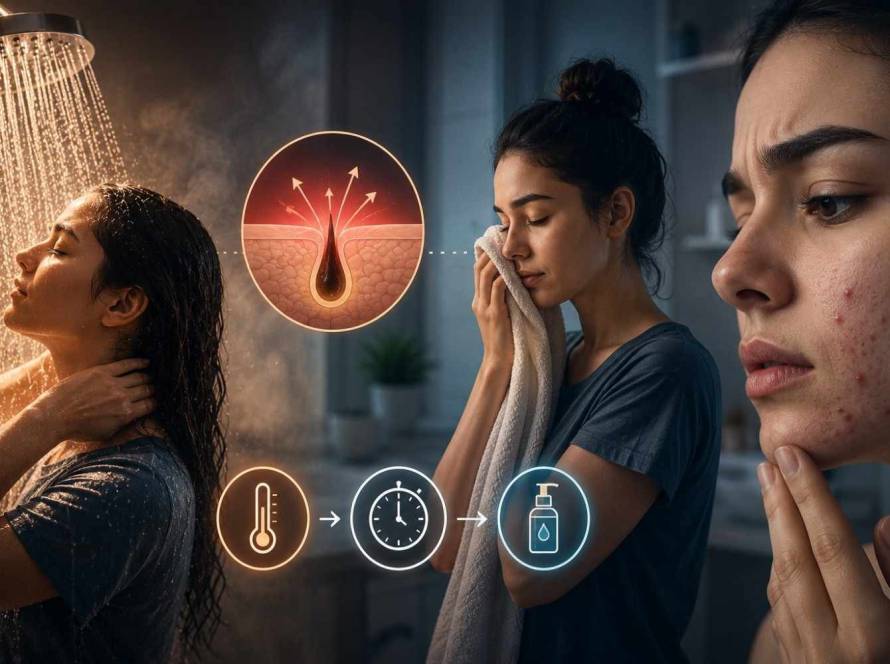
Breakouts are distinct from most physical worries insofar as they can be seen. They are located on the face, which is the area most linked to identity, to expression, to social engagement. Acne does not linger in the mirror in the bathroom; it accompanies one into the conference room, the camera, the date, the conversation. This makes skin a potential wellspring of shame.
“Taking care of your skin” may quietly become a pattern of control and self-blame. Every spot is monitored, every reaction to every product poured over, every flare-up interpreted literally. Even choices as routine as switching or sticking to a derma face wash can feel loaded with meaning. One pimple is enough to prove that you completely blew it.
Why Acne Triggers a Need for Control
Acne breaks out when you are already emotionally weak. This happens during puberty, during the changes in your hormones, during the stressful phase at work, and during life transitions. When the rest of your life is putting doubts about the future into your head, skin care is something in your life that is in control. Routines give you control. Things in your life that you want accomplished give you goals. These goals have measurable objectives. They become something in life that is a treatable goal.
Control can easily slide into rigidity. Skin changes are the same as being on the edge of a disaster. Even something such as applying a facial moisturizer is full of meaning centered on fear, such as fear of acne, or centered on disappointment, such as a lack of changes.
This is often when skincare stops being supportive and starts becoming stressful.
The Mental Health Impact of Acne: What the Data Shows
The psychological impact of acne is no exaggeration or subject for discussion. For most patients, acne poses psychological problems that are more to do with its aesthetic manifestations than anything else. Experiences of distress, lack of self-confidence, and psychological distress are quite common in such cases and do have a realistic effect on psychological well-being.
This is brought out quite clearly by clinical research. Within one cohort study published in the British Journal of Dermatology, it was discovered that subjects diagnosed with acne have a 63% higher risk of having the onset of depression within one year post-diagnosis compared to those not having the mentioned disease.
Taken together, all these findings help to show to what extent acne is more than a cosmetic condition because, although physical symptoms can be held under control, there may be a serious psychological aftermath.
| Emotional Reaction | Symptoms |
| Anxiety | Fear of social situations |
| Depression | Hopelessness after failed treatments |
| Hyper-fixation | Constant mirror checking |
| Social withdrawal | Avoiding events or photos |
| Shame | Feeling personally responsible |
Common Ways People React to Problems Linked to Acne
As emotional distress increases, people often escalate treatments. Stronger actives, more frequent spot treatments, and repeated use of a pimple remover become attempts to “fix” not just the skin, but the feelings attached to it. What begins as care slowly shifts into urgency, where patience is replaced by reaction.
The products are applied in multiple layers which continue without interruption while the skin’s regular recovery periods are neglected and typical skin changes are treated as skin defects. The skin condition develops because people believe that their skin problems indicate successful treatment while their protective skin barrier fails and their skin acne continues to emerge, which causes the anxiety that their treatment methods should have been eliminated.
A Recent Real Incident: When Breakouts Took Over Mentally
In 2024, a Reddit post of an individual narrating how their mental health got affected during their fight against acne, became popular. They canceled plans and stayed away from mirrors because their chin and jaw area had constantly been breaking out.
The posting spoke to thousands of readers who had experienced the feelings of being intellectually shut in by their own skins.
What was most notable was not the severity of the acne but, rather, its impact upon the individual’s identity, self-confidence, and emotional fortitude. Such a case has become far more prevalent among adults who thought that acne would be “behind” them by now.
When Skincare Becomes Self-Surveillance
There comes a point where skincare can transition from taking care of your skin to being a constant observation. This is where individuals go from being aware of their skin to observing it. Each glimpse turns into a survey. Each lump is documented. Each new spot is investigated for reason and responsibility.
This level of hyper-awareness is not driven by vanity. It’s usually driven by exhaustion. After a period of years or months of acne, people crave predictability. They need rules. They need certainty. The beauty content on social media addresses this need with promises of control through strict schedules, ingredient lists, and “right” ways of doing things.
When Routines Turn Into Rules
However, the skin is not a ‘machine.’ It is influenced by hormonal changes, sleep patterns, stressful situations, the environment, illness, and even emotional changes. When the routines are seen as ‘contracts’ rather than support mechanisms in our lives, even the slightest ‘deviation’ is ‘failure.’ ‘Breakouts’ are ‘breakouts.’ They reveal that ‘something went wrong.’
Instead of being an option, skincare tools become an immediate resort to erase discomfort and distress. The urgency to fix replaces patience, and the skin never truly gets space to recover.
The Pressure to Perform “Good Skincare”
One aspect of emotional suffering with regard to acne that has not been explored much is performative skincare. The rise of social media platforms has made skincare a performative act. Skincare routines are something that needs to be performed for consumption by others. Routines, shelfies, progress pictures, and ingredient analysis are now part of this performative aspect of skincare.
When the routine becomes an activity one feels observed in the process of completing, the error becomes public even when it’s a private act. “Wrong” skin care, or skipping a step altogether, in favor of keeping it simple instead of choosing the harder road, can give one a guilty conscience. The individual knows they are not just battling their acne, they are failing skin care.
Making Peace With Your Current Skin Type
One’s skin can change. Acne is not a sin. Clear skin is not a reward for being good. “A lot of people feel that clearing skin is somehow contingent on their goodness, that their skin is somehow a reflection of their character.”
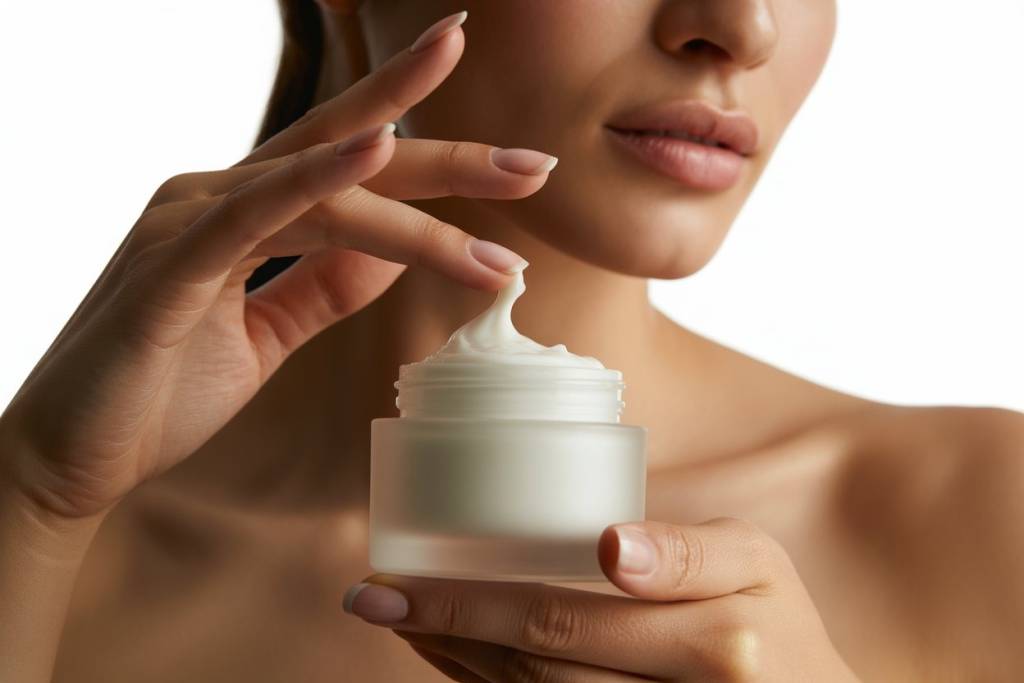
This is where simplifying routines can be powerful. Fewer steps often mean fewer emotional triggers. When skincare feels manageable, it stops dominating mental space. Even foundational steps like cleansing and applying a face moisturizer can feel grounding rather than stressful when they’re no longer overloaded with expectation.
Letting Go Without Losing Progress
Many people fear that letting go emotionally means their skin will get worse. Letting go does not mean never using a pimple remover again. It means using it as a tool, not a verdict. It means accepting that progress is uneven and that healing is rarely linear.
When skincare goes back to its real purpose, which is to help skin, not control it, individuals see not only calm skin but calm minds as well. “The mirror ceases to be an interrogation room.” Regimens become less of an “obligation”. Individuals notice that skin is simply “a part of life, not its subject.”
Conclusion
Acne is an emotional issue because of visibility, expectation, and control. Whereas a pimple remover or a face moisturizer may be able to assist the skin, it is not an outline for self-worth and emotional well-being.
When skincare ceases to be skincare and actually starts to be a source of stress, then having perfection lets go of the skincare routine.
FAQs
Is It Normal to Feel Emotionally Distressed Because of Acne?
Yes. There have been cases whereby individuals have developed anxiety and depression due to having acne.
Are breakouts happening in your skin when you have stress?
Yes, because an increase in stress means an increase in the secretion of cortisol. The increase in secretion of cortisol means an increase in the secretion of sebum by the skin.
Is overtreating your skin with medication advisable?
No, simplification & balancing treatment is far preferable to overtreatment.
Why are breakouts always more emotional in terms of impact than physical in impact?
Acne, besides being physical, can be classified as mental health because it affects the beliefs of oneself, oneself, and oneself’ respect.
What Should Be the Focus of My Skincare Routine: Repair or Actives?
If an individual has sensitized skin resulting from over-treating, a more beneficial product for them might be the California Skin+ Barrier Repair Moisturizer over the constant rotation of harsh treatments. By helping protect the skin barrier, inflammation can be decreased, consequently assisting in healing breakouts.