City mornings start with the same sequence of events, which includes traffic congestion and vehicle horns, the presence of gray smog and people using their phones for voice calls, and tiny dust particles that begin to accumulate on their skin. For urban residents, breakouts continue to affect their skin from their teenage years until their adult lives. This growing problem is often described as pollution acne, a type of acne linked directly to constant exposure to urban air and environmental stress.
City skin shows different characteristics when compared to skin that exists in cleaner rural environments. The skin barrier gets disrupted when pollutants combine with natural skin oils, and this process leads to permanent changes in pore function. The skin condition develops through time into three different problems, which involve excessive oil production, bacterial balance disruption, and visible, enlarged, clogged pores. The reason for recommending salicylic acid cleanser for acne skin to people who reside in polluted areas exists because these studies examine their skin changes. The first step to urban skin protection requires research into pollution acne science.
How Air Pollution Alters Skin Oil Production
Air pollution starts to damage skin before any acne marks appear. The face receives daily contact from exhaust fumes, smoke, and fine dust particles, which disrupt normal skin activities. The first body system to respond shows changes in oil production. Pollutants create oxidative stress on the skin’s surface,e which sends signals to the sebaceous glands that the skin is under threat. The glands release an increased amount of oil as a response to defense needs.
The excess oil present here shows different properties compared to natural sebum. The substance becomes a more substantial material when combined with pollutants, which enables dead skin cells and dirt to become trapped inside the pores. A thick, greasy layer develops on the face, which captures airborne particles and stops the skin from functioning its natural breathing processes. The skin develops a shiny appearance during midda,y while the pores become blocked and inflammation starts to build up underneath the skin.
The combination of sweat and modified oil creates increased skin congestion problems in humid, polluted urban areas. Urban oily skin develops through ongoing exposure to environmental stressors because it does not fully depend on genetic factors.
The Imbalance of Pollution and Skin Bacteria
Pollution in urban environments leads to immediate destruction of this environmental equilibrium. The skin develops an environment that allows acne bacteria to thrive because dust, smoke, and chemical particles penetrate the skin and combine with sweat and oil.
Pollution creates ongoing skin damage, which results in permanent harm to the outermost skin layer. The protective barrier loses its strength,h which allows bacteria to enter the skin through the pores. The result shows multiple facial breakouts that happen in the same facial areas. Many people see pimples that require more time to heal and result in permanent redness that appears after a few weeks.
The skin loses its ability to defend itself when pollution occurs. Pollution leads to antioxidant depletion and immune response reduction, and microbiome recovery problems after its first disruption. Acne develops into a persistent condition that people find impossible to manage because of disrupted body balance.
Urban acne shows different patterns than hormonal breakouts because restoring bacterial balance through treatment is equally essential as maintaining clean pores.
How Pollution Enlarges and Clogs Pores
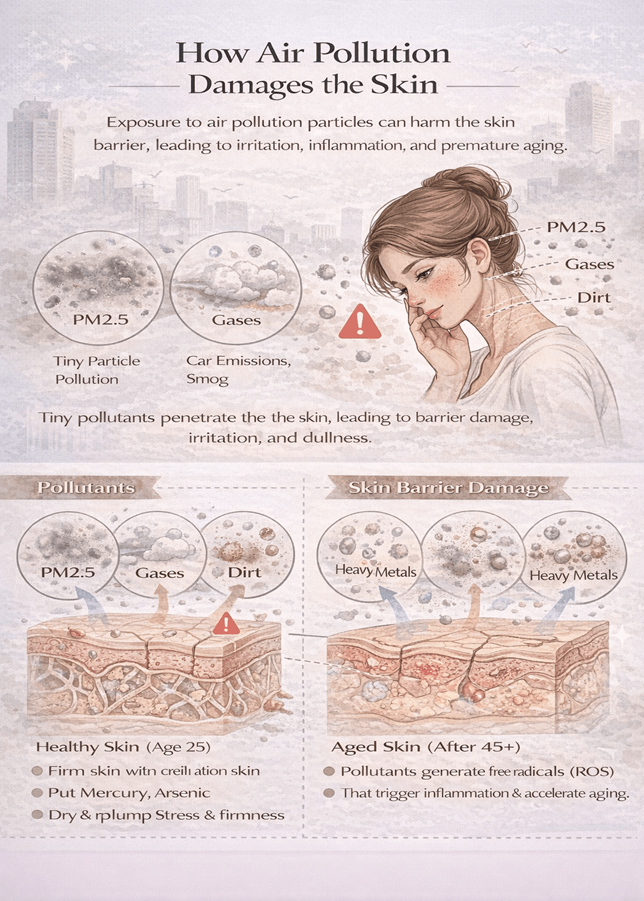
The skin contains tiny openings, which function as pores to enable pollutants to enter the body through polluted urban areas. The face collects airborne particles throughout the day, which combine with natural oil and dead skin cells on the skin surface. The mixture enters the pores as a gradual process, which results in permanent skin damage that standard cleansing methods cannot eliminate.
The blackheads plus ongoing congestion across the nose, areas, and cheek areas, and jawline develop through this process. The pore walls experience internal expansion because of persistent clogging that continues over time. People who reside in areas with high pollution levels show larger and more visible pores because their openings have lost their ability to completely contract.
Texture changes often follow. The skin develops a rough and uneven texture because smooth skin becomes affected by skin damage. The term “urban pores” has become a common description among dermatologists who study these particular skin conditions. The special type of pore exists as a natural large pore that expands in size because of ongoing exposure to pollution, oil accumulation, and continuous skin inflammation.
This gradual damage explains why pore concerns are often one of the earliest signs of pollution-related skin ageing.
Expert Insight: Dermatologist Perspective
Dermatologists consistently note that “Pollution doesn’t just sit on the surface.” The skin experiences oxidative stress when tiny airborne particles enter the body, which leads to skin barrier damage and increased inflammation. When the barrier experiences a break, both oil production and bacterial entry through the pores increase.
Experts emphasise that skin care for urban acne, which lasts over time, requires two vital procedures. The first procedure involves restoring barrier health, while the second one involves controlling skin inflammation.
Reference studies such as these help underscore that pollution is more than a superficial irritant; it alters the biological environment of the skin itself.
Source: OUP Academic
Pollution and Its Effects on Skin
The urban air pollution skin effect differs from the skin reaction to better environmental conditions. The skin of residents in polluted cities shows increased breakouts and skin congestion, together with developing texture issues because pollution changes their fundamental skin functions.
| Skin Factor | Normal Skin | Exposed Skin |
| Oil balance | Produces just enough oil to stay comfortable | The skin creates excessive oil, which forms a fast accumulation |
| Porous healthy skin | Pores stay free from clutter and return to their normal size | Clogged pores grow bigger and do not serve their purpose anymore |
| Skin bacteria | Beneficial bacteria keep the skin surface at peace | Nefarious bacteria multiply more rapidly |
| Red and swelling | Infrequent and disappear quickly | Obscuration, but beneath the current condition |
| Healing time | Spots fade without much effort | Mark’s last long and breakouts return |
These small but continuous changes demonstrate how daily pollution exposure gradually transforms skin functions into conditions that lead to congestion and irritation, and permanent acne development.
Methods of Skin Protection Against Pollution-Induced Acne
Your place of residence shouldn’t be the reason you have a damaged skin barrier or acne. You can achieve significant skin improvements by implementing minor adjustments to your everyday activities.
Cleansing the urban skin properly:
Your nighttime activities represent your most important daily activities. If you don’t religiously wash/cleanse your skin every day, the dust particles from throughout your day will enter your pores. Thus, the skin needs a gentle cleanser at the end of the day to eliminate any pollutants to enter the skin.
Barrier repair and antioxidant support:
The skin barrier protection of the skin gets damaged through continued environmental pollution exposure. Antioxidants serve a vital function because they protect against daily harm while decreasing the hidden inflammation that causes acne breakouts.
Daytime protection
Urban residents require sunscreen as an essential need because it provides protection against both ultraviolet radiation and environmental contaminants. The face should be washed after people finish their commute because this practice helps decrease breakouts. People should clean their phone screens while they maintain their distance from touching their faces.
Conclusion
The skin of people who reside in cities with high pollution levels experiences changes that are visible yet powerful despite their minor impact. The combination of excessive oil production, the disturbance of bacteria, and the blocking of pores establishes a situation that leads to continuous breakouts. The initial step to regaining control requires people to comprehend the manner in which pollution affects their skin. The combination of basic daily practices, skin cleansing, barrier restoration, and sun protection will lead to skin balance and reduced skin inflammation.
The proper routine selection proves to be a decisive factor for various individuals. There are certain specific use of products that removes skin buildup. The salicylic acid cleanser for acne removal ensures the pores are not blocked, and the niacinamide serum for oily skin improves the defense of the skin. The dedication towards the use of the proper methods ensures the urban skin becomes even clearer and more tranquil while developing the ability to resist challenges from the environment.
FAQS:
1. What exactly is pollution acne?
Pollution acne develops when people experience continual contact with airborne particles, which include dust, smoke, and exhaust fumes.
2. Can air pollution cause acne?
Yes. Pollutants enter the skin through pores, which become blocked because they combine with oil and dead skin. This leads to inflammation and skin function disruption, which creates higher probabilities for breakouts.
3. Why does my skin get greasy only when I’m in the city?
Your skin becomes more oily in urban areas because your body uses this mechanism to defend against pollution while experiencing environmental stress, which happens even when your skin remains non-oily.
4. Does pollution make pores permanently larger?
Volatile substances that contact the skin will block pores, which causes their walls to expand until they become bigger and harder to restore to their original size.
5. Is pollution acne different from hormonal acne?
Yes. Hormonal acne develops according to the body’s internal rhythms, while pollution acne shows up on skin areas that contact environmental pollutants, which include cheeks and jawline.
6. Can pollution cause adult acne even after 30?
Yes. Long-term pollution exposure and stress, together with a deteriorated skin barrier,s lead to breakouts that develop later in life for many adults.