Skin rarely breaks down all at once. It erodes. Quietly. Over time. Most people don’t notice it happening because the early signs don’t feel serious. They feel manageable. Slight discomfort. Minor irritation. That’s how barrier damage stays invisible for so long.
In my experience, people almost never come in saying their skin barrier is compromised. They come in confused. Their routine hasn’t changed. Their products are “gentle.” They’re doing everything right. And yet their skin feels unpredictable, reactive, and uncomfortable leaving you in the need of a skin barrier repair moisturizer.
The mistake is assuming skin always reacts loudly when something is wrong. It doesn’t. It adjusts first. It compensates. It tries to keep up. When the barrier weakens, skin doesn’t immediately fall apart. It just starts working harder than it should.
Research published in the Journal of Investigative Dermatology demonstrates that skin barrier disruption causes increased transepidermal water loss through transdermal water evaporation which results in skin becoming more susceptible to developing irritation and inflammatory reactions and sensitivity problems. Your skin loses moisture at an accelerated rate which makes it easier for irritants to enter your skin than what your skin should normally experience. Source:(jid)
The main problem with barrier damage detection exists because the condition does not display obvious symptoms. The condition appears through various minor symptoms which initially seem easy to handle until they become overwhelming.
People who dismiss warning signs need to understand that basic signs should receive attention before we identify the major warning signs.
Quick Breakdown: Healthy vs Damaged Skin Barrier
| Feature | Healthy Barrier | Damaged Barrier |
| Moisture | Locks it in | Loses water quickly |
| Protection | Fights bacteria & irritants | Prone to breakouts & redness |
| Texture | Smooth & soft | Rough, flaky, uneven |
| Sensitivity | Minimal | Easily irritated |
The Early Signs We Normalize
- After moisturizing, one can easily feel tight skin.
This isn’t the kind of dryness that flakes or cracks.. The dryness you experience does not result in either flaking or cracking. Your skin develops a stretched sensation that brings mild discomfort which appears immediately after you use moisturizer. The skin may even look normal, which is why this gets ignored. What’s happening underneath is increased transepidermal water loss. Your skin is unable to retain hydration because the lipid structure of the barrier has weakened. When hydration disappears quickly instead of settling in, it’s rarely just dehydration. - Your skin gets oily faster but still looks dull
The first time people experience higher oil production their skin appears different from its normal state. The skin responds to barrier damage by increasing sebum production as a defense mechanism against moisture loss and environmental threats. The skin produces a shiny surface which lacks any light reflection. The reason people experience greasy skin with discomfort is because mattifying products do not resolve this problem. - Products that used to feel neutral now feel noticeable
The cleanser produces a slight sting which lasts for a short time. The serum generates a warm sensation on my skin. The slight tingling will stop within a short period. The mild and temporary reactions of this product become simple to overlook. Skin sensitivity develops when no new product has been used and no specific trigger has been detected. The protective layer deterioration process leads to increased exposure of nerve endings which results in heightened skin sensitivity towards previously tolerated substances. - Your skin texture feels uneven without obvious breakouts
The condition does not show any active acne development or any visible skin peeling. The condition presents as mild roughness which typically affects the areas around the mouth and chin and cheeks. People tend to believe that dead skin buildup causes their skin problems which leads them to increase their exfoliation practices. The skin barrier functions become impaired which leads to improper skin cell shedding while exfoliating at this stage results in more damage instead of resolving the issue. - Redness appears more easily and lingers longer
The process of flushing after washing your face and exercising in the sun becomes more evident to others. The redness will begin to fade away but the process requires more time than it did in the past. The weakened barrier of the skin enables harmful substances to enter which results in increased skin inflammation. Skin that remains red for an extended period of time needs to be treated as it has lost its protective barrier abilities. - Breakouts heal slower than they used to
Pimples may not be more severe, but they linger. Red marks stay behind even after the breakout is gone. The skin repair process shows signs of decline through this particular symptom. The healing process becomes delayed and the body experiences greater inflammation when the skin barrier sustains damage which results in permanent skin problems. - Your skin feels unpredictable from day to day
The skin develops an oily texture on certain days. The skin develops a dry texture on different days. The products provide effective results during the first week but become ineffective in the second week. The skin shows its first signs of barrier stress through this unpredictable behavior. Healthy skin develops standard patterns of behavior. The skin loses its natural self-control mechanism when the barrier structure breaks down which results in ongoing minor corrections that never complete.
These signs don’t look serious. They don’t force immediate action. They sit in the background, easy to rationalize and easy to ignore. The exact reason for their importance exists because of this fact. The process of detecting barrier stress during this point in time prevents the development of chronic sensitivity and recurring breakouts and long-term inflammation.
As barrier damage progresses, skin stops giving subtle hints and starts changing its behavior. Not overnight, but enough to feel unsettling. The situation which once seemed easy to handle has become unpredictable. The skin now behaves in unpredictable ways which need more difficult methods to achieve successful treatment than what used to work.
People usually first detect changes through the appearance of breakouts. They don’t necessarily become more severe, but they become more frequent and linger longer. Pimples take their time healing and leave redness behind even after the inflammation has settled. This isn’t simply acne acting up. It’s inflammation sitting on top of a weakened barrier.
How to Repair Your Skin Barrier
What actually helps, and what to stop doing
Once you recognize the signs, the next step isn’t aggressive treatment. It’s restraint. Barrier repair isn’t about quick fixes or dramatic transformations. It’s about giving your skin the conditions it needs to recover on its own.
The good news is that, as you repair the skin barrier, follow some guidelines, breathing is not as meticulous as what you might see otherwise, you can improve with the simple approach.
1. Start with a truly gentle cleanser
Cleansing is where most barrier damage quietly begins.The combination of harsh surfactants with strong foaming agents and abrasive scrubs removes the essential lipids which function as skin protection. A deep pore cleansing cleanser removes dirt and excess oil present in the skin at the same time treating it with a conditioning state that would avoid any possibility of skin tightness.
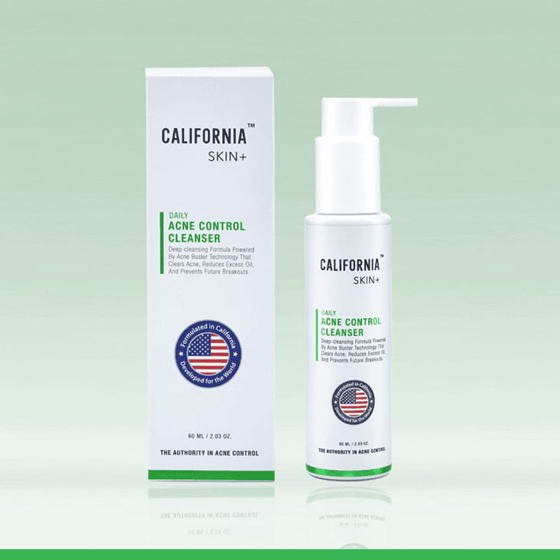
The California Skin+ Acne Control Cleanser provides thorough pore cleaning which maintains its gentle properties to protect the skin barrier, making it safe to use during times of skin sensitivity.
Cleanse no more than twice a day, and once a day if your skin feels particularly stressed.
2. Treat moisturizer as non-negotiable
Moisturizers provide more than hydration because they also deliver structural support.Skin barrier moisturizers work to restore lipid equilibrium which enables them to maintain moisture while repelling harmful substances. The protective layers of the barrier can be rebuilt through the application of ceramides and hyaluronic acid and glycerin and panthenol which function as vital elements for reconstruction. The optimal method for using moisturizer requires application to damp skin because this technique maintains skin hydration throughout both daytime and nighttime periods. The skincare routine requires this step to be completed by individuals who have oily skin and acne-prone skin.
3. Rethink water temperature
Hot water provides comfort, yet it destroys barrier protection. The substance removes natural skin oils while causing increased skin moisture depletion. Lukewarm water cleans effectively without stripping the barrier. The small change which most people fail to see creates an important effect which becomes visible after extended duration with sensitive or reactive skin.
4. Pause and reassess exfoliation
Exfoliation has its appropriate time for use, but active barrier repair needs to be uninterrupted by exfoliation. The use of physical scrubs together with frequent chemical exfoliation procedures results in skin barrier damage because these methods remove the outer skin layer. The skin should undergo stabilization before starting exfoliation which should be limited to gentle chemical exfoliants used once or twice weekly. If your skin feels tight, exfoliation should be the first thing to pause.
5. Support your skin beyond products
The process of barrier repair extends beyond the limits of your bathroom shelf. The skin recovery process depends on three factors which include sleep and hydration and nutrition. Research shows that diets which contain omega-3 fatty acids and antioxidants help protect skin barrier function and decrease skin inflammation. Your body needs both water and sleep to maintain its natural repair functions that occur during nighttime rest.
6. Layer products with correct order
The sequence and time of product application carry greater importance than most people understand. Start your skincare routine with a gentle cleanser when your skin needs treatment and use lightweight serums as long as your skin can handle them. The process requires you to wait one to two minutes after applying each product because you should not hurry through your read-to-apply products. The products will penetrate into the skin when they need time to develop their effect.
Barrier repair thrives on patience, not pressure.
Barrier repair isn’t about giving up on results. It’s about creating the conditions where results are possible. Clear skin, even tone, smooth texture, none of these happen consistently on a compromised barrier.
If your skin feels confusing right now, the solution isn’t intensity. It’s support.
FAQs
1. How long does it take to repair the skin barrier?
Most mild barrier damage improves within 2–4 weeks with proper care. More severe cases can take 6–8 weeks or longer, depending on consistency and triggers.
2. Can oily or acne-prone skin have a damaged barrier?
Yes. In fact, oily skin often overproduces oil as a response to barrier weakness. Oiliness does not equal a healthy barrier.
3. Can barrier damage cause acne?
Indirectly, yes. A compromised barrier increases inflammation and sensitivity, which can worsen acne and slow healing.
4. Which moisturizer is best for repairing a damaged skin barrier?
A moisturizer that focuses on restoring lipids and calming the skin works best for barrier repair. The California Skin+ Barrier Repair Moisturizer is designed to strengthen the skin barrier while providing long-lasting hydration, making it suitable for stressed, sensitive, and acne-prone skin.
5. Can I use California Skin+ products daily?
Yes. California Skin+ products are made for daily use and are gentle enough to be used regularly without damaging the skin barrier when used as directed.