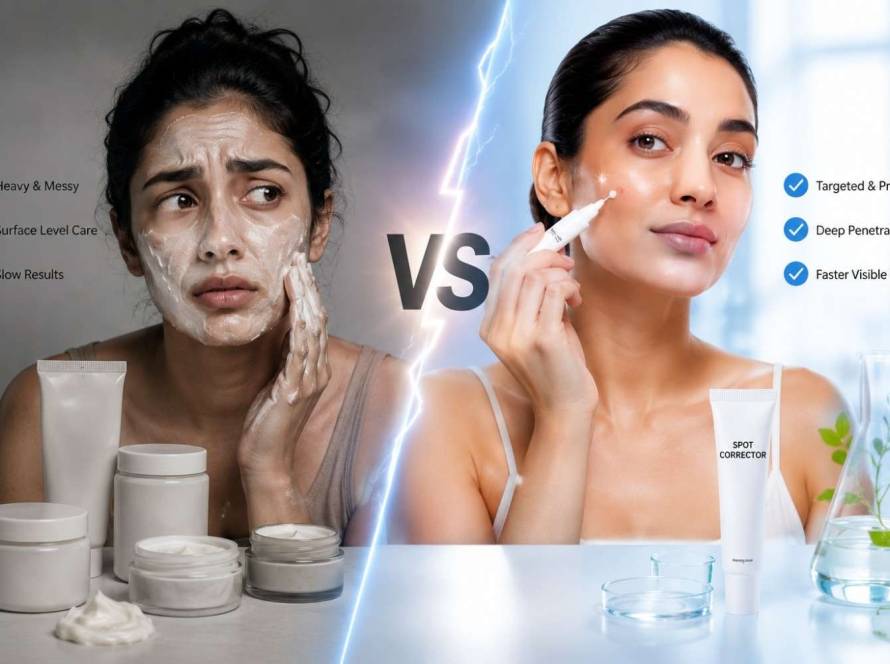
Acne is one of the most common causes for underconfidence and self-esteem issues in teenagers and adults alike. Millions of people suffer every year at the hands of invisible acne. As the name suggests, it is ‘invisible’ in nature and can’t quite be seen through the naked eye. A less noticeable form of acne that can lead to irritation, sensitivity, and slight spots beneath the skin affects many individuals, often persisting even when treatments like a salicylic acid face serum are used without addressing the underlying inflammation. This particular form of acne that is largely triggered due to a condition known as subclinical inflammation is commonly termed invisible acne.
Awareness and understanding of invisible acne and its causes can be very beneficial for individuals affected. This enables them to be cautious and prevent the progression of invisible acne. Below, we shall define what subclinical inflammation entails and what it holds for your skin.
What is Invisible Acne?
Invisible acne is the name given to the skin changes that occur due to acne but do not appear at first as spots, cysts, or black dots. You could be suffering from pain or a tight sensation due to small bumps under the skin that aren’t visible to the naked eye. Although harmless at the start, it could be the source of quite serious skin problems that appear on the surface.
Unlike normal acne, invisible acne may not have redness, inflammation, or pus-filled papules. Such acne is difficult to diagnose without the aid of equipment from dermatology or without observing it carefully in terms of skin feel and sensations.
Statistical Insight
Acne is currently considered one of the most widespread inflammatory skin conditions all over the world. Global estimates put the prevalence of acne at about 9.4%, or 650 million people worldwide, and state that it occupies the eighth place in the global ranking of diseases. Acne was estimated to have a lifetime prevalence as high as 85%, which means that the majority of the population have some form of acne in either adolescence or early adulthood. Its widespread prevalence makes obvious the fact that acne is not a narrow and skin-deep issue but rather an important inflamed skin disorder affecting millions in all age groups.
Understanding Subclinical Inflammation
The cause of invisible acne is actually the existence of a subclinical inflammation in the skin. The skin experiences a low-level inflammation in the skin that is persistent and does not result in visible symptoms in the form of acne at first. The word “subclinical” explains that the inflammation is at the cellular or microscopic level and does not produce any visible symptoms.
Subclinical inflammation may be induced by a number of causative agents, which may include:
- Overproduction of sebum: The overproduction of oil in the skin can provide an ideal environment for bacterial growth, even before a zit erupts.
- Oil on the skin may ramp up when hormones change, particularly if androgens climb, while skin cells also begin to replace faster.
- The moment the skin barrier falters, invaders find their way inside without much resistance. This change lets allergens take hold, sparking discomfort out of nowhere. Inflammation rises once those invaders take hold. A broken shield on the surface means trouble underneath grows faster.
- Fight fatigue when food choices falter, tension builds, nights stay short, pollutants linger. Unbalanced meals drag the mood down while pressure mounts silently behind tired eyes. Restless hours pile up alongside city smog thickening windowsills. Bodies react slowly until small strains link into daily weight.
So hidden swelling, or maybe its flip, sets the stage for breakouts long before spots show up. This quiet shift helps pimples form without warning signs appearing yet.
Few things matter more at first than shielding the skin’s outer layer – using a mild cream may ease redness while keeping hidden pimples from turning into full flare-ups. A soft lotion might just stand between balance and chaos beneath the surface.
| Feature | Invisible Acne | Visible Acne |
| Appearance | Not easily seen, small bumps under skin | Red pimples, whiteheads, blackheads |
| Pain/Discomfort | Mild to moderate, shows up a lot | It might range from mild to intense |
| Inflammation | Subclinical, low-level | Obvious, visible redness and swelling |
| Treatment Awareness | Frequently overlooked, left without early care | Most often leads straight to treatment |
| Risk of Scarring | Potential if untreated | Higher risk if severe or cystic |
| Triggers | Hormonal, sebum, stress, microbial imbalance | Just like hidden breakouts, but with outside injury added in |
Hidden pimples usually show up before the ones you can see. Spotting them early makes a difference because treatment then helps later.
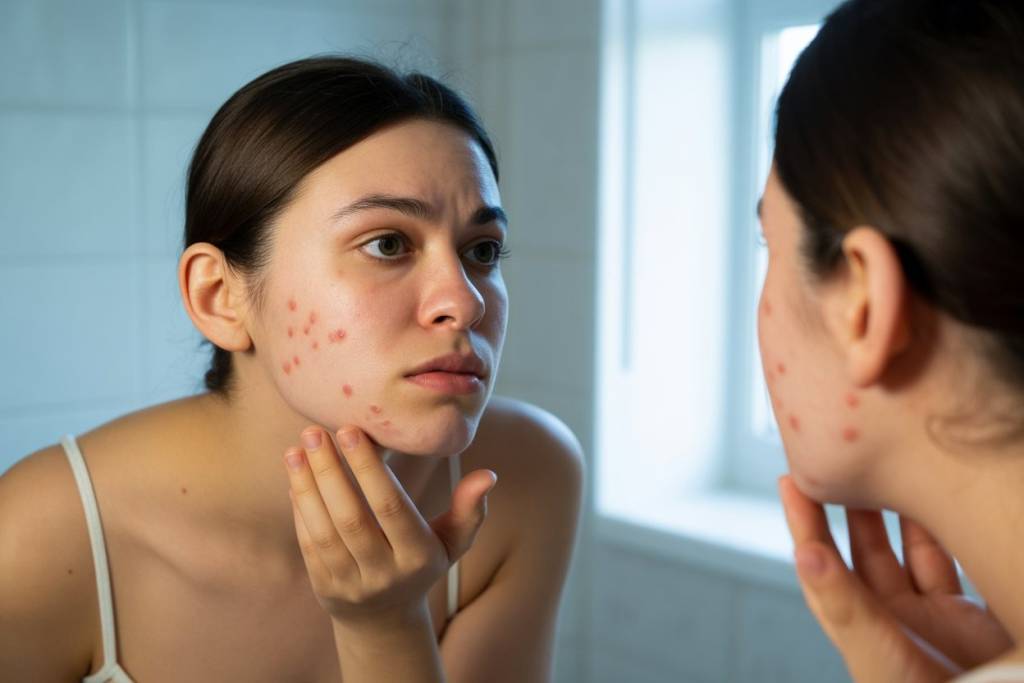
Why Subclinical Inflammation Matters
Subclinical inflammation is inextricably linked with the skin’s health. Despite the somewhat harmless appearance of symptoms, chronic inflammation may lead to the development of:
- Delayed healing: Microscopic inflammation impairs the normal mechanism of skin repair.
- PIH is the darkened appearance of blemishes following some kind of inflammatory process.
- Fragile surface: Products touch it wrong, air changes bother it more now. Then again, reactions happen faster than before.
- When silent swelling lingers, it might shift into deep pimples or hard bumps under skin. Sometimes, what starts unseen turns rough without care.
The Case of the “Hidden” Texture
The following is a recent skincare success story from late 2025, in which a patient at a prominent dermatological clinic showed how treating the invisible phases of a breakout led to a complete makeover.
The patient presented to the Clear Skin Clinic with complaints of tenderness and pain along the forehead and jaw area. She did not have the usual red cysts common with acne, but her skin felt like sandpaper, as she explained it, having “sandpaper under the skin.” This was a case of invisible acne, as she had the tenderness around the areas of the sebaceous glands without the redness and cysts breaking out through the surface of the skin.
The “Subclinical” Protocol
Rather than using harsh drying spot treatments that were only effective for the whiteheads that could be seen on the skin’s surface, her dermatologists changed their attention to the root cause of the problem: subclinical inflammation.
Her “cure” included a multi-step process with the new 2025 technology, as well as topicals:
- AviClear Laser Treatment: This groundbreaking 1726 nm laser has a specific target of the oil glands in order to reduce the overproduction of sebum, effectively “starving” the invisible blockage before it turns into a lesion.
- Topical Triple Combination Regimen: She could have applied a topical triple combination regimen cream.
- The “Egg” Concept: The patient effectively ended the phenomenon known as the “comedo switch”, in which a microscopic plug (the “egg”) hatches from a pore to form a comedo, by focusing on her whole face instead of the area she defined for the purposes of spot treatment.
The Result
Following two months of concentrating on the “invisible” stage, the patient observed that the skin’s texture had smoothed and the pain beneath the surface had subsided. The person was fully recovered by 2025, which cast doubt on the notion that symptoms must appear before beginning treatment.
Conclusion
Invisible acne can be very subtle, yet its effects on the health of your skin should not be overlooked. Subclinical inflammation is at the root of invisible acne. This is something that is working from within to cause problems that lead to breakouts on the surface of the skin. Invisible acne can be dealt with if you are aware of its causes and take a proactive approach towards dealing with it.
Remember, invisible acne is not impossible to treat. The treatment should start as soon as possible. Pimples aren’t the only reason to pay attention – skin deserves kindness even when it behaves. A flawless face isn’t required for a routine. Caring shows up regardless of how things look today. Worthwhile habits start before anything needs fixing.
Good habits begin before anything needs to be fixed. Using an all-skin-type moisturizer to maintain daily barrier support will help decrease inflammation and lower the likelihood of invisible acne recurrence.
FAQs
Q1. Can invisible acne become visible acne?
Yes. Indeed, if untreated, invisible acne due to subclinical inflammation has the propensity to progress to visible acne in the forms of papules, cysts, or nodules.
Q2. How can my acne be invisible if I cannot see it?
Invisible or hidden acne may appear in the form of skin tenderness, lumps on the skin, or the skin surface will appear irregular.
Q3. Is invisible acne the same as sensitive skin?
Not exactly. Although both conditions involve reactivity, while invisible acne involves both low-level inflammation and acne, sensitive skin may experience reactions without acne.
Q4. Might diet be related to subclinical inflammation?
Well, yes, it can certainly trigger your inflammatory response with its sugar, dairy, and processing.
Q5. Why is California Skin+ Barrier Repair Moisturizer the Best Used Moisturizer?
You can never effectively deal with acne “attacking” acne on your own. The California Skin+ Barrier Repair Moisturizer is what is needed to create the support structure that is essential to make sure that subclinical inflammation is reduced and the skin surface is intact.